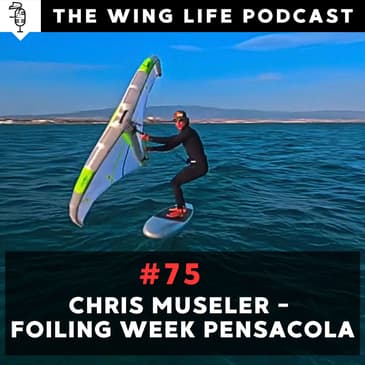

Chris Museler from the We Are Foiling Organization joins us from his home on Rhode Island to talk about:
- Foiling Week Pensacola 2025 (What is it, Where is it and When is it)
- How Foiling Week began and where it is today
- An overview of the We Are Foiling Organization
- An overview of the city of Pensacola and how it offers ideal conditions for foiling and community events (Great for families)
- The festival atmosphere at Foiling Week which encourages participation of all levels (Lots of Free Demos, Racing, Film Festival and more)
- Their Charitable initiatives are integrated into the event's framework.
- The importance of sharing knowledge and experiences in the foiling community.
- We introduce "The We Are Foiling podcast" which covers industry topics and discussions hosted by Chris himself.
- And Much More.
Visit: https://foilingweek.com/landing/pensacola-2025/
★ Support this podcast ★[00:00:00] Hey everyone, welcome back to the show. Today we have Chris Museler from the We Are Foiling organization joining us.
[00:00:06] He is here to present Foiling Week in Pensacola, Florida. What is Foiling Week? It is a foiling festival that should be on all of our radars.
[00:00:15] He gives us an overview of the event. So enjoy this conversation. It was super fun to learn about it. And we're going to be going down there to cover it.
[00:00:25] Last week, we had Benjamin May on the show. He is a three times German race and freestyle champion, along with a two times GWA Vice World Big Air champion.
[00:00:37] Kid's an absolute ripper. We talked to him about big air, gear, safety concerns about big air, his upcoming trips and much more. So we really do hope that you enjoy that episode as well.
[00:00:48] Now, I want to take this opportunity to thank our team for making the show a reality. We have Frank that helped me in consulting. We have Matthias on guest relations and we have Stefan on audio mastering.
[00:01:00] A big thank you guys as a lot of work goes into each and every episode. Next, I'd like to give a big shout out to all of our sponsors. If you want to find out who all of our sponsors are, hop over to winglifepodcast.com and click on sponsors in the main navigation.
[00:01:15] We're going to give North Foils a shout out. I've been riding their SF range in Laventana. Loving those foils. I'm on the 830 right now. As some of you might know, I was on a 1500 before. I'm a guy that likes to just slowly get new gear.
[00:01:31] So anyways, I'm thinking about getting the 680, which is the one step down or two steps down. So anyways, thank you guys. It's been great working with your team. And yeah, no, thanks a lot for supporting us.
[00:01:43] Lastly, winter is just around the corner. And if you haven't decided where to go yet, come out to Laventana. I'm offering lessons out here. I would love to get some riding with you as well.
[00:01:54] So send us an email at info at winglifepodcast.com if you're looking to learn or if you just want to do an epic 5-6k downwinder.
[00:02:02] So now I hope you enjoy today's show with Chris.
[00:02:11] Welcome to the Wing Life Podcast, where we talk about wing foiling and the lifestyles of those who enjoy this great sport.
[00:02:19] Take two. Thanks for coming back, Chris.
[00:02:24] We'll do the GoPro fire up.
[00:02:28] No problem.
[00:02:29] Oh man, man. Where are you right now? That's a cool little backdrop.
[00:02:32] Yeah, I'm in our house in Jamestown, Rhode Island. We have a net zero passive house. We're very lucky to have conceived and built this for at least for our neighborhood, a modest house. But we have three children.
[00:02:46] And a wife Karen.
[00:02:47] There you go.
[00:02:47] Yeah.
[00:02:48] Oh, nice.
[00:02:48] So we're in Jamestown, Rhode Island. We have great water sports conditions around here. It's a surfing and sailing kind of capital. And we do it all.
[00:02:56] My brother built some passive homes in Vancouver and on Vancouver Island. Quite a lot that goes into those things.
[00:03:06] Yeah, absolutely. And when we were going through the process, there's a lot of overlap with the type of people we run into in our sports and industries that you and I work in.
[00:03:16] And the people that are working on unique homes like this, unfortunately, they're unique in North America, not as unique in Europe.
[00:03:24] But it's just people trying to do new things and use efficiencies, be as efficient as possible.
[00:03:29] And that's what we talk a lot about, you know, Foiling Week about that, about hydrofoils and the efficiencies that that allows and how you can reduce carbon footprints, emissions, all that other stuff.
[00:03:40] And so it's no surprise that when we you and I jam together on some topics that when we talk to people and you bring up something like a passive house, it's a high performance house, you know.
[00:03:51] And so you can have the same geeky conversations in terms of where the efficiencies lie, how to get better at something, how to eliminate waste.
[00:04:01] It's kind of in line with our value structure.
[00:04:04] Yeah, very true.
[00:04:05] Very true.
[00:04:06] How did this whole journey into wind and writing start for you?
[00:04:12] Yeah, like, you know, I started to talk about, you know, I'm a classically trained journalist.
[00:04:17] I just got into it from reading sailing magazines as a kid.
[00:04:20] I grew up on Long Island and actually not even reading, like reading the captions, looking at a lot of pictures.
[00:04:25] So we had stacks and stacks of old sailing publications and books from my parents.
[00:04:30] And, um, and just, you know, we had sailboats.
[00:04:33] I grew up cruising on Long Island and got into windsurfing super early in the late seventies, early eighties when I was a little kid.
[00:04:40] And so always attracted to high performance sports, did an Olympic campaign in four seventies.
[00:04:46] And, um, so light loved fast boats, was left to my own devices as a kid on the water and, um, and kept going.
[00:04:53] Sailed in college, sailed big boats, was a professional bowman for a little while and, but was always riding.
[00:04:59] Um, and kind of got into magazines right out of college with sailing world magazine.
[00:05:04] And actually right before that sale magazine up in Boston, I did an internship between my junior and senior year.
[00:05:10] And so I was always in the water sports through my family and, but always interested in performance sports, did windsurfing as a hobby.
[00:05:18] Uh, did IMCO, uh, the Olympic class, just, uh, fooling around.
[00:05:23] Um, and a little bit of formula windsurfer when kite boarding came up first in, in Rhode Island with the F1 Ram air kites and, uh, no, no quick release, no deep power.
[00:05:35] You remember those days.
[00:05:37] And the, um, and then took a break for a long time from that, had children, started working for the New York times in 2006 as a correspondent among other jobs, writing for a lot of other magazines, even classic boat magazines.
[00:05:50] And then, um, and then, yeah, just stopped, stopped kiting for a little while.
[00:05:55] And then wing foiling popped on during the pandemic.
[00:05:58] And a friend of mine was trying to get ahead of all of us.
[00:06:01] So I'm paddling back across the bay one day when we're coming back with our cruising boat one spring during the pandemic.
[00:06:07] I'm like, what are you doing?
[00:06:08] He's like, nothing.
[00:06:10] So I actually had to beg, uh, you know, beg my friend to, to get me into it.
[00:06:15] But, um, but, you know, as you know, since 2020, 2021, um, for a lot of us on the East coast and in New England area and around the world, um, started to see it and started to do it.
[00:06:27] So that got tapped into my old, you know, early adopter, uh, style of myself, um, being the first at a lot of things, even in snowboarding, 1985.
[00:06:38] I was in like fifth grade.
[00:06:39] I got my first snowboard from a friend.
[00:06:41] She brought it back from Breckenridge.
[00:06:43] And so, uh, winging just got me right into that.
[00:06:46] Now I've just been on this fricking crazy path with that.
[00:06:51] And I was actually with a foiling week before then I was interested in hydrofoils and reporting on that and did some lecturing on that, bringing in people.
[00:06:59] And that's how I met Luca Rosati in 2015.
[00:07:04] So, uh, foiling week started in 2014.
[00:07:08] 13, 14.
[00:07:09] And then, um, I want to know more about it.
[00:07:12] So I did a live before zoom.
[00:07:14] I did a live, uh, video lecture and zoomed in people from around the world to talk about foiling at a sail loft in Long Island.
[00:07:22] So we had Peter John's.
[00:07:23] Yeah.
[00:07:24] So we had Peter John's 2015.
[00:07:25] So we had Peter Johnstone cause they had just been flying the G four, the gunboat, foiling gunboat.
[00:07:31] And then a month later it crashed and they never did much of it after that.
[00:07:35] Um, we also had Patrick Wynn who started water lust and he was in the kite foiling back then.
[00:07:40] Water lust is that kind of like online, uh, kind of information, oceanography, sustainability, uh, uh, kind of a website that he started.
[00:07:52] Uh, he's an oceanographer.
[00:07:54] And then who else did we add?
[00:07:55] We had Anthony Catoon who was a moth sailor.
[00:07:57] We didn't have any women.
[00:07:58] I don't think, uh, which was a shame, but we had a lot of kind of, again, early adopters to the hydrofoil space.
[00:08:06] A couple of America's cup designers.
[00:08:08] It was right after the America's cup in San Francisco.
[00:08:12] So, yeah, that's pretty awesome.
[00:08:14] Actually.
[00:08:14] That's a lot of history.
[00:08:16] Yeah.
[00:08:16] So I gave you a big dump, but I'm used to talking about these things.
[00:08:19] Cause I, I, everything that we're talking about in foiling is recent history.
[00:08:25] So it's important to me.
[00:08:27] Like I was at the AWSI trades trade show and hood river, uh, this fall you were at.
[00:08:34] And, um, so my mind, when I look at the, the evolutions of the sport and different corners
[00:08:40] of the sport and look at the athletes, I'm trying to make sure I keep a thread between
[00:08:45] the products, the people, the, the, you know, and the benchmarks in, in the recent foiling
[00:08:52] history, because I'm reporting on it all the time.
[00:08:55] And foiling week is trying to make those connections with people as well.
[00:08:59] So for people, cause I'm from East coast, like we sell a lot in Lake Ontario.
[00:09:02] And I got a bunch of buddies that sail on Lake Erie and then Quebec and Magdalene islands
[00:09:07] and all the way through the, the kind of East coast.
[00:09:09] Oh, cool.
[00:09:10] Yeah.
[00:09:11] Beautiful up there.
[00:09:12] So what is foiling week?
[00:09:14] Okay.
[00:09:15] Foiling week for everyone.
[00:09:16] It is a, well, we now call it a festival and, but foiling week, foiling week was started
[00:09:23] in 2014.
[00:09:24] If you guys remember way back in the 2012, 13 America's cup in San Francisco, it was in
[00:09:31] catamarans that were kind of never meant to fly, to foil there in the design role.
[00:09:36] They were, it was very discouraged to consider hydrofoiling, but a team New Zealand figured
[00:09:41] out how to make it fly.
[00:09:43] And, um, and that turned into a foiling America's cup and it never looked back since, uh, they,
[00:09:49] they're now in monohulls in the America's cup.
[00:09:51] But when that happened, there was already, uh, one class that was, was hydrofoiling an
[00:09:56] open class called the moth class, which you may be familiar with, or your listeners may
[00:10:00] be familiar with.
[00:10:01] Um, and it's really cool.
[00:10:03] It's a, it's just a single handed boat with an open design rule.
[00:10:06] That's been since way back in the forties and, you know, maybe even before that, but
[00:10:10] they had a, a design rule that allowed people to experiment and they wound up getting to
[00:10:15] hydrofoiling and it dominated the class.
[00:10:17] And so that was really the only proper.
[00:10:20] And there wasn't really a one design that, but that was a really, really proper foiling
[00:10:24] class.
[00:10:24] And the America's cup came along and you know, with something like that, where millions,
[00:10:28] tens of millions, even hundreds of millions of dollars gets put into figuring this equation
[00:10:33] out in water sports and all that information and excitement had to go somewhere.
[00:10:38] So what Luke, Luca Rosati did, uh, he's from Italy.
[00:10:42] He was a moth sailor.
[00:10:43] Uh, he sailed 18 foot skiffs in Sydney.
[00:10:46] So like a lot of us, he was interested in high performance boats and he said, man, he
[00:10:51] goes, I know a couple of these designers through the moth class.
[00:10:53] Everyone was kind of going to that class because they were trying to learn, uh, even just how
[00:10:58] to think about racing around a course at 28 knots upwind and 30 knots downwind.
[00:11:03] And so he's like, let me put together an event on Lake Garda just for hydrofoiling.
[00:11:09] So people can come together and share their notes on products that are working on, um,
[00:11:14] designs they're working on ideas.
[00:11:15] They're working on studying ventilation, whatever it is.
[00:11:18] So Foiling Week started as a way to capture the energy that was created by the moth class,
[00:11:23] but primarily the 2013 America's Cup and give people a place to hang out.
[00:11:28] And so it was a lot of, um, uh, presentations, white papers, trials, testing boats on Lake
[00:11:34] Garda at the, uh, Malchesonay at the Fralia Vela, which is, they still host it now in the 11th
[00:11:40] year this year.
[00:11:41] And, um, and it started really geeky, just America's Cup designers and a couple top sailors.
[00:11:48] And it just slowly kind of grew the trials.
[00:11:52] People brought more and more boats, pretty much any hydrofoiling boat that you see today,
[00:11:58] motor or otherwise came through Foiling Week since 2014 as like a presentation or a test
[00:12:05] trial or something like that, that people came to check out.
[00:12:08] And now, now a lot of those foiling classes have their own events, you know, have a racing
[00:12:13] as part of the racing component of Foiling Week there.
[00:12:15] We still have exhibitors from all different manufacturers and designers and brands.
[00:12:22] And, uh, and still a lot of talking points are, are, are, our podcast is an evolution of
[00:12:28] the Gurrit form.
[00:12:29] Gurrit was like one of the largest manufacturers of carbon and they supported our form for about
[00:12:33] 10 years.
[00:12:34] And, um, so now it's just, it's a, it's a festival now.
[00:12:38] So it's a place where, um, uh, classes come to run big events that don't have a lot of,
[00:12:44] um, it's not like a world championship, but people come there to hang out with everyone
[00:12:49] else.
[00:12:49] The moth class this year and the last couple of years has their biggest event in the
[00:12:54] world there.
[00:12:55] So even though the world championships may have 80 boats, we may have like 110 boats, you
[00:13:01] know, at Foiling Week.
[00:13:02] So it's really cool.
[00:13:04] There are parties.
[00:13:05] Now we have a, uh, Foiling Film Festival.
[00:13:07] We have a design challenge, a sustainable, it's called the Sue Moth Challenge.
[00:13:11] So the sustainable moth challenge, and that is sponsored by 11th Hour and a bunch of other
[00:13:16] organizations.
[00:13:17] And that is a now legacy seven-year-old design challenge with more than 10 universities from
[00:13:23] around the world, including ETS in Montreal.
[00:13:26] One of the old, older ones in, um, you know, involved in the design challenge where they have
[00:13:31] to design and build a moth, you know, a sailing moth boat, a single headed moth boat that fits
[00:13:37] within the rules, the racing rules for that class association.
[00:13:40] But they have very specific design parameters for sustainability, both in materials, um, all
[00:13:46] the way through the design and build process.
[00:13:48] They do a life cycle assessment of all the parts that they make.
[00:13:52] And out of that, uh, not only do they have to push the limits of materials, I mean, they're,
[00:13:57] they're coming up with reconstitutable, uh, bioresins, you know, where not only are they
[00:14:03] trying to use flax and bioresins to make a boat that's still light enough and stiff enough to fly
[00:14:08] and support a human.
[00:14:10] Um, but they're thinking about ways that at the end of the life cycle of that product,
[00:14:14] can they melt it down and reuse the resin or reuse, uh, some of the fibers.
[00:14:19] Um, and now big industry like Persico Marine that builds a lot of the America's cup boats
[00:14:25] in the AC forties, um, and a whole bunch of other designers and builders from around
[00:14:29] the world and manufacturers look to these university students and say, ah, you guys are really pushing
[00:14:33] the limits of that starboard.
[00:14:35] Who's a manufacturer of one of the largest manufacturers of, uh, water sports products.
[00:14:39] Uh, they jam with these university students to share with them what they've learned by trying
[00:14:44] to do the same things and the things they failed at.
[00:14:46] And then these students kind of push these things further forward and, and industries want
[00:14:51] to see what they're up to for sustainability.
[00:14:53] So that's, you know, I just went deep into that wormhole with the sumoth challenge.
[00:14:58] I appreciate it.
[00:14:58] That's an example of some of the things that, that Foiling Week has been involved with and,
[00:15:03] you know, all the way up through Artemis Technologies, which was an America's cup Swedish team.
[00:15:08] And now they're just coming online with hydrofoiling, uh, small amounts of people, ferries
[00:15:13] for Europe.
[00:15:14] So they have a couple, you know, they're starting that production.
[00:15:16] They also have luxury boats.
[00:15:17] Um, so all that stuff has kind of, uh, been presented at Foiling Week over the years and
[00:15:23] it just keeps moving forward and we keep evolving.
[00:15:26] And now we have, um, not our first, we've had a couple of Foiling Weeks in the United States
[00:15:31] early days in Newport and Miami, and then also in Sydney twice.
[00:15:37] And, but those were kind of early days, you know, like five years ago, you know, the Foiling
[00:15:43] landscape looked totally different.
[00:15:44] Not as many, uh, boats, not as many events, uh, not as many athletes, uh, or designers
[00:15:50] or manufacturers, but now we're taking another whack at having an international Foiling Week.
[00:15:55] And that's what brought you to us talking about Foiling Week 2025 in Pensacola at the end
[00:16:00] of February and into March.
[00:16:02] And we're in the middle of that planning process right now.
[00:16:05] Okay.
[00:16:06] So it's great.
[00:16:07] What a dump, huh?
[00:16:08] That was good.
[00:16:09] That was good.
[00:16:09] Bring it.
[00:16:10] I like, I like listening and, um, all right.
[00:16:14] So Pensacola, uh, for those who don't know it, where is it?
[00:16:19] So Pensacola is in the great state of Florida on the South coast to Southeast of the United
[00:16:25] States.
[00:16:26] So if you think of Florida as kind of like this big kind of arm sticking out into the, um,
[00:16:31] to the ocean and it makes the Gulf of Mexico, as you come up in the Gulf of Mexico along the
[00:16:38] West coast of Florida and you turn up and you start to head West towards, uh, Alabama
[00:16:44] and new Orleans, Louisiana, uh, that is the panhandle.
[00:16:47] So the upper, upper Gulf coast of Florida, it's called the panhandle.
[00:16:52] And all the way out near the end, as you head West, right near the Alabama border is Pensacola,
[00:16:57] the city of Pensacola, which is, um, which is really cool place.
[00:17:00] Um, really well known for actually a lot of the lumber kind of coming in and out of the
[00:17:05] United States was, uh, for the middle of the country was kind of shipped in and out, uh,
[00:17:10] through there.
[00:17:10] And, but what we know Pensacola for in our foiling universe is that's the home base for
[00:17:16] American magic, which is a two time, um, America's cup challenger from a New York yacht club, which
[00:17:23] is based in New York and Newport.
[00:17:25] Um, but they chose Pensacola because not only is Pensacola Bay and you have the ocean
[00:17:30] there too, is a perfect flat, relatively deep water place for foiling and with a lot of varied
[00:17:36] conditions.
[00:17:37] But, um, also the city is kind of one of those kind of Southern and, and middle of the country
[00:17:43] cities that really did a great job, uh, renewing itself after, you know, like a post-industrial
[00:17:49] kind of city.
[00:17:51] Uh, they've kind, they put an awful lot of effort into making a beautiful city with inviting
[00:17:58] kind of smarter businesses, smarter industries, um, you know, technology firms, younger, younger
[00:18:04] business people, and a really beautiful place to live.
[00:18:07] And there's a lot of Florida cities like that, including places like St. Petersburg on also
[00:18:11] on the West coast.
[00:18:12] But up there, Pensacola is like a shining example of a beautiful city with a relatively new baseball
[00:18:18] team and baseball field, uh, the blue angels.
[00:18:20] So our really famous Navy pilots that do not only are they fighter pilots, but they, they
[00:18:26] do all the great aerobatics, uh, acrobatics, uh, acrobatics documentary on that.
[00:18:32] Not that long ago.
[00:18:34] Yeah.
[00:18:34] So they're, they're kind of summer bases there.
[00:18:36] Their winter basis is San Diego.
[00:18:39] Um, so it's a beautiful city and actually the coolest thing for all of us, you know,
[00:18:44] besides the fact that it's warmer, it's a little cooler up and up in the panhandle than
[00:18:48] it is down in Miami, of course, in the winter time, February is kind of like their spring.
[00:18:52] So we're psyched for that.
[00:18:54] But the greatest thing about it, besides the fact that the city's beautiful as incredible
[00:18:58] waterfront as year round people living there, a lot of people come visit it.
[00:19:02] Is that you have this big, beautiful bay that American magic loves to use for their AC 75
[00:19:07] and their AC 40.
[00:19:09] And, but you have a big, uh, like a lot of like a Cape Hatteras kind of thing on the East
[00:19:14] coast.
[00:19:14] Yeah.
[00:19:14] I was just going to ask.
[00:19:15] Yeah.
[00:19:15] You have a barrier beach with a beautiful hotels and, and a lot of just, it's like literally
[00:19:22] white sand, uh, beaches and beautiful green Gulf water and, you know, clear Gulf water.
[00:19:29] And so whatever wind direction you have, you can get waves or flat water and it's all right
[00:19:37] there.
[00:19:37] You have the city of Pensacola and then, uh, the city of Pensacola beach and both of those
[00:19:41] cities through their tourism dollars and a lot of other support, uh, wanted to bring a
[00:19:46] foiling festival to Pensacola.
[00:19:48] Uh, thanks to all the psych that they got out of the America's cup team.
[00:19:53] And it's just a cool place.
[00:19:55] I mean, I spent a lot of time in Florida, but never out that far and the city's beautiful.
[00:19:59] It's really well done.
[00:20:00] There's a lot of great energy there.
[00:20:02] The people are really nice and, um, and we're psyched to be there.
[00:20:07] Okay.
[00:20:08] So what, let's say somebody wants to drive down from Toronto.
[00:20:11] What could they expect?
[00:20:13] Yeah.
[00:20:14] Well, this is a, Luke, this is a big one.
[00:20:16] Remember, remember when we spoke before and we're trying to tell you how this all works.
[00:20:21] Um, so we have two hours.
[00:20:23] Don't worry.
[00:20:24] Oh, good.
[00:20:24] Let's go for it.
[00:20:25] Yeah, we'll go for it.
[00:20:26] And so, you know, I explained just a little bit about, about foiling week in Lake Garda.
[00:20:32] So that is the home of foiling week.
[00:20:35] It's just beautiful.
[00:20:36] Lake Garda has an also special geographic situation where it's one of those deep cavernous lakes
[00:20:41] with big kind of granite cliffs on either side, runs North and South.
[00:20:45] And in the mornings they get a huge, I don't know if it's technically a catabatic wind, but
[00:20:50] they get a, a northerly wind early in the morning and it's blown like 25.
[00:20:55] And then by like 10 o'clock that starts to die.
[00:20:59] There's no breeze in the middle day.
[00:21:00] Everyone has their pasta and beer.
[00:21:01] And then a sea breeze comes in from the other direction.
[00:21:04] So they have a really incredible situation like that.
[00:21:07] And the way that event has evolved is it's evolved a lot of around racing, even though
[00:21:11] foiling week is no longer just racing, uh, trials.
[00:21:14] Uh, we have a lot of, I didn't even mention our charitable situations, uh, that we like
[00:21:19] to support.
[00:21:20] And, um, but it's a lot of boats.
[00:21:23] And last year we had our first ever downwind, uh, downwind SUP foil event.
[00:21:28] And we also have had E foils in the last two years.
[00:21:32] And then we were doing dock start pump foil and SUP, you know, flat water, uh, clinics
[00:21:36] as well.
[00:21:37] And so that was at Garta or Pensacola.
[00:21:39] That was at Garta and we've done wing foil racing there as well, but not, not to a large
[00:21:45] number.
[00:21:46] And so it's been early on with the board sports side of things, uh, in Lake Garta.
[00:21:53] Let's go to the United States.
[00:21:54] It's a couple of years after we've tried to do a foiling week, we've done a foiling week
[00:21:58] here and all of a sudden, you know, the moth class is very tiny wasps, which is like a one
[00:22:05] design version of the moth class are bigger, but not nearly as big as the 80 boats that we'll
[00:22:09] have at foiling week.
[00:22:11] And, um, but board sports in the United States have grown super fast.
[00:22:16] And, um, with the wing foil racing, us nationals in San Francisco, this, this last summer near
[00:22:23] St. Francis Yacht Club was really big and it was a huge success.
[00:22:26] And there's a lot of people wanting to race, uh, do wing foil racing.
[00:22:30] Even our Olympic development coach, Leandro Spina, uh, all of his kids who are in the
[00:22:36] other classes want to do wing foil racing.
[00:22:37] So a lot of those kids will be in Pensacola.
[00:22:40] So the thing with, uh, foiling week, if you want to come down to foiling week in Pensacola,
[00:22:45] a very big part of it, even though that we'll have boats, we'll have a class catamarans.
[00:22:49] We're going to have, um, I forget which version of the NACRA, but we'll have, uh, the NACRA
[00:22:54] catamarans and then we will have wing foil, we'll have moth and wasp, but we are going
[00:23:00] to have a couple hundred riders and hopefully more, um, in a lot of the board sports disciplines.
[00:23:07] So one of the marquee events is the foil surf race league, which is only a couple of years
[00:23:14] old.
[00:23:14] They're based out of Cocoa beach.
[00:23:15] Their main event each year is almost like this little surf foiling championship of in
[00:23:20] the United States.
[00:23:21] It's professional.
[00:23:22] There's prize money.
[00:23:23] Um, they're in Cocoa beach the weekend after foiling week.
[00:23:26] So in the first full weekend of March.
[00:23:29] And so we invited them say, Hey, can you, can we come to a foil surf race league event
[00:23:35] too?
[00:23:35] So all these people coming from around the world, they have at least 80 to a hundred
[00:23:38] riders coming from all over the world because it's growing a popularity.
[00:23:42] And we're like, let's give you something to do the week before.
[00:23:45] And we'd love these athletes to mix with all of our other athletes and, and also the industry
[00:23:49] and the university students and our charities and come join our discussions.
[00:23:54] You know, that we're talking about all these issues that, that grow up around foiling and
[00:23:59] we want you there.
[00:24:00] So they agreed to do that.
[00:24:02] That was a Brian and Billy Bosch out of Cocoa beach.
[00:24:05] And so that's bracketed on the last weekend of the event.
[00:24:10] First of the weekend, the first couple of days of the event, the 24th, 25th, 26th, somewhere
[00:24:15] around there, Monday, Tuesday, Wednesday is all the racing on Pensacola Bay.
[00:24:19] And that's in wing foil racing, kite foil racing, catamaran foiling racing, which is a
[00:24:24] class and NACRA, um, birdie fish, which is kind of like, uh, um, a recreational foiling
[00:24:31] monohull, but with like, almost like a mocha dolly foils coming out the side.
[00:24:35] Um, I'm probably for, I'm probably forgetting a couple.
[00:24:38] Um, yeah, you can pull it up if you want.
[00:24:40] Yeah.
[00:24:41] Yeah.
[00:24:41] Uh, but anyway, so that, those are the kind of, uh, strict racing on those first three
[00:24:47] days.
[00:24:48] Then in the middle two days, and this is just on the water stuff.
[00:24:50] I'll talk about what's happening off the water.
[00:24:52] Um, the middle, the middle of the week, the Thursday, Friday is multidisciplinary.
[00:24:58] And what's happening there is there are two venues that are awesome.
[00:25:03] So we have racing in the beginning and then surf foil racing at the end with a lot of social
[00:25:09] and other types of commercial events in the afternoons on every day.
[00:25:14] Um, two venues, there's an ocean venue for the surf foil events and board sports events.
[00:25:19] And then there's a bay venue, uh, that's just inside that peninsula on the bay.
[00:25:23] And then on the city front, uh, for Pensacola Yacht Club to launch all the boats out of.
[00:25:29] And in the middle of this event, we're going to have a multidisciplinary event.
[00:25:34] So on the city front, we will have, uh, wake foiling.
[00:25:38] We have sponsors for wake foiling.
[00:25:40] We have professional athletes coming for that.
[00:25:41] We have judges.
[00:25:42] Um, it's going to be really fantastic.
[00:25:45] And there's going to be a wake foil course right in front of the city front and in front
[00:25:48] of our event village, which is right in the middle of the city.
[00:25:50] And then we also have a little marina that's right.
[00:25:53] Also right there.
[00:25:54] And we're developing a pump foil and dock start facility.
[00:25:57] And we're going to be doing pump foil, uh, demonstration and competition as well.
[00:26:03] So I'm sharing with you the different venues.
[00:26:06] Um, there's going to be e-foiling, uh, foiling experiences going on as well.
[00:26:10] But on those middle two days, this is for the water activities.
[00:26:15] Everyone who is at foiling week, we are going to do whatever.
[00:26:19] And this is particularly in the board sports, but there's probably multidisciplinary athletes
[00:26:23] in the boats as well.
[00:26:24] Um, but predominantly people in the board sports, whatever the conditions are that day, we're
[00:26:28] all going to do.
[00:26:29] So if it's either, if it's just ripping out, so we, if it's ripping in the bay, you know,
[00:26:36] offshore, you know, offshore on the ocean, but ripping in the bay, or if it's ripping side
[00:26:41] shore or side on, uh, on the ocean, we're going to do a downwind.
[00:26:45] And that's with wing, with foil assist, like foil drive and stoke, um, para wing, SUP and,
[00:26:54] uh, surf foil and then e-foil as well.
[00:26:57] So that's going to be just a massive downwinder.
[00:27:00] We're going to have a race.
[00:27:01] We're also going to have bus and jet ski assist.
[00:27:04] So everyone will just, once we do a race and then we'll do laps where people just go down
[00:27:09] and they'll get shuttled back up the beach or across with a ferry if we're on the inside.
[00:27:13] And we're just going to be doing laps of a downwind.
[00:27:15] If there's just beautiful surf, then we'll do some surf foil race and then surf style in
[00:27:21] all the disciplines.
[00:27:22] And it'll be fun.
[00:27:23] Uh, we can do, we're going to, we're going to have professional judges there so we can judge
[00:27:27] these things, but we really want everyone, the community just to enjoy themselves together.
[00:27:31] If there's no wind at all on those two days or one of those two days or half of those two
[00:27:35] days, then we all get, there's either bus shuttles from the ocean side to the, um, to
[00:27:42] the city front or a ferry.
[00:27:44] We get everyone to there and we are pump foiling and we are dock starting and we are wake foiling
[00:27:49] and we are e-foiling and we have competitions set up for that judges set up for that, but
[00:27:54] also just for fun.
[00:27:55] Um, so I think when, if you're any kind of foiler or foil curious, even cause there's
[00:28:03] trials this whole period of time for, for six days, you're getting to test out whatever
[00:28:08] you want to test out.
[00:28:09] And there's probably some, uh, prototype craft there as well.
[00:28:13] Um, but if you, yep, absolutely.
[00:28:15] There'll be demos in pretty much all the classes that you see.
[00:28:18] Uh, and also in terms of any prototypes that might be there, cause we always have a couple
[00:28:23] and then also in terms of all the board sports.
[00:28:25] So a lot of the brands will be there.
[00:28:28] Um, we're talking to F1, Cabrinha, Slingshot, Armstrong's supporting the wake foil side of
[00:28:32] things.
[00:28:33] Um, North sports is supporting the pump foil and dock start side of things.
[00:28:37] So, but we, but this isn't, it's mainly about getting all these brands together so people
[00:28:42] can test out this stuff and, and bring their top athletes there too.
[00:28:45] So we can meet them all cause this is open to the public.
[00:28:47] So to answer your question, um, why would you come down here?
[00:28:52] Well, first of all, it's, it's better than the North in the winter time, but, um,
[00:28:55] I have another question.
[00:28:56] Yeah.
[00:28:57] Before we end that train thought, um, are the, are the brands having kind of like AWSI
[00:29:03] presentation booths?
[00:29:05] Are there like food trucks, food venues, that kind of thing?
[00:29:08] Or what kind of a feel is it?
[00:29:10] So, um, the, the base set up at foiling week with the, there's an ocean venue, which is supported
[00:29:17] by the Hilton hotel for all the ocean side events.
[00:29:20] And there's a little bay inside part of that too, that there'll be some IQ foil racing and
[00:29:24] that kind of stuff.
[00:29:25] Forgot to mention the IQ foil, the Olympic, uh, foiling windsurfer.
[00:29:29] Um, but primarily we are all the, all the after water sports activities, uh, happen right
[00:29:37] on the city front at an event village in a park right in the middle of the city.
[00:29:41] And that's right.
[00:29:42] And that's where the pump and dock starting facility is.
[00:29:45] There will be food trucks.
[00:29:46] There are other vendors there.
[00:29:47] Um, to answer your question about like the AWSI part of it, there won't be any presentations,
[00:29:53] uh, from, from brands.
[00:29:55] It's not, it's not a trade show, uh, but there, there will be exhibitions.
[00:30:00] Uh, they're like a exhibition tents and that kind of stuff, demos, trials, that kind of thing.
[00:30:06] Uh, if those brands decide to take advantage of that.
[00:30:09] And so it's, when we talk about it, we, we, it's a proper festival.
[00:30:14] And so I'm sharing with you the waterfront stuff.
[00:30:17] So even though there's racing at the beginning, racing at the end, and then this awesome little
[00:30:21] multidisciplinary approach in the middle for everyone to stop what you're doing.
[00:30:25] On your, in your racing components and come play with us for two days on the water and
[00:30:30] let's do whatever's the most fun.
[00:30:32] Um, in addition to that, all the, we want everything around four or five o'clock has to
[00:30:38] end.
[00:30:38] Everyone wraps their things up on the ocean.
[00:30:40] Everyone who's doing on the waterfront stuff, wake foil dock start all the boats that are
[00:30:45] racing the bay.
[00:30:45] They wrap it all up.
[00:30:46] They all go back to Pensacola Yacht Club and everyone comes back to the event village
[00:30:50] where there's a, a lounge.
[00:30:54] We're going to have music jam sessions.
[00:30:56] Every other night we're going to have a panel discussion on some really great topics with
[00:31:00] some really awesome industry people, not just board sports, not just boats, you know, uh,
[00:31:05] material science, um, issues that affect us rules.
[00:31:09] How do you govern, you know, certain disciplines and, um, and just try to keep costs down for certain
[00:31:15] things as well.
[00:31:16] And, and we want to know a lot from these athletes.
[00:31:18] We want these top athletes here.
[00:31:20] There's, I mentioned before the Foiling Film Festival, we're going to have a Foiling Film
[00:31:24] Festival, uh, with a lot of premieres there.
[00:31:27] And, um, and we're going to be judging those as well, but that's where everyone is who's part
[00:31:32] of the event comes to this beautiful old theater in the middle of Pensacola 400 seat theater.
[00:31:37] And, um, so there's a lot of that kind of stuff going on.
[00:31:40] And so I kind of rambling a little bit, but, uh, sharing with you that it's AWS, I was really
[00:31:47] exciting, but it is a trade show.
[00:31:48] And this is kind of like, I mean, it's kind of a different kind of show focused versus connecting
[00:31:56] brands with like retailers.
[00:31:59] Exactly.
[00:32:00] Brands, brands, retailers, those kinds of individuals are still all frothers like you and me, whether
[00:32:06] it be in winds, other wind sports boats, manufacturing, whatever it is, we have Tesla, we've had Tesla
[00:32:12] as a sponsor.
[00:32:13] Um, everyone wants to learn from each other.
[00:32:15] Um, so it's more like something where people come to, uh, they're just so psyched to learn
[00:32:21] about other corners of hydrofoiling.
[00:32:24] And obviously we like to make a lot of connections to industry and design and research and then
[00:32:30] also use our platform to put forward whatever charities that we're working on as well.
[00:32:35] So can we talk a little bit about those charities?
[00:32:39] Uh, we're not, we don't have them fully sorted yet, but one thing I will say, uh, because there
[00:32:45] are, um, they're kind of umbrella charitable organizations there that, uh, one of them, the
[00:32:50] Satori Foundation, I don't know where we stand with them, but they're focused heavily on sustainability.
[00:32:54] So I know we'll, we'll have some kind of relationship with them.
[00:32:58] Our event has to meet certain sustainability standards.
[00:33:01] Foiling Week is a world sailing special event.
[00:33:03] So it's not like, um, other kinds of championships.
[00:33:06] It's, uh, the Volvo Ocean Race is a special event.
[00:33:09] The Global Wing Sports and Kite Sports Associations are special events.
[00:33:13] The Vendee Globe, which started last weekend, a single-handed nonstop around the world race.
[00:33:17] That's a special event.
[00:33:18] And the Olympics are a special event.
[00:33:20] And Foiling Week is a special event.
[00:33:21] So, and all of those events try to meet certain sustainability standards in terms of how they
[00:33:26] run their event, how they move people around the world to do it.
[00:33:29] Um, you know, all the way down to the way we do our food prep and, and get rid of our
[00:33:34] garbage on site.
[00:33:35] So, um, so that's, that's a big part of it too.
[00:33:38] But as, as far as the charities are concerned, there's going to be a heavy sustainability component
[00:33:43] of it.
[00:33:44] Another thing that's really important for, um, Foiling Week is accessibility.
[00:33:48] So, um, we are trying to work on, uh, you know, there's a wounded warriors component to
[00:33:54] it where you work with disabled veterans, uh, that we're, we're going to probably put together.
[00:33:58] And then there are some surf, uh, therapy organizations that we'd really love to work with, uh, both
[00:34:04] nationally and locally.
[00:34:05] So there's, uh, Christian surfers and there's autism surfs.
[00:34:10] And then there's an organization based out of where I am in Rhode Island called Gnome Surf,
[00:34:14] which works with severely disabled people.
[00:34:16] And, um, so we're really working on trying to find some partnerships to make those kinds
[00:34:21] of charities happen because anything having to do with the sea, uh, we do lots of beach
[00:34:26] cleanups.
[00:34:26] You know, we do tons of that kind of stuff and being a sustainable event is really important
[00:34:31] to us.
[00:34:31] It's like this virtually impossible task, but we're trying to do it.
[00:34:34] Um, but when we think about other charities, thinking about something to help, um, uh, people
[00:34:40] who, uh, who can either use some inspiration or they can inspire us too, but give them that
[00:34:45] either Foiling experience or water sports experience.
[00:34:48] And we can all kind of win from that, but really positively affect our community by doing that.
[00:34:53] That's a big part of what we're trying to do with, uh, Foiling Week in Pensacola as well.
[00:34:58] So, and that's forever.
[00:34:59] That's for everyone.
[00:35:00] I mean, I mean, we're talking to all the brands in the board sports side of things,
[00:35:05] because they're the most visible.
[00:35:06] They're way more visible than sailors, right?
[00:35:07] Um, because they're just self-promoting themselves.
[00:35:10] They're young.
[00:35:11] They get it in the digital age and in social media.
[00:35:14] And so I'm talking to brands primarily bring your athletes here.
[00:35:19] Cause I know they all want to be here and play.
[00:35:21] They want, they have things to compete in and then they have things to froth on.
[00:35:24] Like you saw in AWSI, everyone's towing around foil driving, you know, doing paddling up,
[00:35:30] whatever.
[00:35:30] They're just so stoked to be together.
[00:35:32] And that's what those, the middle of our week is about.
[00:35:34] But we get those athletes there.
[00:35:36] We want to know their opinion on the industry.
[00:35:38] We want to know their opinion on safety and we want them to join us in any of our, bring
[00:35:44] their kind of reach, not just to Foiling Week, but to, um, the ideas that we're trying to present
[00:35:50] and then also to the charities we're trying to support.
[00:35:52] So it's really important that the athletes and those brands really buy in and come and
[00:35:58] then people come, you know, just to, just to enjoy it.
[00:36:01] So whatever level hydrofoiler you're at, whether you're in boats in one of these classes that
[00:36:06] we're talking about, or you're just a wing foiler, which there's a lot, a lot of wing
[00:36:09] foilers in North America right now.
[00:36:12] Um, then there's a place for you at Foiling Week, not just to try out new stuff, but also
[00:36:17] to be a part of these big discussions that we're having in the beginning of a lot of these
[00:36:20] disciplines.
[00:36:21] And again, Pensacola is a perfect opportunity for us to, uh, tap into this interest in all
[00:36:29] the different forms of board sports, because that's where it's growing fastest in the United
[00:36:32] States, particularly pump foiling and wake foiling in the U S it's a sleeper thing that's
[00:36:37] growing pretty quickly.
[00:36:39] And the wake foil industry is just, there's only a couple pro athletes in the, uh, in the
[00:36:44] national kind of a wakeboarding, uh, tour.
[00:36:47] Uh, Armstrong has a couple of women and men in it that, that they'll be there, but that's
[00:36:52] like, I'm really excited to see the interest in North America to come down and be a part
[00:36:56] of that because we're going to be running dock starting pump foiling, E foiling foil
[00:37:01] assist and wake foiling every day of the week.
[00:37:04] That's the, those are the only disciplines that you can run all day long.
[00:37:08] Yeah.
[00:37:08] It's not wind, not, not wind dependent.
[00:37:11] Well, that actually, thanks for the clarification and just thanks for introducing this to us.
[00:37:15] Um, it really kind of, I understand what it is now and it sounds like a great time, great
[00:37:21] time.
[00:37:21] Um, so if you have, you can even bring the family down, what's the accommodations in that
[00:37:28] area and, and are people flying in, driving in, bringing their own gear?
[00:37:32] Yep.
[00:37:33] Yeah.
[00:37:33] So really, really awesome point.
[00:37:36] The, I think the registrations are just starting to open up for a couple of the classes.
[00:37:40] The board sports registrations will be opening up next week, but also at the same time on the,
[00:37:47] all the foiling week channels, uh, and on the foiling week Pensacola website, which
[00:37:51] I think will get you all that, the exact details of that.
[00:37:54] So you can put it together.
[00:37:56] Um, they have, uh, an accommodate, they have a schedule, both social and on the water.
[00:38:02] And then they also have, uh, the kind of, what would you call it?
[00:38:07] The logistics in terms of, uh, transportation, where to fly into, where to stay.
[00:38:11] We have a series of hotels and other, uh, accommodations that are heavily discounted for
[00:38:17] our event, which we're so psyched about.
[00:38:20] They've done a really great job helping us out with that.
[00:38:22] So it's impossible to get, you know, like 300 foilers and participants, uh, free housing,
[00:38:28] but, um, but there's really heavily discounted rates in the city of Pensacola at, you know,
[00:38:34] right next to the venue and also at the Hilton, which is where most of the board sports are
[00:38:38] going to be hosted on the ocean side, which is only just like a couple of miles from the
[00:38:42] city, but we'll have buses going back and forth all the time.
[00:38:45] So any events that are going on, like the foiling film festival happens, everyone's wrapping
[00:38:49] up their, their, um, SUP foiling and surf foiling and IQ foiling on the beach and they're
[00:38:55] winging and they're packing it up and, you know, five o'clock, six o'clock, there's a
[00:38:59] bus taking as many people as it can handle, uh, to the city, to the event village.
[00:39:03] Everyone's getting together and they're walking down the street to the foiling film festival.
[00:39:07] Do I need a wetsuit?
[00:39:09] Um, yeah, you'll need a wetsuit.
[00:39:11] Yeah.
[00:39:11] Let's talk some specifics there.
[00:39:12] Yeah.
[00:39:13] Uh, in the end of February, like I said, it's kind of like, uh, the beginning of the spring
[00:39:17] in the Gulf coast there, but it is beautiful.
[00:39:19] You can get any kind of weather.
[00:39:20] So, but that's good for us because we want to do a lot of these different disciplines.
[00:39:25] And especially when you're talking about the boats are cool.
[00:39:28] So when you're on the, when you're in the bay, if it's windy and you want flat water,
[00:39:32] you just move to one side of the bay or the other, right?
[00:39:35] It could be blowing 30 and you just move to one side and it's flat and windy.
[00:39:39] You move to the other side, you can get bumps, you know, whatever you want.
[00:39:42] That's why American magic likes just a big, you know, oval, uh, bay, you know, relatively
[00:39:47] shallow bay, but deep enough for all sorts of hydrofoils.
[00:39:50] Um, and so, but we also want waves, you know, so there can be winter storms going back through
[00:39:56] the Gulf that'll send up waves and we'll have a perfectly sunny 70 degree day and, uh,
[00:40:01] and have just glassy surf, you know, or you can just get ripping breeze in a front coming
[00:40:06] one way or the other.
[00:40:06] And you can have these beautiful downwinds on the ocean, which we're prepared for.
[00:40:10] And so as far as the answer to your question about the wetsuit, um, my guess would be,
[00:40:14] I was there in April.
[00:40:17] So if I watch April, so too much later, um, I think the water's probably going to be around,
[00:40:21] um, 60 degrees, maybe a little bit warmer than that.
[00:40:26] Hopefully, uh, four, three.
[00:40:28] Yeah.
[00:40:28] Four, three.
[00:40:28] If it's cranking windy and overcast, otherwise it's like a three, two, three, two.
[00:40:32] Yeah.
[00:40:33] And, and if you're like, you know, if it, if it's a glass off or you're just doing pump
[00:40:38] foiling, you're just barely in a shorty, you know?
[00:40:41] So, so that's kind of where it stands.
[00:40:43] Yeah.
[00:40:43] You can get any kind of weather there.
[00:40:45] It could be, you can wake up one morning, it could be 45 degrees, you know, or whatever
[00:40:48] that is in, in Celsius.
[00:40:50] Um, but my guess is you'll get kind of a range of conditions, but generally it's going to
[00:40:55] be pretty mild.
[00:40:56] I think your, your average would be around 60, 65 degrees.
[00:40:59] And, um, and then we're going to definitely have some breeze and there might be
[00:41:03] some no breeze, but there's a chance you can have like epic conditions in all the disciplines
[00:41:08] in one week.
[00:41:09] That sounds awesome.
[00:41:10] Yeah.
[00:41:10] So, I mean, yeah.
[00:41:12] And, and we're prepared for that, you know, in, in Garda, you have the wind that is very
[00:41:17] predictable and, and in a hood river, even though we remember we went there.
[00:41:23] We got skunked this year.
[00:41:24] We got skunked, but you know, we, I flew in on Monday.
[00:41:26] My buddy's like, get, I'll bring the stuff down to the hatchery.
[00:41:29] Let's just go.
[00:41:31] And, uh, Monday and Tuesday were really great, but that can happen anywhere.
[00:41:35] But the great, the thing that you and I saw when we were there, um, when I was at all these
[00:41:39] in Sardinia at these, uh, kite foil and wing foil events, uh, when there was no wind, all
[00:41:45] these young athletes are pump foiling around or dropping a wing in the water and trying to
[00:41:49] like pump up onto the foil with just the wing.
[00:41:52] And all, all these athletes, all these people want to just play.
[00:41:56] And we're going to have e-foils.
[00:41:59] We're going to have, um, the Candela, uh, motorboat, you know, luxury little small motorboat
[00:42:03] foiling boats.
[00:42:04] We'll have all sorts of other kinds of motorized foiling craft.
[00:42:07] And so there's plenty, plenty to do.
[00:42:10] So when we look at a changeable time of year in a, in a place like that, when you have a
[00:42:16] bay and you have marinas and you have a city front and you have an ocean front, you know,
[00:42:21] we have everything to play with.
[00:42:24] And so whether, whatever your ability is, if you're into boat foiling or, or board sports
[00:42:30] foiling, there's going to be so much to do.
[00:42:32] Do you bring your own gear?
[00:42:33] Absolutely.
[00:42:34] If you even like, think about racing wing foil, come bring your gear and give it a shot.
[00:42:39] That's the place to learn and, and have a good time because we're going to be just doing
[00:42:42] it in flat protected water for a wing foil racing.
[00:42:45] Same thing for kite foil racing, same thing for IQ and wind foil racing.
[00:42:49] You know, we've got a place for you.
[00:42:51] The biggest thing is whatever discipline that you like to come down to do, or you just want
[00:42:55] to come down and hang out and go do the trials and sit in and watch and be a part of the
[00:43:00] conversations that we're having about industry and the development of new sports.
[00:43:04] Um, come and do that.
[00:43:06] Come do the trials, come to the foiling film festival.
[00:43:08] You got a cheap hotel room.
[00:43:10] You come to a beautiful little city and, and you're watching kind of the history of foiling
[00:43:15] kind of open up, you know, when we have that downwind race, whenever we have it during the
[00:43:19] week, it's going to be one of the largest downwind races in the United States, you know,
[00:43:24] and, um, that that's happened.
[00:43:26] And just like when we had our race in Garda, it was just kind of a race, you know, I, I'm
[00:43:31] doing air quotes right now.
[00:43:32] If you're just listening to this podcast and, um, but it's, uh, it's a, it's just a really
[00:43:37] great thing to gather people together and be a part of it all.
[00:43:41] And it's just, it's not just about racing.
[00:43:44] It's, uh, it's about the foiling community and it's about how far reaching that foiling
[00:43:48] community is.
[00:43:49] So you're going to be seeing America's cup designers.
[00:43:51] You're going to be seeing women and men like the women mechatronics, uh, people from
[00:43:56] the America's cup that we talk to all the time.
[00:43:58] They're going to be there talking about those kinds of technologies.
[00:44:01] They're going to want to be talking about foil design from small foiling manufacturers,
[00:44:06] you know, in North America and also in Europe and around the world.
[00:44:10] So it's a really, really cool mix.
[00:44:14] Website?
[00:44:15] The website, uh, the website is, well, foilingweek.com and on our Facebook page on Instagram
[00:44:24] and actually the umbrella, the umbrella organization for this is we are foiling.
[00:44:30] So that's a good way to kind of dive into what we're doing.
[00:44:34] All the different parts.
[00:44:35] We have the foiling awards.
[00:44:37] Uh, we have the Sue Moth challenge.
[00:44:39] Sorry about that.
[00:44:40] Uh, we have the foiling, foiling awards.
[00:44:42] We have the Sue Moth challenge.
[00:44:43] We have the foiling film festival.
[00:44:44] We have foiling week.
[00:44:45] Now we have foiling week, uh, Pensacola.
[00:44:47] And, um, it's, so we are foiling is a great way to get straight into it for foiling week,
[00:44:55] Pensacola.
[00:44:56] Let me look that up really quick.
[00:44:58] Um, because that, that is, um, a very specific, uh, website.
[00:45:05] So just give me a second and we can work together on this foiling week, Pensacola 2025.
[00:45:13] Boom, boom.
[00:45:15] Boom.
[00:45:16] Let's do sailing Pensacola, uh, Pensacola 2025.
[00:45:20] Okay.
[00:45:21] I also have foiling week.com.
[00:45:23] Yeah.
[00:45:24] Just go to foiling week.com right up front is the registration.
[00:45:27] The beginning of the registration for foiling week, Pensacola 2025.
[00:45:31] So yeah, there we go.
[00:45:32] All right.
[00:45:33] Foiling week.com everybody.
[00:45:35] Yep.
[00:45:35] 103 days, two hours, 58 minutes and four, three, two, one.
[00:45:41] Let's go.
[00:45:42] Let's go.
[00:45:42] So should we, uh, should we wrap this up by talking about your new podcast?
[00:45:49] Oh, absolutely.
[00:45:50] Absolutely.
[00:45:51] Let me get you back on the screen.
[00:45:53] Okay.
[00:45:54] There we go.
[00:45:55] Um, cool.
[00:45:55] Well, I love your podcast and I got, I got to tell you, you're doing a great service for
[00:46:02] not just the foiling industry, but for the water sports industry.
[00:46:04] I know you're not getting rich doing this with your team, but it's really, really fantastic
[00:46:10] because it's kind of the only place where, you know, you have Eric Antonson, right?
[00:46:15] From the progression podcast, you know, all hail, you know, he's the OG for us foilers,
[00:46:20] uh, especially, you know, particularly board sports foilers for the podcasting.
[00:46:24] And then there's, there's a lot that's grown out of that.
[00:46:26] And you guys are the kind of the everything, you know, from psychology to techie gear to
[00:46:33] just like foiling changed my life, you know, and now, now I'm addicted.
[00:46:38] And when I don't foil, I'm grumpy.
[00:46:39] So I need to buy new equipment to make me feel better.
[00:46:43] That's pretty much sums it up.
[00:46:45] Yeah.
[00:46:45] Did I get it?
[00:46:46] I got it.
[00:46:47] Pretty much.
[00:46:47] Pretty much.
[00:46:48] Yeah.
[00:46:48] Well, you're, you're, um, you're helping us live our best lives and, uh, and stay in
[00:46:53] touch with that community.
[00:46:54] So thank you for that.
[00:46:55] Though we are foiling podcast, which is on Apple and Spotify and every place you get your
[00:47:00] podcasts, um, is, is new this year.
[00:47:03] Uh, we just finished our first season and the goal with that was, I think I'd, I'd mentioned
[00:47:09] with foiling week in Lake Garda, it started with presentations, you know, people presenting
[00:47:14] their design ideas or their concepts or their research.
[00:47:17] And then it, then we, as, as I kind of came on board, uh, we wanted to learn more what people
[00:47:24] thought about the changes in industry and technology and all this other stuff and different
[00:47:29] topics, uh, focused around safety, accessibility, sustainability, all those issues.
[00:47:34] And so we started to make panel discussions, uh, the Magenta project, which is,
[00:47:39] uh, an organization meant to give greater opportunity to women in the Marine industry
[00:47:44] and make those connections.
[00:47:46] Uh, we support them and they were an early part of our foiling week Gert forum and that
[00:47:52] forum through the pandemic, we did it online.
[00:47:56] So we were able to actually bring in more people.
[00:47:58] You know, we, we use that technology to bring more people in the conversations that we were
[00:48:02] having.
[00:48:03] And it was a huge success.
[00:48:04] Uh, the problem was, is then when we went back to Lake Garda, we still wanted to do that
[00:48:08] format.
[00:48:09] So we would have people live in Lake Garda and then we'd have people zoomed in and then
[00:48:13] we would record that live and then, and then save it.
[00:48:15] And if you go on our YouTube channel for foiling week, you can see all of those old forum discussions,
[00:48:20] which were great.
[00:48:21] And I actually, we're working on repackaging them to fill out in between our podcast now.
[00:48:26] Um, so people can re re listen to those because they're still very prescient, you know, they're
[00:48:31] still, um, very useful.
[00:48:33] And so we got our, our forum got too big for foiling week to run it at the venue.
[00:48:39] We had a lot of interest, a lot of topics that people wanted to talk about the sports,
[00:48:43] the technology was growing so much and we just couldn't handle the size of it at foiling week.
[00:48:49] It was distracting.
[00:48:50] It was good, but it was taking away a lot of resources on site.
[00:48:54] So we said, okay, let's make a podcast out of it.
[00:48:57] And so this year was the first year that we stopped panel discussions at Lake Garda and
[00:49:03] we started a, um, you know, it's been about a year in the making, but we started our podcast
[00:49:07] and it's called the, we are foiling podcast because that is now the umbrella name, uh, for
[00:49:13] all the components that started with foiling week.
[00:49:15] Now it's the foiling organization, which is an industry organization.
[00:49:18] I mentioned the foiling film festival, the sustainable moth challenge, and there's a
[00:49:23] couple of the foiling awards.
[00:49:25] There's a couple other elements, foiling film festival.
[00:49:28] Um, so we have the, we are foiling podcast.
[00:49:30] We had our first season and what we're, our goal is a little bit different than your goal.
[00:49:36] You know, we're not going to talk about, um, uh, products per se.
[00:49:40] We're going to talk about, uh, topics that are relevant, uh, in the moment and what people
[00:49:46] are, what people are kind of talking about that year.
[00:49:49] And so for example, this was an America's cup year, second time in the AC 75, a big deal
[00:49:57] and in our sport.
[00:49:59] And so our very first guest was Grant Dalton, who is the head of team New Zealand.
[00:50:05] So Emirates team New Zealand and the holders of the America's cup.
[00:50:09] And now since we've recorded all those things is still the holder of the America's cup this
[00:50:14] fall.
[00:50:14] So we started with Grant.
[00:50:16] Um, our second guest was Olivia Piana, who, if you remember last year set the record for
[00:50:21] most time on foil and distance traveled on foil on the coast of Portugal to bring attention
[00:50:26] to land use issues there.
[00:50:28] We had her at foiling week this year to do a premiere of her film as part of the foiling
[00:50:32] film festival.
[00:50:33] Um, she was one of our guests who else we had Torben Tornquist from Artemis technologies
[00:50:37] because they were just starting to launch all of their, uh, foiling fairies this year.
[00:50:42] So we wanted to talk about that.
[00:50:43] We had an America's, another America's cup component with, um, Helena Scott, who's a
[00:50:48] mechatronics person for American magic and on the women's first ever women's America's
[00:50:51] cup team, at least on the U S side of things.
[00:50:54] And then, yep.
[00:50:55] Ben Biddick from Harkin, which is one of our partners to talk about the hydraulics.
[00:50:58] So we had two, a mechatronics person and a hydraulics person talking on how that all
[00:51:03] works.
[00:51:04] We had Cash Berzola, who's the man of the moment in wing foiling because he just lit the world
[00:51:10] on fire in a Cabo Verde this spring.
[00:51:13] We talked to him right after that.
[00:51:15] Um, who am I forgetting?
[00:51:17] Uh, we had, um, Nick Leeson, the elusive Nick Leeson from lift foils, the only U S foil
[00:51:22] manufacturer besides Delta foils here in Rhode Island.
[00:51:25] Um, so we wanted to know what was going on with Nick, you know, one of the pioneers
[00:51:29] with e-foiling, but also hydrofoils.
[00:51:31] So that's kind of a, the mix that we were going for this year.
[00:51:35] And as we move into, and we talked to them about just big picture topics too, you know,
[00:51:40] what's going on with them.
[00:51:41] We want to learn about them and then we want to learn about their opinions.
[00:51:44] And that's what the, the panel discussions at Foiling Week are all about.
[00:51:47] And we're going to kind of rekindle those panel discussions now that we're in the U S
[00:51:51] with a kind of a slightly different audience than the European audience, slightly
[00:51:55] different group of writers than the European group, although we'll have Europeans and Australians
[00:51:59] and South Americans.
[00:52:00] So the podcast is, is been cool.
[00:52:03] It's like right up my alley as a journalist, it still takes remarkably at least as long
[00:52:08] to, to put together a podcast as you know, as it does to write a feature article or a
[00:52:13] news article or something like that or more.
[00:52:16] Yeah.
[00:52:16] Or more.
[00:52:17] Like it's awesome what you guys are doing.
[00:52:19] And I'm looking forward to this event because it is, it's awesome that stuff is growing in
[00:52:24] North America.
[00:52:25] I know Europe is where a lot of brands primarily focus their attention, but there are a lot of
[00:52:31] people that are in Canada, Mexico, United States, and all the surrounding kind of Caribbean
[00:52:38] sort of everything that it's amazing that we can get some, an event of this size and this
[00:52:42] quality in our backyard.
[00:52:44] Yeah.
[00:52:45] Yeah.
[00:52:45] And I think what I love listening to your podcasts and like Eric Antonson's podcast,
[00:52:49] the progression project, they, you guys recognize where we're at in the history of all this stuff.
[00:52:55] We're super new and things are changing very rapidly.
[00:52:57] So it's so cool to watch, not just to feel it under our feet or in our hands when we pull
[00:53:02] sheets and we're steering.
[00:53:02] Um, but I think that it's important to have these conversations to, uh, think about how
[00:53:11] we want it to go.
[00:53:13] And, and that's, you know, uh, what's his name?
[00:53:15] James Casey, who's kind of a downwind OG with Dave Kalama and code foils.
[00:53:20] Uh, he talks about that all the time.
[00:53:22] He goes, Hey, if we don't like how the Maui to Molokai is, is being run, then we can say,
[00:53:29] you know, let's do it this way because we don't want the sport to go too much in one
[00:53:33] direction or the other, for example, you know, if you, if you and I don't like the balance
[00:53:38] of, of the way, uh, the, the type of guests that are on, uh, different influencers channels,
[00:53:45] you and I can say, Hey, I'm going to have more female guests or, or more guests from South
[00:53:50] America or South Africa, or, you know, from a different part of the world.
[00:53:55] We, we have kind of some control over the way our industry and our sports are evolving.
[00:54:02] And when I mentioned that comment about distribution, that's just a small part of saying, um, we have
[00:54:09] voices that are disproportionately large for our communities and we have a responsibility
[00:54:15] to have as much fun with them as possible, but also make sure that we're spreading some
[00:54:19] good sustainability messages, accessibility messages, you know, diversity messages, all
[00:54:24] those kinds of things.
[00:54:26] So I know I just kind of pivoted to that.
[00:54:28] No, no, no.
[00:54:29] That's, that's awesome.
[00:54:30] Hey, Chris, I want to say thanks for taking the time and for recording such, um, last minute.
[00:54:36] But they didn't need to know, they didn't need to know that.
[00:54:39] We were just talking.
[00:54:42] Well, we were, we were just talking, you and I and, and, uh, Nicola Maggio, um, our,
[00:54:47] our media guru at Forling Week.
[00:54:49] I know the three of us were talking this week and, and I think this is, um, this is perfect
[00:54:54] timing and, uh, we, we're excited to have you come down to Forling Week again.
[00:54:59] Uh, you know, there's going to be a lot of influential riders and industry people producing
[00:55:04] their own content.
[00:55:05] I think that's the one great thing we have in the hydrofoiling space, you know, especially
[00:55:08] a lot of the young riders across all the different disciplines, even in the regular boats.
[00:55:13] Um, so those guys are going to be producing a ton of content.
[00:55:16] They're going to have you having so much fun.
[00:55:18] I want everyone to have a really good time together and it's up to people like you and
[00:55:22] me to make sure that we capture it and have those conversations and, and share it with
[00:55:27] the rest of the world.
[00:55:28] Uh, cause it's going to be a lot of fun.
[00:55:30] All right, man.
[00:55:31] Thanks for joining.
[00:55:33] Cool.
[00:55:33] Thank you, brother.
[00:55:34] We'll chat soon and hockey, right?
[00:55:37] You brought your daughter at hockey tonight.
[00:55:38] Yep.
[00:55:39] You know, I had Canada on my mind.
[00:55:41] It was, it's, it's about 38 degrees outside.
[00:55:44] That's the coldest day of the year so far.
[00:55:46] So, um, but makes me, makes me think about Pensacola like the last time I was there.
[00:55:51] So Foiling Week, Pensacola in February.
[00:55:54] We'll keep reminding you about that.
[00:55:56] Keep watching your, your pod, listening to your podcast, listening to We Are Foiling and
[00:56:00] let's get the froth high.
[00:56:02] Any ideas you have too about this event?
[00:56:04] If you, if you guys go to foilingweek.com and look at that website, you know, your podcast,
[00:56:09] anyone out there, send us a note, say, Hey, you're missing this component.
[00:56:14] You're missing this discipline.
[00:56:15] Uh, we want more of X, Y, and Z.
[00:56:18] We're like, cool.
[00:56:18] This is early days.
[00:56:19] Let's go make this event.
[00:56:21] Great.
[00:56:22] Okay.
[00:56:22] Perfect.
[00:56:23] Thanks, Chris.
[00:56:23] Great.
[00:56:24] Thanks everybody.
[00:56:25] Have a great night.
[00:56:26] Viva Canada.