
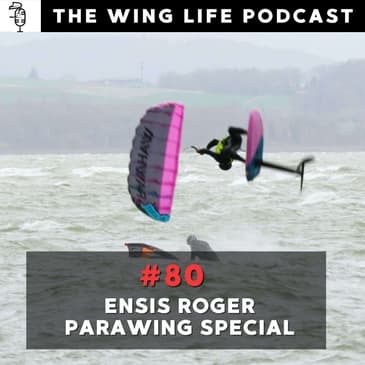




On this episode, Luc, Rawham and Patrick delve into the exciting world of parawinging, a new water sport that combines elements of paragliding and foiling. They discuss the evolution of parawing design, the target audience for this sport, and the safety measures in place to ensure a secure experience. The conversation also touches on the innovations in technology that have made parawinging possible, the development journey behind the product, and the future potential of this thrilling activity. In this conversation, Patrick and Luc discuss the intricacies of power winging, focusing on the best conditions for beginners, the materials and design of power wings, safety considerations, and the future of the sport. They explore the innovations in techniques and tricks, the competitive landscape, and the importance of continuous development in the sport. The conversation highlights the excitement and challenges of power winging, emphasizing the balance between performance, safety, and control.
[00:00:00] Hey everyone, Happy New Year! We hope you are enjoying the holiday season and welcome back to the show.
[00:00:07] This week we have our New Year's Parawing Special with the team from Ensis.
[00:00:12] Roham and Patrick join us today to talk about their Roger Parawing which we will be getting soon
[00:00:18] for testing, we can't wait. We talked about the early prototypes, how it's made, tips for beginners,
[00:00:24] their cold winter testing and much more. So we do hope that you enjoy this episode and make sure to
[00:00:31] check it out on YouTube, we added some great footage. Last week we had our first ever Christmas special
[00:00:37] with North Pro Rider Marley Franco. I had the pleasure of meeting Marley in Hood River last September at
[00:00:44] AWSI. He was crushing it on the dock, pump foiling so I got some pointers from him and it was great to
[00:00:49] meet him also and his family. He graduated from the North Next Gen program so we hope you enjoy this
[00:00:56] episode as we deep dive into his life. Now I want to take this opportunity to thank our team for making
[00:01:01] this show a reality. We have Frank that helps out with media and consulting, Matthias on guest relations,
[00:01:08] and Stefan on audio mastering. A big thank you guys as a lot of work goes into each and every episode.
[00:01:15] Next, I'd like to say a thank you to our sponsors. So we want to say thank you to North Foils for being
[00:01:21] our main sponsor for the 2024 season. We are looking forward to working with them for the 2025 and we
[00:01:29] also have some new ones coming on so make sure to check out winglivepodcast.com and go over to sponsors
[00:01:36] to check out who helps makes this show possible. Lastly, winter is here but there's some awesome
[00:01:44] trips coming up in May. So we ask that you hop over to winglifepodcast.com, click on trips and
[00:01:52] if you're not able to come out to La Ventana from now until the end of February, I would suggest coming
[00:01:58] over to Bonaire in May. We will be helping you learn how to wing foil on flat and warm waters. So
[00:02:06] winglifepodcast.com forward slash trips and we hope to see you there. Now I hope you enjoy the show.
[00:02:20] Welcome to the Wing Life Podcast, where we talk about wing foiling and the lifestyles of those who
[00:02:26] enjoy this great sport. Do we have to oh this is our new year's this is our new year's episode.
[00:02:32] Wow happy new year. Happy new year fellas. Yeah wow it's already different that this year.
[00:02:42] There's some powering in the air. Are there? I see one just behind, it must be Balls. I think Balls is
[00:02:50] doing some sort of a flip just behind us. Could be possible.
[00:02:56] Oh yes, I mean it's almost his birthday yet. I think when the episode came out the birthday was yesterday.
[00:03:05] Hey happy birthday Mr Balls. Happy birthday.
[00:03:11] Yeah. So, Parowing. What in the heck is that?
[00:03:17] Wow, parowinging? A small paraglider for fun.
[00:03:23] To enjoy waves in the water, to experience somehow the ocean or the lakes in the little swells we have.
[00:03:34] And yeah, making some extremely adventures out in the water.
[00:03:41] Now, can we say how long this thing has been in the making? How many years back?
[00:03:48] Parowinging or paragliding? Well, paragliding goes back quite a ways. But do you guys know the initial
[00:03:55] concept of parowinging and kind of how somebody thought that attaching a foil would be a good idea?
[00:04:01] I just remember I saw the first time this kind of pocket wing. And this pocket wing you were holding in
[00:04:10] two hands. And I think the first person I saw was Cynthia. And Cynthia was the first woman who had this kind of pocket wing.
[00:04:21] And tried to make this downwinders with the pocket wing. And yeah, at the beginning I thought, oh,
[00:04:28] yeah, this thing doesn't go really upwind. It's just going downwind and it looks at the beginning a bit struggling.
[00:04:35] And so at the beginning I was like, oh, is this the future of downwind? And yeah, now we're here and we're super happy that we have Cynthia who had the first experience with this kind of pocket wing.
[00:04:51] And now we can do also upwind and downwind.
[00:04:56] Yeah, it's come a long way. Like what was your first version like testing behind the scenes that you guys were working on before you decided to put something out?
[00:05:04] Was there a lot of work on bridle and lines and length and shape and all of that kind of thing that went into the making of it? I can only imagine, right?
[00:05:14] Yes, I mean, at the first time I was trying, I used a training kite. So I had like a two square meter training kite.
[00:05:24] And yeah, I needed a lot of wind to get going. But this thing was so nervous.
[00:05:30] I just thought, oh, that's nothing which will help me to go upwind and downwind.
[00:05:36] And yeah, that's how it started on my side.
[00:05:41] And then suddenly Patrick came up and he told me, hey, I have something like a para wing.
[00:05:52] Yeah, we have two, four, five or eight years.
[00:05:57] We have built a small paraglider in single skin design for a school project by us in the valley.
[00:06:06] And I built a sample for eye dropping and build a sample for this model paraglider.
[00:06:13] And then this goes to the school and then their work that built there in the school.
[00:06:22] Oh, really?
[00:06:23] The first for a completely, I think you have seen the line, the green line, the color who is a
[00:06:32] Balz is riding a lot of time with this.
[00:06:35] And this really high aspect and this completely designed for not for pulling forward,
[00:06:41] for the glide or is a paraglider. And this is a little bit another construction for we will glide with the paraglider
[00:06:50] and the power wing we will drive.
[00:06:55] We will bring you forward.
[00:06:59] Yeah, and the beginning was a journey.
[00:07:06] The last three months I have only Roger is there.
[00:07:11] The main focus.
[00:07:12] Dreaming about Roger, dreaming about parrowing.
[00:07:17] And at the beginning was Michy saying, Michy and Balz, yeah, we must build easy,
[00:07:22] not too much gadgets on this. This was easy and intense.
[00:07:29] We need one day later, you need the deep power system.
[00:07:32] On the next days, you need this and this and this.
[00:07:35] And one week later, now we have too much. Now it's too complicated.
[00:07:41] Yeah, it's too complicated.
[00:07:43] Yeah, with harness and harness line.
[00:07:47] Everything.
[00:07:49] Everything, yeah.
[00:07:49] Yeah, it's really exploded like the imagination what a parrowing should do.
[00:07:57] So really at the first, it just to go upwind and a bit downwind and pack it away.
[00:08:04] Super simple.
[00:08:05] But then we thought, ah, maybe we need harness lines.
[00:08:09] We need to connect somehow to a harness to go easy upwind and we don't have to hold it all in the hands.
[00:08:15] Then we need a kind of depower system that we can really depower the parrowing.
[00:08:20] Then we thought about less lines.
[00:08:22] Then we figured out, oh, maybe more is better than all.
[00:08:25] Then we had issues with performance.
[00:08:28] So in the end, keep it simple and surf.
[00:08:31] And we had the Roger, which is our first sample of parrowing, which we're pretty happy at the moment.
[00:08:39] Yeah.
[00:08:40] Yeah.
[00:08:41] And yeah, it's like we started this project like in August, like with the yellow parrowing.
[00:08:51] And then Patrick came up suddenly after three days with the first sample of the parrowing.
[00:08:59] He has something in his mind, how the shape should looks like.
[00:09:03] Like he wanted to reduce the aspect ratio a bit compared to the yellow one so that it gives them a bit more control.
[00:09:12] And he also has this knowledge from parrowing gliding and what or how he should build it, like all the parts together and all the bridles, how to fix them together.
[00:09:27] So he was really quick building his first parrowing.
[00:09:30] Yeah.
[00:09:31] This was the pink white one.
[00:09:34] And this was a drawing this at the evening at my home.
[00:09:41] And then I go on the next day to my, to my small factory here in Ingelberg.
[00:09:49] And what, what they have for material here to build a small pocket wing.
[00:09:54] And then we have a material here for paraglider, for ultra light paraglider.
[00:09:59] And then I think I come for the first sample.
[00:10:01] We do this with this light material.
[00:10:04] And then you see on the videos from, from balls with the bubbles from the front to the back, the completely wing goes from the front to the back makes, make bubble.
[00:10:13] And this is a two light material.
[00:10:15] And then we have changed material to a stiffer, to a stiffer material.
[00:10:19] Now it's the shape and the profile that the top profile is a lot, lot, lot better.
[00:10:25] Mm-hmm .
[00:10:27] Now, do you think anybody can use it if they just want to go out for a wing?
[00:10:31] Like what's your target audience for this kind of a product?
[00:10:36] The target audience?
[00:10:37] I think it's not the beginners who wants to start water sports.
[00:10:42] So it's really something for people who have knowledge in water sports, like winging or windfoiling or kite foiling.
[00:10:50] So if you are used to water sports, I think you're pretty quick learning parawinging.
[00:10:59] I mean, I think if you have someone who's teaching you a bit, you will learn it in a day.
[00:11:06] Mm-hmm .
[00:11:07] So it's, it's about somehow someone's gonna explain you how to do.
[00:11:12] And the other part is the gear.
[00:11:14] So it needs like really proper gear, like a big board, maybe a downwind board or a bigger mid-length board,
[00:11:22] which has maybe 20 to 30 liter more than you weight.
[00:11:25] Then probably use also a bigger foil.
[00:11:29] Like, uh, I started with a pump foil so I could go easily in light wind.
[00:11:35] Oh, okay.
[00:11:35] Yes.
[00:11:37] And for the parawing, we recommend, um, not too big cause then it's harder to turn.
[00:11:44] So that's why we decided to first make also a sample in three square meter, which yeah,
[00:11:49] is easy to, to control and has enough power for starting in, in, uh, with big foils and big boards.
[00:11:58] Yeah.
[00:11:59] Cause I have so many questions.
[00:12:00] I saw a couple, I was giving a lesson yesterday and I was on a three meter wing.
[00:12:05] And a 72 liter board.
[00:12:08] So I think it's five feet long, but how do you obviously for kiting, like you play within that figure eight kind of thing way above you, you dip the kite down.
[00:12:20] And it generates a good power within the movement.
[00:12:22] How do you do that with a parawing?
[00:12:24] Cause he was trying to pump it like a wing that wasn't working well.
[00:12:27] Then he did these mini figure eights kind of like little movement, quick darty.
[00:12:32] And I was watching him while watching my clients.
[00:12:34] I was fascinated to see how he was going to get up.
[00:12:36] He got up for a little bit, but then fell.
[00:12:39] Um, so is there, especially for teaching that, right?
[00:12:43] Cause I will teach wing foiling and, and stuff.
[00:12:45] Yes.
[00:12:46] How do you generate power if you're slightly underpowered?
[00:12:51] That's a good question.
[00:12:53] I mean, um, as designing part, I think Patrick made a bit longer, uh, bridles compared, uh, to the first sample where it was super short.
[00:13:05] And this helps you to generate somehow also with power and gives you enough control also with the longer bridle puck.
[00:13:13] And the other thing is like, technically you pump less with the hands.
[00:13:19] So you pump more with the legs.
[00:13:21] So I rather would start just holding the parawing in one hand and then pumping with the leg.
[00:13:28] And until you get a bit lift, um, and, and the parawing starts to pulling you, then you can start pumping out of the water and you will probably manage easier to get out the water than just with pumping the parawing.
[00:13:45] Especially when there is a small parawing.
[00:13:47] I think with bigger parawings, it would work better.
[00:13:50] Um, I mean, we are now developing, uh, Patrick made a four square meter and already the bigger sizes go, it's easier to pump cause it feels a bit more with wind.
[00:14:02] Um, yeah, maybe you have to ask why it's better.
[00:14:05] Um, yeah, he's the more the designer.
[00:14:11] So ideally, I guess then you're going in conditions where it will initiate, um, like pull within the foil.
[00:14:20] Lift within the foil.
[00:14:21] You want that thing to drag you and be fairly powered in essence to learn.
[00:14:25] It makes more sense.
[00:14:26] Right, Patrick?
[00:14:28] I think the first, the other, the first, the first part, before you go on the water with the parawing, you make training on, on the beach or on the, you will.
[00:14:37] You need a small area, a little bit wind.
[00:14:41] Then you learn handling the, handling the parawing.
[00:14:44] That's the same.
[00:14:45] Then what we do, uh, in paragliding, we will go, go, uh, ground handling.
[00:14:49] Say this ground handling, you go, uh, on a, on area with a little bit wind.
[00:14:54] And then you, you play with your paraglider for the feeling.
[00:14:58] And, uh, when you are, can these do it closer to ice than, uh, up in the air.
[00:15:03] And you have the feeling for the glider paragliding is, is, is not looking.
[00:15:07] You, you, you do not paragliding and you fly here.
[00:15:10] True.
[00:15:11] And you, you, you will see a little bit the mountain and, uh, and the country.
[00:15:16] And then you, you feel, you feel your paragliders.
[00:15:18] You feel when is the paraglider to, to collapse or before collapse, you feel this on the break.
[00:15:24] And when you will learn to, to control you, you, you parawing perfect on the beach, then you have a lot, it's much easier when you go.
[00:15:34] So I think he has the most ground handling experience cause he has always to test it to adjust some bridal configuration.
[00:15:41] I think he had already more time, uh, changing bridal connections than somehow winging or, or parawing in the water.
[00:15:50] Or my first, my first, my first test on the water was I was a lot of time in the water, more swimming than winging.
[00:16:01] Yeah.
[00:16:02] And, uh, the thing is that parawing was every time in the air.
[00:16:08] When I crash out from the board in the water, the parawing was, the hand was up and the parawing is every day in the air.
[00:16:14] The parawing was no time in the water inside.
[00:16:17] You don't want to have it in the water.
[00:16:20] I mean, yeah, keep that as long as possible in the air.
[00:16:23] So there will be no struggle with any, uh, bridal or any problem with bringing up the parawing again.
[00:16:31] Yeah.
[00:16:31] Let's talk struggles.
[00:16:33] Yeah.
[00:16:34] Is there a way for water to get out of there?
[00:16:36] Does it just feel like a bag or their safety concerns?
[00:16:40] Sure.
[00:16:41] There are.
[00:16:41] I mean, um, when it's in the water, it's wet.
[00:16:45] I mean, we had like on the, on the parawing two different colors.
[00:16:50] So pink and blue.
[00:16:52] So the pink part is the leading edge part.
[00:16:55] So we already know which part is the leading edge.
[00:16:58] So we can grab the leading edge out of water.
[00:17:00] And then we need to first, uh, bring the water away out of the parawing.
[00:17:05] And then you can just, um, how to say, um, yeah, bring the water out of the parawing and bring air inside.
[00:17:14] And then you can throw again and it fills up again with air and you have already power in the parawing.
[00:17:20] Okay.
[00:17:20] And it dries pretty quickly.
[00:17:23] The dries pretty quickly.
[00:17:24] Yeah.
[00:17:24] I mean, it don't have to be, um, perfect dry.
[00:17:28] It just needs to be away from water, which is weight.
[00:17:31] And you don't want to have weight on, on the canopy or on the, the material of the parawing.
[00:17:38] And then the other thing is like the parawing is swimming.
[00:17:41] So if you let go of the parawing, it swims.
[00:17:45] So if you have flat water, it stays where it is when there are waves, probably it can be gone away from you.
[00:17:53] Cause then the, the, the, the waves will pick the parawing and bring it to the beach somehow, or somehow you will lose it.
[00:18:00] That's the reason why we also have kind of a safety, um, connection to our bar.
[00:18:08] And the safety connection is, um, connected to the center part of the parawing.
[00:18:16] Like you have like different, uh, layers on the parawing.
[00:18:21] That's the ABC and the steering line.
[00:18:24] The front one is the, is the A and the BCD and the brake on the, on the trailer.
[00:18:31] Connected the, uh, we connected to the, to the sea lines.
[00:18:34] Sea lines.
[00:18:35] And obviously all that's coming from paragliding.
[00:18:38] There's nothing much new there in, in form of technology, or did you guys have to develop stuff because it's so much closer to you or.
[00:18:47] We, we, we, we know on the paragliding, we can do a B stall in the air.
[00:18:51] We, we pull the B lines, we turn down and then goes the glider, uh, flight, not more forward, only goes down.
[00:18:59] The glider is completely open, a little, it's smaller, or we go only, only go in this position down.
[00:19:05] This is when you are in a storm or, uh, but everything you will fast, you will fast, fast down.
[00:19:12] And this is the same system, what we build down the parowing.
[00:19:17] This is the same as you make a B or C stall and the profile makes, makes collapse.
[00:19:23] So there's no chance of me and 35, 40 knots getting lofted and going for a little paragliding tour.
[00:19:31] Or is that a possibility?
[00:19:33] Just in case.
[00:19:35] Um, about the overpowered situation, um, I had around 35 knots.
[00:19:43] And, um, then the parowing is just, was just pulling me and you have all in the hand.
[00:19:48] So you cannot depower the parowing.
[00:19:51] And, um, then I was struggling a bit.
[00:19:55] I thought like, okay, how I can get up on the foil?
[00:19:57] I couldn't get up cause it was pulling me always over the board down, downside.
[00:20:02] And, and then I thought, oh, now I would like to have kind of depower.
[00:20:07] I can just bring it down somehow and can be safe.
[00:20:10] And that's the reason why Patrick came up with the idea.
[00:20:13] Oh, let's make a safety just in case something happened that people can pull the safety line
[00:20:20] and bring the parowing down and there's no power anymore.
[00:20:24] And yeah, you can, um, bring back your energy and, uh, when you're fine, you start again.
[00:20:31] So you can bring this, uh, safety from, from, from the safety line to, to, you can connect
[00:20:40] to the belly leash or something and then you can drop it and you're safe.
[00:20:45] And yeah, we just wanted that people are safe and secure if they want to go out in really
[00:20:50] strong wind.
[00:20:51] I wouldn't recommend use it in light wind.
[00:20:54] I mean, the, the, then the parowing, when you drop it, it's always depowered and, uh,
[00:20:59] it's down, uh, but when it's overpowered, then it can be dangerous somehow.
[00:21:06] And yeah, that's the reason why we have it just in case.
[00:21:10] And that, is that something unique to, cause I don't think I've seen others, right?
[00:21:14] With a bit of that safety system for the most part, it's just a bar and lines and, and
[00:21:19] that's it, right?
[00:21:20] No, we haven't seen yet.
[00:21:22] So far we are first ones, I think with this kind of system and it's kind of safety and
[00:21:29] maybe something for the future where we don't want to tell you.
[00:21:33] That's fine.
[00:21:34] That's fine.
[00:21:35] That's fine.
[00:21:36] Yeah.
[00:21:38] After.
[00:21:39] Tell me after.
[00:21:40] After we're off.
[00:21:41] I'd love to see that.
[00:21:43] Yeah.
[00:21:45] No, um, we are part of us and develop big fervor at the moment.
[00:21:49] So, um, there is something in our mind for that.
[00:21:52] Um, um, we better take a look now at it.
[00:21:56] Uh, then, uh.
[00:21:58] There's a lot to consider, right?
[00:22:00] Like there's a lot to consider with innovation.
[00:22:03] Whereas you have to test absolutely everything, not only for functionality, but safety.
[00:22:08] And in case something happens and you haven't looked at that scenario and then somebody gets
[00:22:14] it.
[00:22:15] Um, we do appreciate the time and the effort that goes into R and D and testing.
[00:22:20] Cause there's a lot of stuff that happens behind the scenes for somebody who just goes
[00:22:23] to the store and picks it up and has a good experience or a bad experience.
[00:22:27] And it's there's how many hours do you think?
[00:22:30] Like it could be two or three years with stuff in the background before it gets even ready
[00:22:34] to start getting put out.
[00:22:36] Right.
[00:22:37] True.
[00:22:37] True.
[00:22:38] No.
[00:22:38] So, I mean, as Patrick already said, the last three months, we were just thinking only
[00:22:45] in borrowing.
[00:22:46] Yeah.
[00:22:47] And this was not in the plan of the year.
[00:22:49] Yeah.
[00:22:49] It was not in the plan.
[00:22:51] The year was completely full and we have a working three months on borrowing.
[00:22:56] This year had not 12 months.
[00:22:58] This year had 50 months by me.
[00:23:00] Yes.
[00:23:01] I mean, Patrick was working every day on borrowing and thinking of how we can, uh, improve and
[00:23:08] bring a new, new development in it.
[00:23:11] And we already have like new prototypes.
[00:23:14] We think like, wow, that's already a game changer.
[00:23:17] And yeah, it's crazy.
[00:23:19] I mean, yeah, we tested everything like, like this low kite was gone having to, we also, uh,
[00:23:26] trying to do this.
[00:23:27] And, uh, yeah, we're not sure where it goes, but, um, yeah, we have a lot of fun with the
[00:23:33] videos of, uh, of other brands.
[00:23:36] I imagine.
[00:23:37] We looked at, oh, this problem, this guy had, this problem we have, we have for one week.
[00:23:42] And now the problem, the problem is, uh.
[00:23:45] Yeah.
[00:23:45] It's really interesting.
[00:23:46] You see people have also the same problem like we have.
[00:23:49] And, and yeah, I think also they will develop and yeah, you've just understand it when you
[00:23:56] use it once in the water, why is it like this and why it's not like this?
[00:24:00] And yes, I mean, you have to go into water and test it.
[00:24:05] And the good thing is like Patrick has his atelier here.
[00:24:08] He can make the power wings here.
[00:24:09] He can, uh, stitch something together here in his, uh, kind of factory.
[00:24:14] So that's a really benefit we have.
[00:24:17] That's why we went so fast in, in, in developing.
[00:24:20] And we have 50, we have 50 minutes to the, to the lake.
[00:24:24] Okay.
[00:24:24] So what you're able to do is go test, come back, fix, go back and test, fix, and then
[00:24:30] continuously evolve this thing as to what you want it to be rather than shipping it away.
[00:24:34] Yeah.
[00:24:35] Mm-hmm.
[00:24:36] Yeah.
[00:24:37] I think next time we do this, uh, when it's, uh, in summertime, four hours in winter with
[00:24:44] wet lines and you must do the nuts open and close and your fingers and all is off.
[00:24:52] That's horrible.
[00:24:53] Like 25 degrees is absolutely great.
[00:24:56] By zero degrees is, uh, the bridles is frozen and the nuts open.
[00:25:01] And yeah, that's part of your marketing right there.
[00:25:04] Regardless if you're in the sunny Caribbean or minus 40, this pair.
[00:25:09] Or minus 40.
[00:25:10] Yes.
[00:25:10] You tell Carl that.
[00:25:11] Minus 40, hopefully never.
[00:25:13] Yes, I like that, Carl.
[00:25:16] Yeah, yeah.
[00:25:18] Now, now it's really worth the work we do here.
[00:25:23] And, um, I guess we enjoy also the work we do because it's something new and it makes
[00:25:27] us happy.
[00:25:28] Yes, that's true.
[00:25:29] So that's true.
[00:25:31] I was just talking to, um, a company owner.
[00:25:34] He's a, uh, a buddy that I know.
[00:25:37] And he was saying that he felt the future of freestyle winging was going to go back to what
[00:25:43] it was like with strap or with unhooked kiteboarding and stuff.
[00:25:46] And he said, wait and see.
[00:25:48] It's going to be insane what these guys pull out.
[00:25:51] And I just started seeing, I was having been on Instagram too much around Christmas, but
[00:25:55] I did see like you both and balls pulling some stuff and it's like, okay, let me try this
[00:25:59] backup and let me try this.
[00:26:00] And he's like, I told you this is coming.
[00:26:03] Yes.
[00:26:03] Um, yes, I was talking, uh, with, with balls and I thought, oh, finally, if you found a
[00:26:11] sport where we don't have to go really freestyling, you can enjoy the waves and just cruise around.
[00:26:18] And then, yeah, we saw Kyle and we thought, fuck, now we have to do it as well.
[00:26:22] I mean, I thought, yeah, a day after he was calling, let's do it.
[00:26:27] And then I, okay, let's do it.
[00:26:29] So he, he was in Brazil.
[00:26:30] He did it.
[00:26:31] And one day or two days after when we get wind, I tried it as well.
[00:26:35] I thought, okay, now I have to do it.
[00:26:36] But first I went downwinding.
[00:26:38] So I enjoyed a really nice session.
[00:26:40] And now I should do also this.
[00:26:42] So I did.
[00:26:43] And somehow, um, yes, it's like, well, where it goes next with this power wing.
[00:26:49] Now with this unhooked feeling you have like on a wing.
[00:26:52] When you do this handle passes with back mobs, we have seen already Marlo doing back mobs with his, um, um, low kite.
[00:27:03] And yes, I mean, the, the horizon is, is huge.
[00:27:09] And I'm curious where it goes.
[00:27:11] Yeah.
[00:27:12] We think, we think the sports goes in two directions.
[00:27:16] We think the, the, the, the, the basic idea was we will go, we cannot paddling.
[00:27:22] This is, uh, yeah, uh, not easy.
[00:27:24] And with a wing push on the wave, this is, this much easier.
[00:27:28] And this was, that was the goal.
[00:27:30] This was the goal.
[00:27:31] And then by us on the lake, I pushed Michi to the water when is the wind low?
[00:27:35] And the wave is small.
[00:27:36] And I said, we must testing of its work.
[00:27:39] What's the angle in the wind?
[00:27:40] And, and then I see more time for time.
[00:27:44] It's not only for go down winding.
[00:27:48] This, uh, this toy makes fun to ride with them.
[00:27:51] Mm-hmm.
[00:27:52] Mm-hmm.
[00:27:52] And that, I think this was in, in two or three direction.
[00:27:56] One is only a simply stupid, uh, pocket wing and every pocket wing to go in waves,
[00:28:02] poke it in and ride the waves.
[00:28:05] And, uh, we say,
[00:28:07] Yeah.
[00:28:09] It just needs to go for the downwinders.
[00:28:11] When you go from A to B, that's the first person who's going to buy this.
[00:28:15] And then I think we're going to have the second, um, group, which will do upwind and downwind
[00:28:21] and enjoy the, the, the lake somehow, or go to unexplored, um, areas and, uh, make downwinders
[00:28:30] there.
[00:28:31] That's like the second person.
[00:28:33] So it needs to have performance in going upwind and downwind at, but it has also to have an
[00:28:39] option to stow it somehow super easy and simple.
[00:28:42] Um, and then the third one, um, it's going to be maybe the freestyler, maybe the racers.
[00:28:50] So yeah, it's going closer to this kite, uh, surf feeling, I think, I mean, racing with,
[00:28:59] I think in the future we will have races in power winging and maybe we'll be also faster
[00:29:05] than wing.
[00:29:06] So, cause we could go better upwind angle.
[00:29:09] I'm sure we're going to have better upwind angle with, uh, this power wing.
[00:29:15] And, um, so the, the area is, is really huge.
[00:29:20] There's this, we have so many options also in power winging.
[00:29:24] So, um, I'm curious where it goes.
[00:29:27] And this, uh, with yours, with yours, is it only in the hands?
[00:29:33] Do you have a little line that's fixed to a harness?
[00:29:36] Like, how is that connecting to people?
[00:29:40] Um, like how I mean connecting to people?
[00:29:45] Like, sorry, like, are you just holding it in the hands or is there a harness that actually
[00:29:49] hooks up to you to go upwind or downwind?
[00:29:52] Or is it just hand like holding in the hands, uh, with no harness lines or no harness hookup
[00:29:57] or anything like that?
[00:29:59] I mean, we test different, um, connections.
[00:30:03] Um, so the, the simplest one is, um, having in the hand and then go as much you want upwind
[00:30:12] as you can, but it makes you tired.
[00:30:14] And then, uh, we made, uh, or connected just, um, a harness leash to the power wing, which
[00:30:23] I mean, we have not as much space in, in the power wing handle compared to a boom from winging.
[00:30:31] But the reason is because we want to also pack the small handle from the power wing, uh, easily.
[00:30:37] So then we decided to make a, a simple connection, just probably a kind of rope.
[00:30:44] Uh, and then you have enough space to hold, but you can also connect with a harness, uh, to,
[00:30:51] to the, to the power wing.
[00:30:53] So I think the harness helps quite a lot to relax because you can, uh, hook in to the harness
[00:31:00] line and then you steer just with the backhand, the power wing, and then you can make easily
[00:31:05] these downwind journeys, uh, if you go upwind and downwind.
[00:31:09] And, um, yes, I mean, I think balls, uh, really loves that kind of way because then
[00:31:15] you don't need to travel a lot going to a spot, uh, where you just go downwind.
[00:31:21] That's mostly have to do a lot with, um, transport, um, organization and without, um, or with the
[00:31:30] harness, you cannot go upwind easily, downwind easily and having fun, uh, in a
[00:31:35] local area.
[00:31:37] Okay.
[00:31:38] So harness then is an option as well.
[00:31:40] Do you ever think it's going to get inflatable like the kites or is that just the, it's the,
[00:31:45] it's the ability of storing it away is what is the main thing with this, right?
[00:31:50] Yes.
[00:31:51] Uh, at the moment.
[00:31:52] Yes.
[00:31:53] But for sure, um, there will be other options in the future.
[00:31:58] Somehow inflated.
[00:31:59] I mean, what we know from other.
[00:32:04] Yeah.
[00:32:04] I mean, we have built a seven square meter prototype with a Rammar system to test, or this is not
[00:32:12] a pocket wing.
[00:32:13] This is short kite.
[00:32:14] This is, uh, or we have, uh, see on the lake on the first test.
[00:32:20] This we must work on the, it's very dangerous.
[00:32:24] Yeah.
[00:32:24] It's, it's really this, the, the, the single skin, when the, when, when you release the
[00:32:30] handle with our system, this, this collapse, this no pull you forward.
[00:32:34] Uh, the small, as the seven square meter double skin, uh, Rammar short kite, though,
[00:32:41] we will ever just call this.
[00:32:43] This, when it goes into water, the air was in, is inside.
[00:32:47] This is inflate and you have to full push.
[00:32:50] Uh, yeah, yeah, yeah.
[00:32:54] You can with the, with the foil board, you cannot pressure, you cannot stop with the kite
[00:33:00] board.
[00:33:00] You can pressure in the water.
[00:33:01] Then you have air pressure in the, in the kite and then you can restart.
[00:33:05] And there is the problem when you're on the, on your downwind board, you cannot make so
[00:33:10] much, uh, resistance.
[00:33:14] And then you can, you have not, uh, the wind brings not the energy to bring the, the
[00:33:20] short kite up when it's in the water.
[00:33:23] It's on, and this is, uh, Michi called me, Michi called me out of the lake.
[00:33:27] You have, you have to, you have the key of my car.
[00:33:30] It's okay.
[00:33:30] You have the key of my car.
[00:33:31] You cannot.
[00:33:32] Yeah.
[00:33:32] When I, I don't have such a stupid.
[00:33:36] No, wow.
[00:33:37] We have now this system.
[00:33:40] We have a lot of power.
[00:33:41] So this, when, when we go in the direction to the, to the, to the race in the, in the
[00:33:47] future, then I think that's the right way.
[00:33:50] There's a lot of power or we must do a system for forces.
[00:33:54] The system was his safety.
[00:33:57] Yeah.
[00:33:57] So it'll be the same as the, the, the revolution for kiting where I went from a two line to
[00:34:01] the power systems to like everything.
[00:34:04] It would have to be the same thing.
[00:34:05] And this, this is the, this is the big problem with the deep power system in when we are go
[00:34:12] similar to the, to the kite.
[00:34:14] Yeah.
[00:34:15] Kite, you have, you have long line.
[00:34:16] The kite can a little bit fly on the air on the backside to the right side.
[00:34:20] And this is stable in this, in this range.
[00:34:23] When my wing to two meter to this, to the left side, then it's, uh, it's on the ground.
[00:34:28] And this is the problem with, you cannot, uh, a wing on the deep power.
[00:34:32] We have a system where you can hold with, with one line and the wings stand on when come
[00:34:37] a little bit wind from left or right, or from the little bit turbulent from the wave.
[00:34:42] Then he goes a little bit back and left and right.
[00:34:46] And when it's too much, then he goes so much left.
[00:34:49] Does the wing tip goes into water or something, then struggling the wing or the time for the
[00:34:55] long lines.
[00:34:56] This is a, this was a, we have not done that.
[00:34:58] Yeah.
[00:34:59] Yeah.
[00:34:59] I mean, we go close to this direction that we are close to kiting.
[00:35:03] So, but we have to say like, there are some places in Switzerland where it's forbidden
[00:35:11] to kite because of mostly of the long bridal systems.
[00:35:15] And with this power wing, I mean, we should call it being a lot low kite because when we
[00:35:21] call it low kite, then we are banned because then it's kiting.
[00:35:24] And that's the reason why we will bring it more into direction of winging with short lines.
[00:35:30] So that some spots can be driven by this power wings, uh, without any problems.
[00:35:37] Um, and looking at the safety, cause the first thing that comes to mind, looking at the safety
[00:35:43] aspects would be if it fills up with water and this is across the board.
[00:35:47] Um, if it fills up with water and I get stuck in my lines, can I get dragged down?
[00:35:51] Like that's one conversation, but you're saying there's a bit of a release.
[00:35:55] So that is a little bit safer in that regard.
[00:35:58] Cause if one with no release and it just feels like a rock, it could drag me to the bottom.
[00:36:02] If somehow my wrist or somehow my foot is tangled in the lines.
[00:36:06] It can happen.
[00:36:08] I mean, we're doing water sports.
[00:36:10] We're doing, uh, I mean, not super risky sport, but it can.
[00:36:16] Or if a shark eats it, like you're, if a shark just jumps out and grabs the power wing, you
[00:36:20] know, we're done.
[00:36:21] And you get tangled in the power wing.
[00:36:24] Then you're going to have maybe a nice ride.
[00:36:29] It'll be like a ride out to sea.
[00:36:31] That'd be all right.
[00:36:32] Yes.
[00:36:33] With the dolphin, it would be nice.
[00:36:35] Yeah.
[00:36:35] It'd be fun.
[00:36:36] Yeah.
[00:36:37] Okay.
[00:36:37] Okay.
[00:36:37] If it holds the bar.
[00:36:39] Yeah, there you go.
[00:36:39] But no, I guess those are just questions and, and cause it is so new and there's only,
[00:36:44] I think I've only seen three or four people do it in Mexico.
[00:36:47] It's still like 90% kite.
[00:36:49] And then there's a lot of wingers here, maybe a handful of windsurfers, but I saw two or three
[00:36:55] guys.
[00:36:55] I'd love to get my hands on one because I'm about five kilometers off the beach, even though
[00:36:59] I have surf wings.
[00:37:00] Um, I'm curious with a slightly bigger surf wing, whether or not I could get it going and
[00:37:05] just do a cruisy ride down.
[00:37:08] Yeah.
[00:37:09] There does look pretty, pretty fun, especially if you could just store it, go into some waves,
[00:37:14] kick out and then repower it again.
[00:37:16] Uh, have you tested, obviously a friend of mine had it in Toronto and he was saying onshore
[00:37:21] was a little hard, especially if you're getting into some bigger beach break and stuff like
[00:37:25] that.
[00:37:26] Ideally, what kind of condition should people be trying this out in for the first time?
[00:37:30] I mean, flat water is the best option to start with.
[00:37:35] I mean, then you can really focus more on the power wing than, uh, standing up on the
[00:37:41] board and, and, um, get going.
[00:37:44] So when it's flat water consistent around 80 to 20 knots for the three square meter, then
[00:37:51] you will have a lot of fun learning this board because Laura and Flora, our team riders, they
[00:37:58] tried also in the first day, they had flat water and they, after one hour, they already
[00:38:03] could fly.
[00:38:04] So that's, I think the best option, uh, also to start making the turns and, and trying to
[00:38:13] pack and stow the power wing, it's the best when you do it on the flat water.
[00:38:19] So then you not get washed from the waves and, um, yeah, could easily stand up again.
[00:38:26] And so I tried also this onshore condition and, um, it's really hard to get out.
[00:38:33] I mean, the best option is to stow your power wing first somehow in your pocket, swim out just
[00:38:41] with paddling and go as far out as you, uh, yeah.
[00:38:45] That you have enough space before you go back to the, to the shore.
[00:38:49] So, um, then you swim out and can relaunch the, the power wing and then it's easy, um, to
[00:38:57] foil there.
[00:38:57] And I love, I was also in France on onshore condition and it was really nice cause you
[00:39:03] can go sideways crossing the waves with the power wing, writing the waves down.
[00:39:09] And that, that was really amazing.
[00:39:11] Very, very true.
[00:39:12] True.
[00:39:13] And obviously we're starting to see some beginner tutorials out there, helping people learn how
[00:39:18] to get up, how to go upwind, how to go downwind, how to do transitions.
[00:39:23] Um, so obviously a bigger board and a bigger, like higher aspect foil at the start, you're
[00:39:28] saying something that'll glide almost with nothing would be the easiest way to get going.
[00:39:33] Yes.
[00:39:33] Yes, exactly.
[00:39:35] All right.
[00:39:36] Well, what about, and obviously, is there anything you want to touch on with the bridles, um, or
[00:39:42] the kind of materials that you guys are using that makes it a bit unique?
[00:39:46] Uh, does it dry a bit quicker?
[00:39:48] Is it a bit stiffer?
[00:39:49] Like what specifically, or if we can talk about it, cause I'm fascinated about what kind of
[00:39:55] lines and stuff you guys are using for something like this.
[00:40:02] Just regular kite lines or whatever.
[00:40:03] It's all the same.
[00:40:04] There's nothing crazy out of that.
[00:40:06] No, we have, uh, the Nima lines, uh, without of cover.
[00:40:12] Okay.
[00:40:13] This is, uh, this is a more stable from the tension and for the, as I said, that's not going longer
[00:40:23] or shorter.
[00:40:24] Yeah.
[00:40:24] This is a, it keeps, keeps the stretch.
[00:40:27] Yeah.
[00:40:28] Yeah.
[00:40:28] Less stretch.
[00:40:29] The, on the, the best on these lines, we do this, not the stitching.
[00:40:35] We do this splicing.
[00:40:37] And then you have not there on the loops.
[00:40:39] You have not the double line.
[00:40:41] You can, when you pull your finger, the lines on your fingers that you have a smooth, smooth,
[00:40:46] smooth bridle, a thin smooth bridle in the fingers gliding.
[00:40:50] And the Nima is a really nice gliding in the hands.
[00:40:53] And we have, uh, the loops or splicing.
[00:40:56] This is a really, really soft there in the, in the hands.
[00:41:00] And Dary said the bridle was only the point of the development.
[00:41:06] But every day we need less lines.
[00:41:10] Yeah.
[00:41:11] I was curious about that.
[00:41:12] Why there are so many.
[00:41:14] Yeah.
[00:41:14] And I, I, I, I see the say I working many times a little bit as a paragliding teacher.
[00:41:21] Mm-hmm.
[00:41:22] And there we have all, all the paragliders for beginners and we have newer paragliders.
[00:41:27] Newer paragliders have less line and all the paragliders, all the paragliders have more lines.
[00:41:33] And that, uh, spaghetti was the same if you have 10 lines or you have 20 lines.
[00:41:39] You can make the same, the same struggle with the 10 lines, with the handles or with 20 lines.
[00:41:45] The best one is when you have more lines, you have more control on your, on your power wing.
[00:41:51] Mm-hmm.
[00:41:51] And, uh, this is absolutely important in the, in the back part of the lines for steering, for steering, uh, of the paraglider.
[00:42:02] Oh, sorry.
[00:42:03] Sorry.
[00:42:04] Yeah.
[00:42:05] So it'll hold it, it'll hold its shape better and then it'll facilitate turning and more control with the more lines.
[00:42:13] Yeah.
[00:42:13] I say you can do a little bit more.
[00:42:17] What's heist?
[00:42:20] Oh, you get more tangled.
[00:42:22] More, a little bit more tangled with more lines or small tangles.
[00:42:27] When you have less lines and you have, then you can, when you have a tangled and it's bigger, bigger.
[00:42:32] When we go with one line up and then we go to two lines and not the next two lines, then you can all can in the same.
[00:42:42] And when you have a line from the bottom to the top, there is one line, not a lot of knots, uh, who, who, who, uh, get tangled as well.
[00:42:52] Okay.
[00:42:53] I've got done as well.
[00:42:54] And you have only on the break, you have a better, better steering angle of the, of the bridle of the wing tips for more control and the more easier to steering this.
[00:43:04] Like, obviously you guys have probably tested just one line that kind of comes in and then the whole different bridle system, right.
[00:43:11] To see whether or not you could get away with like a two line kite system rather than more of a paragliding system.
[00:43:17] So that's what you're finding is a, the wing, the pair wing will fly better, more control.
[00:43:22] Um, and then there'll be a smaller tangles rather than a big, if that thing loops and saying you might not be able to get it untangled on the water with a fewer lines.
[00:43:31] Yep.
[00:43:32] Oh, yeah.
[00:43:32] I mean, you have, you have this, as Patrick said, you have this, um, points where you go away from, from different lines.
[00:43:40] I mean, you have one rope, it's going up and then it goes out with two and then you get tangled in between there.
[00:43:46] Then you will struggle.
[00:43:47] Then it's, then it's, then, then you have really, uh, a miss, uh, tangling of the power wing.
[00:43:54] Or when the wing go, the wing tips goes in this, in this, uh, foul part in the back and go inside and then you bring this nut outside in the air.
[00:44:03] Oh, for inverting and all that kind of thing.
[00:44:06] Yeah.
[00:44:06] And we have by the, by the restart with the three square meter or we have no time.
[00:44:12] I have no time.
[00:44:13] I'm seeing by you.
[00:44:14] Uh, does, uh, the bridles go at the lines or the bridles with the bridle this, uh, does this set, uh, knots when you do open?
[00:44:23] Um, as the bridle goes, not, not seeing himself.
[00:44:26] And, uh, this is a, the direction, the direction.
[00:44:30] Yeah.
[00:44:30] It actually opens better because then when you don't have knots, you can, they don't get, um, tangled together.
[00:44:36] So it's easier to throw it and open it because when you have knots, you can tangle each other somehow.
[00:44:42] And then.
[00:44:43] Oh, that's what you're mentioning.
[00:44:44] Everything was spliced together rather than knots.
[00:44:46] Oh, that makes a huge.
[00:44:48] Absolutely.
[00:44:49] There's less chance of it getting caught up on itself.
[00:44:52] A hundred percent.
[00:44:53] Yeah.
[00:44:54] That's one reason.
[00:44:55] On the bigger, on the bigger one, we work.
[00:44:58] Okay.
[00:44:59] No, the four square meter is, uh, yeah.
[00:45:01] Finished.
[00:45:02] And, uh, there is a, there we have more, uh, more lines, uh, on the canopy or there are from the size.
[00:45:11] We have, uh, split this some type of, uh, less lines, a little bit less lines on the A and then the B on the B level.
[00:45:17] It's always a compromise somehow, you know, like.
[00:45:20] Okay.
[00:45:20] Yeah.
[00:45:21] This, this, this is a good point.
[00:45:22] We say, we say this is everything in this is a compromise of in, in paragliding.
[00:45:28] We say handling performance and safety.
[00:45:31] There's the three parts of compromise.
[00:45:33] When you have a lot of, a lot of, uh, control, a lot of control.
[00:45:38] Oh no, sorry.
[00:45:39] A lot of performance.
[00:45:40] You have not so much safety or you can do a great handling.
[00:45:45] When you much, when you build the wing with a, with a, with a lot of safety or you have not so much power and, uh, not the performance for one wing.
[00:45:55] And not so, uh, a fine, uh, handling.
[00:46:00] Hmm.
[00:46:00] And this is the, the, the compromise from, uh, yeah, from, from building, from building, uh, paragliders or para, para wings.
[00:46:09] So there on the para wings is more the handling, the performance and the reopening and the turn when bald says, uh, restart.
[00:46:20] She's powering the powering was 180 degrees on the wrong, on the wrong side.
[00:46:25] The leading edge was looks down and the power wing turns automatically 180 degrees.
[00:46:32] That's great.
[00:46:33] This is great.
[00:46:34] You can, we have a lot of, of, of videos or turns.
[00:46:36] Michi make a turn.
[00:46:38] The power wing is on the back of him as one pocket and the mark on the power wing is on the perfect position, uh, over the top of, of Michi's head and, and, and flying.
[00:46:52] Just like chocolate.
[00:46:53] You guys just know what you're doing up there.
[00:46:56] More or less.
[00:46:58] Not always.
[00:47:04] So how far, how far.
[00:47:06] Yeah.
[00:47:08] How far are we from backflip, front flips, like all that kind of stuff.
[00:47:12] Like, obviously you guys are back most, which is pretty much, it's pretty much there.
[00:47:17] Yeah.
[00:47:17] It's pretty much.
[00:47:18] I mean, I mean, um, last time we went out with bolts and we were pushing again and I was missing somehow his feeling and it was great again, pushing each other.
[00:47:29] Cause it's a new sport.
[00:47:30] Cause it's a new sport.
[00:47:31] So we can push again somehow in a, in a, with another, other, um, um, yeah, sport actually.
[00:47:37] And, um, yeah, we tried then already toe sideback mode somehow.
[00:47:42] I, weird stuff.
[00:47:43] I, we couldn't imagine what it was actually, but, um, it was really interesting pushing each other, trying some style of winging into power winging.
[00:47:54] And, uh, it was just amazing, this feeling.
[00:47:57] Uh, and we had really nice waves.
[00:48:00] We could combine stuff.
[00:48:01] We can, could pack the power winging, then riding waves, throwing again the power winging, flipping around.
[00:48:08] And, and yeah, it was just fun in the water and yeah, we really enjoyed like the new sport.
[00:48:14] Yeah.
[00:48:14] Brings new feelings, new experience out of you.
[00:48:18] And, um, yes, I mean, in a week we have wind again, see already the forecast.
[00:48:25] And I was talking with balls.
[00:48:28] Oh, balls has to go to Italy.
[00:48:29] And then he said, ah, maybe I got a day later to Italy cause there is wind for power winging.
[00:48:35] Nice.
[00:48:36] Yeah.
[00:48:36] Nice.
[00:48:37] Last time they, they, they, they, they bounced to me, uh, today I go power winging.
[00:48:42] Uh, I must not inflate this.
[00:48:44] I can, I can win my board.
[00:48:46] Okay.
[00:48:46] My power wing.
[00:48:47] I'm not, was pumping this up this much easier.
[00:48:50] Yeah.
[00:48:51] That's true.
[00:48:53] I think this is, this is our only point in the, for, for, I, I think for, for a, for a kiter.
[00:48:59] Yeah.
[00:49:00] For, for a short session in the evening on the lake, on, on, on, on, on smooth, uh, evening
[00:49:05] thermal in the lake by us is, uh, you can.
[00:49:09] Yeah.
[00:49:09] Just make your power winging.
[00:49:11] Bring your foil on your board and power winging and go one hour, one hour after the work.
[00:49:16] A little bit there.
[00:49:17] The craziest thing.
[00:49:18] We have a lot of, of, of, um, boats in Switzerland.
[00:49:22] And now if the boats, we can chase them like pirates, you know, then you take the power
[00:49:27] winging, then bring it down.
[00:49:29] And then you surf the waves from the boat.
[00:49:31] And I did last summer and I mean this summer, and it, it was really fun.
[00:49:36] So you're chasing now waves when there are no waves from, from, from the wind.
[00:49:40] So, um, yeah, that's also a lot of fun.
[00:49:42] You could steal some chocolate and go for a good ride.
[00:49:45] Not bad.
[00:49:46] Yeah.
[00:49:47] Yeah.
[00:49:47] And the people, and the people are having fun.
[00:49:50] Sometimes you get a beer from them, but usually they're just cheering and yeah.
[00:49:55] Enjoy it.
[00:49:56] And you can wake surf and you need another boat.
[00:50:00] Yeah.
[00:50:00] Some boat skippers don't like to chase behind them, but, um, yeah, many, many like it and
[00:50:06] having fun and like to look what we do.
[00:50:09] And yeah, do you think the GWA will ever adopt this into a form of competition?
[00:50:16] You mean PWA?
[00:50:18] Parawing Wing Foil Association.
[00:50:19] Oh, that was possible.
[00:50:25] This is good.
[00:50:26] All right.
[00:50:27] Yeah.
[00:50:28] I mean, Tom Hartman, let's see.
[00:50:30] Let's see, Tommy.
[00:50:31] If he makes this PVA, I mean, curious about, uh, yeah.
[00:50:37] I'll send him an email after this.
[00:50:39] We'll ask him.
[00:50:40] For sure.
[00:50:41] I mean, he will be also at both Düsseldorf, I think.
[00:50:44] Yes, that's true.
[00:50:45] Yeah.
[00:50:46] They're doing a contest there.
[00:50:48] Yeah.
[00:50:49] Yeah.
[00:50:49] So I'm really curious.
[00:50:51] And, um, we want to try to do also parawing in, in this pool.
[00:50:55] So let's see if this ventilator works in this pool.
[00:50:59] So, um, yeah, maybe we get tangled with the lights in the, in the, in the, in the hole
[00:51:06] there.
[00:51:07] Let's see.
[00:51:07] As long as you just save the area for, for seven square meter.
[00:51:11] Oh, yeah.
[00:51:12] As long as we don't just see you slowly lofting through the screen and onto the other side.
[00:51:17] Oh, yes.
[00:51:18] Yes.
[00:51:19] No, no.
[00:51:20] Above the hole.
[00:51:21] Yeah.
[00:51:23] Yeah.
[00:51:23] Let's see.
[00:51:24] So what, so what you're saying obviously is there's cause this, this thing is so close
[00:51:28] to you and the way it's made and fabricated, it's less likely for you to get lofted.
[00:51:34] But as soon as you get into a more of a paraglide slash blowup kite slash Ram air kite, which
[00:51:38] the racers are using here, it produces so much power.
[00:51:42] And then you have a whole bunch of new safety considerations that you got to take into effect.
[00:51:48] Okay.
[00:51:48] Pretty sure.
[00:51:49] I mean, the safety will, will be a really important thing when we have this kind of low
[00:51:54] kite.
[00:51:54] Yeah.
[00:51:55] And that come from paragliding.
[00:51:57] There is safety as to once and only.
[00:51:59] There is.
[00:52:00] Yeah.
[00:52:00] I can imagine.
[00:52:01] There is another one.
[00:52:02] There is a, when you do a wrong thing, then they say, yeah, then you crash from thousand
[00:52:07] meters to the ground and this is not.
[00:52:09] Yeah.
[00:52:10] And you don't want to be the brand who someone's going to die cause you have forgotten the safety,
[00:52:15] you know?
[00:52:17] Yeah.
[00:52:17] Yeah.
[00:52:18] Yeah.
[00:52:20] No, that's very true.
[00:52:22] Okay.
[00:52:22] Well, is there anything else you guys want to mention?
[00:52:24] That was a kind of cool little introduction to this thing and I can't wait to get my hands
[00:52:28] on one and try it out.
[00:52:30] For sure.
[00:52:31] We need to look that to get a Roger Paro.
[00:52:34] Yes.
[00:52:34] That would be fun actually.
[00:52:36] Cause it's a, yeah.
[00:52:37] 6k downwind here and coming back up.
[00:52:39] I can make it like I'm doing it with the wing right now, but it would be, I think it would
[00:52:45] be epic with one of those little things.
[00:52:46] So maybe we'll talk.
[00:52:47] Yeah, for sure.
[00:52:48] I mean, they just arrived these days.
[00:52:51] Oh, yeah.
[00:52:52] So, uh, okay.
[00:52:55] Yeah.
[00:52:56] Yeah.
[00:52:56] Tomorrow.
[00:52:57] Tomorrow.
[00:52:58] Come the first.
[00:52:59] Come the first stock.
[00:53:01] Yeah.
[00:53:01] And you guys will be at the boot.
[00:53:02] So Frank can check one out when you guys are there.
[00:53:05] Yeah.
[00:53:05] We're going to be, I mean, you as well at the boot.
[00:53:07] Yeah.
[00:53:08] Yeah.
[00:53:09] We were there like the last three years and it was always fun enjoying this kind of pool.
[00:53:14] Cause, uh, up there it's like outside two degrees and then you go in the pool with board shorts
[00:53:20] and, and enjoy the pool.
[00:53:23] Yeah.
[00:53:23] That's really fun.
[00:53:25] I mean, there are a lot of pump fighters as well.
[00:53:27] And it's like a little circus there.
[00:53:29] Cause yeah.
[00:53:30] You're playing around with wings, with paddle to get up and yeah.
[00:53:34] Next year or this year, which is coming to both.
[00:53:37] It's with parowing.
[00:53:38] So we're curious what we're going to do in this pool and how does the race will look like
[00:53:44] from the GWA.
[00:53:47] I mean, it's going to be more a fun event and, uh, but for sure we want to have fun
[00:53:51] and enjoy it and, um, yeah, make a kind of show out of it for the people who are there.
[00:53:57] Definitely.
[00:53:57] Well, I hope that goes well.
[00:53:59] Thanks guys for coming on and giving a bit of an intro and I'm looking forward to seeing
[00:54:03] yours in more detail.
[00:54:05] And, uh, I don't know.
[00:54:07] Hopefully get out to Switzerland eventually.
[00:54:09] My mom went there a couple of years ago and loved it.
[00:54:12] So it's definitely on the list to come out and try some of those.
[00:54:15] I'll bring my 15, 14 wetsuit.
[00:54:18] Cause I think that's what you guys wear out there.
[00:54:22] More or less.
[00:54:24] Yes.
[00:54:25] Yes.
[00:54:26] I heard you were coming out with one that you could actually bend your elbows in.
[00:54:29] So that's kind of exciting.
[00:54:31] Yeah.
[00:54:32] With heating system inside.
[00:54:34] Excellent.
[00:54:35] Battery powered heating system.
[00:54:36] Yes.
[00:54:37] Yeah.
[00:54:37] Yeah.
[00:54:38] That would be great.
[00:54:40] But it must be pretty fun.
[00:54:42] Like must be super fun.
[00:54:43] Working on brand new ideas within this sport that, you know, people are going to have so
[00:54:48] much fun with.
[00:54:49] Definitely.
[00:54:50] I mean, it makes fun for us and I love to, or we love to develop for others that they can
[00:54:57] have fun.
[00:54:58] And for us, it's just makes fun and other people have fun.
[00:55:03] So, and then you can enjoy it.
[00:55:05] And yeah.
[00:55:06] And the part is, can we do that more better?
[00:55:08] Yeah.
[00:55:09] Mm-hmm.
[00:55:09] With it.
[00:55:10] Like, obviously we can't, we can't talk about.
[00:55:13] We can, we, I think we can say the next structure, four square meter who comes in the next year,
[00:55:20] this sells a more better profile.
[00:55:26] We have worked a little bit on the profile.
[00:55:28] We have worked on the completely, every size who come as next.
[00:55:32] We work in permanent at the, at the, at the products and only on the wings.
[00:55:38] And every wing we work when it's the first, the first there, we work forward and forward
[00:55:45] and forward.
[00:55:45] And this process is never stopping.
[00:55:49] And it's not only borrowing.
[00:55:52] No, there's a lot of other things we're not allowed to talk about, but like with, with
[00:55:56] the profile, does the shape of it, does the cord, like the thickness of it, like what
[00:56:01] about all the chambers?
[00:56:02] Are there technical questions like that of making it fly better, creating, generating more
[00:56:09] power?
[00:56:10] Like all those things are quite interesting as well.
[00:56:13] Like how, how did you, obviously that's the compromise of the performance, safety and
[00:56:17] control.
[00:56:18] I mean, for sure.
[00:56:20] We've seen different brands already with different shapes of the nose.
[00:56:24] And, um, I think this adjustment, you can develop a lot in performance with the nose
[00:56:32] profile.
[00:56:33] I mean, that's the only thing which brings you up and gives the lift.
[00:56:37] So if you have a good lift, um, then you have good performance.
[00:56:42] So look also at the nose profile or the leading edge profile.
[00:56:47] Um, yes, that's really important.
[00:56:49] Yeah.
[00:56:50] And the, and the, the, the, the front curved, when you look, the rupture from the front goes,
[00:56:55] uh, more, more down on the, on the side.
[00:56:58] And this is on a single skin.
[00:57:00] You have more pressure outside and you have more tension on the completely canopy.
[00:57:06] Oh, okay.
[00:57:06] That's right.
[00:57:07] When you make a, when you make a flat, a flat paraglider, there's no tension to the left
[00:57:12] and to the right side.
[00:57:13] And this will collapse and the more you give them the, the, the, the, the, the curve to
[00:57:18] the arch of the, of the, of the wing tip.
[00:57:21] You have more pressure outside and the more, more, more tension, more tension, more stand,
[00:57:28] more control.
[00:57:30] This is a little bit more lines.
[00:57:33] That's the compromise.
[00:57:35] Yeah.
[00:57:36] Every day is, uh, on the, on the wing or a paraglider.
[00:57:39] It is, uh, there are compromises.
[00:57:41] The best we, we say, we look from paraglider.
[00:57:44] We look only at the, uh, glider on the cycle.
[00:57:49] Flieger wants to, I do glider, uh, not the motto.
[00:57:55] Glider, uh, normal at the high.
[00:57:58] What's the, what's the word?
[00:57:59] An airplane, a sailing airplane.
[00:58:02] Yeah.
[00:58:03] Or this has a long, long, long, uh, wing.
[00:58:06] Mm-hmm.
[00:58:08] Absolutely high aspect.
[00:58:09] Or, and this is a, this we cannot build on a paragliding.
[00:58:12] This is too big.
[00:58:14] We cannot do too much, uh, um, too much, uh, span on the wing.
[00:58:20] Then you have the wing tip in the water.
[00:58:21] We have only, we work only with compromise.
[00:58:24] Oh, that's fair.
[00:58:25] Cause if it's like 10 feet, if it's 10 feet, for example,
[00:58:29] along and it pulls down, like you're, it's just going to be dragging the whole time.
[00:58:33] Yeah.
[00:58:33] And the next one is when you have, uh, the, you have a two to add with area
[00:58:38] when the wing is flat on the, on the, on the ground.
[00:58:42] And you have, uh, an area when is the wing flat and this is smaller.
[00:58:48] And then there is, when you will more power, it's the best when you have to completely
[00:58:54] area and the flying area, it's the same or in the near.
[00:58:59] Mm-hmm .
[00:58:59] Are this, you can do on a, on an airplane or another thing or not on a paraglider or
[00:59:05] the area on the wing.
[00:59:06] Okay.
[00:59:06] Yeah.
[00:59:06] Do have, you have a flat, flat wing.
[00:59:09] This is the, the, uh, the flat area is the same when you have on the ground deflated
[00:59:16] or when it's in the air on the paraglide curve, you have more flat when it's on the ground
[00:59:22] as when it's in the air.
[00:59:23] Yeah.
[00:59:24] Yeah.
[00:59:24] Yeah.
[00:59:24] Cause the profile will completely fill up and change and then it's designing the right
[00:59:27] profile to get what you want.
[00:59:29] I see what you're saying.
[00:59:30] Yes.
[00:59:30] And this is really interesting.
[00:59:31] We have no idea what, what, what for, uh, for size gift other brands.
[00:59:36] Is this the flat area or is this the flying area?
[00:59:39] Mm-hmm .
[00:59:40] Oh, that's a good point.
[00:59:40] I have, uh, yeah, I've not seen this is a, this is a, that's a huge impact.
[00:59:46] Yeah.
[00:59:46] This, this is, uh, on a, on a pocket wing is this, uh, big number.
[00:59:51] Yeah.
[00:59:52] Mm-hmm .
[00:59:52] I'm curious to see what's going to come out next year and are you guys going to have it?
[00:59:56] Are you coming out to AWSI?
[00:59:58] Do you know if they're coming out in September maybe?
[01:00:02] Yeah.
[01:00:03] I don't think so, but, um, we'll see.
[01:00:07] Yeah.
[01:00:07] The next year is special.
[01:00:10] Yeah.
[01:00:11] Really interesting.
[01:00:12] What's to the other brands?
[01:00:13] We are looking every day on the internet.
[01:00:15] Oh, this looks interesting.
[01:00:17] Oh no, this looks not interesting.
[01:00:18] This is a, it's really, this is the right way.
[01:00:21] I think this part can, yeah, this is a, it's only for us a little bit challenge to look,
[01:00:25] but do another.
[01:00:26] Yeah.
[01:00:27] And then this, this is only we have, uh, this make, this make, so the friendly, the friendly,
[01:00:33] the friendly fight who is faster, who is better.
[01:00:36] This is a.
[01:00:36] That's true.
[01:00:37] A little race to see who gets to the moon first.
[01:00:40] Yeah.
[01:00:41] Yes.
[01:00:42] Well, the Americans make it or we'll be the Switzerland.
[01:00:45] Yes.
[01:00:46] Yeah.
[01:00:46] I mean, it's, it's good to, I mean, this is how the sport is developing and actually
[01:00:51] it's, it's so great.
[01:00:53] We have Instagram for that point of view, cause we, we never had such a huge development
[01:00:59] step.
[01:00:59] Then since we have Instagram or Facebook, whatever, cause you always see what's going to happen.
[01:01:05] Back in the days, it was like, oh, there was a magazine.
[01:01:08] Oh, there's something new.
[01:01:09] And then they saw it.
[01:01:11] And then it took a half year until someone developed another, other, um, uh, tool, toy.
[01:01:18] And now if Instagram, you're so fast, it is so quick.
[01:01:22] So you just need to be quick on the market to, to be, uh, I don't know, on top of, of the
[01:01:28] brands, you know?
[01:01:29] And, um, yeah, it's like, you can be today.
[01:01:33] One of the first brand, but, uh, yeah.
[01:01:36] Two months later, you're not anymore there cause so many brands are there.
[01:01:40] That's the reason why we have to focus are still focusing on developing further with this project.
[01:01:45] And see where it could go and what you like and what you don't like and be a couple of years
[01:01:50] ahead just to stay within that, that popularity kind of scale.
[01:01:54] For sure.
[01:01:54] I mean, uh, BRM with Greg, for sure.
[01:01:58] He's already on the next step of his kind of drawing.
[01:02:02] And, um, I'm curious how it will look.
[01:02:04] And, um, I'm sure there is something coming new also from him, but that's nice cause it's
[01:02:10] always kind of little challenge to see what's happening.
[01:02:14] And yeah, I love to see it.
[01:02:16] And, uh, at the certain point for the customer, they have to decide, okay, this is more my style
[01:02:22] or this is more my style.
[01:02:24] So I think when there are more brands, then you can also more decide what you want in kind
[01:02:30] of style.
[01:02:31] And we have the important thing with Carl.
[01:02:33] We have a huge freedom.
[01:02:36] What we do.
[01:02:37] Yes.
[01:02:37] Oh, that's nice.
[01:02:38] This is weekend.
[01:02:39] This is absolutely.
[01:02:41] Uh, yeah.
[01:02:42] Carl said, you have an ID.
[01:02:44] Let's go.
[01:02:44] Yes.
[01:02:45] Awesome.
[01:02:46] This is all this new winging is new power winging is new.
[01:02:49] There is, there is a, there is a, the room, the room for, for a new ideas.
[01:02:54] And Carl say, no, stop.
[01:02:56] No, this is too early or not.
[01:02:58] Do this not.
[01:02:58] Um, they say, mate, let's go.
[01:03:01] Yeah.
[01:03:02] So he tries to your judgment.
[01:03:03] Yeah.
[01:03:03] The first, the first test with the, the, I sent Carl a video for all your send the
[01:03:08] video from the first test from the, yeah, from the yellow lime, uh, power wing, what
[01:03:15] is for the school project.
[01:03:16] And I, we send him the first video on the lake.
[01:03:20] And he called me and what's, it was on the, on the, on the dinner, on the dinner with my
[01:03:26] girlfriend and then calls Carl and I go and Carl, I say, Carl, I am on the eating.
[01:03:30] And they said, it's okay.
[01:03:32] Eat or tomorrow you build a power wing.
[01:03:34] Let's go do this.
[01:03:35] We need this.
[01:03:36] This is one video, one test, one video on the FC.
[01:03:39] And I said, let's go.
[01:03:41] Today.
[01:03:41] It's okay.
[01:03:42] You can eat or tomorrow we need a, we need a power wing.
[01:03:45] Let's do it.
[01:03:46] Okay.
[01:03:46] He said like focus on power wing wing is now, uh, swing is dead.
[01:03:51] Bring it a bit more back and then focus on power wing.
[01:03:55] Well, Hey guys, thanks a lot for coming on and telling us and sharing this with us so
[01:04:00] early on, and I'm looking forward to having you back on.
[01:04:03] Maybe when you get some new kind of innovation that's out in the market, uh, let us know.
[01:04:07] We'd be happy to chat with you again, but, uh, enjoy your pair of winging.
[01:04:11] And I guess I'll have to email Carl and get on that.
[01:04:14] And maybe I can get a, I'm here for another couple of months.
[01:04:17] So you never know.
[01:04:18] I'll get a bit of testing.
[01:04:19] I'm here till end of February.
[01:04:21] So, uh, two more months, I think.
[01:04:23] Yeah.
[01:04:24] Two and a half more months.
[01:04:24] Great.
[01:04:27] So it's summer every day, every day.
[01:04:30] It's 25, 25 degrees.
[01:04:33] And if you get a cloud, it was, it's starting to get a little bit colder, but November,
[01:04:41] till about, yeah, for a month and a half, I was in board shorts and a two millimeter
[01:04:46] top.
[01:04:47] So, um, Oh, it was just so hot.
[01:04:50] I'm sorry.
[01:04:50] The water was just so warm.
[01:04:52] It was so hot that now it's snowing.
[01:04:54] Yeah.
[01:04:55] Okay.
[01:04:56] We have from here, uh, 10, from here, 10 minutes.
[01:04:59] I got a couch guys.
[01:05:00] I got a couch.
[01:05:01] You come visit.
[01:05:02] Yeah.
[01:05:05] Yeah.
[01:05:06] Uh, I mean, we are used to it.
[01:05:09] And then I like this kind of different, uh, temperature and, and, and, uh, weather systems
[01:05:15] we have.
[01:05:16] That's the reason we have also a lot of wind systems here.
[01:05:19] Very true.
[01:05:20] And that's what I like.
[01:05:21] I do miss the snow and it is that that's what we would ride.
[01:05:25] I would have a six five four with a hood and five mil boots.
[01:05:27] That's nice to get.
[01:05:29] Um, but you get some really good conditions in the fall in Ontario and on Vancouver Island.
[01:05:33] If you ever want to be in the ocean, it's always that stuff.
[01:05:37] Yeah.
[01:05:37] So it's good that you guys are training in those conditions because that's the stuff
[01:05:41] where you could actually have problems.
[01:05:43] If you're in 30 degrees, yes, you could have some issues, but imagine trying to fumble
[01:05:48] with something like that when it's five degrees out and it hasn't been tested in
[01:05:52] those conditions.
[01:05:52] So no wonder, um, you have all the car manufacturers who are making tires.
[01:05:57] They're all like, they're all testing their tires on ice tracks and all this stuff.
[01:06:00] It's not just sunny Caribbean roads.
[01:06:02] So it's important.
[01:06:05] That's important.
[01:06:06] So thank you for freezing for us.
[01:06:10] Yes.
[01:06:11] Oh, it's okay.
[01:06:13] You get used to it really.
[01:06:14] Well, we should make you a little sign or something.
[01:06:17] So yes, I froze for you now.
[01:06:19] Enjoy my product.
[01:06:23] Yeah, no, it's fine.
[01:06:26] All right, guys.
[01:06:27] Well, we'll chat next time.
[01:06:29] And, uh, this is coming in.
[01:06:31] I think, obviously, this is our happy new year.
[01:06:35] So happy new years to the both of you.
[01:06:37] Happy new year.
[01:06:38] Yeah.
[01:06:39] So great.
[01:06:40] Happy new year.
[01:06:42] And, uh, I wish you all the best.
[01:06:43] Have a good year, El.
[01:06:44] Yes.
[01:06:45] Everybody tuning in.
[01:06:46] I wish you all a good year and, um, more toys to come.
[01:06:49] So we're stoked and looking forward to chat with you guys soon.
[01:06:52] Cool.
[01:06:52] Cool.
[01:06:54] All right, everybody.
[01:06:55] Catch you in the next one.
[01:06:56] Thanks a lot, Luke.