
On this episode we talk to our panel of wing foilers from around the globe about how they got into wing foiling. We discuss what beginner gear they chose to learn on and why. Special Guests Include, Tom Ben-Eliyahu, Guy Lacroix, Thomas Boyce, Peter Williamson, Noah Rainey and more.
Listener Note: Recorded live on Zoom. This is a round table conversation and the audio quality is not studio quality.
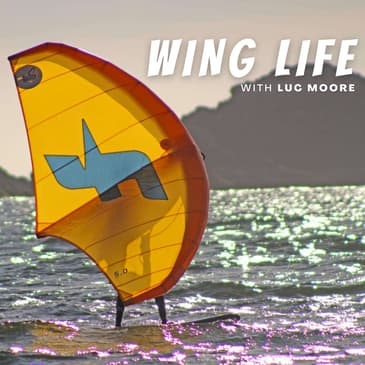
[00:00:00] Welcome to the Wing Life Podcast where we talk about all things Wing Foiling and the lifestyles of those that do this great sport. On tonight's episode, Introduction to Wing Foiling, we are talking with a dedicated group of Wing Foilers from around the globe.
[00:00:22] We will discuss what year they learned on and their recommendations were beginners. Stay tuned and enjoying! Just to get everybody starts, thanks everybody for joining us tonight. We want to do an intro into Wing Foiling, how to get started, what year to use and then
[00:00:45] obviously questions feel free to be like an open format. So if anybody wants to kind of take charge, normally what we do in our group from the Eastern, it's Caribbean Tom, that is one of the high savvy technicals. So we could always let Tom and Fr. Min site.
[00:01:06] I know that my friend Thomas here from Ottawa, he just started Wing Foiling so he's going to come with a completely different perspective, same with G. And then some friends from as well as Noah and I were sailing and knitting at this year,
[00:01:20] working out a bunch of stuff as well. So I think all of us come with this little breadth of knowledge from our different perspectives. So kind of stoked to hear everybody's story, how we all kind of got into it and then why
[00:01:33] gear were we're using and what we like about it. And I'm going to throw it up in the chat, the group tonight. And I might throw it on YouTube as well just so we can have a bit of exposure in that sense
[00:01:44] of people can quickly look at it. Yeah, it sounds like a great way of starting it off. So Luke, do you want to give us your background? Sure. Yeah, I can start off riding these things. Sure, I can start off quickly.
[00:01:55] Yeah, so I'm riding I'm a team rider for dirty mermaid water sports here on Vancouver Island. I started riding for Jesse this spring. So I'm riding KT gear, key to bullboards, wings. I'm still on Armstrong foils. I did ride the Maui Fin Company foils. They are pretty awesome.
[00:02:16] I just haven't fully switched over yet. So it's my third season and it's been going pretty good so far a lot of hours. A lot of hours. But so far it's pretty good. All right, maybe clockwise. Thomas.
[00:02:37] All right, Thomas here in Ottawa, so I began with wind surfing as my main sports in size of 13. And then this this winged thing and things showed up in the garage when I was there. I don't know if I can remember what year that was.
[00:02:52] And we all kind of poo-pooed it because everyone was struggling in that first year a few years back. But as soon as I saw a video of it, I knew it was going to be massive. And we had started doing some wind feeling,
[00:03:07] grow with some wind falling without wind surfers. And as soon as I saw a wing falling, I knew wind in falling was going to die and a wing falling was going to take over. So it took me some time to get the right gear.
[00:03:21] And so I think gear is really critical. We can talk about that tonight for sure. And it was, it's very costly of course to get the good gear and took me a while. And once I got good gear and I was ready to rock and roll this spring,
[00:03:35] I've just been going crazy with it. It's been really fun. All right, you're up, Noah. If you can, if not, we'll catch you after. Yeah, what's up guys? Hey, I'm Noah. Originally from the UK, but now in Salzburg, New Island. Let's see, it's probably my second season.
[00:04:00] On Salzburg, we have light winds. So it's been tough to progress here on the slice. I've been traveling to really get the practice lapse in, spend lots of time at nip net, of course. I'm pretty much anywhere else. I can get the gear too.
[00:04:14] Let's see what I've dabbled with different gear, of course, from large boards, kind of settling around 100 lead to mark now. And I would be lucky to use a naughty, chill mix boards. I get a marching band. He's a shapewriter of Victoria.
[00:04:31] He's still practicing, he's still figuring it out, but I like to support the local talent. Like that hopefully we can get high quality shape in the community. We have them, you know what I mean? But we just got to support him really.
[00:04:44] So yeah, I write his boards, I write Sapp foil foils, which I used to with Kai Foil, so that was in No Brain. I'm happy to on a slingshot wings, the sling wing. And they're great, but actually...
[00:05:00] Are you an intermediate level wing foiler looking for an epic adventure this winter? If yes, I suggest you reserve your spot for the wing foil expedition, hosted by Agua Salada, Baja California Sur adventures, this coming January. This trip is going to be absolutely amazing.
[00:05:17] It includes oceanfront accommodations, airport pickup and drop-off, fresh locally made food and snacks created by a local artisanal chef, yoga, massages, five days of wing foiling, and the best part over 100 kilometers of boat assisted downwinders. Just imagine the freedom and peace in mind that will provide.
[00:05:39] I look will be one of your wing foil coaches on this trip, so it'll be a great time to know the enjoy the downwinders, but also ask questions to approve your writing.
[00:05:48] Our trip will take you on different parts of Laventana and Baja that you would not otherwise be able to access without a boat. To learn more, visit winglifepodcast.com and click on trips in the main navigation menu. Once again, visit winglifepodcast.com
[00:06:04] and click on trips in the menu. With only eight spots available, we know it's going to book up fast, so we recommend that you act quickly. I'll see you there. Just I'm about to receive some wings from on kiteboarding, which I think is another Canadian brand out of
[00:06:20] for there. Slash designed on and tested on Maui, so I'm excited to try that on wings. Any day now when they arrive? I think you'll be stoked on those little bias in put that. Sorry, I'll wait for my turn now.
[00:06:36] It's a little bit left to hear that. It's obviously a smaller brand, but it's a cool there's some feedback. Chris, you're up next. Sure, I'll just turn on my video here.
[00:06:50] I'm a beginner, so I'm in the process of acquiring gear. I have a tide, I have a board and I'm planning to get a foil in two days or something like that, or I'm hoping to do ready for this. I'm probably your least knowledgeable person here.
[00:07:11] Hey, that's okay. Thanks for joining us. Thanks for sharing too. All right, Caribbean Tom. They taught me you there? Maybe not. All right, next would be anage. We'll come back to Tom.
[00:07:43] Maybe not. Can you guys hear me? Sorry about that. I was, sorry, Tom. It's muted there for a little bit. That's all right. Couldn't find the onion. Yeah, so thanks for hosting this. This is super cool. And welcome to everybody that's new
[00:07:59] to the sport. Hopefully we can help you guys out to get you set up and going. I did a little shout out for on there when Noah mentioned it because I'm actually a team writer
[00:08:11] for them and I helped the product development for that company, which I'm pretty soaked on. It's something that I've been doing for the last year and a bit. And we have some pretty cool
[00:08:20] things in the pipeline, even the products that we have now are pretty cool. So very cool that you got to know, I'd be really curious to hear what you think of them. I've been winging for four
[00:08:33] years now. So I got the first prototype from Doa Tom because I was writing for those guys at the time about four years ago and we got it kind of like fresh out of the garage before everything was
[00:08:48] before you could even get production ones. And that was really cool. That was a really sweet opportunity to be able to get on that early. It was just, it was such a unique thing to be able
[00:09:01] to do because we had been win-foyling quite a bit before that. So the base was there and then you put the wing together with the four and then all of a sudden, wow, you have this amazing combination
[00:09:13] that's so versatile. I remember in the first years that I was writing every people were kind of looking at me funny and being like what is this guy doing? And then they started realizing
[00:09:22] that I'm always writing the same board and the same foil and the same wing and they've spent half their session trying to decide what when surfing sale to rig. And they started figuring it out
[00:09:32] from that and like oh, maybe this is interesting. And you know, once you get on little boards and stuff like that then it's a completely different feeling than you can have with any other
[00:09:41] sport that I've tried. So it's really cool and I think what's really neat about is that it's a sport that works really, really well for average conditions in terms of average conditions
[00:09:51] that most of us five access to into a lot of fun. So I think it's definitely going to keep exploding. I think it's a very accessible sport if you're on the right gear and I think that it's something that is only going to keep getting bigger.
[00:10:06] And it is now. That's true. No average conditions, you're absolutely right like even here sometimes when you're on a smaller lake and it's 15 knots, you've got some small little rollers and you can kind of start to surf those and play around with them and those are those
[00:10:23] a huge point. Well, thanks for sharing Tom. We have Angela Paznext if you are available and if not we'll jump over to Sophia. Hi, yeah I'm Sophia. I'm based in Santa Barbara just
[00:10:47] learning how to do this. I started in July pretty much. I think I'd done maybe a toe foil session before that but yeah it's pretty fun. You got pretty light wind here in Santa Barbara. But yeah
[00:11:01] I still don't know how a ton I use a sling wing 4.5 most of time. Just graduated down to a 65 leader cloud nine board and I use a sling shot F pump like a pretty big foil it's like 1700
[00:11:19] centimeters. So what is that square here? The area. Yeah and I've gone I just want to put a river try that out like we could go it was pretty cool but yeah just learn in and it's cool to
[00:11:34] hear about all the new gear trying to figure out like what to get next. So yeah thanks for putting this together. Yeah absolutely and thanks for joining us. Thanks for sharing. All right Adam you're up next.
[00:11:48] Hey, good evening and afternoon everyone. I'm Adam and based in Courtney BC and no experience when foiling just joined the local Vancouver Island Facebook group and have been kind of interested in the technology recently sold a sailboat and
[00:12:09] the moaning opportunities get out on the wind and water. And so yeah just interested in learning about where I might try it out check it out locally before I commit to gear I do have to run
[00:12:22] in about 40 minutes. So yeah we can all message you after Adam I'm in Victoria right now but I think I'll be going up to maybe a combox before I head east so I can always chat about a few spots
[00:12:37] and stuff. But yeah absolutely I think engine robin I think you're up next robin. I just hey I just wanted to send a quick note to Adam. I'll hand it in hit me up on Facebook I visit
[00:12:49] unfoiling combox quite a lot because my in laws are there. So if you don't catch up with Luke or even if you do catch up with Luke let's hang out I would totally point when the right direction
[00:12:59] up and combox. So basically it's all about goosefish just go hang out I can spit when that's windy and you'll meet the crew. Thanks to both of you appreciated and I'll also touch base with you. Cool thanks Noah. All right Robin you're up next good sir.
[00:13:16] I'm gonna unmute everyone. Yeah I'm Robin I'm a local to Victoria area I've seen yourself there Luke a couple times at Ross Bay. Sorry very last night but yeah that pack in front of you. That was a mean attack man. That was really clean. I'm also go by
[00:13:50] unusually large robin on Big Wave Dave for anybody that's on there. I've got I was a wind surfer forever back into the 80s and then wind foiling came along and I never bit watch my buddies do it
[00:14:12] try it a couple times on their gear and but right around that time there was also these rumors of wing foiling and peering though there was nothing available or in production at
[00:14:23] the time and then I managed to get a probably the I thought I got the first production wing on the island back in 2019 and the rest is history just became instantly hooked with it and one of the
[00:14:43] founding members of the Ross Bay foil club. Nice I got one of their shirts it's awesome. Going off mark yeah yeah that's pretty cool because we got fairly big turnout there like if
[00:14:57] we had like about 20 guys out there last night so yeah it's a pretty active community and more and more people from all walks of life for getting into it. Nice well hey thanks for sharing.
[00:15:11] All right Carl you're up next. Hey everyone I am in Scotland so I don't have good video but five years ago I got the first a slingshot foil from silent sports and started to wing
[00:15:32] a wind foiling under my old Big Techno because I didn't commit to getting a dedicated board and it actually is a great way to learn and I'm having success teaching people wind foiling who've been
[00:15:46] wind surfers on that long board that exits the water smoothly and then doesn't result in a catapult when they wait out and then two years ago with the foiling that I'd already done I got
[00:16:02] the wing and this year I got bored with footsteps and discovered that you can drive infinitely if you don't switch your feet and it's just oh my god what a feeling doing like 20
[00:16:17] 30 40 jibes in a row staying up on the foil and last Friday I jumped for the first time so for a guy that retired a year and a half ago the sport just came at the exact right time
[00:16:33] for me to have something to learn and do and most importantly teach I run a wind surfing school called the lunch pad been surfing academy up on Georgian Bay and that's my retirement passion
[00:16:48] so hey that's cool I had my first wing foil student get up and start winging last week so that's pretty fun absolutely hey thanks for sharing all right thank we got Christopher next
[00:17:06] Christopher's iPhone hi everyone nice to meet you all so it's good to see a couple of familiar faces on ready I'm based in Victoria BC I moved here about five years ago from the Virgin Islands in the Caribbean
[00:17:26] we're having kite surfing for a little while and surfing and really been missing water sports being up here it's been a big part of my life that I haven't really been able to kind of really
[00:17:36] take advantage of and you know it was a little bit intimidated about kiteboarding here just because the beaches are a lot busier than when I'm used to wind a little bit weird and just the additional
[00:17:50] you know safety aspects of it and getting people to help launch online you it's a bit tricky my girlfriend didn't want to do it so yeah wing foil really appeals me that you could just kind
[00:18:00] of grab this stuff launch from anywhere you got steady wind and head out relatively safely so I've just just recently bought some stuff I've got a five eight fanatic 125 liter board
[00:18:16] and a five meter do it's own kite I just got out once it was a race bay when there wasn't enough wind and kind of drifted around there and then just this last weekend went out at knit bat where
[00:18:29] I was actually able to get up and foil and ride in one direction so I'm 100% hooked and can't wait to get out there again and yeah I'm just really mostly stoked about what I'm also welcoming community
[00:18:39] and supportive community being able to find it so far so thank you guys very much absolutely. Hey thanks for sharing you got up pretty fast. I was very happy with it. Yeah I was
[00:18:51] steady wind with it so I had one jet ski lesson a few weeks ago which I think really really helped bring it up in that net to give me a toe around so that made a big difference. Oh cool awesome yeah
[00:19:01] I was teaching for Marie to string a little bit so I talked for the month of June and knit nine and then I had did you online stuff so I stepped away but glad Bruno was able to take you out
[00:19:11] that's awesome yeah I mean see what a place yeah absolutely all right good serve Peter you're up next alright let's see if I get this thing turned on here is that working it is here we are how are you?
[00:19:27] Good you yeah so I'm an auto-gees roll king of Ottawa. Yeah yeah so I started I was been surfing back through the 80s and started citing in 2000 still kept been surfing and citing started
[00:19:41] foiling in probably kite foiling about six years ago and I live on the auto river so I have lots of water I used but there's you know launching issue so citing was never going to be
[00:19:57] the sport because you know high water there's the trees right up to the water's edge and it's deep and stuff like that so when surfing kind of always was there for me. Do some winged last year actually
[00:20:10] I saw a Tom that's the year before I went oh surfing the waves okay now I get what it's all about because I see at the garage you ever before that and no one can do how to do it. Yeah I was kind of injured
[00:20:22] last year did got like 10 days last year and then this year I think that I'm probably pushing 50 days on the water so it's been good awesome yeah that does sound like it's going good alright hey thanks for sharing Peter. Yeah all right I don't uh...
[00:20:43] water. I don't want to screw up your name there but you're up next guitar. Can we just try and see if it can get the sound? Sure. We can't see you but we can we can hear it. I can't figure the video on this iPhone but
[00:21:09] yeah I moved to Victoria about 10 years ago and had kids and I wanted to get into some water sport given that we so have so much access to the water and I saw these guys win surfing,
[00:21:22] win surfing in the big meal of summer and I said I was on a stand-up paddleboard with the kids and I said now it's time to take this to the new level and it seemed easy when I saw people doing
[00:21:35] it but I got a set up in the big meal of the summer and found it really challenging and I've been out about six or eight times and I haven't been able to get on foil yet perhaps because
[00:21:49] I'm just going on light wind days and also I made the mistake of getting a pretty small board it's a 97 liter rock and roll from inches and I'm about 80 kilos and in the first sessions
[00:22:05] I could barely stand up on it without you know falling off even without foiling so I'm really anxious to get some feedback and advice from this really friendly group I'm really glad to see today. Awesome well hey thanks for joining and thanks for sharing
[00:22:22] and we're going to get into that as soon as we hear from Mr. Ghee up at the top left. Mr. Sir hey everybody so I'm in Ottawa too with Thomas, Peter and sometimes Luke
[00:22:33] a long time when Sir for three years ago I got into wind foiling. I bought this thing shot board, the wizard and you know the 99 front wing here and then the wing foiling
[00:22:52] I started two years old last year and it was supposed to be like for late wind and keep the wind surfing for the higher winds but as a lot of us know you want to test yourself on the wing
[00:23:03] as you get better with the higher winds on your four two wing so I was on I started with arm strong foils and this year I switched to F1. I mostly because I wanted I was on the other
[00:23:19] old generation one mass and stuff and I wanted to get onto the higher aspect of wings and stuff like that but yeah really really loving you're loving F1 yeah loving F1 us and yeah it's fine okay
[00:23:36] cool all right well we're all introduced and so what did we want to cover first we want to go over maybe boards of choice size according to kgs and then maybe we can go into foils after that
[00:23:53] going to wings after that I think we've all learned on different stuff I started wind surf foiling at the start I found for myself that was the easiest way to get into it if you have a
[00:24:03] wind surfing background because that sale isn't attached to the board and all you really had to do is lean back a little bit with a bit of speed and your foil would pop out. I was on a wizard 105 and Tom
[00:24:14] was able to help me get started in that and then once I had a little bit of a foundation of foiling from there taking the sale off and putting a wing on felt fairly natural so but maybe we could
[00:24:27] do a quick run around as to see what boards people have used and and then what they liked about them so I started the wizard 105 away about 150 pounds it was 510 I believe so just under six feet
[00:24:44] and for me for learning it was awesome so that's my intro story but we can kind of go free for all I guess it doesn't really matter who says but we could just kind of go ahead time.
[00:25:00] So all well continue on that's the I started on the the 150 the slingshot 150 which was a huge board with a huge front wing but you know Thomas and I are heavier riders and when it was
[00:25:15] appreciated the extra float and stuff and then this year I went down to last year went down to at 115 which was about a plus 20 for my 95 kilos and just the last couple weeks I've been down on
[00:25:27] a I'm on a 90 liter which is a minus 5 and I'm handling that pretty well. And then just you that was 2 to 3 years, Guy? What? You're first your first year was on the 150 then you went down and see his number two
[00:25:44] down to the 115 okay and then just last couple weeks in the 1990 okay and now that there's no bottom limit. I don't know why you've worked you've worked hard. I'll go next we'll keep the
[00:26:03] Ottawa crew going. Sure I just started this spring I was just so happy to finally get a foil that was going to work and be able to forward that. I had seen Luke and Peter and all the
[00:26:17] little guys here start to get a jump on me so I really needed to get going. I built my own board Peter when he said I actually taught me how to build boards he's really good at it and I believe
[00:26:28] past that long to other people in the community so there's a bunch of us building boards now in Ottawa so I built a 135 liter wind foil board and I don't think I even knew about winged
[00:26:40] foiling. I did a little bit of wind forling on it but never had the right foil from my massive size on the same weight 25 kilograms as G. And then as soon as I was able to get a good access foil nice big one it's I think it's
[00:27:02] 1850 centimeters squared it's their broad spectrum carb it's an amazing foil for starting. I just slammed that this spring in the cold water on my big board 135 and as soon as I got a windy
[00:27:18] day I was off to the races and then I made the I'd already built actually a smaller wing foil board and anticipation so pretty much right away I went down to a 105 liter board and I've been
[00:27:34] riding that and I've just started construction on another one that's going to it's probably going to be about the same volume but 100 but the the design's going to be totally different and
[00:27:45] it's going to be a lot better and I'm also going to build a 70 liter board this fall so it's been really quick progression. All right I'll chime in here on some board size stuff loaded to
[00:28:01] I didn't like some of the other guys said I I started off with a wind foil board just because that's what that's what I had and I would say for someone who's starting out that's actually really
[00:28:14] good it's not not the kind of thing you're going to buy and spend a full season on maybe but I had a wind foil board I built it was probably 110 liters or something like that and I'm about 75
[00:28:28] kilograms yeah it's their flat their wide their stable my brother and his daughter have been learning at the cottage this year and I brought out my you know 100 liter wing board that I built
[00:28:46] I'm a brother that got going on that okay but he's happy enough just to hang out he's using my wind foil board because I don't wind foil anymore but they're very hard to drive they're they're
[00:28:57] great for getting the feel for the foil and getting like easy lift off straight track and there's a lot of swing way up at the front because everything sets so far back that driving a pretty hopeless
[00:29:09] well it's not I mean it's it's a lot harder to drive or just there's a lot of swing way up there but for the first if you get your hands on one there's a lot of people I think that started
[00:29:19] wind the foiling that are switching over to wean so if there's that you know someone with a wing foil board sorry with a wind foil board this kicking around I think that's a good option
[00:29:30] because it's a good way to get the first few runs on something that's stable and floaty but I wouldn't shell out very much money for one of those I'd see if I could borrow it because it'll be
[00:29:40] faster pretty quickly I think yeah I'd give that advice to a gampom I think who is struggling in my picture here I'm on this sting ray the fanatic sting ray 140 and I've got a slingshot 99 so the massive front wing underneath that or the foil
[00:30:03] and I'm using a six meter due to tone wing there and that's super easy that's what I taught my beginner on last week and with a bit of wind surfing background he pumped and got up on
[00:30:16] the foil and so he's had six wind foiling sessions and he was able to wing foil on the gear you see in that picture in in the first couple of minutes he was going back and forth in both directions
[00:30:31] so I degree a big old wind foil board is the best first wing foil board because you can stand on that and you're completely stable you're not trying to balance and then you just pump a little bit
[00:30:46] with the wing and point your toes and up you go yeah that's a good point like one of my clients last year trying to create on Vancouver Island he bought himself I think it was an old
[00:30:59] old racing board like a old it was probably 200 and some plus leaders so what we did for him to start off is we actually because he was a little bit older what we did is he started sitting on the board
[00:31:12] and then he went to gealing on the board for toeings and Neil and we were able to get a bit of control to understand the basics of it and then once we did that he was able to try to
[00:31:23] standing from there we were able to throw the wing on and then do that as well so we kind of broke it down to small steps but that big board was was amazing yes I had a lot of swing weight
[00:31:34] but oh it was such a wide plank like and in so long and so much volume that it helped him at a lot so it doesn't even really matter I guess for your first board a cheap wind surf foil board
[00:31:48] seems to be like that's what most of us learned on I'm just gonna hop in here because I'm hearing a bit of a common trend from a lot of people and I think for people getting into the sport today in 2022 there's other options that are
[00:32:05] essentially a little bit easier to use than when surf foil boards I as well have learned early on on a when surf foil board just because there is nothing else available but actually the first
[00:32:15] board that I got to use was this massive subfoil board which was about 145 liters and almost I think six and a half feet long or something like that and and that in my mind is actually
[00:32:30] the easiest thing to learn on the reason being is that you have all the volume and all the length of these one surf foil boards but the foil is considerably far forward and the volume is more balanced
[00:32:43] so it ends up being that you're standing in the right spot as you're taking off the board is just a stable if not more than a one-fold board and once you're up in the air as much as it's a
[00:32:53] really big board it doesn't feel as big because you have a lot less swing weight so it's a board that you can actually progress forward and a little bit as well so I'd be very you know if I was
[00:33:04] somebody getting into this sport with zero when surfing zero kite surfing experience before this is my first one sport I'd be very inclined to recommend that kind of a board of big
[00:33:16] subfoil board that you know you can then use to initiate people afterwards or you can just use it on the wind is really light because it remains a board that's still usable and still fun to you
[00:33:28] and of course if you actually have access to subfoil in conditions which a lot of people do because it doesn't really take that much wave to make it work and it makes a great set of foil in board
[00:33:39] so in my mind that's kind of the ultimate beginner board and there's a lot of kind of inflatable boards are coming on the market these days that are being used as beginner boards as
[00:33:53] well and my general spiel on nose is that if you live in a small apartment and drive a smart car or travel a lot that nuts an excellent option but if you have the space for a rigid board
[00:34:07] and you can find one for a place that's reasonable because the inflatable is our little bit cheaper for sure I do find the rigid boards are easier to learn on then then the inflatable is they
[00:34:20] have better glide on the water and most of them will be touched back down they forgive more so the board will bounce off the water instead of kind of sticking like the inflatable words do and so that just
[00:34:31] makes it easier when you're learning. I think for people that are learning if you're looking at a subfoil kind of board, if you're going with your waiting kilograms plus 40 or 35 that's probably
[00:34:46] kind of the sweet spot for that absolute beginner board if you're somebody that has a little bit more experience with wind surfing and kite surfing ideally kite forling and kite and wind forling then you can start with a smaller board if you're buying something new that you can
[00:35:04] start with a board around plus 20 plus 25 leaders to your waiting kilograms and that's bored that you're going to be able to progress with quite a bit before you get off that board
[00:35:16] you've got a while for most people you've got at least the season if not too and even at the end of that season or two that remains a really good light one board so I think that you know
[00:35:28] in that kind of range of volumes that's probably what's going to be the most applicable for most people getting into the sport. I heard our friend I think he left now unfortunately but that was starting on a 97-liter board when he weighs 90 kilos I believe or 85 kilos
[00:35:47] that's really rough you know you're especially coming into it without any sort of wind sport experience from what I understood that that's a really steep learning curve so I think you know not to discourage people from doing like that but I know that people don't want
[00:36:04] to buy a lot of boards and change them often that's totally understandable at least things are expensive and you want them to get the most out of them but I definitely wouldn't recommend a board
[00:36:15] smaller than plus 20 leaders to your waiting kilograms for somebody just starting off I think you're just asking for a hard time. Those are good points Tom and Peter just threw something in
[00:36:31] the chat here and I'm not sure if the recording covers the chat or not so he said here that I think the common theme is a really big board for the first few days I don't think there are any
[00:36:40] subfoil boards in Ottawa so it depends on what you have available so that's a good point Peter definitely I think that's why some of us learned on the on the wind surf oils but that is a great
[00:36:52] great point Tom and maybe so you were saying we're looking at 25 leaders do you want to explain the wait to a to leaders ratio Tom? Yeah absolutely so I think what's the easiest way to kind of
[00:37:10] compare board size to rider size is by looking at your weight and the volume of the board and I think without getting overly technical there's a lot of other aspects that make a board
[00:37:25] easy or hard to learn on but if you're at least starting off with a reasonable amount of volume then that's really a good a good start so what you want to do is you want to find your
[00:37:37] waiting kilograms which is your way in pounds divided by 2.2 or you can google it and figure out what your waiting kilograms is or you just have a scale and what the wait in kilograms so let's use
[00:37:47] an example of a hundred kilo rider just because it makes the math really easy and super simple for everybody to see if you weigh a hundred kilograms and you are a complete beginner you've never
[00:38:00] touched a board before you haven't went surf before you have a foil before and you're going to want to be in that your weight plus 30 to 40 liters so that means that you would be looking at boards
[00:38:13] that are a hundred and third breach of 140 liters if you already had some experience and you're going into it looking for a board that's going to last you a little bit longer and potentially be a
[00:38:24] lightman board for you later on as you progress then you can bring that down to about 20 or plus 20 plus 25 and then you're at 125 liters and then what's nice about that size about that plus 20 and plus 25 is that it really compliments well a smaller sinker board eventually so it's
[00:38:44] a board that can stay in your quiver and long term so once you progress past what what you can do with that plus 20 board at this point you know we're a pretty confident rider we're making
[00:38:55] all our transitions or basically all our transitions and we're looking for something a little bit more nimble and more fun for a little bit higher performance riding at that point you can go to your
[00:39:07] minus 20 to 25 liters and I really like to insist on that kind of progression because I find that the boards that it can be tempting to go from your plus 20 board to a zero board for example it's the
[00:39:22] same as your weight in kilograms or a little bit smaller but I find that it's still a big board so it's you're not really gaining all that much compared to your plus 20 board in terms of
[00:39:35] maneuverability in terms of feeling the air and you've lost all that you're going to lose in terms of stability if not more than you will with the smaller board that's the minus 20 board if that makes
[00:39:47] sense so I think I don't really see the point in those kind of mid-volume boards that are around your weight in kilograms unless you're in a very specific case where you're doing free style
[00:39:59] and at that point it's much easier to land tricks and kind of pop out on the foil quickly if you have a little bit more volume especially if you're learning tricks and learning jumping so
[00:40:10] for that absolutely but for everything else I think that that you know plus 20 board and the minus 20 to 25 that makes it really really good quiver that covers you know a tremendous amount of conditions once you become really proficient you're probably going to be
[00:40:28] riding that minus 25 board and basically every condition and then of course you can go with the full sinker that's a lot smaller than that but again it's a much more limited case you need to be
[00:40:40] living in somewhere that has a lot of wind and you need to have a good bit of talent and have a decent cardio to get those boards up on the foil so I think the yeah go ahead look
[00:40:50] you mean you gotta be in the Caribbean man it's not even that windy here actually I think you know I was riding I had more ease riding smaller boards back home because whenever we go
[00:41:02] it's windy even if it's not super windy you have pretty strong gusts to use those to take off here we get a lot of you know 12 to 20 knots which is not super windy by any means and it's
[00:41:13] pretty steady so you don't have that you know in Montreal or Ottawa or Lake Ontario if it's 12 to 20 knots it means that it's 12 knots all the time you know I'm 29 knots gusts here if it's 12
[00:41:27] to 20 knots it means it's either 12 or it's 20 knots there's not that much pests so it ends up being a fairly constant amount of winds you really need something that can take off in a very little
[00:41:38] wind so either a bigger wing to go with that smaller board but you're for you know there's all kinds of options but yeah so I'll to say you guys don't have that bad especially for wind
[00:41:52] no fair enough so I guess our consensus right away would have been either a subfoil board to start off with and then also or that or a wind surfoil board to start the boards that we had at
[00:42:04] the school this summer I would have preferred 145 liter and that kind of cover a decent range of weights so that gives us a basic overview on boards now what about foils guys and ladies what did we
[00:42:17] all kind of start on my clients were starting on something around 2000 for the front wing I think they even started on a wind surfoil so it was 70 long 300 centimeter tail and then the mast itself at the school I may have been a 70 but I've seen beginner start with 85
[00:42:39] that's what I saw the big difference for clients that I've taught was obviously a big nice front wing the longer fuselage to a bit of stability and that big tail as well and then not only
[00:42:51] can you keep that foil you could keep it the next year if you if you want to down size but then you're also able to use it for that like light wind if you want to go out for a light cruise
[00:43:03] and 10 knots something because that's what we get an auto at sometimes then you get away and you can keep that and depending on your weight then obviously your foil size will relate to your weight as well
[00:43:16] so I know that ghee and and Tommy and Peter back home we're all like varying weights so Tommy and Geen might be on the in 1800 as where me it's the same relative to a 1500
[00:43:28] so it's kind of the same thing I kind of ran a one foil quiver right now I'm still writing 1550 version one from Armstrong that gets me out anything from like 12 13 knots all the way up to 30
[00:43:43] so for me I've just been writing that but then I might be looking at a slightly bigger guy to get out in lighter winds or a slightly smaller one obviously when the way it was get bigger
[00:43:55] it's sandbags for example but that's my experience um what about you guys yeah look I've worked at it this slightly different like I started like on the big 2000 and I was my go to earlier then it quickly went to the 1800 and then I got I made the mistake
[00:44:14] of getting the 1550 V2 which was a beautiful wing and the rest is summer I was just on the 1550 my class year and I sold off the 18 the 2000 I don't want anything to do with them too slow
[00:44:30] I can get going on the 1550 so what I do is I just put a bigger wing on I'll put the 6 meter when the guys run 5 or an 8 meter and now I'm on a 1400 that's my biggest
[00:44:42] front wing and the 1000 or not for high-grade yeah so fair enough yeah everybody has different different kind of ways to get in the kind of writing that they like and so that's cool yeah
[00:44:52] thanks Shranger I think just the as we go through and we kind of mentioned what foils we learned on it's important to mention as well that especially now with all these high aspect
[00:45:04] foils coming out and stuff like that um that the surface area is actually not that great of an indication of how big of foils because if you're on a 1400 centimeter high aspect foils for example then that's more similar or that's pretty similar to about an 1800 or almost a 2000
[00:45:24] lower aspect for what ends up being what ends up being a better 1500 is a 1400 is a 7.5 aspect so mid-iron okay yeah so you're you're probably pretty close to that 1800 range on that and not case compared to a lower aspect foil
[00:45:45] for anybody listening right now that doesn't know what the aspect ratio is it's basically the width of the wing of the wing so the wings fan which is you measure from tip to tip
[00:45:56] on the two sides by the cord and the cord is the kind of the length of the wing forwards and asked and basically the higher the aspect ratio the thinner the wing is and the more drawn out
[00:46:11] the lower the aspect ratio the closer it becomes to a square so if you have an aspect ratio of 7 and a half as you were saying that's kind of like a mid high aspect ratio you can see wings go up
[00:46:24] to 10 you can see wings down to like four and a half and I think that you know kind of like that seven areas been pretty popular these days I think it's a good mix of a good efficient foil
[00:46:40] and decent amount of speed decent amount of maturity and relative easy to ride once you get closer to the other two extremes it generally it becomes a little bit more technical to ride when
[00:46:50] you go into the higher aspect and it becomes a little bit too slow when you go into the lower aspect unless it's a very thin wing which again becomes technical to ride so all to say
[00:47:01] when we talk about surface area it's important to keep in mind the aspect ratio of the foil and I do agree that when we're learning generally speaking kind of like a mid aspect or
[00:47:13] mid lower aspect is a really good foil to learn on I think that often we especially for you Luke that's and for Carl that are teaching people how to foil you know there's that absolute beginner
[00:47:29] kit that's you know the absolute easiest thing possible to fly on that makes it most successful and there's the first kit that somebody's going to buy and those two are generally different things because that absolute beginner kit as much as it's fantastic for the first 10 to 15 sessions
[00:47:46] after that you either are going to sell it or you're going to feel kind of limited by it so if we're into a foil in a school context you can go even bigger you could go you know 2,500
[00:47:59] for an hour but I just think this thing shot 99 which I think a lot of people experience on where does that fit in that description yeah so this thing shot 99 is actually a really nice
[00:48:12] swing I'm very fond of it for learning I know that some heavier riders have felt that it might not have quite as much left as it should for its size but I find that it's a really nice
[00:48:25] combination of stability decent amount of glide for what it is and it's very predictable very easy when torque width and it has a good amount of lift so you can be going quite slow and hop up on the foil which is a lot less intimidating when you're starting
[00:48:42] and it doesn't over lift when you go too fast which is also nice so I think that would be a fantastic first wing to learn on as a key kind of feels that's a wing that you know after the
[00:48:56] first 15 20 sessions when you kind of got things a little bit more figured out it's a little slow it kind of feels like you know not that much excitement and so having something a little bit smaller
[00:49:09] a little bit thinner it could be more fun and that's where it's really cool to have people like Carl and like Luke giving lessons because then you can learn on that absolutely beginner kit
[00:49:20] you can have somebody that's shown you how to do it and then once you're ready to buy your own gear you've already got that first couple steps in and to be fair that's kind of the same in
[00:49:30] when surfing it's the same in kite surfing you don't really buy the gear that you would learn on in a school so it makes sense it would be the same in in a wing-foyling as well.
[00:49:40] Thank you that song Chris and any thoughts on the Saved Foyle Moses 1100 which is a 21 square centimeter would work well but that work well for a beginner. Is that for me or it will
[00:49:56] help? Alright can be for anybody who rides Bob Foyle I haven't tried them I know that no one does so what are your thoughts sir? I have that foil that's kind of the classic light wind slash beginner
[00:50:09] foil in the Moses IgA Sab foil liner and it's not the biggest anymore they've come out they've recently been coming out some bigger wings IgA foil but I would say that is a great
[00:50:23] wing for every beginner it's not high aspect it's kind of mid-aspect but it's nice and big so you know one thing maybe that we didn't really touch on yet is that one of the major factors
[00:50:36] that will contribute to progression is going to be optimal conditions and so just as a general rule of thumb like the more wind the better pretty much within reason you know there's obviously a hurricane
[00:50:51] Florida right now and so I've seen some people on the forum saying well let's meet up and ride there okay and that's obviously not great for learning but you know if other people are outfoiling
[00:51:01] um oh here's a great rule of thumb if no one is outfoiling that probably means you should not be outfoiling that's right and even with the wind like the Moses Sab foil 1100 yeah if there are
[00:51:17] people outbuzzin around that's probably pretty good wing to learn on it is a light wind wing and so as you progress to a smaller board or if you're a lighter rider as well that might actually be
[00:51:29] too much but I would say it's probably a good start point that's what i ride day today here on Sultzbring Island in the like 10 to 15 knots in kind of like mellow conditions that we have
[00:51:41] and I also have the 950 which I want to say is like 1350 cm a little bit higher aspect ratio and you know those two wings complement each other quite well and so on the subject of foil and quivers I mean unfortunately there is a lot of gear to get
[00:52:05] if you really want to do this the right way but the good news is that you over time with experience can build what we call a quiver which is kind of a series you know a group of
[00:52:17] you know when when sales or a group of wing foils got me we need some new atom energy here you know you get complementary gear that you can pick and choose for the conditions but yeah so basically back to those conditions so if you're learning definitely recommend
[00:52:37] more winged versus less it's going to make them so much hard run light wind and the other general tip that I wanted to share with people is that you know this is obviously like a very outgoing
[00:52:49] friendly community maybe it's like thanks to wind surfing or something i'm not sure but if you go and look at our cousins in the prone surfing world they have an terrible time getting beat up in
[00:53:00] the assisted line up and also it's crazy weirdness so we're fortunate that's right sorry Grant limited resources yeah sure that's a great perspective actually so what I'm trying to say here is that everyone for the most part is pretty friendly and welcoming
[00:53:22] and we also like to support beginners for couple reasons and my number one tip for anyone who's like the seems really intense very technical what are all these numbers these guys are talking
[00:53:34] about why do they why do I need so many foils and wings and on the rest of it i would my number one tip would be to go down to the local spot see if you can defend someone there or even
[00:53:45] on the forums there's lots of people out there who are obviously paying it for and wanting to share their experience and if you can get if you find one person that can kind of mentor you they're
[00:53:55] gonna definitely be able to guide you through some of the gear decision making which is I think gonna be a you know can be a bit of a barrier to people you know hey at the beginning I said
[00:54:07] just in my second season actually the truth is it's my third season the first season it's about trying to spend trying to get the right gear together I spent whole season pick and choosing
[00:54:16] different gear and make in the wrong decisions because I didn't have that mentor and so yeah I would recommend going to talk with you know making a friend basically who can help you make those correct
[00:54:28] decisions and also choose the right days to get wrong because obviously we've got limited time you know if you can only go a couple times a week it's best to go out when it's actually right
[00:54:38] of them so yeah happy times more questions about this app well lineup oh I got one more coming actually about two how you know at a top level when you're looking at gear or making
[00:54:52] considerations obviously there's lots of brands out there and you know maybe we could just say that they're all good the city could be our community let's just say all the gear is good out there but
[00:55:01] there's still a lot of choice and I would say that one factor in choosing could be how much of that gear you're seeing in your local community and market because pretty soon you're gonna
[00:55:16] be wanting to sell or buy you stuff and if you're in a sap foil community or a slingshot community or if you go I think out on an art where there's a lot of go foil but I've just never even seen
[00:55:30] an ego foil here in BC you know same in Hood River believe lots of go foil anyhow I chose my foil brand because my mentor when I was a kite foiler was on that brand lots of people were riding
[00:55:45] that brand I knew that I would always be able to sell and buy with ease and so I think that's another kind of like soft scale consideration when it comes to like choosing gear so in summary it's trying
[00:55:56] to friend and to maybe ask them what the locals are using because you're gonna participate in that micro economy basically yeah it's a good point no and thanks for mentioning that wind strength
[00:56:10] as well because it is being sold as a light wind sport but we can ask some of our our bodies back here in Ottawa Tommy and Peter like sometimes we're getting some pretty
[00:56:23] pretty light wind but Thomas like what was the best wind for you maybe we'll go to geek because you guys are a the taller and big and tall category yeah for me that as a
[00:56:38] true beginner this spring it was the only time I had my breakthrough was when I got my on my fourth fashion I actually got it windy day and it was probably 20 knots and it was a
[00:56:49] media and then I was going right across the river and I was turning around no falling and turning around coming back all the way across the river before that it was like what the house going on I was going
[00:56:59] up from way to light wind and now since you know I go all the time and in every wind and then the foil I have is absolutely amazing it's an axis broad spectrum curve it's 1850 it's you know it's a 10
[00:57:15] 1060 so it's a 166 centimeters long it's a beautifully designed wing and I will keep that wing forever as my light wind foil because it's just so smooth and it glides so well that's so well
[00:57:30] designed so I chose that foil brand for two reasons one because it set high quality and so well research and um there's a huge range of oils you can get from that company and secondly I kind of
[00:57:45] want to follow in Peter's footsteps again and start building front wings and stabilizers and the fuselage is very easy to build off whereas it would be next to impossible to build off
[00:57:58] say a sling shot fuselage with the octagon insert or a arms trunk right very difficult to build so that's the reasons why I chose those just really high quality I'm going to be able to keep
[00:58:12] that wing forever okay so we kind of covered but sorry Tom we ride everything we can mean ghee in the guys not a while because it's yep it's the wind is bad that's fair so boards we kind of covered that we covered wind most likely starting at about 15
[00:58:31] can we say 15 to 20 knots is that kind of a minimum rod consensus yeah yeah yeah at least because I think I got going 16 18 knots or something it almost feels like it's too much wind and that's good
[00:58:44] to get you up and going um covered a little bit about foils maybe yep sure yeah I got one more tool before we wrap up on foils you know if we're going to start there looking at a mix of
[00:58:57] gear you know on Facebook Market Play so Canadian wind oil classifies oh good plug that's best for Facebook group best Facebook group to buy your gear if you're looking at the on your Canada um if you're a browser in the gear I would say there's two buckets there's
[00:59:16] aluminum gear which is definitely going to be easy on the wall right it's more heavy it's definitely more resilient you know it can take a little bit more punishment from rocks and
[00:59:26] whatever else you might have in your local spot uh this is early yeah did you hit a corset uh core of the thought you're on strong oh yeah I I reother core I'll head up full speed with my
[00:59:38] arms strong stuff and there's no problems at all it's way more solid than any um aluminum kit that but uh I do think that you're right that the aluminum gear is considerably cheaper and it makes
[00:59:52] it a lot more accessible uh and there is really good quality aluminum gear today which is great because the first versions of of the aluminum systems were really not that good um so the newer
[01:00:03] aluminum stuff the higher in like access or there's a number of companies making good aluminum gear these days and that's a fantastic first for especially if you're not in salt water that's a really good place to start and I think from the from the perspective of somebody that
[01:00:19] worked in a shop through quite a few years I think what's really really important and this is kind of similar to what you're saying nor is to kind of look at what's available locally what's your
[01:00:28] local shop selling um what can you get support for who can you talk to that's actually used this gear that can kind of guide you in the right direction it is intimidating so it's so hard to know
[01:00:43] and I think that often you know for me um suggesting gear to people people often end up buying something that's a little bit more expensive upfront in order to have it last a little longer
[01:00:56] and to buy into a system that has you know more options for weigh-ins if what they want to be doing or fit the kind of sizes they are you know so I think it's not uh if you're going to be buying
[01:01:09] a new kit especially your first kit the only thing I would spend money on is the foil everything else you're going to change but the foil is really something that you could keep for a long time
[01:01:22] if you buy a system that you know is going to work for your needs for a bit longer so it's quite the only one for people there's definitely an argument for carbon foils
[01:01:34] even as a beginner if you have the money to invest in them obviously it's not for everybody and don't let that stop you from starting the sport but just keep it in consideration when you're looking
[01:01:43] at that stuff hey Tom good points Tom can I can I could you expand for us on you made a reference to aluminum gear in fresh water or you know vice versa and that is a let maybe begin as
[01:02:00] might not understand the risks of using aluminum gear and so what to how would you how do you that one yeah good call no so um okay so we're going to start with there's aluminum is not the same
[01:02:14] as aluminum so that means that there's high quality aluminum that has good anisation and anisation like access for example and you have lower quality aluminum like the hover glide system from slingshot
[01:02:26] which is not to say that it's a bad system it's actually a very good system and I quite like it but it's goal in life is to be an introductory system that is as cheap as possible while
[01:02:38] holding together fairly well and having a decent performance so once you get into a bit of medium price range in those access or even sabb for that matter has you know metal fuselage
[01:02:52] I think are they doing um I don't know if they're doing comp is a fuselage no but anyways the point is is that once you um once you get a higher quality aluminum already you're going to have
[01:03:03] much less corrosion issues which is kind of the big problem in salt water in that you know you're not going to experience basically at all if you're in fresh water but if you're in brackish water or salt water then definitely corrosion is a reality and just because something
[01:03:20] is carbon doesn't mean it won't corrode you can still have kind of low quality stainless steel in the screws or you can have all kinds of corrosion issues the only company that I know of
[01:03:32] that's really you know put a ton of effort into making things impossible to corrode as Armstrong everybody else has done a varying job of good to poor and there's a lot of good options other than
[01:03:45] Armstrong especially if you use tef gel which is a great product that you put on the screws as you're struggling the men that will really keep your foil in good shape but if you're uh
[01:03:57] if you're looking for something that's just not going to corrode the only one that I could really say has put a ton of effort into it as Armstrong and that's because they use titanium instead of
[01:04:07] any sort of aluminum or any sort of stainless steel and that's a four-legged been writing mine for the last two years I live on a boat so I don't have fresh water to rinse the gear with so it's
[01:04:18] always in salt water it's never been rinsed and I ride it a lot in the zero corrosion on it so if that's an issue for you if corrosion is something that you're really serious about that would be
[01:04:29] heavily my recommendation otherwise a high quality aluminum and just using tef gel and you know rinsing in fresh water once in a while is going to go a long way it's going to be a lot cheaper as well
[01:04:43] yeah regarding the aluminum foil like the mass market stuff from slingshow or any other brand frankly I've heard and I've had actually back in the liquid force kite there's I had a liquid
[01:04:54] force foil I did not really check on the screws often enough maybe and my screws were different type of metal to the other components and I guess that corroded and I had some of the pieces
[01:05:08] fuse together and I kind of seen that around with some people looking how you just don't know what you don't know and if you find you know totally work hard you save up you get the foil
[01:05:18] you get it you're having a great time focusing on progression and then before you know bloom your foil's jammed up and you know it's tough to work back from there really so I guess the key
[01:05:30] tip for anyone with a foil like that would be to what you call it just marimpton it every couple sessions re-grease it and basically just don't leave it for a long time with the screws or
[01:05:43] screwed together in a sandbox because that is a pretty good way to create some problems for your gear absolutely good points guys good points what about we're actually we're just cracked the
[01:06:02] hour here what about uh what about hand wings what's everybody's Thomas and Guy and you guys learned on some Thomas you said along the seven was it or a six or a seven I use a seven a lot
[01:06:21] start off I have a five meter yeah I have a five meter as well and I do not like it does not have enough low end power so I just ride the seven the whole time and I will be switching my wings up
[01:06:36] this fall and so I'm gonna get a definitely a gruntier five and probably another seven just as fresh in the map okay so at 150 pounds I learned on the five swing from F1 I wrote F1 for the first two
[01:06:54] seasons and now that I'm writing for Jesse I'm writing the KT wings and I was thoroughly impressed with their first line to come out I was pretty impressed how powerful they were how they rode
[01:07:06] I think we got kids back there playing the park but anyways so I have a five and a four I do find the KT's are fairly well spread out so I ride the four primarily now I get away with fairly
[01:07:18] decent light winds with that four meter but I'm 150 so what about what about everybody else so I can say that uh I'm writing I started off at a five two then I got in the fall of a couple
[01:07:38] the gastro one it was cheap I got what I paid for I don't really use that one anymore but now I've got a four and six I'm 150 pounds in Ottawa so the four and six there's there's
[01:07:51] overlap between them but there's definitely days where I'm thinking you know if I had a five you know they're definitely like having a six for the light days and and and you know
[01:08:01] not to win I was holding a four and the other day was crazy so the range you can get out of two them is huge yeah but given that people talk about you know wings where and out and and
[01:08:11] bag and out after a while I'm starting to think that again myself a five as well because it'll probably you know that means I'm not gonna be riding things over card is not
[01:08:22] it'll be on the right size it'll prolong the life the other ones so I'll wear them all out eventually so I'm as well where are the right size and and have you know we have such a variable wind
[01:08:32] like hey I looked at it and it was good for six and then on my time I'd come up up I'd come to four because I was solid rode for a bit and the wind cracked out I mean I've
[01:08:40] been very so had I been on a five I would have pumped through the walls no problem and I would have been a little happier in the gust than I was today so but in four to six I wouldn't go more
[01:08:51] than that although my neighbor does have a four two and a six five although he also wants to get something in the middle the only thing I can say is that I have a couple of foil wings now
[01:09:03] so two or size I got a 1600 and about a 1250 I don't know the size exactly because I built them but but you know if I think I'm gonna be overpowered I'll be on a smaller foil wing
[01:09:16] if I think I'm gonna be a little underpowered I'll make sure I get the bigger wing on under underwater so there's a you can kind of play with the tweak your size as by changing your foil
[01:09:27] cool cool I'm gonna have to run so I'll add I started with the duetone echo which is in the picture there and I liked it I got a slingshot version one without the boom
[01:09:43] and I can't stand not having a boom as a wind surfer I really really like having a boom to hold on to so my third one is a five oh duetone slick and it's at my absolute favorite
[01:09:56] it's the newest one but it also has an inflatable middle part which acts like a third leg when you're trying to stand up so you can balance using the wing upright and when the wind dies and
[01:10:11] stuff so I like that combo of the boom that I like and an inflatable part that I can stick in the water when I'm losing my balance fair absolutely thanks Carl thanks Carl yes thanks for doing this I gotta run but no thanks for running us
[01:10:36] guys sorry yeah like like Peter I have a four in a six but I am for my two hundred pounds I like to add the eight year and unfortunately it's been my go to a lot of times
[01:10:52] even up to the range I can stay on that almost into twenty knots sometimes and as low as 13 knots with a good 14 hundred 18 hundred four underwater as well okay okay stuck cover is a bit of
[01:11:12] bit of wings sorry you can continue okay I said sorry I cut you off there no okay so we're looking and I guess for wings it really does depend on what people like some like booms some like the
[01:11:26] short handles that do a tonce coming out with now that are the rigid handles some like kt's handles are actually the material handles but they're quite long I thought I wouldn't like it but I actually
[01:11:36] kind of did so I think for wings especially it also depends on what you like and what your budget is because they do range quite a bit we're gonna quickly go over leashes helmets I impact vest
[01:11:49] and one time I'm looking to add on wings sorry I think that Peter kind of touched on this a little bit and kind of where he has the impression that often he's riding before and you can
[01:12:03] maybe be riding the six like there's overlap there's a lot of there's a lot of range on these wings and then at the same time he also feels like maybe a five would be nice because on some days
[01:12:15] he just beat that perfectly powered on the five and you know be less overpowered and whatnot and I think one of the things that attracted me personally to this sport right from the beginning
[01:12:27] is that really big range that the wings have so it means that you can really get away with having so much less gear if you want to. Nothing stopped you from having all the sizes like
[01:12:39] you would in one surfing or hiding but I do think that for somebody getting into the sport it depends a little bit on your weight but let's say for a smaller rider something around
[01:12:50] that four five to five oh is a really good wing that'll cover basically every condition and as you get more efficient you can ride that in further light wind and if you're overpowered
[01:13:02] you can still ride that until you know most days that are quite windy you know so that's a really really good size for that smaller rider as a one wing quiver and for a bigger rider you can
[01:13:14] be more in that six meter range maybe six and a half and that again will be a really good one wing quiver for you so that's if somebody's looking to buy a kit and they're not ready to think about
[01:13:26] you know what's going to be the next wing that I buy with this what's the next four then I'm going to buy with this if they just want to have like one setup and just know okay
[01:13:36] I'm going one surfing today this is what I'm using I don't need to think about it then those two wing sizes are kind of a good ballpark for you otherwise if you're starting to put
[01:13:48] wing quivers together I think it's really it kind of becomes a little bit complicated because there's wings that are very powerful there's wings that have really good low end there's not that really good high end so my suggestion would be try to stay within the same brand whichever
[01:14:05] one that it is that you're riding and ideally within the same model from that same brand and space out the wings by at least a meter probably better a meter and a half to two
[01:14:18] for most brands and you know if you're thinking about changing the wing for something new that you really like make sure you try it first or you talk to somebody that's written the wings that you're
[01:14:29] used to riding and now is going to be riding these new wings just to make sure that it's going to fit into your quiver of wings the way that you think it will because you can very easily have a five
[01:14:40] meter for example that pulls more or has better low end in some six meters or a four meter that has almost no power but as much more stable than some three meters in high winds so
[01:14:53] just kind of yeah and know where you're asking who's the on rider here and that's me if you have questions about that maybe we'll do it in the end after we've tried it about other stuff
[01:15:05] well thanks Tom. So that does like I think I did my first two seasons I only had a five meter that did find this year was actually the first year that I had a four just because I was able to
[01:15:17] get two wings for for the sponsor so I just tried the four and I ended up figuring out that I can get away with the four most of the time just here because we had we had we have decent
[01:15:28] wing on wind on Vancouver on the summer from both likes that I was at most the time you're hitting 16 18 plus so I was fine on a four but thinking of that maybe next year's quiver could be a five
[01:15:42] in a three so it was like I could get away with that three and 16 17 knots and and it's amazing the difference like we all think that that I did thoroughly enjoy having a smaller wing
[01:15:56] is just for surfing for all those aspects of things when you get to that point like it was unbelievable to have a smaller wing there so that was pretty cool. That was pretty cool actually
[01:16:07] sorry I just thought of one more thing as you said that if you don't mind I'll just say quickly that I think that three five five meter is kind of the perfect smaller rider quiver
[01:16:18] the three five you can hold on to that until you know 30 to 35 knots most people aren't riding when it's one year than that so that's really great top in and the five meter with a little
[01:16:27] bit of proficiency if your light and have a decent light wind board and four you can be getting up in 10 to 12 knots or that so that really covers a tremendous range with just two wings for a
[01:16:40] bigger rider that would be kind of this maybe six and four six five and four something like that maybe even a seven depending on you know on the brand and how it is seven four five so those are
[01:16:56] kind of you know if you want to go for the best bang for your buck and cover the most possible conditions that you can I think that the three five five was a really good quiver for a smaller
[01:17:07] and then something in that four to four and a half and then a six and a half to seven for a bigger rider that's really the two golden quivers at it. Okay and one of next time yep
[01:17:19] hey Luke I want to mention handles yes there's so much I just had to thought cross my mind maybe what we'll do is geek out on wings in the rest of the stuff next time I don't know how much
[01:17:33] time everybody has but what we could do because there's so many different wings depending on hand wings depending on what you want to get into so maybe we'll do a take two of this because
[01:17:43] it was a good success and I'm sure it's been an hour and a half there might be some other people that have to jet but so what we could do is that and even keep leashes helmets all that kind of
[01:17:53] stuff for a version two at least this time we did a really good cover on boards foil started off into wings but I guess if there's any Q&A or any kind of cross talk we could do that and then
[01:18:05] we'll probably wrap up in a few minutes and we can just book it out of the way. There's a few people that were mentioning that they're just getting into this sport and wanted some information I
[01:18:16] don't know if there's still a round but if they are maybe this would be a great time if there's anything that you didn't hear and you wanted to hear if anything was unclear definitely speak out
[01:18:25] it's been a little bit of a circular conversation with people that are a little more experienced but I think it's really important that you guys speak out if you're still here. No, you joined halfway through our Gaveny any questions or comments or anything?
[01:18:47] Hey thanks for inviting me to speak I'm Noah from Santa Barbara, California and I joined his my sister and invited me and been really stoked to learn this sport here. I'd better our local beach and I'm more just listening and really nice to be a part of this
[01:19:04] Mason but awesome community. I have a 120 liter with a five meter, a six meter and a eight meter and a 220 or 2200 SGT foil on an F1 F2 foil on the 75 centimeter mass and just
[01:19:25] getting through the touching ghost stage and you're getting to foil a bit but yeah I'll say it's there you guys chat absolutely thanks for joining us. Yeah that's a great setup for where you're at
[01:19:36] I think and that should keep you going for a little while there you didn't mention how much you weigh or maybe just missed it. Nice mute it oh there we go sorry I missed the question actually
[01:19:59] could you ask that for some time yeah it was just wondering how he's asking how much he weighed. Sorry I'm on a mobile so it's kind of funky I'm about 255 pounds of 90 low 90s in the kilos
[01:20:20] so and we get light wind here it's better that's why I went for the eight and I've noticed since I'm learning I'm really inefficient so I've kind of dumped a lot of power so it's like
[01:20:30] it's like I'm a really inefficient engine and I meet all the you know the power I can get to the eight's been great. Beautiful that all makes sense and should you have any questions before we
[01:20:44] hopped off here thanks for sharing Noah right on really appreciate you guys doing this. Yeah absolutely okay maybe not so what I'll do is I'll throw this up on the on the wing classifieds tonight once zoom finishes the recording what we'll do is we'll book a take two
[01:21:09] so what we could do is everybody here if you want to throw in maybe a time we could try even for next Wednesday if the same kind of time works for everybody just doing our maybe eight to nine again
[01:21:23] and talk about wings we can go over a little bit of at least just whatever it likes really just because that's always that was the kind of first thing we thought we could get away with
[01:21:31] and then realized nope we can't so leshes even going into some basic stuff like impact best even two so you can throw for some people just getting brandy wind to wind sports
[01:21:43] why would I use an impact best will this foil ever come close to hitting me what about helmets ahead of buddy that was on the northern lake here he wasn't wearing a helmet he was on the water
[01:21:56] even water like positioning yourself if it's getting windier where to be up or down when if you're bored he happened to be downwind of the board the board was light it flipped the
[01:22:05] foil caught him just above the brainstem and it's sliced right to the bone and they took them to the hospital so now he's gonna wear a helmet when that's lower cut to the back so that's
[01:22:17] something we can talk about too as well just go over some of that safety stuff that and wind surfing we may not have had to worry as much about but now we got this big giant weapon
[01:22:28] underneath that we have the respect so what we could do is maybe cover that next time as well so but thanks a lot for joining us guys I really do appreciate this this was fun and we'll see you
[01:22:40] guys on next time cheers look tensed for hosting this very idea looking for absolutely cool all right absolutely guys all right cool enjoy your night bye