
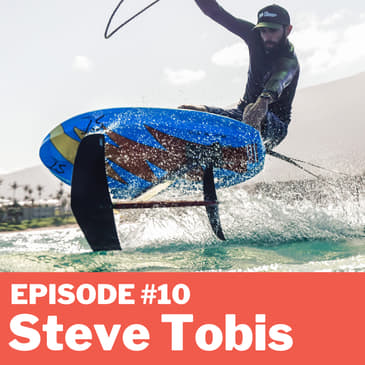

Steve Tobis, Pro rider and product tester/developer at ON Kiteboarding, talks to us about Jaws, winging and waterman life from his home in Maui, Hawaii.
[00:00:00] Welcome to The Wing Life Podcast, where we talk about wing-foiling and the lifestyles of those who enjoy this great sport. Alright Steve, thanks for joining us tonight, man. Stoke to talk to you. Yeah, likewise, I think you're having me. Yeah, we're super stoked to have you, man.
[00:00:26] How was your day been so far? It's been good. Yeah, it started with a little foiling in the morning. And then yeah, not here talking to you guys though. Really stoked to talk some foiling, talked some wing in, and yeah, just have a good time. That's great.
[00:00:40] Nice, we got a lot to talk about. Guess we can start off, but how was Jaws a couple of things going? Yeah, it was unreal. Probably one of the biggest flaws that's hit this year. It was just absolutely massive, guys, you're sending it huge.
[00:00:56] There is a panel of simply in the morning, and then in the afternoon, turned into more of a toast session. There were guys citing, there were guys, a couple of guys trying to wing it.
[00:01:06] Windsor first, so it was kind of everyone had their chance to jaws a couple days ago. It was insane. That I must have been quite as due to have everybody out there all the same time. How does the lineup work between all those different sports?
[00:01:21] It's kind of coordinated chaos, I guess it's the best way to put it. Everyone just kind of finds a rhythm and finds their way, and then just kind of works in between.
[00:01:29] Usually when there's paddles out, there's not very many towers kind of just general etiquette right with the paddle or scale. And then once it starts to blow out, then toe and then let the fighters come in. Yeah, everyone kind of finds their niche finds their spot.
[00:01:43] There's massive 50 foot waves rolling through and then kind of in between sets, there's a smaller one. So there's something for everyone to find space and pick it off, but it definitely does get, get tied out there and it just kind of that, you know, the lineup regulates itself.
[00:01:57] And it's, it's jaws, that's the, the big kids playground. Did you, did you ride? Not when it was huge. We were now thinking about it and then kind of when we got there just looking at it, it was, it was a lot.
[00:02:11] So come on, you got to know when to pick your days and when it's when it's right and wrong. And it was just a little too much for me that day. But you got to hang out in the channel kind of thing and watch her.
[00:02:20] I got front row seats to the best show on the face of the year. So yeah, it was pretty awesome to be out there and wait this a man that would be so what time do you guys get out?
[00:02:29] Do you get out in the morning to kind of go into the channel and wait or do you go out when it's bigger? How does that normally work for you guys we waited.
[00:02:36] So we went out probably 11 o'clock from the colleague harbor drove up the jaws through the wind in the waves and it's a, It's a rough ride pounding up wind on a jet ski for a half hour.
[00:02:47] But yeah, then once you get there, you know it's all totally worth it. I spent we're left at 11 got back kind of when the sun was going down so it's all like six, seven hours out there. Oh, wow. Hey man, that's pretty cool.
[00:03:02] I saw it from the top and I think a lot of us were seen it from from the top of it just like looking down.
[00:03:08] And and you don't realize how big it is like I went to one of the sport stores in in town afterwards and I just saw an up close video of that. And it was like, oh wow, I didn't realize it that 40 50 feet is completely.
[00:03:22] Can you write and the one thing where you can't see it from top because you're so far away and that like one of the things that really I think catches people at guard or you don't realize it is the sound of the wave just hearing this sounds like a tornado smashing into the water and like just the the thought that you can feel of the the lift throwing into the water and the salt spray coming off the top of it.
[00:03:44] It just adds a whole other sensory element that you don't get from the photos and videos and it just kind of it's it's a reality check of how heavy it really is.
[00:03:53] You know, some of the guys are really good they make it look like a just a little six point way the stuff that they're doing on these ways it's just unreal.
[00:04:01] And until you're sitting there in the channel just right on the edge of the way if you don't really realize how how heavy and how intense it really is.
[00:04:10] Yeah, I can't imagine in all the training that goes in like I follow Sarah and Casey house or a little bit and all the training and even like we'll see lads and so grand stuff but all the training that goes into.
[00:04:23] And and all those techniques that have been developed over years of learning right it's just unbelievable but. A little bit about you like how long have you been in the water industry.
[00:04:34] I've kind of grown up around water sports ocean sports you know, started hiding when I was like 10 or 11. When sir sir. So kind of a lot of been doing this stuff in my whole life.
[00:04:48] I got into boiling probably late 20 17 2018 something like that kind of in that first generation of oils really came to market with like this flingshot hover go.
[00:05:00] You an intermediate level wing foiler looking for an epic adventure this winter if yes I suggest you reserve your spot for the wing foil expedition hosted by Agua Salada.
[00:05:10] Baja California sir adventures this coming January this trip is going to be absolutely amazing it includes ocean front accommodations airport pick up and drop off fresh locally made food and snacks created by a local artisan al chef yoga massages five days of
[00:05:30] wing foiling and the best part over 100 kilometers of boat assisted downwinders just imagine the freedom and peace of mind that will provide.
[00:05:39] I look will be one of your wing foil coaches on this trip so be a great time to know the enjoy the downwinders but also ask questions to prove you're writing.
[00:05:48] Our trip will take you on different parts of love and tana and baja that you would not otherwise be able to access without a boat to learn more visit winglifepodcast calm and click on trips.
[00:05:59] Click on trips in the main navigation menu once again visit winglifepodcast calm and click on trips in the menu with only eight spots available we know it's going to book up fast so we recommend that you are quickly I'll see there.
[00:06:14] I started there and I started kite foiling this kind of film level that it was really cool to have that sensation being above the water and then the efficiency right how we can kite in next in no way.
[00:06:27] So it's kind of where it started and then I saw like kai doing stand up foiling it was like oh that's pretty cool I want to try that figuring out how to prone foil and then you know wave foiling came around and now we're towing and it's just kind of cool to see how the sports of evolved.
[00:06:43] I still do them all you know I stand up paddle I serve like kai away so it's just too much fun to not do everything.
[00:06:54] For everybody just listening in and not seeing this behind Steve is I don't know what that 10 boards back to shoot and that's what you can think of.
[00:07:04] That's the foil and surfboard rack and then up above my head I have the stand up paddle boards and wind surfers and then up there is downwind.
[00:07:15] Foiled boards longboards there's some more boards under my house and once it don't get used as often but yeah you can have a whole bunch of toys around here for everyone to get in some trouble. When did you start working with with the new ad?
[00:07:32] Yes I started working with the guys from on and like early 2020 I want to say kind of right when winging was starting to take off and really gain some traction. The on guys were down at the beach and Maui here and just right place at the right time.
[00:07:47] They had some prototypes on the beach and asked if I wanted to test them out and so at that point I was like just so frothing on the sport I wanted to ride everything I could.
[00:07:56] I was trying to do it from every designer and body that I knew that had different gear and just wanted to ride everything.
[00:08:02] So started riding their first generation prototypes and just kind of gave some feedback and it was really cool to like have them be really receptive to just like this random guy on the beach that they had to try gear.
[00:08:15] And then then got my contact info and we just kind of go back and forth and texting and emails and Facebook whatever.
[00:08:22] Through the first generation stuff and just saying you know what's working well what could be done better and really just how can we take this sport that's really in its infancy and put some good design into the end of the product and how do we make this like really be a great wing because really got to start somewhere and just how do we build and improve from that.
[00:08:45] And that's pretty cool so just like on the beach and ran into the guys pretty much that was really it. Just is right place at the right time, this pretty pretty cool.
[00:08:55] I can totally see that when then like I you kind of riding around in different spots and go back as well and you're often as all meters and with a bunch of prototypes. Yeah, I like that.
[00:09:09] It's super cool like that's my style you know I just I like that just guys trying to try to make it happen right it's a top industry.
[00:09:17] And there's you know there's some really big brands that hold a lot of the market share so it's tough to get in there and tough to make a name for yourself and I just like stoked on on bed's energy and his design process like what he wanted to do with the wings it wasn't just about trying to.
[00:09:34] Make a wing and then sells many units as you can right like obviously that's great, but he really wanted to make a good product and really like push boundaries trying new materials trying new designs and like he wasn't afraid to kind of take risk to the sense or like.
[00:09:48] Let's just see what happens and I really like that thought that was really cool a lot of trial and error and some stuff worked really great other things are like yeah, let's it's not through that again, but it was worth an attempt.
[00:10:01] No, fair enough. Do you find a lot of companies there because there's a lot of people on Maui doing this is there any kind of inter company collaboration or to the writers kind of talk to each other or is it kind of more siloed and kind of ended a little bit of both.
[00:10:15] I mean, this is Maui right it's it's a small island everyone knows everyone.
[00:10:20] Everyone's in everyone's business, yeah you go down to the beach and there's a half dozen wings with no graphics on it. It's pretty easy to figure out who's writing what and what prototypes or what companies.
[00:10:31] But everyone does kind of have their own way of keeping stuff close to the chest or behind closed doors. Writing kind of off the beaten path or finding places that are low traffic to test things. So you get a little bit of both.
[00:10:45] I definitely like when you show up to the popular spots like everyone's going to look at your gear and check your wing out and you know what something new shows up it's funny everyone like.
[00:10:54] Gravitates with that person and they want to see what's this wing and what's new and what change and how are they doing it so it's it's pretty cool.
[00:11:02] I don't doubt what about so did you come on at the v1 like right on the onset kind of walk us through that process because it's been super fun to watch.
[00:11:10] Like this is the first time because well I'm 39 now but so first time that I've been able to see a sport through its original infancy and actually get on the different versions of gear.
[00:11:20] Which I find is pretty special like you only get to do that once or twice in your lifetime if you're lucky. But for us it's going to be winging and I don't know what's in the future but stoked to hear your perspective on it.
[00:11:31] Yeah, so yeah, I did know of v1 there was like a red one and a white one there are a couple different prototypes that Ben had.
[00:11:39] And that was exactly it right that was a jumping off point that was let's make a wing and see how it goes and that was really cool like it was it worked and it had some good things about it but it like most wings in the first generation.
[00:11:54] And they needed some refinements and tweaking and it was cool to try other wings and see okay and yeah I didn't really understand what each piece of puzzle did.
[00:12:02] But I would just tell Ben like hey I really like this about this design like that about that design and here's an idea that I'd like to have for a wing you know I want this low end and this type of handle configuration and the stability like this arrangement felt really stable this one was a little squirrely and he would just take the feedback and build a new wing and ship it over and.
[00:12:23] We went through a couple generations of prototypes and like each time it it was massive the steps that we would take you know we go from a wing that was good and something not like.
[00:12:33] Was unreal and next level and then the the writing level could follow it in like the gear was pushing the writing and the writing was pushing the gear so you got this really cool kind of you know circular feedback loop in a sense like the gear would get better than the writing would push it and the gear would get better again the writing would put it even further.
[00:12:52] And then that's kind of led to the current generation and soon to be the B3 know as where they have you know a lot of power really good for free style really good for wave writing you have stability you have.
[00:13:04] You know diverse writing conditions and it's it's been cool to kind of see the just to sport really developing grow.
[00:13:12] Yeah I can't imagine that must have been and still continues to be such a blast working on that because you can just look at the little refinements take it back and then ride something new I think that that's that's unreal.
[00:13:24] Yeah, and it's cool to see like the steps are maybe becoming less dramatic in in the improvement of the gear but it's really the details and the fine tuning that are kind of coming together now with just how the handles feel you know the oval handles versus round handles and soft or is hard.
[00:13:40] For example, it's a modular system where you could have soft handles and hard handles and it's really everything is hitting a point of like.
[00:13:47] Refinement you know the basic performance is there it's just how do we make it really comfortable less fatiguing on the body and just all around more fun to ride.
[00:13:57] It's that I totally agree to be right I think that on the on the first generation and this is across the board as you're saying you know every first one that came out definitely needed refinement.
[00:14:09] And it was amazing to see how much progress is made by the time we got to V2 and then now he's three and it's like whoa the steps are getting same. And you know coming.
[00:14:22] Having seen one third and just in less than the end to the more non-finement stage yes there's improvements between you know one year to the max and yes sale get better and catch get better.
[00:14:33] But no and year what we do and just couple years like you literally night and day and it truly poor I don't know how that did it honestly kind of came out of the booth and really had a good product for it's some beginning.
[00:14:47] I was very much within the generation of those wings and it still is now quite cool but imagine you just a lot of it's feedbacks and guys like you got everything else around them. There's also a very unique.
[00:15:03] I think what's really cool or special in the sense is like Ben and on you know they're putting out a product that's competitive if not better than many of the bigger brands and really operating it as a small business right it's not like there's this giant design team with a multi million dollar R&B budget.
[00:15:20] It's like very small business in a sense you know it's a couple guys in a garage and working with suppliers overseas and like doing it all themselves and that's really cool.
[00:15:30] It's really tough to compete with just companies who have big budgets and that's making it happen and that's that's really exciting to be.
[00:15:38] And then considering exactly that like there's companies that are relatively both are huge let's be honest they're huge and they're putting out a different products and I got to try a bunch of wings this summer and.
[00:15:48] I am looking forward to trying because I think Ben Ben was that he was going to send over a couple for us to do that because you guys are doing different stuff with handles that.
[00:15:57] Better looking more advanced in other companies using different materials like you were working on leading edge size like bladder size all that kind of stuff. I think it's even the wide line from what I've seen events and I'm not heavily involved in an either basically he.
[00:16:15] He's afraid to think outside of the box and you really like to look at the material that he has and try to push that material as far as you can so instead of taking.
[00:16:26] And you know a new lighter material and making the same way that a new lighter material being like cool look the way it's lighter like well this new material is also way stiffer so why don't I also reduce diameter and then I can go even lighter and you're more efficient.
[00:16:41] Okay, and so you know if there's so much that goes into that. Yeah, totally and then you know you were talking about handles and I think that's something that's been.
[00:16:52] We've been working on it for quite a few years now and then was actually involved that based on what mistaken in the original hot wings that had kind of like too many balloons. You know, that was already 2020 or something like really right in the beginning.
[00:17:10] I think the whole rigid handle thing is in my sort of quite a while and even playing with it a lot and he's kind of alluded to it. But the amount of shining product that's going to come out is a modular system where you can have a different.
[00:17:25] So it's like regular some people like soft. And it's going to be easy to move, easy to put them back on and I think you know forward come out of the ability and ease of use is really the key and durability.
[00:17:44] Some of the you wing coming out with part handles. You know, to jump and you have a pond is pretty and that's really light. So basically but you know you have a pond with something out and that's what it looks like.
[00:17:58] And that's one thing that really doesn't want to be on. So he'd rather have his invited this for thinking and then you know set out a product that's solid once it's on the market. Yeah, that makes sense.
[00:18:16] To go back to you Steve like have you lived in Maui your whole life or where did you grow up? No, so I grew up about as far from Maui as you can grow up. I was born in Des Moines, Iowa.
[00:18:26] So pretty pretty far from the ocean pretty far from Maui. We did a lot of like weightboarding and stuff on inland lakes and then once I figured out how to kite. It was like one of the only guys kiteboarding in Iowa, shockingly.
[00:18:41] I think there's after you're starting, fighting there's like five or six of us in like the whole state and people and drive hours to go kite and like. You know we'd be looking around like that being class like looking out the window seeing when coming through.
[00:18:54] So yeah, it was it was interesting for sure. I was fortunate enough to kind of travel around spend a lot of time in cover out there in the Dominican Republic. I was hiding down there. And then yeah, I went to school in Iowa for mechanical engineering.
[00:19:12] Once I finished that I jumped on a plane and blew out and was just like yeah, I need to get in some warm warm weather closer to the ocean and. Yeah, yeah, no, I'm here. Hey, that's awesome. So you do mechanical engineering on the island then. Yep, right.
[00:19:30] When I did whenever you can. Yeah, I kind of I didn't doing a various degrees of engineering. Oh, I different stuff and then now I'm kind of a. Surfing a lot there.
[00:19:41] I was just wondering if you got into work with any other companies in and use your mechanical engineering background in the in the sports industry. And I got a little bit. I've been 2020 kind of like right after the island shut down from a pandemic, I started building boards.
[00:19:59] So that was a big thing using my engineering knowledge like figure out how to build a board like I understood the concept of putting resin on fiberglass around foam, but like really had an engineer product and like make a lightweight composite and I learned how to vacuum bag and like how to do resin and fusion and how to build board.
[00:20:16] So that was pretty cool.
[00:20:18] And kind of using that technology, I've worked with other board builders and Maui and other companies based around here and kind of just shared what I've learned and figured out and kind of how things work together in a sense and so yeah, I kind of dropped knowledge when asked and where needed I guess.
[00:20:37] Yeah, that's cool. Yeah, it would definitely come in handy and yeah, that's pretty nice kind of understanding like how things should go together and why they go together a certain way and.
[00:20:51] Just kind of why things to do what they do different materials different assembly methods different manufacturing components and kind of stuff like that. Just try to help companies out help people out that can use a little problem solving I guess. Okay, well, it's very enough.
[00:21:10] It's an interesting thing and water sports and I think even if you look at like skateboarding is nobody stuff like that as well, like the all these sports there's such a big design aspect that comes in art it's almost like a kind of a black magic thing.
[00:21:25] And then at the other end of it, there's really are kind of simple mechanical concepts that you cannot optimize if you know how to do it.
[00:21:34] And so it's a really beautiful mix of science and I think all this sport development and sounds like you brought a little bit of the science into it for some companies that can use that.
[00:21:44] Yeah, for sure, and like you know a lot of a lot of where the started was just guys trying to figure it out, you know, like even to the OG strapped guys you'll learn and they.
[00:21:54] And they, a woman like just all these guys that they didn't know so it was like well let's just go let's go try and figure it out and like that's really inspiring for me I kind of like that mentality and that idea of like we don't know what's going to happen but we're just going to try it and.
[00:22:11] The better for where it's will learn from it and you just try to develop a foundational knowledge and build from there. Yeah, totally if you don't try you definitely won't know that's for sure.
[00:22:25] You hear them talking about those early foils that were like solid aluminum and weight I don't know like 20 pounds or something like that yeah. I don't even know how they didn't brown using those things you know when you fall off the fly that's crazy.
[00:22:39] Right and they're hooked in with snowboard boots and like buying eggs like you're not coming out of the board even if you want to and then they're going out and.
[00:22:46] Failing 30 foot jaws like that just that's I think it's so cool and like just such that the spirit of these water sports have just wanted to. To stand it and go bigger and faster and like that's really cool and that's what drives important.
[00:23:01] Like when you were around for some of that did you see any of those first rendition. No, not in person. Yeah, there's a few wall hangers floating around in the right places if you know it'll look but I've never I wasn't like their first hand of it.
[00:23:13] I grew up seeing them like on movies like I think the first when surf movie I can remember was the quick silver with like the animation and the guy going through the stone age to get to the board and the wind surfer and everything and like.
[00:23:25] I thought that was the coolest thing ever. I was just like addicted to these wind surf movies and then kiteboarding came along and these kiteboard movies my room was plastered floor to ceiling with cutouts from kiteboard or magazine of like.
[00:23:39] These guys just doing crazy stuff and so it always like I knew I wanted to be around it. I just didn't know how to make that happen from being you know 8000 miles away.
[00:23:50] But while you just keep working at it and be patient and eventually the opportunity strikes and you end up in the right place at the right time with some guys want to test wings on the beach. I think and then you're a pro rider.
[00:24:05] I mean that's kind of how it works I guess yeah you just keep keep riding and keep grinding and died eventually something works out I guess. But I'm so stuck for it like we don't get to hear very many stories like that firsthand.
[00:24:19] So thanks a lot for sharing that's we appreciate it. Yeah I'm actually interested to continue we got you know we kind of circle back to jobs with the whole layered and the big forves stuff you were telling us that you're.
[00:24:31] kind of working on tofoiling now and trying to push the boundaries of what's possible on a forum. I'm really curious what what you guys have been working on like what have you done to the foil to the board like what's happening in that room.
[00:24:44] Yeah so about I can't get too much into some of the foil stuff a lot of it is very very closely guarded. But really just trying to figure out how to make a foil go really fast and be really stable right that's it speeds stability is everything.
[00:25:00] Kind of like when when you're a kid and you try to skateboard down the really big hill and you get the speed wobbles kind of the same thing will happen on the foil if your foil isn't tuned for it.
[00:25:10] And it's it's kind of crazy that just the physics and everything that happens are on the water the way it separates and flows over the foil all that changes when you get going really really fast. So just trying to design boils and can handle that.
[00:25:25] It's kind of like building a formula one car, you know every little tent of a degree and every little small shenangle matters and how you ride the foil in the water matters and like having the right foil makes it's not having the right tool for the job you know having a proper foil for big waves is kind of the only way to really write them.
[00:25:47] You can kind of shoulder hop on them but like I don't know I'm trying to figure out how to get deeper at them.
[00:25:52] It does come with you know associated consequences, but I just kind of like write them more like how you would circle wave but on a foil.
[00:26:01] Yeah, they're there obviously higher consequence, but that would be such an epic thing to be able to do so yeah like how many how many years would you say like.
[00:26:11] Or first of all like how many years have you I guess you've been for a long since the onset kind of thing but how many years do they for like in Maui have seen some of the layered stuff and he's like you're not allowed to go in big waves or we try to keep you up back unless you can swim in certain whatever like 20s foot swell or something.
[00:26:28] Like are there kind of unwritten rules for how guys are allowed to go out because they've seen such an increase in people that go and. That was everybody kind of hiding and now magically everybody can handle those conditions. Can you talk about that?
[00:26:42] I guess I think it's certain spots really regulate themselves. Okay. Like jostre example, it's really easy to know if someone should or shouldn't be out there on that level of a day.
[00:26:58] I've had especially this year I've gone out probably five or six times with the goal of writing and it's been like yeah now this isn't is it my day it's not right.
[00:27:10] So just being able to say no or like understand and realize that it's not the right conditions of the right day I think that's what's really important.
[00:27:19] But really kind of you know that ocean is essentially a free for all in the sense a lot of spots do self regulate the crowd will self regulate so if you if you're not.
[00:27:29] You're not forming or you're not up to standard like people will they'll tell you you know you'll know you'll find out real quick for me the ocean or someone else that hey you should probably go find somewhere that's that's more within your range.
[00:27:42] And yeah I mean you see people out that you're like wow I got keeping extra cool side on that guy because it could be you know not. Practice stop or not trained up. This is a general rule people.
[00:27:55] Wait when it comes to like you know walking the walk in a sense when there's 20 30 foot waves like people they back out pretty quick I guess if they're not really feeling it. There.
[00:28:07] I guess I'm speaking of that but I've been speaking at with that attitude from the shore it'd be a lot different if you're actually there about.
[00:28:16] About to ride a house it totally is yeah you can sit you know sitting the channel no I could surf that all day long.
[00:28:22] Yeah like you see go with me in and then like when you're getting towed in and it starts to steep enough and like you're looking at the drop like.
[00:28:30] You've got to be sound between the between the ears you know you got to be like 110% committed and focus you can any other distraction like the only thing the matters is what's directly in front of you.
[00:28:43] Then you're not trained you're not prepared your team is it ready you haven't put in the hours ahead of time if you're just not going to find success.
[00:28:51] Okay and for those at home who are not maybe up to speed about everything like how many people are on a team that go out on a day like those real big days like the guys that you'll have you know a couple jet skis above like EMTs with them so it's you know whole.
[00:29:07] The whole operation when it's not like fully juice and you know 40 50 feet like 15 20 feet usually will go out with like a to ski and a rescue ski kind of just have a backup plan put in place.
[00:29:22] And then just having the the conversations on the training and dry land you know here's here's our plan A here's our plan B here's our plan C.
[00:29:30] Almost everyone I tell us we've you know we've gone through the brag courses the big way big way risk assessment group we've done their training so.
[00:29:38] You know you kind of learn and how to put together an action plan and figure out if something goes wrong here's what we're going to do and having everyone in the water on the same page or at least you know working from the same playbook makes a huge difference.
[00:29:52] And then just everyone themselves every individual person putting in the dry land trading and you know hours swimming in a pool and running rock and working with weights and cardio.
[00:30:03] Doing everything when it's small and flag getting our pick up style off the jet ski like all that goes into play for you know a 15 second way.
[00:30:15] Okay, no I like I've always been super interested now the training I used I was a kcologist years ago and we went into all that kind of land based stuff.
[00:30:23] But the water stuff has been something that I've been always been fascinated about so cool to find out a bit more about it. Actually might be a good time to ask for some questions anybody in the audience interested in asking see if anything.
[00:30:37] I'd speak up real quick Steve couldn't could see a meteor here. I'm a recovering mechanical engineer as well so I share that with you. I was just to your last comment about the training the brag the rock running and the preparations.
[00:30:55] I was going to say that I get that as well I used to race snowboard cross in the world cup and the scale of that speed and the magnitude of the crashes and the heaviness of this sport is you know from the outside are super crazy.
[00:31:11] But for me it was like slow motion you know when you're doing it no real big deal but the only way you can get there is through the 10,000 hours and the preparation.
[00:31:20] You can't just fire down the gauntlet like top the bottom and expect to be in good health so this is interesting to me I'm new to the sport and trying to find the next big thing for me to pursue and I just wanted to say that's cool story very relatable for me.
[00:31:36] Good yeah. Thank you. Thanks for sharing my project cheers.
[00:31:44] I mean the 10,000 hours thing is like totally the truth like it's it's not hard to go buy a jet ski and go grab a tower up and go fling yourself into the biggest maybe you can find like that's really easy to do what's what's hard is to survive it and to come up and like how someone that's going to come get you and be prepared to to survive a situation like that.
[00:32:05] That's where the training and you know that the 10,000 hours comes in it really like you know kind of what people ask I go how do I start doing this to start there's no secret there's no magic recipe or anything you know it's just hours of time behind the throttle time on the road practicing your pickups training your body getting your mind comfortable to go fit under water for 45 seconds while you're getting beat up like there's no shortcut.
[00:32:32] You just put in the hours put in the time and like. Kind of when you know you're ready you're ready I guess you're never really ready but the bottom line is just kind of be kind of manageable level. It's more normal.
[00:32:45] Yeah yeah when it wasn't like absolutely terrifying and you and you worked your way off you know all said 10 feet feel small then 15 feet feel small then 20 feet does feels manageable and then you just kind of slowly build your way up and up. Okay.
[00:33:02] What's cool for breath holding like how long can you hold your breath now and how long that take you to get there like just laying on the floor after a good comfortable breathe up in a few like.
[00:33:14] Breathe out breathe down probably like four minutes is kind of where I'm maxing out. But it's like you know which I train both like static breath holding so just trying to hold my breath as long as I can and then also like dynamic breath holding so like.
[00:33:30] I'm trying to put on a bike you know trying to put out like 70% output and then hold my breath for 45 seconds and do that over and over again or like a couple laps in the pool and then hold my breath.
[00:33:40] So you kind of train both the elevated heart rate and lower heart rate of breath holding you know there's there's a ton of science in it like really the free divers they seem to really understand at the best and I try to just read as much as I can and try to learn from them.
[00:33:56] You know I'm not a doctor or not a respiratory expert by any means.
[00:34:01] I kind of just try to read as much as I can and learn what I can and try to figure out how like what is my body doing when it's deprived of air and like when am I truly out of breath verse when I feel like I'm out of breath which surprisingly are two dramatically different points.
[00:34:21] And what's the mental game like I've heard that's like do you feel freaked out the whole time because I do if I hold my breath thus a certain point like do you.
[00:34:29] I know there's obviously a lot of levels of stuff that you break through but how does that feel it's totally a mind over matter thing up to a point obviously.
[00:34:39] And so the mental game is huge right and knowing how far you can push your body and what it feels like as you're approaching that failure point in the sense.
[00:34:48] I think that's really important and a really essential part of safely being in the ocean and knowing what you can and can handle. Practicing it and learning that in a controlled environment where you have spotters and you have people that are.
[00:35:02] Abel and ready to help you out if you do go a little too far and like black out for example.
[00:35:07] You know you're better to do that in the swimming pool with people that are there to help you then in the middle of the ocean where you have next to no help or it's minutes before you can get to a better level of care.
[00:35:18] I'm just trying to push your body and control environments so that way when you get to is an controlled environment you know you're you know your thresholds you know what it feels like as you're approaching them and then you know how to like feel with it.
[00:35:32] Okay, no it's good point and how many years of training would it take for you to get to that four minute kind of holes. Honestly not that long. Within like less than a month of like actively practicing and doing it.
[00:35:47] I was surprised at how quickly you can get to that point when you kind of commit to it.
[00:35:53] And you know every person's different right like their their long size and other body uses the air everybody's different so my four minutes could be someone else's three and a half minutes and someone else's five minutes.
[00:36:04] But it was really kind of it was pretty quick to get to that point going beyond that like definitely seems to take a lot more time though. I'm like five minutes is kind of in my goal, not there yet but it's getting better. You got a good foundation.
[00:36:23] Okay. Yeah. Yeah that's a huge foundation. And I'm I'm super curious about what your first flight was on foil. What did that feel like?
[00:36:35] Did you anticipate what it would feel like like kind of walk us through that with like writing and fucking bronco and a skateboard on a ladder. Oh. So. Very first foil I had was the slingshot hover glide.
[00:36:51] I think it was maybe like a 700 800 square centimeter foil was the green one really heavy and aluminum. And I was kiteboard kite foiling I lived in Los Angeles at that time.
[00:37:04] We were down in Belmont, sure is down there in Long Beach and there are a few guys foiling down there and it had a small scene.
[00:37:11] I was like, I don't know what I'm doing so I drilled some holes in the skin board and bolted it on with courage bolts and just kind of went. And it we figured it out relatively quickly.
[00:37:23] But yeah, definitely having like that three foot long mass and you just as soon as the foil catches it just launches you up and I think I had to walk it up to be a couple times.
[00:37:34] But then I figured out how I could like stay up and on it and then you go out one way and trying to come back in was hard so it was man it was there was an adventure. How long ago was that?
[00:37:46] I think that was 2017 yeah, 2017's 18 something like that. Yeah, it's cool.
[00:37:55] I saw a lot like my first time as well and I was I started on the RS like something like that that first meal pro had basically like race foil that how they thought with a beginner foil.
[00:38:11] And it's still funny because I started on that and I tried it for like half an hour and I just was working at all. And then I hopped on us set up and go for it on it which is like way bigger thicker foil.
[00:38:25] So I'm going to do the ride and you just like, and say like, no, right everyone that's learning to foil now they have it they have it so easy. So how's your first wing foil then like when did you get on that for the first time?
[00:38:41] The first of a try to wing foil there was a guy that how when at the beach it was like one of the OG Nash prototypes.
[00:38:47] I think this is like 20 2018 something like that and it was like a stand up and had a big foil and it's kind of like I got up right away and just kind of went out and turn around and came back and it didn't click for me.
[00:39:03] At that point it was in the summer and like there were no waves you know the the North Shore mountain is quite flat in the summer.
[00:39:09] I don't know I kind of was like I could take it or leave it so it kind of just did an out and back walked it up to the beach was like, I had full man thanks for shaded by whatever.
[00:39:20] And then probably like what six months later ozone launched their was the very first V1 of that and I had a different stand up and bored and there is like some little waves and kind of just little bumps.
[00:39:33] And I went out and got a bump and wrote it and I was like okay I see how this works now like using the wing to pull myself into a wave and then just hold it flat there and be able to just focus on surfing the wave without any thought of wind direction and swallowing.
[00:39:49] And swallowing like I'm only riding away that's a click for me.
[00:39:53] Kind of you know all these wind sports wind surfing kite surfing they all kind of have a roof of trying to ride waves without having a paddle for them you know kind of like the personal jet ski in a sense and winging is the first sport that like actually does that for me.
[00:40:10] And where I'm not I can go up when I can go down when I can go left and go right that it matter what the wind direction and the swall direction is like I can just ride the wave.
[00:40:20] You know sometimes we're citing or when surfing you're restricted in how you can ride the wave depending on the way the wind direction and swall direction.
[00:40:29] If you want to go left you can't always go left you got to go right and the wing just kind of opens all that up. Yeah, and that was really cool. Have you seen like obviously you got to see crazy board progression.
[00:40:39] What kind of sizes are you riding now and what do you like to ride? So I ride four six by nineteen and a half and like 32 liters. And that's kind of my one board quicker wing it I prone it to it.
[00:40:56] It's just a good size for me that that's pretty much everything learning to ride small boards was so hard.
[00:41:03] You know we all started out on stand up where we're getting underneath and then do our feet and then it's like alright like this is fun but I have way more fun riding waves on my small board in my small foil.
[00:41:13] So we all had to figure out you know how to do this like how do we sink the board do we sink it do we get underneath do we get it moving through the water and try to stand up.
[00:41:23] And you saw a lot of different water start technique start to happen now I'm I'm six foot four and my legs are super long so like sitting and getting to my feet is like not a easy thing for me.
[00:41:36] So yeah, no figure out how to sink the board and that was really frustrating the first few times I went out and did it as I go my god the socks and like.
[00:41:46] I almost put on it a couple times but then once I figured it out and like got it dialed in that it was totally worth it and I was like fired up on the sport again.
[00:41:56] Can you walk us through how you do that because time you've ridden some small stuff. Just you were said that can you just tell us how much you weigh in that way we have an idea for you know how you're.
[00:42:06] Yeah, so I'm going to have a full four hundred and seventy pounds.
[00:42:11] Straps is obviously way easier to do the the sinkers start or just a sinker board in general because you have more control over the board when it's underwater you're not just relying on the buoyancy of the board to push it against your feet, but I start by pushing the board down.
[00:42:26] Actually, I think about this a little bit here.
[00:42:30] I push the board down I put my back foot in first so my front hand is on the nose of the board and my back foot is in the rear strap kind of doing like a little yoga pose there and then I put my front foot in.
[00:42:42] And then I get the wing back to my hands and hold it over my head and then go okay and then. You have a so no impact so you're kind of sinking you're just in board shorts and a and a kind of rashi kind of thing.
[00:42:58] So you I guess you're lying back on your back kind of thing a little bit and then, but so you have to have enough wind to fly your wing decently well you get you going I guess you can't do that.
[00:43:08] Like 15 or less I guess this is what you see it's easier with stronger wind right because you're. Like I'm sitting on top of the board because like the foil in the board and then my bodies here and everything is kind of stacked on top of each other.
[00:43:22] So I'm almost like squatting on top of the board and when I'm in the water I'm probably like. Deep more or less on top of the board stronger one is definitely much easier.
[00:43:34] But like after practice and you start to figure out little things to be more efficient probably my bottom end is like that 15 to 16 range.
[00:43:43] But that's a lot of work and it's okay it's hard right like once you get up you want to kind of just cruise around and take a break and like your arms relax before you go down again.
[00:43:55] Like 20 is kind of bread and butter like if you have 20 knots like all day long it's it's no big deal when it gets under that though that's when it can be a little more fatiguing I guess like I just get tired quicker because you're pumping harder and harder and just takes more effort to get out.
[00:44:11] So you'll still just still sorry you're going to say you just try it 12 11 12 13. I would switch my board honestly at that point I just go right a bigger board. Okay that's it. That's one grand. Okay or just go. And if you pick the sweet spot.
[00:44:29] Yeah, have you picked a sweet spot for how like the weight to size ratio for a sinker board because like you're finding the 32 for yourself at your weight is ideal.
[00:44:39] What happens if it was a 45 or 50 would you find that it would throw you off more wouldn't sink as well.
[00:44:44] Correct so just kind of give you an idea one liter will displace one kilogram of volume right so if I'm what I'm like 80 kilos I think and 80 kilo board I'm essentially like neutrally boy it over that board.
[00:44:57] So having something that you're pretty dramatically heavier than what help you get it down.
[00:45:05] I've done that sinker start up to about 50 liters there is a point though where like it's like a bell curve in a sense where like two low volume is going to be too hard to to get up and then you kind of have your sweet spot and then if you're too much volume.
[00:45:23] It's also like really quirky and wants to throw you off and doesn't want to sink properly so there is an optimal volume for sure. I don't know if there's like a specific formula or like a percentage of your weight.
[00:45:35] I've talked to guys that are my size that they're like oh I can't do 35 liters but like I can do it and then guys like oh I like you know 28 is perfect where I think that's not quite enough so.
[00:45:47] Everyone has their own ways and their own kind of nuances about what they like and don't like. Really I think the best best is like try to make friends that have different size boards and see if they look your borrow.
[00:46:00] I can you account for a time because how big's your little one now is it 30 something as well. Yeah so I'm a little bit lighter than you are but not much and my my small board is 38 liters.
[00:46:13] And I think that for me because that's I'm in the Caribbean so I trade ones are quite a bit weaker than what you get in now. So we'll get you know that's all 15 knots fairly often and I find myself a little bit limited with that board.
[00:46:27] I can tell you you have a lot of wind you know you get that things start going and it's sweet you can buy a trade board it's really awesome.
[00:46:36] It's great but if you're in Canada you know conditions or it's really good to be you know kind of pop up really quickly. I found that a little bit more volume that lets you kind of do a new start or modify your start is really cool.
[00:46:54] And you don't end up losing that much seal in the air i find compared to smaller board obviously the small is a better it's always more fun.
[00:47:04] It's nowhere around that but yeah I found that like kind of you're waiting for 25 maybe my 30 is a pretty sweet spot for that first small board and anything below that you.
[00:47:19] I do know a lot of what I'm checking in because you're kind of saying to me about what can I. Yeah for sure and that's kind of you know my my whoever's design and set up for Maui right i wouldn't take my gear to.
[00:47:33] The Caribbean or someone had lighter wind and expect to have the same results right that's just not reality and because this kind of goes back into like design and everything too you know what.
[00:47:43] I think is awesome here Maui might not be awesome in Toronto or might not be good in Spain or the Caribbean so like yeah i think that the conditions we have here are really good for testing stuff because it's just so consistent and so good.
[00:47:58] But then you also kind of have to keep that in the back of your mind that like is this good for everyone you know or is it only good for this small you know niche group or one location.
[00:48:08] And that's like you know when we're testing gear I try to go right at a bunch of different spots you know like the the colleague harbor is going to be different than canahawk is going to be different than.
[00:48:17] Sprakes in different than whole keepa and like all these different spots have their own characteristics and their own own things that they do so it's kind of cool to go try light wind and flat water to like.
[00:48:29] Got you east wind in bigger waves and like just trying to see what how everything works. Yeah that's a good point and have you looked at.
[00:48:41] And what's your take on canopy tension because there are some wings obviously that have that are very loose that they're good for high end but they got no grunt like have you found in your testing that you can go too far with canopy tension if it gets too taught like that kind of thing yeah i think.
[00:48:57] Can it be touching tension is important but also i think like the camera and the profile of the wing relative to that canopy tension is is really important you know some of these wings there they're like so high strong or so tight where they.
[00:49:10] You know they point straight up wind but then they also back when really easy to the point where like it's almost difficult to write up when and then some of them you know as you said there's no loose and sloppy that like.
[00:49:21] They just clutter and they're like a noise maker not a sale so i think there is about that point in there and you know it's all given take frozen cons.
[00:49:31] It's you know i tell Ben like i wanted all i want to say all that has good low end that's like a way that's strong it's stable it writes waves good like i want everything so give me everything.
[00:49:42] But i think you know just making the right concessions is is important in the sale design if you know there's some wings that are phenomenal free style wings where you can go and do 720s all day long but then you try to write them in a wave and they're like flipping over and topsy terrvy and you don't know where they're going.
[00:49:59] And you have wings i do the opposite right where they're dead stable but they don't jump at all or they have no catch so kind of just matching the wing with what you want it to do i think is really important.
[00:50:12] Yeah because i teach wing for a little bit i'm think over i'll unlike i do that part time and and one of my buddy's got like a v1 from from Nash and he was so excited and comes down to the beach i'm going to get going in eight knots and.
[00:50:26] And it's like how did it go and is like it's not the right wing for eight knots but it's fun for other conditions and then like same thing with the ocean rodeos came out with stuff and i'm i'm right with a kt a little bit so that kt wing came out and that's cool and it's really fun those things all the different kinds of styles of stuff and.
[00:50:45] Are you finding now that it's breaking down more obviously sports specific like wind surfing like you have different sales are racing different sales are freestyle all that kind of thing yeah i think there's.
[00:50:55] Yeah i'm seeing some stuff where companies are trying to focus kind of seems like two main disciplines right like wave writing or freestyle.
[00:51:03] They're both similar what they want but they're also different like for wave writing having a sale that just has really solid pull it's consistent and stable that's huge because if you're writing away even the wings flipping all around and kind of going crazy on you like it takes a lot of fun out of it.
[00:51:21] And it seems like a lot of the freestyle emphasized wings are going more for backwind performance and like stability on inverts when you're going over the wing or something that spins around easy and doesn't like doesn't pull you down towards the water but kind of goes more around.
[00:51:38] It seems like those are two of the main focuses that companies are going right now.
[00:51:43] But there's okay you know kind of like you said there's there's a hundred different designs out there and a hundred different wings and there's really no I don't think anyone has a right or wrong answer i think they're all just different and really just got to find a brand and a design that works for each rider.
[00:52:01] Really good way of looking at it I think i think there's and it's the same for and barely you get just kind of find a brand designer that's kind of doing what you want to do and.
[00:52:13] And go with that because that's that's usually what's going to give you the good that you're going to be most so close and ideally if they're about your size that's even better but you know that's asking for a lot.
[00:52:25] So what what are you thinking of these new materials you know like all these high model materials and stuff like that like how have you. I think it's cool man i think.
[00:52:40] One of that is might get me crucified but I think one of the shortcomings of like the surface industry in general is being resistant to change resistant to new materials new constructions like yes there's tried and true yes there's materials that you know we're going to work every time.
[00:52:56] But without trying new things and taking risks in a sense.
[00:53:00] You know whenever going to push these sports and the designs and the progression to where it could be so for me it's it's really exciting because it's not my company right i don't have any skin in the game to take the risk on the mirror that may or may not work right so.
[00:53:15] I don't know that out there i understand why the the safe option is is attractive but.
[00:53:21] From a engineering standpoint and like a design standpoint i think it's a really cool the company is trying new things and taking those risks to see what materials are going to work well or what.
[00:53:30] And you know what's out there that maybe didn't work for when surf sales but could be great for wing sales so i get excited about it. I like that you know band is willing to try these things to and get prototypes made of.
[00:53:44] I guess on proven materials just to see are they going to work and is this going to work for for the sport in the designs like so i'm excited about it i think once more people start doing that type of design and trying new fabrics trying new materials everyone's going to kind of follow but it's.
[00:54:00] The like who's going to go first type thing yeah so we had a call with a guy and Vancouver island that repairs wings.
[00:54:10] Yoast from call box type repair and he showed us some new materials that ocean because he worked for the ocean rodeo and some of those materials they went from just they're almost unterrible not i'm sure a foil will still go through them but we are kind of curious to see the performance of those things and did you have to adjust like the shape of the wing.
[00:54:28] To compensate for the fact that it's not a stretchy all that kind of stuff or kind of stoke to see what's going to come of it but yeah you know i don't know the answer to that.
[00:54:37] Like how the design changes relative to the materials but i'd only make sense right if you have a different modulus or different elongation under pressure like your your sales shape is going to change when it's loaded and how your you know how your sales twisting and acting.
[00:54:52] With one material it's going to be different with a different material so just taking the same design and putting new material on it i don't think it would maximize the performance of that material.
[00:55:03] So I think you know okay making a design and material that are congruent and work together and they play off of each of each other strengths i think that's really important.
[00:55:12] Yeah i totally i think it's it's not even just that it's not going to maximize the performance of the material you might actually end up with something that doesn't work as well like i i personally found some of the early allula wings that i tried.
[00:55:28] Really like which was really cool and really stick but they almost felt two steps and like the you know the sales just kind of really like it couldn't deform and it didn't really work.
[00:55:41] Because they just you know took the same leading edge dambers and and can i work that it would this new material and it just didn't work and i think that's really a case of as you're saying you got to try it and you gotta see if you don't try it don't know.
[00:55:56] Yeah. So what's your longest swim then when one of these new wings is blown up if you've seen any of that it has that happened to you.
[00:56:09] Well, if you take a now like whatever prototype wing have it blow out kind of thing it can all hire somewhere else and you normally have a ski when you're prototype. I want you to swing out in your own.
[00:56:20] Yeah, no usually like if we're just going and wing and usually known no ski you got to swim in with your arms in your legs. I think the swim from way outside is like a mile and some change maybe a mile or so.
[00:56:38] And yeah definitely still have more than more than i'd like to.
[00:56:43] Usually it's more like falling in waves and then having the wave trash to sail that's that's been like why I swim more than anything else and foil catches up and pop to leading edge or you know just foils and wings are not inherently good combinations.
[00:57:02] The foil usually is not when you're getting wild. Yeah, exactly when you're getting tumble and washed and leases are pulling everywhere it's kind of like to said. Say your prayers and hope that your foils is how you're wing is fairly all you can do.
[00:57:17] Okay, and how do you stay like you have you come close to the border or anything or has that been fairly good okay so far in that washing machines it's everything has fair game to collide your body you're weighing the board coil everything is fair game.
[00:57:34] I don't plan for that right like our shorty with some fall built into us I have a little impact rotation. I've been worrying about helmet.
[00:57:44] I found also it's interesting everything drifts or poles at a different rate and so like the wings they seem to get pulled the furthest and then the board seems to be the slowest so.
[00:57:56] Kind of between my board leash and my wing leash I'm like caught in the middle getting drug between two ends and it generally keeps it not other way now obviously it's not always the case but it sometimes works out in that favor. I think sometimes it doesn't.
[00:58:15] Yeah, I was actually going to ask you on that like how you have some sort of a leaf set up that you know minimizes chances of things tangling because I've had a few sessions where.
[00:58:26] I've just gone to deep and just blew up and then the wing you know the second of fall comes in contact with the one getting lost you did like there's nothing you can do the thing is torn.
[00:58:39] So like have you seen any interesting setups that you know has a lot of release or I don't know something into that effect that can minimize that kind of damage. I think they're leash setups and stuff I don't think there's a whole lot you can do.
[00:58:54] I've tried way sleashes I personally ride with a wrist leash and just a normal circle I leash for my board. I think the the way sleashes I just personally I didn't like it as much I didn't like that pole coming from my waist as opposed to my arm.
[00:59:12] But when you're falling and getting washed kind of something I found is if if I know I'm going to go down for like I'm in the middle of falling I'll try to throw the wing straight up in the air and try to get it over the foam of the wave.
[00:59:26] And I found that.
[00:59:28] And notically improved the survival rate of my wings what I was finding was like when the when the wave robs them it tires the canopies so the bladders and everything are just fine they're all intact but the the canopies are actually getting blown out like at the stitching just from all the pressure that you know you have a wave and then a sale it's catching it all like it's going to blow it out.
[00:59:48] So keeping the wing up above the foam and the turbulence has been a really. A positive thing and then I kind of just let the board do whatever.
[00:59:59] Usually like if the wing goes over the wave and then lands kind of on top of it the white water will grab it and kind of pull it out away from me so I know.
[01:00:07] Basically like the tension in my leashes for where my gear is if I feel my wrist leash is super tight okay then I know my wings far away and I'm okay and then I can try to like figure out where the board is or if I know my leg is super tight then I know the boards pretty far away and that it's going to be coming back at me.
[01:00:24] It's neat that's normal for you. A lot of a lot of yard sales and a lot of meetings that kind of figure out the nuances of eating it. Yeah I guess so I guess so far for every for those at home.
[01:00:42] And for those at home Steve that that are either stuck at work or stuck in the snow can you walk us through a day of what if you'd like to be a water minute there yeah.
[01:00:51] Kind of you know get up in the morning I get my binoculars out and take a look at the nurse sure see where the waves are.
[01:01:00] Yeah follow the wind and weather reports really closely tracks wells coming in so I usually have an idea what that day is going to look like before it even gets there.
[01:01:09] If there's no wind in the forecast and I know waves are coming then deal we get the skis out and get ready to go toe or go paddle if we want to surf.
[01:01:19] Otherwise if it's a wind day then usually a morning surf and then we'll come home pop some lunch go back down to the beach with a wind gear and go get some wing interciting in.
[01:01:29] And then depending on you know what the what the evening session looks like and how hard we play that day sometimes evening surf session.
[01:01:36] And then if there's not much waves and it's really blasting land and the downwind crews show up and we just downwind paddle and yeah it's coming with us. There's no shortage of activities every day. I think that work is not involved in this at all.
[01:01:52] No, no of course not we don't use that. I'm going to be a little bit more excited. I'm going to be a little bit more excited. How many hours a week do you say you're working with Ben and I'm not on testing it really very.
[01:02:09] It really varies depending on where Ben's at in his development cycle and kind of what he has going on for designs and prototypes and stuff. When I call it like Christmas day when Christmas day shows up in the the UPS box comes to my front door.
[01:02:21] Pretty good amount of time going back and forth with you know what did I think about this how did this feel or what. Yeah, I tried to just tell Ben what what did I experience and what did I feel and let him take care of the design.
[01:02:35] Because he really he knows in and out what each piece of the puzzles doing so I tell him hey I felt I had really good low in power but my top end was kind of lacking like he knows what to do and like okay what we changed that you're going to experience this and so it's a really good like.
[01:02:49] Given take relationship for him.
[01:02:53] Like you know it just tries different stuff and we send it and go right it so once I kind of given the feedback I have on the wings then it kind of becomes more of just a way to get new prototypes may get new design and roll out and then they get shipped over and we do it all over again.
[01:03:10] So yeah, yeah it's kind of got a variable number I guess but when when we get way to come stuff in a lot of time going back and forth and trying to figure out you know how how do we make these exactly what we want.
[01:03:24] Where has been it on base. Are they're in Canada? Is it in Quebec I believe. Just part of Montreal and around. The new blue wing. That was a really cool wing.
[01:03:46] Them has shown me pictures of this design for months before I actually got my hands on the prototype.
[01:03:52] He had so much new stuff packed into a new handle, new connections, new materials, new design like everything is brand new and I was excited about it just because I've seen pictures of it for so long and then it finally showed up at my house.
[01:04:08] There was a perfect example of like trying all this new stuff and there was a lot of good that came out of it and then there's some stuff that did need to get tweaked on it and really it wasn't there's no way to find out without building one and see what goes.
[01:04:23] Really the top end of the wing was fantastic. The wing didn't have quite enough camber I believe or a sail profile to where the low end of it was a little lacking. It took a lot of effort to get it moving.
[01:04:38] But then once we got it going then it sailed really nice. Well, lightweight was a cool thing like I was just like flipping this wing around with one hand like it was a tissue paper out there it was really fun to ride.
[01:04:51] But again, one of the things it was really easy, you know, I brought it to the beach we went and wrote it and I was like, man, I just need a little more power in the sail. He goes, oh no problem and tweaks the design and he's getting a new one made and we'll try that one.
[01:05:06] Okay, let us know when you think when you get it for sure for those at home that want to follow you a little bit more. Your on social media, your on Instagram Facebook.com.
[01:05:14] Yeah, my Instagram is Steve underscore to best T.O. Be as in boy I.S. Find me through the hydrophilic company, bluesmiths. Yeah, out here and now it comes a high. Okay, awesome. Are you riding? I'm going to see the hydrophilic company.
[01:05:36] So I'm riding stuff in the hydrophilic company. I believe they've split off from MSC so kind of just doing their own thing now. But yeah, there's new foils coming out from the hydrophilic company that are really, really good.
[01:05:49] Kind of going through the final stages of R&D on them right now and really excited about that whole product on him but I think that's that's a whole another conversation in itself.
[01:05:59] Oh yes, we should definitely have me back for that. I'm very keen to hear about that. And you give us a little spoiler. Yeah, I'll add you. Yeah, they rip. I don't know.
[01:06:12] Do you know when they're releasing maybe we could have thought around that and the top point you can kind of tell us for a little bit. Yeah, I don't know about that. I don't know like the release date or anything on them.
[01:06:24] I know it's coming but yeah, I don't know when. But as soon as I get more information, yeah, I'll give you guys a shot and we cannot set something up. Be sure. No, that'd be awesome. Well, hey, man, it was great to meet you.
[01:06:36] I talked to you. Thanks for joining and kind of spreading that love and spreading that joy for everybody so I really appreciate it and looking forward to meeting you now when we all get back in there and let me sweep.
[01:06:49] Awesome guys. Yeah, thanks for having me. I really appreciate it and yeah, hopefully you guys make it over to me. I'll be happy to be out and we'll go sell. That's a little bit. We're at everybody. Yeah, that's a lot.
[01:07:01] Thanks for joining Tom and I in this episode. We hope you enjoyed it and we'll see you next time.