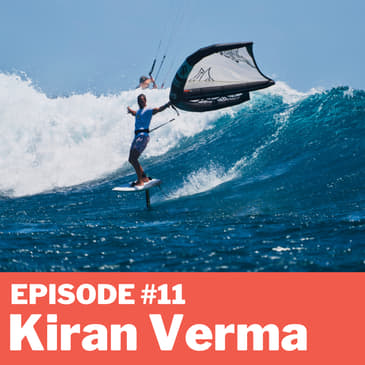

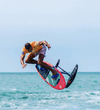
Kiran is a team rider for Duotone / Fanatic living on Australia's west coast. He will represent Australia in the surf-freestyle division at New Zealand's first-ever GWA Wingfoil World Tour event.
Follow him on Instagram: www.instagram.com/kv_foil/
[00:00:00] Welcome to the Wing Life Podcast, where we talk about wing foiling and the lifestyles of those who enjoy this great sport. Hey everybody, thanks for joining us tonight. Here in stoked a chat with you. How's your morning been so far?
[00:00:24] Yeah, good man. Just actually went and picked up a female, a bit more gear, a few more items. And yeah, we got a little wing here at the moment, so I'd be going out and suck my head.
[00:00:36] Cool. And I know you had talked a little bit beforehand, but you had said that your day was empty, so you're getting it waged after. Where abouts are you in Australia? Some fun cuts. It's a ace cut.
[00:00:51] Cool. And you're going to go out there all afternoon, what's the wind look like today? So good, cyclone actually just sitting north of us, which is sucking some wing through us. So we'd be looking at about hopefully 20 knots about 34 footers of the sun.
[00:01:07] So hopefully that next few days, actually we should get all the remnants of that unsyclone. Just staying off the coast, so it's not going to get any of the... Which is good, so I was going to air blast him, which is when the snow.
[00:01:21] Oh, sweet. Nice, that'll be a fun afternoon. So when I know you had reached out and you talked to us and we had somebody different things that we want to talk about today. But how long have you been involved in water sports?
[00:01:38] Want to kind of curious to start there. Yeah, so as I was saying, you were performing a talking, I came from Brisbane, which is about, you know, an hour and a half away from either Gold Coast or Sunshine Coast. People looking at the map.
[00:01:50] So I've kind of caught myself a weekend, Surf Up. You know, it was pretty much since I was a teenager, kind of in an out of it, you know, you go through Stagesby. Surf a lot and not so much.
[00:02:03] And then we moved up here in 2019 to Sunshine Coast. My wife and a doctor, and she got work up here for her six-week contract, and then four weeks since that contract, we bought her house. And the side of it we're going to live here forever.
[00:02:17] And I just had a really big plan to, you know, get into surfing and really focus on trying to get better at surfing. The fact I was living here and I had more time.
[00:02:29] And I was, you know, I was going out and I was struggling with crowds and conditions and waiting for the right conditions that it was really good. You're talking, you know, hundreds and hundreds of people. So, you know, trying to improve those conditions were hard.
[00:02:43] And then I saw someone fall in and crazy as I am. I saw the next day to go spend a three-and-a-half grand to go to our fourth. That's not anything. So, yeah, I got the foil and I went out, you know, watched some video.
[00:03:02] Nothing to just come up to. You're hard, and I thought, you know, I just made a terrible decision here. I was spending this money on a foil because, you know, it didn't feel like I was going to get anywhere close to it.
[00:03:13] Did you know, I've heard in your podcast book guys talk about it, getting off in the first session, and I was in close. So, I reached out for a shop near here and got up behind a jet ski. Okay.
[00:03:28] And found my feet and then, yeah, started from there. I'd still serve quite a bit. And when we get big swells here over four, five, four, we've got some really good for the way. It's like point breaks that it is too fat for surfing.
[00:03:45] So, you know, from 2019, I probably four or four or six times a year. Okay. I was probably at surfing between. So I wouldn't say I was, you know, some big watermen or into water sports my whole life.
[00:04:00] You know, I kind of might be because seeing has been boiling. It's really good. Yes. Now, are you started toe-foiling at the start? Like, first, sorry, toe-follow paddle kind of... Yes, I started with... I started with... No, no, no.
[00:04:15] So, I started with paddling and I did that for a bit. And then I found a bit of a crew and I had a get ski. And, you know, it was just, it's time on the foil is really important. I found it.
[00:04:26] I found with pruning though I had enjoyment for it. I wasn't having so much time on foil. And I found with the towing, you know, you're able to get picked up, go back out.
[00:04:36] Catch away and really focus on being on foil and how you feel works out these. And how you get directed on the bags. So, I think from forling is like the hardest possible way to learn how to foil. There's so many other ways that are so much easier.
[00:04:55] And the turning as you say, unless you're a really stellar coiler and you have just absolutely perfect conditions. You spend so little time on the foil that it's just going to take. So a long, a learning.
[00:05:07] Yeah, I think that's how you found a lot of people got frustrated at the beginning. And why I guess we're going to the wide winging is over the door to so many more people being able to foil.
[00:05:20] And, you know, we're talking about earlier just the age bracket with winging like your age bracket richs, you can be an idea role and go out and give winging and go and have a real shot of getting it.
[00:05:33] So I think it's opened up the market so much more than it ever would have with pruning or someone needing the money to digest.
[00:05:43] Yeah, so how long I guess you did that for what two three years you said and then you think you're going to wait in after two years yeah okay. So the winging part so about 12 months ago. I was looking at cutting.
[00:05:58] They're just going to ask you on the water and someone let me a wing and I started patting out the serve with it and I put a hole in it before I even got out. So, added.
[00:06:11] Feel a bit obliged to buy the wing so I got to fix it and water. So I decided, you know, if I've spent so much money, I'm going to put in the time to learn the sport. Okay, okay. And what kind of wing was that?
[00:06:25] That was an ocean right there. So not a cheap wing. Okay, they're glider was that the full of Lula one. Just had a curious. Oh shit. Okay, yeah, that's a cheap mistake. Nice, not a cheap mistake.
[00:06:43] So you understand why now I am very much focused on learning sport. No, fair enough. I'm a mistake and got you into winging for that to be great. Oh, man. And this. Yeah. And I thought it was the business I got in my.
[00:06:59] So I'm really curious to talk about your community and I actually had touched about that briefly before. So how you could bring in people from all these different walks of life have them together. So can you talk maybe a little bit about that wing-failing community over your app?
[00:07:15] Yeah. We kind of started with what's that group. I was about one or two other guys just to, you know, where are you going today? What do you think is going to be? What's what are you going to go? What time you're going to go?
[00:07:27] Just see if you can have someone else to go with. And that's how it all kind of started. And then, you know, I started going out of beach and I'd see, you know, a random guy maybe start going by himself or we're coming in.
[00:07:39] And I just had the idea that, you know, I'm just going to everyone I see do that. And I'm just going to go up to a production and, you know, ask the number. If they want to drop a lot, join the WhatsApp group.
[00:07:49] And, you know, we're up to 40 people now. Which is that way. Which is awesome. It's all, you know, you know, people will just get on there. We've got some wind today. So, you know, it only really fires up when there's wind, but we've got wind today.
[00:08:02] So everyone can't just jump on and say, look, this is something I just spotted at one thirty. You know, this is something I can't make it. I'm going to this spot two thirty. So it kind of gives someone to ride with, you know,
[00:08:13] safety factor and I guess just the, the stoked fact that's always more, more enjoyable when you got someone else there. You can hear when you catch your way, we're going to do a good job. And then, you know, being out of myself. Oh, absolutely.
[00:08:26] And I think that's something that's really a cool distinction between the surfing community and the wind sport community is that it's so much more inclusive. If you walk up to another surfing, you have to like, where's it happening?
[00:08:38] What's a good break? Are you going to be like, you know, not here? What have you actually tried to, you know, chat with somebody, winging or tiding or wind surfing. They usually super stoked and they want to, you know, share information and stuff like that.
[00:08:54] That's really cool to see that you got you into it and you've been able to start this group. That's really sweet. And it's amazing. Like we've got to spot a flat water spot on the Sunday coast. Kind of everyone is a learner will go there.
[00:09:09] It's fun to wait or start, you know, it's just a good spot to quite say. And yeah, everyone goes there and everyone goes there and chats and you're right. So different to surfing around everyone's so good in the help of each other in the sport,
[00:09:22] which is, which is so good. It's just so refreshing, you know, to have a water sport where I was saying to look for that. You know, it doesn't matter if there's 20 of you out in the sport.
[00:09:33] There's so much for waves and colour and, you know, you've got 20 surfers there. It's hustling for one peak. It's just, it's just not the same wing in Williamsport. Or is it a joy to share with members that you want to get in surfing?
[00:09:47] Especially when you put a foil into the equation because as you say, you can ride kind of anything. You don't need to be right at that perfect spot, right at that perfect peak. So absolutely. So we talked a little bit at any.
[00:10:00] Are you an intermediate level wing foiler looking for an epic adventure this winter? If yes, I suggest you reserve your spot for the wing foiler expedition hosted by Agua Salada. Baja California sir adventures this coming January. This trip is going to be absolutely amazing.
[00:10:17] It includes oceanfront accommodations, airport pick up and drop off, fresh locally made food and snacks created by a local artisan chef, yoga, massages, five days of wing foiling and the best part over 100 kilometers of boat assisted downwinders. Just imagine the freedom and peace of mind that will provide.
[00:10:39] I look will be one of your wing foil coaches on this trip. So be a great time to know and enjoy the downwinders, but also ask questions to approve your riding.
[00:10:48] Our trip will take you on different parts of Laventana and Baja that you would not otherwise be able to access without a boat. To learn more visit winglifepodcast.com and click on trips in the main navigation menu.
[00:11:01] Once again, visit winglifepodcast.com and click on trips in the menu with only eight spots available. We know it's going to book out fast so we recommend that you act quickly. I'll see you there. The ego. I'm interested in hearing hearing hearing this story debut into pro.
[00:11:21] I don't know. I'm a kind of person that wants to be something that's it. I'm going to commit to it and then how do I do it live? I remember watching a wing foiling world tour in Morocco, I think it was.
[00:11:36] Just watching these guys is perfect point breaks and looking at the level and free services. Something beyond like it imagined time. I'll look at the surfing. I can be on this level with a surf, if I put it a bit of time.
[00:11:53] It would just be a bit of amazing to go riding one of these spots in the world where they go and just with the two-man 3-man heat. Before I'd even really probably five months in the sport, I contacted the world.
[00:12:08] I was like, well, I think I'm going to be on a tour with a new world. I'm interested in trying to get to one of your bets. I'm definitely applying. We've got wild cards we can be able to get you into an event that can come over.
[00:12:25] I'll start with that and then I'll be more serious about riding. I guess my free style of it because I knew that that's what I was really missing compared to. If you see these European guys, they're more and more amazing.
[00:12:41] What they're pulling off in the air, it's also the conditions they're riding in. 20-30 knots compared to our average 12 to 16 here. Yeah, so I started working on it and practicing and then I saw that I'm having an event here in March.
[00:13:00] I'm using it all just across the ditch, about 3-hour flight from here. I entered and I got in so now my friends are calling me Eddie Eagle because we have no free style here.
[00:13:12] I've finally just this 38-hour guide came off of an idea for months into a sport. I'm going to go over and hopefully be competitive. Super excited. Yeah, and super excited to see what I can learn off the guys. I'm really looking forward to the five days before.
[00:13:31] The competition because I've reached out to you guys and it seems that they go over and all train together. It's a lonely time, Australia trying to do free style when you're just trying to learn.
[00:13:44] You're back to flipping, trying to learn is backflip, whether it's all under, what's your own video about it? It's very different to see it in person or have someone who knows who's doing it, who knows the little adjustments. That's all it might be.
[00:13:56] At the moment I've got the rotation that I'm just struggling with a wind and putting holes in winds. Yeah, just hopefully I can push my riding and bring back the up.
[00:14:06] And then if there's anyone else who's interested in Australia then I can be passing tips down down on. So what I think it's something that we're hoping to see show up in winning. But there's not that much grassroots events right now.
[00:14:22] That's probably that I know anyways. There's the International Tour, which is really cool for all the pros. For people that are getting into it and just looking into getting into more amateur competition and stuff like that, It doesn't really exist yet.
[00:14:35] And I think that the, you know, from me, but in my win surfing, the most progression I ever made was when I was around the pros riding. It just learned so much. It's unbelievable. I think what you're doing is amazing.
[00:14:50] So you're going to answer to get into the event, but you're going to participate in that. You're going to learn so much. It's going to be such a fun experience. Yeah, and that's it for me. The worst thing like don't give me wrong.
[00:15:01] I want to be competitive. I'm like, I'm competitive first and I want to go over that bit. But I am looking forward to hopefully really progressing my riding. And just seeing where you sit. It's very, it's hard to see where you sit on film.
[00:15:17] If you know what I mean? Like we've got some really good way of riding in Australia and we have had some, you know, some like a way of riding competition here. It's mostly racing.
[00:15:27] Racing is a really popular here because we have a lot of wins surfing racing in Australia. A lot of them are transitioning over the winning. So it got quite a strong racing to me in Australia.
[00:15:40] But yeah, we've got no grassroot free selling here. Nothing at all in Australia has free selling. I know in Europe, in Europe it's a lot better. It is a lot better in Europe. Well, we have one buddy right Max. He's from Toronto. He goes, Yeah.
[00:15:58] Sponsored through a store in Toronto and now he's on the tour as well. And now he was in Spain. I think he's in Mexico right now training. And he was probably one of the better win surfers back east in Canada.
[00:16:14] And now it's been really fun to see his progression. He's working on front flip back flip rotations just to get that stuff up to certain standard to see if he can compete as well. And it's been super cool to watch.
[00:16:30] It will be stoked to watch you out there too. Well, you know, he's like extremely funny. I actually very reached out to him about two days ago. Oh, no. Yeah, so I reached out to him about two days ago.
[00:16:42] And I saw that he was, you know, he was on the tour and he was coaching. And I actually just reached out to him on Instagram and said, Nate, you know, I'm coming to tour of it. I see you're in New Zealand and I just love to.
[00:16:54] I'll be doing some tips. I'll feel and show you with this fall. He straightaway right back and goes, no, no problem man. How to help you out? Let me know when you're there. We'll meet up in a row of me. Oh, well, man.
[00:17:07] He should totally do that. He's not only is he a really serious athlete like he had. He was doing a Olympic win surfing campaign before. But he's also a super big coach like he's a.
[00:17:17] Yeah, that's going to be awesome and give him a high five for me and for Lucas Walker. He's been getting many of our from back home. Yeah, now let's. But that's not really like you're not going to.
[00:17:30] And I just funny that you don't know if these guys, you know, we'll take a time out of diet and he didn't have to. And you know, it's just nothing with sports or something that,
[00:17:38] you know, somebody can pay to get to take it and time to give you their time to data. Help you out. Mm-hmm. I find there's certain aspects of different, like I used to ride motorcycle and I race
[00:17:51] motorcycle a little bit and I went through some different life changes and I don't do that anymore. But the biggest aspect of that whole thing was the camaraderie of the community.
[00:18:00] Like every time you rode down the street or a road, you would wave at them and you felt like you're a part of this bigger family. And when I found the win community when I was rehabbing from the accidents that like brought through that motorcycle,
[00:18:12] it was amazing to find these people that were kind that lived a little bit differently. Thought a little bit differently that had something that drove them from a deep passion inside of them. And it was a passion that was very much different than I had seen.
[00:18:27] It wasn't corporate drive, it wasn't greed drive. It was like freedom and joy that they were working on. And then everybody for the most part they're like, hey, like you, you build this brand new community of friends and then your community expands everywhere you go.
[00:18:44] Like if you go to these different spots around the world, they got friends from all over now. And you still share that same love and passion for this sport. And I think that's been, that's probably been one of the nicest aspects of winsports for me. Yeah, 100%.
[00:19:00] And that's what you feel the same which is cool. Well, we totally understand both because of all the issues. Yeah, like we're talking from different sides of the world between it, you know, takeaway, we don't have this conversation and you know, we're talking about it.
[00:19:16] And it's just a little, you know, I'll say any before that I went over to Fiji in December. And you know, I got to ride stuff I never would have rid of. Never, even, you know, though I served, I never would have gone over there with, you know,
[00:19:31] done stuff I did over there because of winning. And met the people over there because of winning. And one of the coolest, just getting the story of that is one of the coolest things about the boys who've got Fiji
[00:19:42] was one day, it just got a really weird and beautiful left hand point break of the side which is the photo for this episode.
[00:19:50] And you know, you had all the surf guys sitting on that table watching and you know, I went off from the island with one of the structures.
[00:19:58] Actually, if in the sunshine case, and then we'll ride these perfect four-five foot refrags with this 20-long win that we're just like a ride. Like you go out the channel, find a set for ride the back and ride it in.
[00:20:10] And we're at the front four hours and when we came back in, you know, two of the surf guys, I'm from Marriott, and many of the other guys I mean, can you come show us how it works?
[00:20:19] You know, come out the back and you know, nothing we ever thought would we try. I mean, we've just been sitting there, you know, not being able to serve. And you're out there having a ball for us, you know, we want to, we want to keep it going.
[00:20:31] So, you know, I ended up taking behind a jet ski and teaching a bit of boiling and show it in our winglets.
[00:20:38] Yeah, it's just, it's just cool that I suppose, you know, guys who probably think they wouldn't do it or have no interest kind of a watch it. And then go, yeah, it's something that I can find on. I mean, like the demographics for our podcast, it's mainly 45 to 60.
[00:20:53] And I'm finding that kind of interesting as well that like a lot of other sports even, and even when it's here from the most part, you'll have some guys that are doing a little bit later.
[00:21:02] But this is opening up a huge window for people who are a little bit older that when you get your dynamics of standing up, figuring out your wing like you can foil like we were saying, rid up into your 80s kind of thing,
[00:21:13] maybe even later, depending on what kind of foiling you want to get into, which is also pretty cool. Because you're mentioning the competition there, you might have some young people competing with like 40 in some girls.
[00:21:27] Like there's such a wide age group, which is pretty neat if you think about it. Yeah, I was talking to you about it before. It's pretty a my tonic compare and I was in the world too.
[00:21:39] You're talking about not just 140 plus your older, 115 year old, and then everyone in that 20s, you're talking, you know, numerous of people in that 40s, you know, sort of kids in their teens all competing in this in this one event.
[00:21:54] And you know, I suppose golf is the only thing I've really think that's similar to have that. So and I think with the equipment you talk about the age, I think as equipment gets better as well, it's kind of open up.
[00:22:06] So you know, your most pressure you've got on yourself is really getting on foil. Once you're on foil, you know, you could be on foil for, you're on foil for three or four hours and really not be so.
[00:22:19] There's so little resistance against you once you're up and going. And with equipment getting better, you know, if an older guy who might have, you know, some limitations with their fitness can be on a bigger foil, a bigger wing.
[00:22:32] That's going to get him up easier. Once they're on foil, you know, they can be out there for hours. And everything or 70 has to do today when they get up in the fall for the first time. Yeah, yeah, absolutely. Are your kids getting into it?
[00:22:46] No, there are a bit younger than six four and a three. Okay, yeah, they're a bit younger at the moment, but I definitely will be keen to hopefully get them and see because it's going to be amazing what the sport is in 15 years.
[00:23:00] Like a total of two years old, because they're in public back to some ways in 720's. You know, it's amazing where where goes like, you know, as a government, Strapless and these kids even doing 360s with no straps on.
[00:23:15] You know, it's just endless to think of where it could be. Yeah, we interviewed, we interviewed, Keaton Pritchard from Maui around Christmas time.
[00:23:26] And the stuff this kid's pulling off is crazy. And it's really, it's really cool to be able to look at this like as a life thing to be able to have talked to him at 13 and then maybe talk to him in 10 15 years from now.
[00:23:40] To just see and he can look back at that interview and say, hey, like this is where I was and this is how far the sports progress.
[00:23:47] Because we've mentioned that on other episodes, I personally haven't had the opportunity to watch a sport evolve like this one where at an age that I can actually get.
[00:23:55] And I can actually kind of comprehend what's going on when surfing was kind of before my time, cutting was before my time. But this one is kind of cool that you can watch through all those renditions which I think is pretty neat.
[00:24:07] Yeah, it's quite funny because a lot of and you've said it before a message a lot of people talk about, you know, this happened with. I just, this blow up of a sport having with wind surfing and having quite boring.
[00:24:20] Having the subbing and you know, it's happening with winning but it's funny. I can't say I'll let around to those explosions eater.
[00:24:28] But I just feel that we're so accessible for so many different people and can come up so much of the world that I see it being big.
[00:24:38] I see it grow. You know, it's looking to go until then bits, you know, you've got racing, you've got freestyle, you've got they haven't even touched on the way competitions yet. You know, they're doing their first way competitions this year on the world too.
[00:24:51] And you know what these kids going to be able to do on a way in 15 years without the freestyle is, you know, there's no limit. And when there's no limit to something, there's endless growth.
[00:25:02] And you know, if you've got enough people enough growth, not interest, it's going to be a bit of it and it is going to get bigger. I'd love to learn a little bit about your progression in winning.
[00:25:16] So when you started and then just kind of walk us through that and then maybe even talk about some of your first moves and how you were able to kind of connect those dots.
[00:25:27] Yeah, so I had zero winning experience. So none. So when I was going out there, I had to learn everything to scratch. So I did nothing in the direction what, you know, we got a what we're direction tied blah blah blah blah blah.
[00:25:42] So I found that most people like most of us going out quite lightweight and I was really struggling. And you know, to try and put the falling together with holding the wig in the right direction.
[00:25:54] And you know, I did that for a few weeks and you know, get up on full, you know, I'd get going a bit sooner come down than another half an hour to work myself up.
[00:26:03] And then I started going out and strong wins and I know we don't know where you're going to always get this but I always recommend this when someone's learning is go out and strong wins.
[00:26:12] There's nothing wrong with how you're going to get on for you nice and quick and fast bit. And you know, you can figure that out once you're up and going and start figuring out your progression.
[00:26:22] So I definitely say that when you're learning strong wins your friend, which you know, I suppose goes against a lot more people might think. I don't know, you use a coach if you agree with that but I just found a lot easier.
[00:26:36] What a strong what a strong win mean to you. Yeah, exactly. Yeah, yeah, I think the. Yeah, the lowest number I feel like 16 knots is like when you start to see the water get a bit darker.
[00:26:49] You'll have the light layer of water and then it starts to get these dark patches that are coming down and dusty Canada. They're very easy to see.
[00:26:57] I don't know if it's the same over there but 16 to 20 is such a magical beautiful number that it just kind of it powers you right up. So I do agree with that for sure. Yeah, and then so I started three weeks of really, really terrible time and enjoyable.
[00:27:14] I don't, I found it, you know, difficult. It was tiring. It was a lot of work. And then you know, starts coming together and I compare it to what I learned snowboarding.
[00:27:27] So it was a quick effort for, you know, I remember starting snowboarding that first day you just said,
[00:27:32] I'm never going to get this balance, you know, just keep forward before and then suddenly you find you find your middle ground and I found it the same with wingers once I found that sweet spot everything else started coming all easier.
[00:27:45] So, you know, from back to progression straight lines and then into into tacking into turning. And then you know, this is a very grass and over probably a month. And we're going to start with with the little jumping. And jumping into twisting. And then it's trying to flip.
[00:28:08] I was attempting back flips probably six months in. You know, I had my 180s down probably three months in and you know, 360s around the same time as back slips and then, you know, it's really insane down.
[00:28:24] I was, you know, not landing just in my book, you know, been able to pull it off. And, you know, last few months has really been about getting better on waves.
[00:28:35] So learning how to, how to read a wave where to get on the wave with a wing, how to hold your wing neutral. You know, you guys are not when surfing. Learning to power up on a wave the right time to power up with the wing.
[00:28:51] And yeah, just try to progress and try to get more consistent with my tricks and just I go out and let's see every time it's going to.
[00:28:58] So like how often are you getting a because that kind of progression normally it takes longer than than a year like that's that's super quick progression. So this week of winter we're not getting much wind. So winter, maybe one or two weeks.
[00:29:15] During summer we're good patches like right now we're on getting out five days in. And I'll go. Okay. I'll go. I think the free balance. Okay. Well, yeah, no, that's awesome.
[00:29:29] Any art for them and people just, this thing is you don't be scared people but don't get full learning how to force really important when you have a foil on it you feed the wing.
[00:29:38] And, um, feeling safe to foil will make you enjoy your food and make you progress a lot quicker. You're worried about foiling and falling and hurting yourself. I think you, it'll take you longer because you'll have another bite.
[00:29:55] So I think learning to foil where it, learning to fall and where to drop your foil and where to drop your wings is important. Javany tips for people that you found have helped you. So I watched a lot of people try to learn their way through back heavy.
[00:30:11] On their foot where they're trying to get away to get on for you really want to get that for momentum so make and show you kind of pulling with your wing and pushing your upper body forward.
[00:30:21] And then your lower body falls for five through to make you get up on foil as quick as possible and, um, make sure that you just spend the heat to time you get up.
[00:30:31] I know you've run as other chance but getting behind a jet hero boat and getting up on foil and just learning how to correct yourself on a foil or how foil feels.
[00:30:43] And just make such a difference when you are doing winging or any sign of foiling because it's such an unnatural feeling to be on the foil.
[00:30:51] I was listening to, I think you're episode last week when we talked to Steve Tauvis, I think he's an artist and you asked him what my first time you're on a foil is like getting bucked on a bike on top of that up.
[00:31:02] And it's so true. So I think I think the winning side, you know those little things with defeat and stuff, you know, I recommend everyone go to a coach and they're learning and you're going to give them that sort of advice.
[00:31:14] And that's going to help but you can't beat time on foil because, you know when you're getting up, um, you're poof on a situation.
[00:31:22] A lot of people might get up and then have their foot in the wrong place or they might have their weight in the wrong direction because they just don't know what, you know, how to react to a foil moving in one way or another.
[00:31:33] So definitely general, I think, you know, getting on your foil as much as possible is going to help your winging and everything, no for it.
[00:31:43] No, it's good tip and what I started doing actually is coaching people based on their skillset sometimes you'll have a pretty good athlete who has never done all anything foil related.
[00:31:54] You can stand them up right away because you can just tell they're like that others I would actually get them to sit.
[00:32:00] And then what we do sitting is we just get them to sit and then you'll start to feel on a big massive board because then then we just get that and then once you can get sitting a little bit will put you on your knees.
[00:32:10] And then from kneeling, you can start to control the foil and you can't buckle nor hurt yourself underneath and sometimes with thumb individuals all they would do is or first couple sessions yes it burned out their quads.
[00:32:24] But it taught them that basic of like, okay, so the foil does this the foil does that then our third session I would stand them up.
[00:32:31] So I felt that slow nice slow progression time on foil was a lot safer because it's not a bit speed per se behind a jet ski you can gun it like I can go whatever but I could start I think the slow end was like even on the speedometer on there would say 10 now at 10 I could get you up and that's all we really needed.
[00:32:52] So that's kind of cool. So getting into your first jumps terrifying was that fun how did that feel. Yeah, definitely definitely scary and I know you hear from every professional we got that I've heard and speak about it's that committee.
[00:33:16] Easy to fight about yourself is not committee and I think you know the first thing you'll do it is going to be scary.
[00:33:23] And there's a lot of timing involved in it to hit the wave right after wing under the wing underneath the wing and gain that pop but like I say is it's so doable doesn't matter you know if you're a month in if you're going it is a doable thing to start doing and.
[00:33:43] Once you get some serious high there's no feeling. So, you know, no better feeling than just looking down on a wave or you're you know you're flying in the air and we need time everything right it's just yeah it's one of the best thing to get out there.
[00:33:58] So I'll just say yeah just just want to find a bump find yourself a bump I compare it to an early in on a skateboard get that pop get the wing in the right direction you're going to get it wrong you're not tall.
[00:34:13] But tag in the line so and you will progress really quick once you want to do because it really is not hard at all. Trying enough and what size of boards or how much do you weigh and then what size of boards are you writing on that 77 kilos.
[00:34:28] And after a lot of refining I'm between a 15 or 60 later board alright but you're in the time now it's super heavy. I could drop down on 30. And if it's really not I'll pull out my down windball would be focused out of the cruise around.
[00:34:45] Okay, for now so your average board is what like minus 25 I guess. For like 75 kilos down to 50. Okay. And you said you just got picked up and you're just starting to ride with do you want some fanatic is that right. Yeah so I just actually yesterday decided well.
[00:35:06] I jumped on with them which is which is really exciting I guess it all comes back to you know I was with NASA NASA has been on early and they've been absolutely fantastic and. National show the God J.B is one of the most passionate.
[00:35:20] For you lose wings serve as high to deliver me your life and has given me amazing advice over six months I was with him. For me it was.
[00:35:31] Do a tone has right as I'm too up and I guess as we talked about before as you guys are saying before you need to be around right is to improve.
[00:35:40] That's really the opportunity to ride with some of that guys leading up to these events and hopefully if I go to more events just been around you know professional crowd. But yeah I can I can just familiar then not to mention their wings are amazing. Amazing.
[00:35:59] I'm on the near near there but I have all my stuff yet but it really is amazing the low end grunt that wing has and you know being able to. Get us feet not so quick in between why I've sublust and transition.
[00:36:15] No I use one of the early on natural things and they don't have a lot of low end there are more of a higher wind range I guess kind of wing but I was quite impressed with the evolution of the do a tone from I use one the summer of brand new one.
[00:36:32] And they were pretty they're comparable let's say to the F ones KTs came out they're also really really good for low end grunt but they pumped well they're a super fun way.
[00:36:45] So I think you're going to love love riding on those for sure what you're so you're riding their boy obviously they're born and foil to. Yep so I'm running a 55 liter.
[00:36:57] Panatic Ellie wing board in the same and I'm waiting for a pause cover the moment I'm just in between using a thousand flow which is probably a bit bit for me I want to say it's.
[00:37:13] Yeah I definitely use small foils I like to be quite whip in the waves and turn it quite sharp. So you know it was super easy to get out of water.
[00:37:25] Great on just lumps but yeah it was a bit begin in steeper sections for me okay are you riding mid aspect higher aspect stuff what do you find the best for your waves up there.
[00:37:41] So I've actually I was riding mid aspect the whole time which you know for steep sections and recovery I just don't be human better. They will literally mid aspect winds will give so much leeway and you know if you for it shit.
[00:38:00] If you come out we're losing as you lose in speed and I guess and pump ability so yeah at the moment I was kind of riding the in between the mark once from Nash which is quite a good in between wing.
[00:38:15] But super excited about the the fanatic car 75 of what's quite a bit online and it just fits us a little wing. Sweet no I think that's going to be slow. It's the first time they go over to New Zealand is that right.
[00:38:34] No I've been New Zealand skiing actually been a great morning okay but yeah first time I've been in North Island so it's up in Bay of Plenty. Okay and that's now it's the exact spot. I'm going to go to the next one.
[00:38:50] Basically I find Auckland is that to our drive and it's a little coastal town and I've got a wing festival down there so I'm going for racing music.
[00:39:02] I mean they're suppressing and the wing for tour so it's over about a so I think the way into third to eleven. Yeah I'm going to try and go there five days before and you know just wing is much suppressing can.
[00:39:18] Okay as I said hopefully get some tips off these guys and try to see where I am. You know how far off it I am which is really fun to me. So you know just be where I need to be to be competitive with these guys.
[00:39:35] Max is well miss it because we've been trying to. We want to have a chat just a catch up with them because we we normally would sail with them on the Great Lakes but we'll follow up with them to chat with him.
[00:39:46] He's awesome and his he has a really good crew of people now that that he trains with so they're going to be more than happy.
[00:39:54] To chill and do stuff Max is probably one of the what are the nicest guys in like I met him at Sandbanks and it just became super tight so he's a he's a real good. So I think it would be super fun.
[00:40:06] Yeah and I'm so excited like and especially the fact that someone's been a coach you know in your coach and it just they can kind of explain things. You know probably been someone like I can or you know someone else who might be a fantastic robot up.
[00:40:23] But you know you got to know you just seem to break it down a lot easier and be able to explain it in a way that he can kind of transition that into actually doing it.
[00:40:32] That's fair and Max is taking it from like my level of coaching will go to where I can ride.
[00:40:39] Now his level is like that next level and he's been able to work through and learn all that and train so his coaching will be a completely different level than mine. Like I'm taking people from zero to.
[00:40:52] To make it a can tack and drive and like I just ride strapless all the time I'll even jump. So but I have been looking at getting a smaller board so it's cool talking to you guys about just what boards you're writing.
[00:41:05] Because I've just been writing a float and ride like a 70 liter I'm 50. 150 pounds or like whatever whatever that comes out to 70 some kilo. So this 70 liter board for me is just a float or I can come in and eat knots and float on it and stuff.
[00:41:22] But this year I was starting to think Steve was saying he runs a 32 or 33 liter. Yes, his smaller board because he sings that well so you're 50 now that thinks it's thinking a little bit right but it's not. So he starts that thing.
[00:41:41] No, so I'll just it's quite funny to talk about because I went all the way down with 30 and I suppose that Steve you know he's writing her why even then got some serious wind.
[00:41:51] And you know I was serious wind I think water start can actually deep water start to me easier.
[00:41:57] But I think it's you know your feet already said you can hold your wing in position and you look to just puffing and you straight up on the floor you're not in a transition from me up till they.
[00:42:08] We just don't get enough wind that it was feasible for you to earn enough so I can kind of find him between so 50 liter I'll be on my knees that I'll be sinking you know maybe.
[00:42:19] I don't know half a foot underneath and then it's okay anyway you go pop up and then I'm up to my feet. I'm kind of found the 50 foot files probably my perfect white literally just sink it.
[00:42:33] You know I've been locked wind up and stand on it and still kind of pop back in if I have to. Okay so you're knee starting you're not surf style starting yeah you're knee starting on it. Yeah yeah yeah yeah yeah okay. Yeah I'm very similar.
[00:42:51] I think that's something around the way it's in killer terms is 25 is really a spot where you can still make a work on it tonight.
[00:43:03] So it's all enough to define when it's 20 and you're not getting to do a lot of so it's really a lot of starting you need 29 like unless you're using a huge wind.
[00:43:16] Like you need a lot of wind and it's just not a reality for a lot of people. Especially if you're hiding in spots where it's really gusty and you have you know 12 guessing the 20 knots.
[00:43:27] The 20 knots is only last thing about 10 seconds so your head is really fast and real efficient or you're just never going to get up.
[00:43:35] So yeah I think Steve writing and Maui would all that wind totally makes sense but for anybody looking into getting into smaller boards that weight minus you're waiting to the ground to minus 20 to 25. So really give this a start.
[00:43:53] And just the last little I saw on that is I would say and I don't know what you think about this kid but. You should kind of hold off on that board until you're making all of your transitions basically all the time.
[00:44:06] If you're falling you know half the time in transition. I think you're not quite ready for that part and you're just going to be one of a half soul and it's going to be a good.
[00:44:17] Yeah and takes the weight of the weight of the energy always having to get up. I think you also find that a lot of the companies are realizing that majority of the people who are writing don't have those Maui conditions.
[00:44:28] Like it's going to be on a sort of Maui special wind place and I think what you're fine is they're making shorter boards more floaty. So you know 50 might 55 lead up and only boards 4 7 so you know I can throw that thing around.
[00:44:45] This much is a one I don't feel like it is so true my spinning on my jumping but you know I can still need started and get out through the ways or if I have to come back and say. And I've been a 70 for someone my way.
[00:45:01] You know it's a very very enjoyable you know progressive board you could be on you can still do a lot of things on a 70 lead a board that's you know five feet.
[00:45:13] With that struggle if you are struggling those little boys still struggling between you know doing your terms of getting up. How big a how big was the board that you started on. I start on 85 lead. Okay that's still one. Oh that much amount.
[00:45:33] Yeah it all could I could still stand on that. Yeah I don't know I just found it flat it was flooded me.
[00:45:44] You know I just progressed through I didn't I was starting with the guys I was going with you know I was three months six months behind these guys so.
[00:45:51] You know I hadn't really have a choice but to learn quick otherwise it was a lot of paddling and a lot of walk my beaches for me.
[00:45:58] Why would have been because I learned on 100 and I don't I think I was on a 105 or Windsor kind of big 105 and I think I may even have been on a 150 for a little bit at the start too.
[00:46:11] And then from there 105 down to an 80 and then the 80 was a decent jump and now down to 72 just because in cold water I didn't want to have to worry about it sinking it off but.
[00:46:21] Speaker boards is great when they learned that I find they struggle that swing way once they start being a turn. Oh yeah.
[00:46:29] And and you know I've had so many people I just you know I'll say you're up now which you know they have to be up you want to start with people get their straight lines but you see them start the turn and they're on a one.
[00:46:40] And I think that's a very, very decent thing you know ankle break up go the opposite direction just and just I think you're an adult that I don't mind.
[00:46:49] Our teaching are absolute beginners they may have kind of they've never fulfilled so in and finally have them for one hour and then it's part of their vacation to Vancouver Island for example.
[00:47:03] I try to make it a little bit fun so hop in the month of 150 or 30 at least they can get up because a lot of these guys are weighing like they're not 150 to 165 pounds or sometimes 180 to 100 even 220.
[00:47:16] So it's like we're trying to get them aboard and the school has a board big enough but after they figure it out like maybe in a couple hours they would be ready for something significantly smaller which is the nice thing about going to a school because then you might avoid buying.
[00:47:33] The big behemoth that you might not need for very long if you progress quickly right so sometimes even lessons or save you some money. I recommend 100 is like everyone I talk to should go to school. Like everyone should go to school because it'll save you money.
[00:47:50] It'll save you like when you're talking about for like you know it takes a long time so you can teach someone to sit meal.
[00:47:57] You know where someone could be spending four months trying to stand and then you just stop something little like that to get them going and it saves them you know three months of learning and then.
[00:48:06] You know the money of them buying big stuff because unfortunately there are good deals out there that some deals are so what they want to get rid of. And you're not having an idea 100% of that.
[00:48:17] I recommend that anyone if anyone's listening to it or they want to start if you go to a coach and you spend that money to a coach listen to it.
[00:48:25] And I like to ask you the other question is I see that there's a lot of foil drives coming into the coaching for winning. What's your opinion on that?
[00:48:36] Yeah, I think the issue with them is that they I don't know if you've gotten to try on Karen but basically when you throw it up. You have yeah so you're probably related to this basically when you throw it a lot.
[00:48:50] The nose of the board just really wants to go up. And that's that point you need to move your way way far forward to compensate for that and that's just something that doesn't happen when you're winning.
[00:49:01] You do need to keep your way a little bit forward, you know, to the forum after pop up but otherwise you just not something that happens when you're winning. And the other thing is that they're so heavy and so big that it's really hard to pump the board.
[00:49:15] So for me behind the boat or the jet seat like you were saying before that's really the way to do it and you can be riding kind of the same foil that you're going to be winning on.
[00:49:23] Can be on a nice big board stand up on not having to move your feet just already have the instructor tell you where to put your feet.
[00:49:31] And then you know they put you up the right feet that go I'm really quick saying around you know 10 not just things and we like a pretty sweet spot show a lot of hope.
[00:49:39] And I find that's a way better set up to learn on than on an e4.
[00:49:45] Having said that I had I have had really good feedback from friends that of you know e4 all thought that it was a bit way to improve your foil and I didn't just get more time on the foil.
[00:49:56] Yeah, if you don't have access to border issues and then we go. You know I've got kind of a bit different things over here called four drives which I'm sure you see in the kind of a taxi or mask.
[00:50:08] So there's just a little engine and a touches and we went to a.
[00:50:12] Demo day for another week and it's quite a bit different does want to live with the nose, but you put them on quite bigger boards and I know that in Australia they're getting used to teach winning quite a bit. I still think you're right, I think that it's.
[00:50:29] It's not going to give you the exact same feeling so you might go to. Win afterwards and it could be completely different but it's just not the interesting concept that I guess they're bringing to turn rage more and more people and.
[00:50:42] You know, I guess if someone comes to a lesson and they're really far off learning to get them on then they still get the feeling and you want to get the passion for it. Yeah, totally.
[00:50:53] I think the foil drive it actually makes more sense than the e-foil because you have the engines so much higher up so it doesn't.
[00:51:01] It's right up as much as you're saying and it gives you that little bit of forward momentum you get the thing moving and get it popped up on soil. And that point as you're saying, you know you pop up you get the feeling and cool yeah.
[00:51:14] We're having fun right away.
[00:51:17] Because the one thing I've seen a problem with towing is is the kind of rope you're using so if you just like the rope that we had at the school was not as like a kind of the stretchy ones that you use for wake foiling and stuff.
[00:51:31] So our rope would sink our rope was super tight it was like a yellow whatever standard nylon ropes stuff.
[00:51:38] Like it was super hard on their arms so there was and then as a ski driver you got to get used to throttling up throttling down so there's a lot of things that came into making that an enjoyable experience as I learned how to be a better instructor for the people that I was teaching.
[00:51:54] But if you get the right tow rope obviously so if anybody that doesn't want to try that get the right tow rope don't cheap out because they do the other would sink.
[00:52:02] The other ones will yank your shoulder out and then what I would say is as soon as you go to fall let go of everything all come by I'll pick you back up because what I was finding was that people would hold on and then they would start.
[00:52:16] Yeah, and then they would just start to sink underwater and it takes me like 15 seconds to go and then you do like this kind of question mark thing with your jet ski which then puts the handle right in front of them and then they just grab it and they pop right back on.
[00:52:31] So that's the only downfalls I've seen of it. Another thing I saw when I was teaching a buddy who's used to kiteboarding is he went way too far forward on the board and kept asking for more speed.
[00:52:43] So as I do, I'm not going fast enough. I can't pop. I can't pop and I was like and I did it once and then as soon as he popped he came so close to hitting that I saw the.
[00:52:54] Like the fear of what death it is eyes it's okay so next time we're going to back you right up onto it and that's go super slow and then you'll know the difference of citing versus this because foiling is not about speed. So those are the little things that that I've noticed about teaching of towing.
[00:53:13] Obviously if you can get something where you can like throttle lock it would be awesome because you're always kind of playing up and down.
[00:53:21] But yeah for us it was mainly the things that I learned that were the hardest was the rope just to make sure you're at the right rope.
[00:53:29] So I'm actually a great idea of how to the opportunity to tell where the quite a few different crafts and I think what seems to be the easiest is the biggest boat you can find with the most powerful and you can find because the boat absolutely doesn't care about the person behind it.
[00:53:45] Where the ski or the really small river thing like that you just don't have enough power to go out and speak with that. And quite a bit and the second person pops up.
[00:53:57] So the person who's driving means to really on it and kind of talk about and take everything under control. So it's a big boat with a big powerful engine and doesn't feel the person behind it.
[00:54:13] So you can just hit the opportunity to be. You set your speed at 10 knots and that's it. So pretty much what we're saying is we'd like a $250,000 weight for this for the podcast you know what I mean want to be able to.
[00:54:29] Yeah if it can make like a nice way behind. That's it. So sure all of us.
[00:54:45] We're looking forward to chatting with you especially when you get over to New Zealand it'd be cool to even hop on quickly and do a little walk around with you to see how that experience kind of feels.
[00:54:56] Because there are a lot of people that that from out here that would love to go to New Zealand is just really far. Yeah, not that I'll be definitely painted it out like I'm so happy to show.
[00:55:09] Hey people you know just every show going this little championship and nothing. Yeah, you know just show them the experience. Nice. All right, what we'll talk to you soon then and hey thanks a lot for joining us. That's an English.
[00:55:25] Thanks for joining Tom and I in this episode. We hope you enjoyed it and we'll see you next time.