
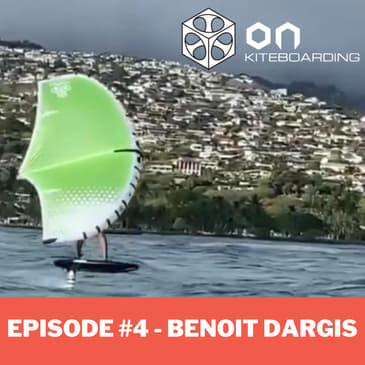




Benoit Dargis is the owner and designer at ON Kiteboarding. An artist and shaper first and foremost, he has been designing and building everything from snowboards, to white water kayaks, to composite luxury sports cars over the past 25 years. Benoit was a World Cup snowboarder and a designer for Jasey-Jay Anderson, who won Gold at the Olympics. Join us to hear about what goes into developing/producing wing gear and how this passionate and creative designer started ON Kiteboarding. www.onkiteboarding.com
[00:00:00] Welcome to The Wing Life Podcast, where we talk about wing-foiling and the lifestyles of those who enjoy this great sport. Hey Tom! Hey! How are you? I'm good, how are you? Pretty good. All right everybody. Sorry for the tardiness. We have a bit of a rain situation.
[00:00:35] We weren't done the boat. Yeah, no problems. Yeah, we'll keep everything dry or what's happened? Oh yeah, I was just at the Marina and we don't have a roof over our dinghy which is our car so it's like driving around in a convertible in the rain.
[00:00:59] I'd have waited 100% 100%. Well everybody, I want to thank you for joining us tonight. We have Benoit here and wanted to quickly introduce him and actually Benoit, if you'd like to introduce yourself to the group, thanks a lot for coming on tonight and we're super
[00:01:20] stoked to chat with you and learn more about what you're working on. Yeah, thank you for your invitation. There you are. So yeah, I've been in the sports industry for a long time.
[00:01:33] So I built a lot of design for different companies and it was starting in creating and then working on snowboarding and so it was so up and served and now we're building a company in Maui and now I'm working a lot with the windfall.
[00:01:58] So yes, so my always taking down some of the other sports that's trying to bring the sports to the other one. So when I learn from sports I'm trying to give to the other sports. Yeah, okay. That's that's why I'm doing this. This is my passion.
[00:02:25] So that's why I'm I'm doing here. I'm doing this that here today. How long, what sports did you start out in if you don't mind? Or designing or maybe for both, I'd like to know where you're kind of sporting a
[00:02:45] little bit about your sporting career and then maybe when you start when did you think designing was what you kind of want to do? Yeah, I start skiing when I was reading on. And then after that, I just switched to snowboarding when I was about 16 years old.
[00:03:03] And yeah, I was competing skiing at that time and then after that, just switching to snowboard and then start compete in snowboarding. And then I make the woke up for like five, six years. And then I was pushing also snowboarding.
[00:03:21] After that, yeah, I was starting doing like composite things also on the other side. So I made a guy is in Montreal when I'm doing what are kayking? So I made the guys and we started designing kayaks together.
[00:03:45] And then we made some huge company, yeah, one of the third biggest kayaks company to work. And after that, yeah, I did another kayak company for like more for lake and for sea kayaking for the big market. Okay.
[00:04:06] And then yeah, and I was with corn out of sin, right? Yeah, it was like yeah, yeah, we're current. I was working current until 2003 thing. And you left the company for is for other company. And then I was the domain, the designer from 2003 until 2008.
[00:04:29] So we did a lot of kayak there. So just sending a lot of plugs and making molds and making prototype in plastics. Yes, so I learned a lot with that company. So I worked there for almost eight years.
[00:04:49] And after that at the same time, I'm doing some composite things like carbon things for snowboarding. Are you an intermediate level wing foiler looking for an epic adventure this winter? If yes, I suggest you reserve your spot for the wing foil expedition hosted by Agua Salada.
[00:05:10] Baja California sir adventures this coming January. This trip is going to be absolutely amazing. It includes ocean front accommodations, airport pick up and drop off, fresh, locally made food and snacks created by a local artisan al chef, yoga,
[00:05:28] massages five days of wing foiling and the best part over 100 kilometers of boat assisted downwinders. Just imagine the freedom and peace in mind that will provide. I look will be one of your wing foil coaches on this trip.
[00:05:43] So be a great time to not only enjoy the downwinders, but also ask questions to approve your writing. Our trip will take you on different parts of Laventana and Baja that you would not otherwise be able to access without a boat.
[00:05:55] To learn more visit winglifepodcast.com and click on trips in the main navigation menu. Once again, visit winglifepodcast.com and click on trips in the menu with only eight spots available we know it's going to book out fast.
[00:06:11] So we recommend that you act quickly. I'll see you there for Jayce Anderson who won the Vancouver Olympic in 2010 so that was my device I did for him. And then what else I did.
[00:06:25] So I'm as cool to her and a shaper so yeah I did a lot of stuff around that. I'm sure she had. If you guys have forgotten the chance to visit Ben at his workshop he has some really, really cool stuff
[00:06:41] in there it's really funny you go in and you see these like really cool prototype white water canoes and then you have these giant penguins that are out of composite and then you have wing gear
[00:06:52] and like boat stuff and car stuff he's like really kind of touched everything. And it's true what he's saying that they kind of all of these different designs and different different ways of shaping and being an artist in a way with these materials kind of bring a
[00:07:12] really unique finish to what he does. It's very very unique. So now we're doing some cars so I did some two collection of cars so that's my main main job for right now and then I did some some water cycle stuff also so
[00:07:31] this is my other job matter company but it's good because I can mix the composite into this port also so we can I can combine both work together so both my passion goes together.
[00:07:45] So that's pretty cool. That's very cool. There are very many times when you can find something your passion about and turn it into something that can sustain you as well so it's pretty cool. Thanks for sharing that Benoes. Thanks.
[00:07:59] Very welcome. Did you want to share so we're sharing your screen right now? Is there anything that you want to share with us on there? On my screens? Yeah. This is a new computer right now I have
[00:08:16] had a lot of stuff in my phone. Okay, I can show you what yeah but this is yeah this is a new computer I don't have anything on that things so oh that's not worth it.
[00:08:31] I have to yeah it's not a big deal but yeah I have so many stuff so many stuff. Fair when did you start working on on on cut, kiteboarding dope? We're starting a company at 2019 so we are developing like in 2018 to 2019 we
[00:08:54] are developing all the kite prototype so a past lot of time in Maui to develop the kites and then yeah we're launching the company exactly in 2020 February. We're supposed to launch in first January of 2020 but with a website and everything was pretty tight
[00:09:18] so yeah so we end up launching the company in February 2020. So we launched that website and everything was already all the kites was ready testing and the wings was also ready so that was a lots of time working there and I'm trying to make
[00:09:38] the best material, the best design for the first years. Yeah so yeah we saw that 2020 so now it's like that it was three years now. Two years yeah two three years now. Two years yeah. Huh, cool and how is it going so far?
[00:09:59] It's pretty good just we're going to pretty step ice step you know like it's important for us to just make a really good design with really good materials and then
[00:10:14] get that it could takes a lot of time to do it but yes yes we're taking time to make the best things you know the best design and everybody is happy with the new prototype so we can go on a market after that.
[00:10:31] Because you are writing for him right on? Yeah I am and actually got the the opportunity to try right from the first wings from the V1 Noah's right in the beginning so I've been able to see kind of the development right from
[00:10:46] from early on even though I wasn't writing for on at the time and it's been a really cool thing to see especially that you know I was I was writing for due at home at the time and you
[00:10:57] see the amount of money that goes into developing this kind of stuff and it was pretty crazy to see how good of year bends coming up with with a budget that you know is maybe 1 100th of what
[00:11:09] do you don't is putting into it or big companies like that and it was right from the starting all right the first wing that came out um it was kind of around time that you know
[00:11:22] just a little bit after the V1's from the big companies were coming out and it was at least as good as those and better than any of them and the V2 that were on right now that's going to
[00:11:32] become a V3 very soon um that's again you know at least part with all the big companies if not better than many so it's really cool to see how how bends manage to keep things you know as much
[00:11:48] as he doesn't have a huge team he really does get a good product out on the market and I love super reasonable price as well which is quite neat. I don't know. So I guess Beno how were you able
[00:12:01] to do that? I guess it would be my question with that your experience from all the different levels and how are you able to build up through that or? Yeah but I'm into keyboarding for a long time
[00:12:15] you know so I saw a lot a lot of kites and I write a lot of different kites so that inflatable thing for me was like not you know it's super things so so yeah so I think the kites helped me a lot to develop a good wing
[00:12:36] also um you know when I'm doing something I'm always making something that really good quality so I'm using good materials also what else um the design also like everybody was using like super thin
[00:12:59] leading agents charts at that time and then it and I come up with some Heidi with my designer and I said why not with this increased the diameter of the leading agent make it really big so that's
[00:13:14] going to be strong right? So yeah we start making the new the first version of Benoa like with a huge bliter and then yeah it was pretty strict rule and it was a good idea and
[00:13:29] then um and then we're at that time we were putting some windows but our windows were pretty small because everybody was using huge windows and yeah I'm living in Canada I know doing the
[00:13:42] winter those PVC stuff kind of cracks and I say well we'll have to have some windows because that time nobody added so I'll try to make good to make a windows but something like they don't crack
[00:13:57] and you can be visible so it will just taking our logo and and we're just taking the middle of the load look like a trap of water and then we did all that the windows with that so
[00:14:11] little windows so easy to to pack the wing to fall the wing and yeah you can have it clear as a bowl of you but also this windows is pretty stupid right now because it's really hard
[00:14:27] to make a good wing with windows because it's not the same materials so it doesn't flex doesn't flex the same and yeah so both together they don't go together it's not the same
[00:14:40] materials so that they age poorly as well right like because there's such a different flex pattern of the two materials the canopy is gonna stretch really differently than the wing just loses
[00:14:54] a shape much more fast much more quickly exactly and I was at the beach in Maui and I was just pushing my thumbs and shoot at window and it was like whoa that's super soft you know I can
[00:15:08] move that that thing super super super like like an engine two-hange sometimes like like whoa so yeah so that's why we didn't put window on all wings it's not good but good at all and also
[00:15:25] after a few months if you're going to salt water you'll see the the fabrics going more yellow and then you'll you'll see nothing at that so it's not the point okay it's a good point actually
[00:15:42] so yeah and they're like they're pretty and they're pretty heavy also the pretty heavy heavy stuff to put there so we don't we don't need some some heavy stuff that the thing is to make
[00:15:58] something really really light yeah it makes it something like yeah because you want to when you're surfing you want to disappear the wing and then just concentrate on your on your surfing on your fall so that's why we we've been a lot of importance for the likeness
[00:16:19] but I think beyond that even in an application of a beginner or somebody used more in intermediate phase and not necessarily surfing yet the lighter the wing is that more easily it
[00:16:31] flies on its own and these are it is to manage so it's just it's gains for anybody you know the the lighter the wing can be the better it's going to work for any rider yeah the better
[00:16:42] but for men's also yeah yeah okay needs to be like it's a powerful so how many that's the wing lines it's the new sorry I guess there's just a bit of a like sorry I was going to say
[00:17:02] how many lines do you have you love the Noah right now and you're coming out with you said V3 Tom is that where you guys met with them okay um we're not sure right now we have the
[00:17:14] Nov2 and I will still produce that Noah V2 because it's really it's a good stuff you know it's a good wing so it's good for everybody for expert for beginner it's a good design so
[00:17:29] until we'll have something better we might be we'll call it Noah V3 but right now we're making a different design it's a bit more square so we'll change the name for a new
[00:17:44] new name for the model for this model and this model have like hard intervals on it so it's a completely different wing different design yeah it's pretty good wing also but it different yet so we'll call a we'll call an inner name I think maybe flare
[00:18:05] something like that we have to talk with some riders and I mean now we but yeah we'll change that so we'll have like two different models yeah the Noah V2 and then the flare for the next one we want Noah V1 I remember you was a background material
[00:18:25] what is the material on the Noah V2 on the which material you the background material you said we do yeah they when I tried it is a pretty light yes the Noah V2 at the big big difference from the Noah V1 and the Noah V2 is the materials
[00:18:49] first in the design but the material is the tangent the V1 we were using techno force it's a modern chip and materials but a little bit heavier and it was with another factory also the
[00:19:06] V1 and then Noah we are just using it ijin from japan and this material is pretty rare right now so there's no love company to use it so you can count on your right hand right so there's
[00:19:23] almost four or five factory in the world they are using the tangent right now background and canopy so we are one of the this company you're using the tangent from japan it's pretty hard also to to get those materials and that's why that's going
[00:19:45] is it pretty light because the background is light and canopy is light also so do what we do is a made in Japan and now the material is made in China but the material is made in chatonia okay and you did it
[00:20:07] those didn't catch that decision this is a huge manufacturer of all kinds of different fabrics um how to Japan and there's it's a very high-end material uh fabricator and they have all kinds of different lines of you know single ribs off or double or triple
[00:20:24] and different backgrounds and all that kind of stuff um and it's uh as been and saying it's because it's such a high-end line of material it's a little bit more expensive than the other ones but
[00:20:34] it's also harder to come by because it's really wanted and Ben decided to buy a lot of material kind of up front to make sure that with all the covid shortages and material and and supply
[00:20:48] changing interrupted you'll have a good supply of material and so he can choose what material is using when he's making the wings I remember that some of the bigger companies early on
[00:21:00] for people that were kind of following it they kept having to change the colors of their wings every couple months and it's because they just didn't have enough materials to make them so at that point you know they're not even they're not worried about who's making the material
[00:21:15] where it's coming from they're just worried about getting some sort of canopy material on some sort of the background so we're not at all in the same situation is that which is quite nice
[00:21:27] yeah that would be tough yeah yeah yeah so yeah it says there go ahead Ben so yeah so this is a big difference uh the materials some from tangent they are really super then everybody right now in the world and they have like
[00:21:48] a concept for for a boxing process for the so it's it's really unique there like all the process they have nobody have something like that in the world right now so this is the big difference
[00:22:04] wide wing is we have a good performance and wide slight and wide good for long term also you know so the wings doesn't stretch too much like order so the material is good for long term
[00:22:19] so after six months the wings also tight and it's also good but you'll see after six months in water lots of wings they're like crap you know good for garbage nothing to do with that
[00:22:33] that makes big and like a big McDonald on the tweeling edge yeah yeah so so many so many wings and they're big brands then they have some materials like that also so
[00:22:48] today we this is the big things that we have to consider and then we bought a lot of materials like Tom says it in front so now we are buying each car for next years so we already have
[00:23:02] a material for next years so we are choosing colors and backgrounds in it and it's all your materials for 2023 from a Titan so all the new all the new wings gonna be built with that
[00:23:20] yeah and we're pretty lucky to have that because we're a small company and we're the only smallest small company to use that also because they don't want to small brand to use the
[00:23:31] new materials but we're all in what we are a good customer and then so and then we're there at the at the beginning and buying this stuff and then they say great well go with you
[00:23:50] well honor that that's great cool cool cool and to have that this to have also a really good manufacturer this is another thing you know the manufacturer is your products you can have the good
[00:24:06] materials but if you don't have a good manufacturer the good labor the wing is not the same you know so it's that or manufacturer is really consistent it's the same same labor all the time you know
[00:24:22] I'm talking to the today I'm probably there it's the always the same guys in same year I was working there so they know what they do because they did the first we pick up kites you know at the
[00:24:34] beginning with the balloon lagoon so yeah my friend I got a lot's lots of experience to to sewing and football products so this is a big thing also the manufacturing this is huge huge
[00:24:50] things yeah so it's the first company got a big company go buy numbers you know so they go buy numbers so they don't care if like the quality and everything but we're really like
[00:25:06] focus and quality and then we inflate kites like 24 to 48 hours to make sure everything is okay before we have packed everything okay because a lot of the v ones like they were they were exploding at
[00:25:25] words it like your boom attaches at the at the leading edge kind of thing like where where it would attach there a lot of those were exploding and so how how were you guys able to kind of see
[00:25:36] what was going on and then to create something slightly different or it was just the bell better building process that kind of helped together to those yeah first but we have only two wings
[00:25:52] explode to the v one for the Noah and it was in one it was for testing so the guys were testing the wings and then they put too much pressure on it and then at the beginning nobody was putting some
[00:26:07] reinforcement at the T where's the T his where this trust attached to the leading edge so we reinforced the middle like the two first template in the middle we have a reinforcement inside
[00:26:25] there so we don't have any problem with that anymore okay now that was better I think a part of it is the size of the bladder as well that you choose to go that you chose to go with and these days
[00:26:38] the leading edges are getting a lot bigger in the boom stars well but I remember the first time I tried to know of v one there's like whoa the bladder on this thing is huge like almost double
[00:26:48] and the other ones we're having those big glouters just distribute slow it's better and it's different it's just much stronger yeah exactly and when you're increased the dimension of the leading edge it makes it more pressure also on the on the sewing parts so it's normal
[00:27:10] it makes a lot of pressure so so that's why the day they burst but yeah we just make more reinforcement and then now that the way we're sewing the leading edge together it's better also
[00:27:27] we have other techniques to sewing the leading edge together so it's pretty solid yeah so we don't have any problems and he bursts out of v two dishears and no no problem model
[00:27:44] so that's good yeah that's quick and you guys are playing around with different handles as well you're you're talking a little bit like obviously don't sure I think you can't share but
[00:27:54] like for your handles yeah I can but material and yeah I'm working with what I come to like more than a year isn't that I at the beginning I started with semi-region handle on the prototype
[00:28:12] and yeah we were like at the beginning and then nobody was half those hard and semi-region handle at that time and then yeah so I just continue to to design to design a different handle like that
[00:28:28] and then I came with some hard and low but different than the one we have on the market right now our handle has two screws in front and two screws on the back where you attach
[00:28:42] on this trots so it make a little bridge between the two screws it make a ridder rigid on the lateral flex and then only once through if you're putting only once through you have 3D
[00:28:57] you have a link elongation on 3D side you know like front left and back so once true can have lots of travel and a lot of stress so that's why the handle cracks on that parts and they have
[00:29:12] a problem with that because yeah only one it's not good so again it's if you look in snowboard they develop a standard with full by four or the binding right so you put four in the third
[00:29:29] there's like four screw and it's solid that's imagine if you have only one screw that's things going to torque everywhere but it's it's just no one so we put a lot of pressure
[00:29:41] but it's just you know a comparison of a sports and two and other sports so that's why I'm putting two screws to make it stronger and then I'm sure that that thing's going to stay there for a long
[00:29:56] time and then we're using good nylon carbon also for the production and and also the design it's not all needs so we're just going to build a handle like we put it to the tube inside
[00:30:11] and yeah we will make a really nice design at all the curve around and we put more thickness where the tube goes inside and yeah we make a lot of prototype trying to break the plastics
[00:30:26] and where's the week place so yeah we're making a few ones and then we work on the softwares to make it more round and yeah now they're pretty stiff and then we run like a tusk and
[00:30:44] those on the mold right now and then they're coming out pretty pretty nice and then it's a cover with an nice EVA so it's comfortable for the hand and a pretty direct it's pretty awesome
[00:30:57] handles work coming out and there's different and all the thinned and others yeah I can show some pictures sure yeah that'd be cool I find some in my computer and my iPhone
[00:31:19] I think you can share from your phone you can share from your phone as well if you have zoom on there yeah but it's a little bit bigger while Ben is looking for that it's um we've been talking about rigid handles
[00:31:33] ever since I've been on board so that's been you know I got one of the first prototypes which were kind of some rigid about a year ago at this point and you know I think Ben must have
[00:31:44] talked to me at least about five different like really different iterations of these handles since the beginning so he's just always thinking always developing always changing trying to find kind of the best combination for stuff and you can really see how every it's
[00:32:01] it's really cool to see like every you know every design of the new handle kind of addresses issues that were with the older designs and he likes to make the product you know 100% before it goes
[00:32:15] on to market and not put on stuff quickly just to be within that cycle of you know you have to put out a wing and you wing every year otherwise you're behind so I think that's something
[00:32:26] that's been kind of really cool for me to see because I've gotten to to see an experience kind of the turnover in models from bigger brands that just have to put out a new model every year
[00:32:42] and you know I'm one end of the spectrum it's kind of cool because they develop a lot and they try a lot of new things but as a client that's not that great because you and them getting
[00:32:54] things on the market that are not necessarily been tested that much and I think that smaller companies that you know take the time to develop and make things right before they go out
[00:33:06] onto the market are definitely doing it the right way and I think KT as well like yeah the wings you're riding look are kind of on that program as well go ahead and and and quadro they
[00:33:18] keep their models at least for two years they don't turn over every year like some of the big brands do I think that's a pretty good thing. It's a lot more client focused definitely than coming
[00:33:29] out with something oops coming out with something oops like from our perspectives who are looking to buy wings and hold onto them for a little while obviously I'd much prefer that route for sure. Yeah for sure. Did you find those pictures Ben?
[00:33:51] I'm looking yes I'm looking for it. I have so many pictures those are my so would you like the most time about those wings I'm compared to F1 compared to KT compared to
[00:34:04] all the other ones I know you've written a lot maybe for like anybody who's listening that's not here now like what do you what are your kind of quick favorite points as well as we're waiting
[00:34:16] for Ben? I think something that's really unique about the wings is the stiffness of the leading edge of the boom and that a big part of that is the kind of the shape of the wing but it's also
[00:34:30] the diameter that's really really big in the material choices and I think that it's got the best stiffness and the leading edge of any wing that I've tried and I've tried wings that are
[00:34:41] stiffer of tried wings that are less stiff. I really really like the the amount of stiffness that the on-wing has. I also think that the weight of the wing is really good especially for how
[00:34:54] durable it is it really does last a lot longer than other wings that I've tried. And it's a very comparable way to how the strikes and the really light F1 wings. So so that's yeah I'd say those are really both through the cool points and from
[00:35:14] working with the company's sound point it's it's been a much more fun experience than I have what other companies so that's really cool as well. Yeah good to hear I guess with that smaller
[00:35:27] company like your feedback has more opportunity to to get taken in and and do you find things run faster? Do you find things like you can you can one of my trying to say here?
[00:35:40] You can kind of spin off an idea a little bit quicker. Well I think it's pretty unusual for somebody with the amount of experience that I have in the industry to be talking directly to the
[00:35:54] head designer and the owner of the company and be able to bounce ideas back and forth and for him to kind of listen and you know really take into consideration what I'm saying and you know
[00:36:06] he'll try it and if it doesn't work it doesn't work. If it does, that's great you know. So I think that's something that's been really cool. On the screen share we were just one of the latest
[00:36:19] the handles here. So for those of you just listen to this what we're just Benoes sent us a few pictures to review and so we're starting here with a rigid I think this was the first picture that
[00:36:33] got sent it was the rigid handle Benoes. Yeah right yeah yeah and I sent it out of one with the Reno1 with real pictures some prototype we did. So they were like why'd he be and then black in island?
[00:36:50] I just what I have six or seven pictures from you I just want to make sure that I'm showing the right ones. Okay I'd show the design one with the yellow handle and then the second one with
[00:37:03] the flexible handle and then the last one that's a little bit further away with the white wing I think it shows well like the aesthetic of the wing and everything all together. Can you see my
[00:37:15] my mouse scrolling over? Yeah there you go that one that you're showing now yeah. Oh no that's a tight prototype. Go to the left look okay this one. Yeah I think so oh no never mind I'm crazy. I think after I fresh there was a couple more sent
[00:37:38] to see you open up here let me stop my share here and I'll quickly yeah I quickly take that out. While we're doing this anybody have any questions for Ben as we're kind of in this in between
[00:37:52] when we're trying to get this picture so now oh here we go. Okay luckily Luke is quick. I am pretty fast okay so here's the first just one picture that I got sent.
[00:38:13] Yeah so this is the new one. This is the new handle we have. Okay so we got two screws for those at home what listening and we got actually that's looks like a fairly nice covering on top of that.
[00:38:30] Just cool. Yeah I know if you guys made them with soccer. Okay it's really a good quality EVA who are using and yeah and it this is the plastic is made with an island and carbon
[00:38:46] and it's really nice we didn't force like the two side maybe have better picture. Yeah the reinforcement is like you know when you're seeing injection parts when you go on the
[00:38:58] other side of the injection parts you see all this bridge so we made yeah we made the brackets around that design you know like because it's an injection mold. Okay we have. And how long are the handles? It's 2 decentimeters.
[00:39:18] 3 decentimeters. It just perfect length yeah. Okay and I like the fact that the handles are fairly far forward. One of the things and some of the wings I've been riding it's nice to be able
[00:39:30] to kind of flag out and bring your handle a little bit forward you can super play with power when your handles are a little bit longer which this allows you to do.
[00:39:41] Totally especially an onshore kind of wave riding if you can keep your hand on that front handle because you can get it so far forward you can steer the wing a little bit and keep it flying more
[00:39:51] easily and it's especially with a rigid handle like it really makes a huge difference my I've been riding the production no of you choose an approach type of handles that have a similar layout to that and it's just by changing the handles if you
[00:40:07] don't change anything else it's already a different wing completely like it's crazy how big of a difference it makes. Oh yeah I don't doubt it'd be so responsive right? Yeah it's pretty direct
[00:40:19] big big differences like you haven't been out like it's like you haven't narrow in your hands so it's direct you want to go up and the wings go into a big big hop and it's fun to ride also
[00:40:35] yeah when you make it turns so yeah it's just direct. It makes it a bit more easier for sure because they're more heavier than soft handle but this handle is interchangeable so you can using the soft handle on this
[00:40:53] handle as you took off the two screws on each side and then you can use the soft handle also if you prefer riding it soft so we have both for so you can use the soft guard
[00:41:09] yeah and what's the diameter of the like the diameter of the hand that's 20 20 millimeters 20 okay yeah okay that's good for those of you coming from wind surfing the boom diameters that you're used to around 28 to 30 yeah and then you have reduced the
[00:41:30] diameter around 25 and you have some crazy slim ones around 23 so this is really really now like really small which is gonna sort of come from on your hands at 20 that's gonna be crazy comfortable
[00:41:44] even if you have really small hands that's gonna be pretty cool. Because I was one of my main thoughts about starting some other ones with the rigid handles it was the fact that that my
[00:41:54] forums retire almost like a wind surf boom because they were a bit thicker but yeah I can see I could see the fun and the maneuverability of a thinner handle. Yeah it's thinner than a harder one I try
[00:42:10] but we don't want to go thinner than that because in brooks and then we need some really something really rigid but yeah it's the right size for also for glove or winter you know like
[00:42:26] chest width glove so it's good and then they don't they don't they're not what I can say it's not too direct on the harms it's good because the wing is doesn't it's not too physical so
[00:42:44] yeah it's good it's not direct I was thinking like with that heart handle maybe we have like a lot of power and can be weird on harms but yeah it's pretty smooth it's not a boom you know it's
[00:42:58] too small it's too small sticks so it's different than a boom yeah I think it's actually for me riding with rigid handles I find that it's less tiring than with soft handles because you can
[00:43:13] choose exactly where you want to put your hand and so let's say your fun arm is getting tired you can move it a little bit and you know change the pressure to the back hand or vice versa
[00:43:23] so to me the you know I think it's it's a little bit of a tasting and that's why we're gonna offer the soft handles and the rigid handles but the small rigid handles like this are totally
[00:43:37] totally the way to go in my opinion and I see there are two valves just as a new yes it's a pre valve always yeah because you can inflate more you're living edge or a struts
[00:43:53] and it's not a kite a kite they have like three or five struts so yeah you know you have to go on each struts to inflate I did like we did at the beginning so that's why the
[00:44:08] that's why the one pump system appeared but four wings we don't have to do that so it's only one struts it's easy to pump so we pump out of the right in the same place in the middle
[00:44:24] it doesn't take it's not faster and it's not slower it takes the same time so but it's easier to replace if you have something with the blotters really easy to replacing the blotter you don't have any one pump and then you don't have any parts and
[00:44:44] so it's like less is more we have less parts we have less glue less involves less rubber because the rubber between pump rubber it dries with pimes and then you have to change that so it's like gimmicks we don't need that so we just have two separate buffs
[00:45:06] it works well you know and it's actually a lot easier when you deflate especially when you have a really big blotter like that it's like night and day compared to deflating with a
[00:45:19] one pump system so that's really really important it has been as saying you can kind of choose the pressure that you want in the boom part of the wing and in the leading edge part I don't know
[00:45:31] if a lot of people do this but I like to play around with the pressure and the leading edge and in conditions where I'm kind of like perfectly powered I'll have let's say I don't know
[00:45:42] 8 PSI or 9 PSI in the leading edge and then when I'm underpowered I'll actually bring down that pressure a little bit to make the wing just a little bit more flexible so it's it pumps a
[00:45:53] little bit easier and then if I'm super overpowered I'll bring down the pressure again to allow the wing to deform and depower and you can really really change how the wing rides just by changing
[00:46:05] that leading edge pressure and you can't do that if you have a link with the one pump systems because it's explained to me because I'm not it's technical but if you're having only
[00:46:22] one valve it's one bladder that is now glued at that insertion point at the T-junction as how that works so yeah yeah go ahead and then I know what other things that I'll make
[00:46:40] a pump sorry yeah you have one valve yeah sometimes you have other out of valve to deflate because it takes time to deflate the system so we have one valve so we inflate it by the leading edge
[00:46:54] and then when you have enough pressure on the leading edge the pressure goes on your struts and start inflating your struts so there's a system between the leading edge and the struts and so there's another valve inside the struts so we have to glue that valve so
[00:47:15] and there's plastic things inside you know and there's like a ring plastic on top to cover to make it to don't have any leak so it's it makes it tight and then so those things
[00:47:30] broke after times and there the silicone tube it dries it's it's really and I don't it's not good you know it's good for kite because you inflate it's fast but for wings I don't I don't care
[00:47:47] I don't I don't know why it's people you just are still using the the one pump system yeah just just to clarify that if you didn't get that look basically the if you have a one pump
[00:47:59] system you have two different blotters you have a blotter for the boom and you have a blotter for the leading edge and instead of having just two one valve and each blotter the way that we we'd have on the
[00:48:09] on-wing and then a few other wings at this point you'll have two valves per blotter so on the inflate valve on the leading edge but it can either deflate and inflate the wing or just inflate
[00:48:22] going depending on the one then you have another valve that's glued into that blotter that kind of has a nipple on it and you put a tube and that tube goes to another valve
[00:48:35] that's glued onto your boom valve onto your boom blotter so at a minimum you're adding at least one more if not two more points of failure because generally the blotters fail at at those valves
[00:48:51] they are their rip there or on glue or the valves themselves crack and break because they're outside and as Ben is saying for for wings it's just there's too much volume of air going into the
[00:49:06] boom's for it to really make much of a difference in terms of inflation time and in terms of deflation time having that big valve on there that you can just you know let all that air out
[00:49:17] all at once it's a huge difference so yeah totally agree the the two valves is really a good option for for wings no fair and safety aspect to I guess right because if one especially on the
[00:49:31] early version strikes like they didn't have a clamp or anything so if anything happens then you're kind of going to slowly bleed out while you're out there so that's always something to keep in mind
[00:49:43] yeah the whole thing just deflate so it's on on a wing that has a two separate blotters with two separate valves where's if you blow your leading edge for example you wrap up your wing around the boom
[00:49:55] and at that point you can swim in using your wing as a as a flotation device if you lost your board for example or whatnot so it's got to save the aspect to it as well okay and Benua where can
[00:50:12] people work in people buy these are going to be invited by the website okay I know we have we have a disability in USA and Texas okay and we're working with a disability in Germany
[00:50:29] and and we have we are we're sitting in Maui and then we're sitting in Canada but mostly you can buy it or we use a directly on our website okay so direct shift to your house then yeah yeah
[00:50:45] yeah exactly here you just posted another picture here so I wanted to showcase this one yeah so this another look at your handle more of a like a cad drawing it yeah yeah exactly
[00:50:59] okay so this is this the final version of the handles okay still yeah say it's more it's more around on top and we put more plastic also to make it more rigid and yeah so we can change
[00:51:18] also for soft handle so you took off this cruise and it can use your soft handle so okay so for those not watching we got that we got a decent sized Tom do you want to kind of walk
[00:51:30] through the plate and stuff and maybe to those plates get glued on they say they're glued and sewn or how does that work they're sewing yeah yeah so I like to play too so yeah yeah it's
[00:51:41] said they're sewing to the to the straps and then we have beyond the sewing there's reinforced plate hatches as well exactly yeah so then and also the two screws it's also good because they disobeyed the pressure so only one screw they have like a one point
[00:52:05] and for the reinforcement it's harder to make every reinforcement with the only one point there so with two screws it's much better with the reinforcement so that where is attached to the diagram it's pretty clean there so there's maybe it'll be much better
[00:52:27] also for a long term yeah no that sounds better right yeah yeah and I think something else to think about is that these you know these handles actually take a lot of load and a lot of
[00:52:43] people are starting to ride with harnesses and kind of hooking in which means that they can ride much bigger wings and carry them with a lot more wind and especially with people getting into
[00:52:53] higher aspect foils and smaller boards and you know all of that means that the winds are going to take more and more of a tool and more and more forces are going to be transferred through these
[00:53:05] handles so having you know a super solid handle and a super solid connection between the handle and the boom is really really important and you know it's it's easy enough to look on social media
[00:53:19] and kind of see ways of or examples of these handles kind of blowing up some people you know that are not necessarily professionals just have real drill riders and they're blowing them up so it's
[00:53:34] I think anytime you have a connection between something rigid that doesn't move and something soft moves it's inherently very complicated so taking all this time to make it right is I think
[00:53:47] very much the right approach yeah I agree because just a whole notion of that it sounds complicated because you have a fairly thin material with a bladder just underneath so you got that potential risk of of anything blowing the bladder from there but then you have also
[00:54:08] attaching something rigid onto something and then how much is it going to move right how much flex is it going to have with the actual insertion point so there's a lot to think about
[00:54:20] yeah and then we have to choose the right material also to do that so there's a lot of material different material different TPU different nylon so we have to choose the right one the
[00:54:34] the flex and the thickness also of the the base plate is really important so different thickness for the suing because they're going to cut so much noodles if they're using two sticks
[00:54:51] so we have to manage all the thickness also and then the quality of the TPU and the quality of the nylon yeah and how all that ages afterwards in UV and in salt water and you know
[00:55:07] that kind of stuff it's actually there's a lot that goes into figuring out the right plastics and if you make it to you think like Ben is saying then you know that idea with all of these plates
[00:55:17] and reinforcements is transferring load and spreading it out so if you have a plate that's too thick into rigid then the connection yeah the connection between the handle and the plates
[00:55:28] never going to break but the connection between the plate and the wing itself is going to tear or break or so it's really you have to really kind of taper off the thickness taper off the rigidity
[00:55:41] and go from something that doesn't move at all something that can move actually quite a bit and not only when it's inflated but also when it's inflated right and the bag because if you
[00:55:51] make something super stiff when you put in the bag all the sudden you have hard edges that are going to wear your platters and stuff like that oh yeah so it's there's a lot of dimensions
[00:56:02] these things to this puzzle no fair absolutely yeah they even take it that aspect of things being in the bag as well yeah that would be a big deal. There's a lot of thing happening
[00:56:16] in the transport and shipping so we don't know or you know something happened not in the water it's not being in the car it's happening between in the house between the house and the car
[00:56:28] you don't know what happened with the wing so and that's why we're thinking to give the soft handle ready to go on the on the wings and we're going to put hard handle a separate on the bag
[00:56:43] to protect it so we don't have any issue with shipping so this is really important because this is it's a stiff parts so the things moving and then we have a soft part into and inside we
[00:56:57] have the bladders so all those things moving and that's why we're going to just uh yeah we're with soft handles and then the rigid separate so if they want the rigid and all the after
[00:57:11] put the rigid handle and also they're going to know how to put the original also okay and leash are sorry not leash but harness are there going to be insertion points on there or we think in
[00:57:30] harness and stuff harness lines with that as well with the hard handles yeah yeah you can put your harness line just on the art handle so you can have a different position
[00:57:44] and with a big tail you just put the big tails and it's enough tight to just have the good position and put your your harness line attached on the hard handle okay
[00:58:02] hmm so for those of you don't know what a pig tail is it's kind of a loop and um in a dineema or or spectra rope which is a very high tensile rope it's very strong and
[00:58:14] you basically loop it onto the handle and as Ben is saying because it kind of wants to cinch down as you pull on it it kind of locks in place and you can choose where to put your
[00:58:24] line a little bit forwards a little bit backwards so you get that balance that you're looking for which is really nice because if you have fixed points you have the balance that the design
[00:58:35] would put in there which if they did their job well is probably pretty good but um you know everybody has their own flavor for everything so that's sure it was nice to be able to choose
[00:58:48] yeah fair that's not my head and thought of actually because the other ones are just fixed points so if you are if you are playing with like like your wing is gonna change a little bit
[00:58:59] based on how much air you put in it which could then affect the the attack to the wind right a little bit so then your center could change which would be nice in this particular situation
[00:59:09] that's true yeah and the wing will deform over time as you use it um regardless of how good of materials you use and you know different riders just have different preferences some people
[00:59:20] like having a lot of pressure on the front hand some people like having it on the back hand and this way you get to choose so we may be getting to choose choice for the people
[00:59:31] choice is good yeah so I think we're getting to around an hour here we are and maybe we should open up for questions from our listeners to see if anybody has something to ask Ben it's not
[00:59:47] often you get to talk to a designer absolutely anything from P.Lip or John I don't know Peter are you connected to audio I don't see a mute options I'm not sure if your audio is connected
[01:00:02] or not but well wait we'll give you guys a few few seconds to chime in and if not Ben why what's what's your website that but people can visit it's on cagboarding.com okay and so if they want to order anything your suggestion buy from there
[01:00:29] yeah yeah perfect okay what's the turn around time on I'm waiting right now turn around we have a wing-in-stock right now okay beautiful everything is in stock okay good to know good to know well I think we're questioned out
[01:00:49] so Tom you want to you want to send us away well maybe Ben work in Sonna so I and tell us why why do you think on is unique what makes a difference from other companies so why
[01:01:02] why should people buy on wins instead of buying on the ones but I think the first thing is the quality yes the main the main thing is like we hear building a really nice quality products this is the
[01:01:19] things are it's different and unique and also the design is pretty unique you don't gonna have any wings the fitting of that V2 it's a completely different it's a unique profile we have so it's pretty different than how to brand we have up there it's powerful it's light
[01:01:43] and it's everything the people wants so yeah something pretty good and we have a lot of things it's why it's also unique we have really good bladder also from Germany the glues from Germany it's not from China this is also different so all this little
[01:02:09] details we have maybe you're not gonna have tells detail with other other brand okay nice yeah I think the attention to detail and quality construction and then and in design and definitely things that I felt right in these ways so and also all the models you can see
[01:02:35] other models we have like a seamless wing you know we don't have any gaps on a wings we have it's pretty tight so it's it's way different than other brands as if you see another wings
[01:02:49] on on the sand you'll see it's super loose and you'll see some big gaps you'll see a lot of of defect right but our wings are pretty pretty nice right now and then that's the things there
[01:03:09] we are a bit different than others so it's the quality and it's the design and it's the seamless of the of the wing and then the lightness so the material and the design yeah a completely different yeah and that comes back to what you're saying before we're
[01:03:26] more about the choice to manufacture as well to you know you can have great materials of great designs but if you don't have a good manufacturer then you know then you don't get good quality
[01:03:37] products okay well we want to say thanks Benoher for joining us tonight thanks Tom for another great chat thanks for everybody you look and we will see you guys for joining us absolutely we'll see
[01:03:53] everybody in the next week and for those interested in looking at wings on kyporic.com thanks for joining Tom and I in this episode we hope you enjoyed it and we'll see you next time