
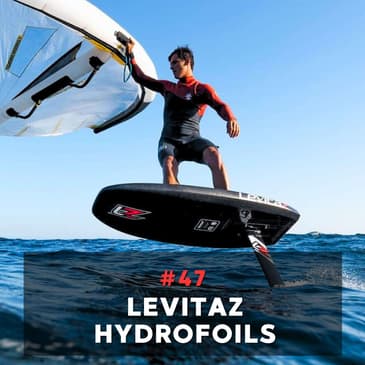



Mario Legenstein and Andreas Brandstätter from Levitaz Hydrofoils join us on the show to talk about:
- Their personal wind passion stories
- The history of Levitaz
- How it all got started
- The tricks behind making a really fast foil
- An overview of their lineup
This episode is brought to you by La Saladita Kite School in La Ventana, Mexico. Book your lessons today at https://saladitalaventana.com/
★ Support this podcast ★[00:00:00] Hey everyone, welcome back to the show. This episode is with Mario and Andreas from Levitaz
[00:00:05] Hydrofoil. They joined us to share how they found wins, so their personal win-passion
[00:00:10] stories, the history of Levitaz, how the company got started, and the tricks behind making
[00:00:15] a really fast foil. So I hope you enjoy this episode. It was super interesting. Now if
[00:00:21] you haven't had the opportunity to listen to last week's episode, it was an official gear
[00:00:25] release episode from North Foils. We talked with Mike Draper and Hugh Pinhold all about
[00:00:31] their brand new modular track system called North Shift Lock, and they also were releasing
[00:00:37] their Nova Pro, so we talked about that as well. We had some good reviews on the episode
[00:00:41] so far, so I really do hope that you enjoy that one as well. Now don't forget if you want
[00:00:46] to support our show, there are multiple ways to do so. The easiest way is to follow us on Instagram,
[00:00:52] YouTube, and on your favorite podcast provider like Apple Podcasts and Spotify. Give us a five-star
[00:00:57] review those do go a long way and help our show grow. If you want to help out in the day-to-day,
[00:01:01] visit winglifepodcast.com and click on support us to donate a few dollars or jump on a monthly
[00:01:07] subscription. We appreciate your support and we hope you enjoy today's episode.
[00:01:12] Welcome to the winglife podcast, where we talk about wing foiling and the lifestyles of those who
[00:01:24] enjoy this great sport. Alright hey guys, thanks a lot for joining me today, pretty excited to
[00:01:29] talk to you. I met your team in Hood River and yeah, we're stoked to learn more about
[00:01:36] your foils because I've heard they're fast and they're very well engineered so I'm kind of
[00:01:41] excited to get into all that with you both. Thanks for the roses, we're also looking forward
[00:01:49] to give you a brief overview about our lineup how we develop foils at what's the background,
[00:01:55] what leave it does, how we don't start it at what's the future will bring us. Yeah, welcome to
[00:02:01] the both. Who wants to get started first? I would love to learn a bit of both about you, find out when
[00:02:08] did you first find this magical thing called wind. Yeah so let's jump straight into it.
[00:02:16] Sure Maryl, why not? Yeah, so yeah, I'm maybe the co-founder of Libitus,
[00:02:27] so for me personally, I was always attracted by wind and water sports. So from my child to the
[00:02:34] aunt so I started in Optimist as many water sports men and women. And then I spoke to laser and
[00:02:45] regatta sailing and at the age of 12, sight sailing I started wind surfing and this really got
[00:02:55] me hooked so I really liked this freedom and going in waves and wind. It was really a great time
[00:03:07] and I actually never thought that it will come even better than this. And yeah, I started
[00:03:14] chiting in 1999 and way back. And yeah, I got into contact with foiling my first time
[00:03:29] in France during European championships in 2009 because on the west coast of France in
[00:03:37] Dune an A and this time most of the kaiters were on directional raceboards. Also I was on such a
[00:03:48] raceboard and there is all the first kite foilers and yeah, it looked just magic like they
[00:03:56] flew over the surface and I got immediately hooked and in the same year I bought myself
[00:04:05] one of the first hydro foils. There was an American brand. I was excited as I expected and but on
[00:04:15] the other hand, it was a bit disappointed about slow speed and it felt still a bit draggy and
[00:04:24] it was vibrating and I thought it could be way better. And yeah, I started digging into the
[00:04:32] hydro dynamic and all this stuff. And yeah, I did also with some board building and so I tried
[00:04:43] to build some foils and started with it and yeah and got better and I remember there was a
[00:04:52] scenery in France. There were a couple of guys who developed foils and I was, yeah,
[00:05:00] in the German Austrians with the region. And yeah, we exchanged it each other and we organized
[00:05:10] or the French guys were more involved. They organized their first championships in kite foiling
[00:05:16] back in 2012 and it was in South of France in Lassioda. Oh awesome. We were about 60 people
[00:05:27] and yeah, it was a really good atmosphere so everybody showed what he's making in his garage
[00:05:35] and we were competing against each other. It was really great and I saw my parts were working
[00:05:43] really nicely and yeah, I was looking for a manufacturer after this and I contacted different
[00:05:55] manufacturers but they all were very skeptic and they thought, oh, this one, there's no market
[00:06:01] and yeah, it's a bigger investment so yeah, I was not successful in these days. And a year later
[00:06:11] there was the America's Cup 2013 and we saw this catamaran flying in San Francisco and from
[00:06:22] these days on, the interest was rising. Everyone wanted to fly and then I had some offers
[00:06:33] and I got into contact with Adrian and the company of Geislinger and yes, this is in my hometown
[00:06:43] so yeah and we said let's make something out of it and yeah, this was the day. We leave it as
[00:06:52] was born and we're still working together and yeah, it's a great time so I'm still excited
[00:06:59] like on the first day. That's cool. Hey thanks for sharing that with us. Andreas, I guess
[00:07:05] is a good time for you to take it. First, introduce myself. I have the engineering background.
[00:07:13] I started engineering 10 years ago but developing this oversmall passion also as a child I used to
[00:07:25] design and fly RC planes. I was competing with RC planes and managed it to get Austrian
[00:07:33] championship long time ago. Wind, terminals, fluid dynamics has been always a passion of mine.
[00:07:42] Then I got to the university where I was more in the production direction but then I started as
[00:07:50] Geislinger 11 years ago as an R&D engineer for composite fiber parts. The company Geislinger
[00:08:00] which is behind leave it as a long tradition or producing carbon fiber parts. Geislinger, let's
[00:08:10] make a step back. Geislinger is known for its drive-drains solutions. We are equipping fast
[00:08:18] ferries with carbon shafts, container ships, heavy industry, big engines with specialized
[00:08:27] products and we are very good in solving problems customer has with the drive trains. We are also
[00:08:38] equipping windmills with couplings, container ships, mining trucks, everything is big and special
[00:08:45] where there is no other solution than our solution. Wind and water is also what we need for
[00:08:53] hydrofors and of course the passion of the managing director is water sports. That's why he was also
[00:09:01] fascinated by Mario on the hydrofoiling and the mercus cup back then also was in Piont.
[00:09:12] So the whole project started and the sport was really early age so we had the possibility to be
[00:09:21] part of the sport from the beginning and we see how the sport developed and now we are going
[00:09:28] to the Olympics. Yeah, it really emotional product came into this company. Yeah, it's all technical
[00:09:36] and they are all good cooperation. What was your background Mario in workwise industry?
[00:09:48] So I'm actually a physiotherapist so I studied sports before a physiotherapy but
[00:09:58] always as I wanted to become a teacher I always wanted to teach physics and sports.
[00:10:07] Yeah, but my profession is physiotherapist and the physics came through the back door again so
[00:10:16] there you go. Yeah, it's sort of a site profession and yeah, Hoppy that got his high profession
[00:10:25] working with the company of Guadalina. That's amazing. Yeah, absolutely that's amazing. Well,
[00:10:32] hey, thanks for both of you guys for sharing that kind of thing with us just to get to know you
[00:10:36] a little bit more and so how was the week in Austria? Is there anything that we can talk about?
[00:10:43] I know I want to get into your history and everything but just how does it feel like to be
[00:10:49] to just be there and working on these products and knowing that there's so many people that get to
[00:10:55] just because it's the only time they have sometimes right they have two hours a day they want to go
[00:11:00] out and have some fun before we get into the technicals of your brand. How does that make you guys feel?
[00:11:10] Yeah, the feeling in Austria is at the moment we have Grazka and Rainy weather. It's not too warm
[00:11:20] but we are also very keen on the foiling. So actually we foil the whole year as long as we have
[00:11:29] beyond five degrees Celsius, we get in our tricudes and go in the lakes as soon as we have wind.
[00:11:41] Oh nice. Okay. For me personally it's kind of off season now so I'm not
[00:11:49] I'm foiling for five to six years from now, I started directly with foiling
[00:11:55] so I didn't try the twintip or something else, I started kiting and foiling. It was a pain but
[00:12:01] it was a good decision to just start foiling and I like this kind of seasons like summer, winter
[00:12:10] and something in between. And so now from these kind of season ending it's getting colder,
[00:12:17] today's a getting shorter you have more, it's more calm, you're not that active anymore,
[00:12:22] you can focus more on your business stuff and on the new projects at the moment this is what's
[00:12:29] really fascinating at the moment looking forward what's coming next. Yeah.
[00:12:36] Yeah. Developing and materializing ideas is really a passion what was here. So when
[00:12:44] yeah, especially winter time is when you think of how to improve and the moment we have actually
[00:12:51] a very intense time because we're looking forward to the next Olympic cycle where the registration
[00:13:00] date is in February and we're really yeah in a hot time of developing. Okay, getting ready for that.
[00:13:09] So let's get right into it then, let's walk through the basics of how your gear started,
[00:13:14] where it's at and the progression I would love to hear all about it.
[00:13:19] Yeah, oh, we were already looking a long way back as we started in 2013.
[00:13:30] So I came into the company with a type which was close to the aspect one. It's not on the market
[00:13:44] anymore but yeah, we spent a lot of time for developing the intersection how we
[00:13:55] connect these things together and get a stiff connection system. And yes, and then we
[00:14:07] evolved and our portfolio got bigger and bigger and actually racing was almost all over the time
[00:14:20] our interests. So we were always in contact with very good races because of my
[00:14:27] past and my past, I forgot the sailing. I was in contact with races and yeah, I wanted to make
[00:14:39] the best gear for these guys and this was really interesting. We developed a aspect
[00:14:47] foil. We had a foil where we made some assumptions and we tried some stuff but then we had the foil
[00:14:53] and then at that moment, where it was on the market everything began from new so how can we make
[00:14:59] it faster? How can we make it more in this direction, this direction? And we did calculations,
[00:15:07] we did investigations but we were not sure. So we got it at direction that
[00:15:12] at the moment when we look now at it, it was like hilarious riding a really small thin back wing
[00:15:19] with ultra long fuse lush. It was drag-wise, it was perfect but control-wise, it was not perfect.
[00:15:26] From this moment, you had so many things you can improve, you can look at and steps by steps,
[00:15:35] we made hydrofoiling better, more easy to ride faster. Actually, we learned with every wing,
[00:15:45] with every foil we make, we learned something new. So the empiric part is quite big actually
[00:15:54] because of course, we have expectations and we make a lot of simulations, hydrodynamic and
[00:16:01] mechanical and we work with the feedback of our team riders but with every foil we make,
[00:16:09] we learn something new and this helps us in improving. That makes sense. Yeah, and then you've
[00:16:19] been doing it for quite a while so I guess do you find there's still incredible increments
[00:16:27] knowledge and learning every single year? Do you find is it speeding up still?
[00:16:33] It's slowing down, is it? Okay, it's slowing down but don't forget that we didn't
[00:16:41] develop a race foil. We didn't bring something on the market for three years now for race foil wise
[00:16:46] just in the other direction but we didn't make the same product different because it was
[00:16:52] free for the Olympics Ike and we are now developing a new product with a knowledge of three years
[00:17:00] developing. So all the small steps together can make a huge step again. Yeah, actually the
[00:17:07] improvements of course were in the beginning it was quite steep and now the curve will flatten
[00:17:14] of course and you need more and more effort to be a little better but on the other hand all
[00:17:25] the team riders, although the races they're getting a lot better and they're getting close and so
[00:17:34] even small improvements are crucial actually. So yeah, still exciting. Now talking about racing
[00:17:47] what do you mean that it freezes? So I'm assuming can we walk through a little bit about what
[00:17:51] that Olympic cycle looks like for you guys and let the public know how that works?
[00:17:56] So our five is or the actually two of our five race wings, our IKEA registrant this means
[00:18:12] that the design and the manufacturing procedure is fixed it cannot be changed for the cycle from
[00:18:24] the current cycle is from 2020 to 24 until the coming Olympics and there are very small measurement
[00:18:36] tolerances because the goal is to every customer gets the same foil so therefore it has
[00:18:46] the design is free, the manufacturing procedure is free, the material you use is free so this foil,
[00:18:55] the R5 is the same as in the beginning but beside this we are working on the next cycle which
[00:19:07] starts in 24 now and last sale 28 for the Olympics in LA. Okay, all right can we talk a little bit
[00:19:17] about what changes you're making or is that still behind the curtain a little bit?
[00:19:26] The most important thing actually is that you have really top riders who can push it to the edge
[00:19:33] so I do kite foiling but these guys they're just in another universe and but the challenges to
[00:19:50] translate what the rider needs into the design and I think my advantages as I practice myself maybe
[00:20:05] I know a little bit better than other manufacturers how to materialize the needs of the riders
[00:20:12] so this is what I try to make best. Try to do best for them, no that makes sense
[00:20:21] what is the secret behind an extremely fast foil? This will probably be a multi part answer
[00:20:28] but make two questions out of it how to make a one fast foil and how to make 100 fast foils because
[00:20:37] yes this is where we are good in I think so. So we have the production background from our company
[00:20:45] we have the quality system and I think Mary will talk about making one fast foil and I'm gonna
[00:20:51] talk about making 100 fast foils 100 percent yes
[00:20:57] so yeah I can show you the R5 way of viewing the back absolutely yeah we'd love to see it
[00:21:03] so I get one here you see the fraud wings of the R5 series and this is the R5 I can close
[00:21:12] it to the camera the front wing and obviously what you see first is the steel part in the middle
[00:21:25] and this took really quite some time and some prototypes to make it work
[00:21:37] and I think it's really the the stiffest part on the one hand and put on the other hand with
[00:21:51] the smallest diameter you can get the big advantage of steel is that it's an easy-troke material
[00:22:01] this means that it has the same strength in every direction in comparison to the carbon fibers
[00:22:11] they always have the best strength just in the direction of the fiber and it's very important
[00:22:21] for a fast foil that you have a very stiff connection system from the wing to to defuse a
[00:22:32] large to the mast to the board and to the rider so you have to have a very direct feeling
[00:22:41] you have to imagine that these guys go up to 40 knots and races and they have to feel every
[00:22:49] little tubal ends and have to react on it and it's very very important that this is
[00:22:55] and I always say an extended body part so they don't feel they're a gear anymore it feels like
[00:23:05] a body part of them so they train hundreds of days a year and they they grow together with this
[00:23:19] with the race gear okay can we take a look at that a little bit more detail and see how
[00:23:26] okay yeah how your front wing bonds to the refuse oh yeah now then the steel part is glued
[00:23:36] into the front wing and here we have a box system the mast will be fixed with two screws
[00:23:51] and here we have a special feature on the back we connect the fuselage which is one part with
[00:24:02] the back wing to the steel part with a screw oh interesting and we have a trimming system here in
[00:24:12] the back there are two trim screws and it's possible to trim the back wing to your needs or to the
[00:24:20] conditions for 0.8 degrees which is quite a lot for a race wing no other race wing has this option
[00:24:30] on the market yeah fast foil means low drag and the back wing makes drag it pushes down
[00:24:41] the front wing has to produce more lift so you want to have as less as down force on the back
[00:24:48] wing as possible so you don't have the extra drag of the back wing this is why you can adjust
[00:24:55] the angle you can go to a point where you can still control it but you have as minimum angle
[00:25:02] on the back wing as you can ride oh wow okay if the condition changes if there is more turbulence
[00:25:09] in the water um if there are some some dust in the water that the riders feel this this kind of
[00:25:17] water they feel how the water is is it warm is it cold salt or sweet water and if the water is more
[00:25:23] draggy you need more angle on the back wing because the drag gives an extra momentum that the
[00:25:30] back wing has to push against with this trimming system the two screws you can adjust the angle
[00:25:40] even on the water if you are skilled and you can find your perfect balance and in the beginning
[00:25:48] we started with our trimming system with the maximum most riders were on maximum angle of attack
[00:25:55] because they want to have the control the the pressure on the front foot but now when they get
[00:26:03] more skilled and they are really skilled so they can decrease the angle on the back wing
[00:26:10] and the muscle memory and muscle reactions are faster now than two years before so they can
[00:26:17] decrease the angle and so they have last drag on the back wing okay but that will become a lot
[00:26:24] more skater yeah okay with a bigger angle you get the more locked feeling there are still some
[00:26:31] riders they prefer this this locked feeling and the less angle you'll have the more agile it gets
[00:26:39] around all axis actually but yeah you need really good reflexes to go with this
[00:26:49] now relating to speed does obviously the less drag so they will get a how much faster are they
[00:26:55] getting with their foil looser and having less of that back tail pressure does it make significant
[00:27:01] difference in the speed oh we can tell because we will collated that 4% of drag is like 25 seconds on
[00:27:15] their race course something like that and 25 seconds with the speed it's a huge gap but it's
[00:27:22] all over the race course you don't when you compare it next to next you won't feel much
[00:27:28] difference but the sum of the old race course it makes a difference okay good to know
[00:27:37] yeah it's always I think the right of course is the the most important part and he has to adapt
[00:27:48] to his skills and to the conditions and then he will be fastest which he feels most comfortable
[00:27:57] and safe and reliable so yeah now relating that to wing foiling because we have all these wing
[00:28:05] foilers from everywhere are you using the same system for your entire wing foiling division
[00:28:13] yes plus there is an extra wing foiling okay
[00:28:20] okay so we have actually a whole series of the RR5 wings and as you know probably
[00:28:34] Matis Q is dominating the race scene and he yeah he mostly writes the R5 the R5 S and the R5 SX
[00:28:48] we have two nother wings so depending on the course and conditions it might win
[00:28:54] he's using the 710 and I can also recommend using the 710 for waves yeah it's really nice in
[00:29:04] there's so much such a good glide and it's nice to riding in swell it feels like almost no drag
[00:29:14] and on the 710 we are also using a titanium shoes lush to make it lighter okay all right and then
[00:29:22] you're having the same shimming system with screws rather than yeah with the same shimming system
[00:29:29] with the two screws you're into your wow so we can you can play on the handle of the pick wing
[00:29:36] oh wow now let's go into manufacturing because I follow a couple different big companies
[00:29:41] and they're saying making prototypes is the easy part manufacturing on a mass scale is difficult
[00:29:50] prototyping for us it's not easy it's not fast we are
[00:29:56] easier sorry we have small big companies something in between we have a huge machine park
[00:30:06] and we have workload on the machines and you cannot say here's is my part and I want to produce it
[00:30:13] you have to plan everything you have to to wait for for us to be produced it's the negative but the
[00:30:21] the positive is if I say I want to make three different wings I will have them faster if I say
[00:30:28] I want one wing one wing and one wing I can make three rings in almost the same time like I can
[00:30:34] I make one wing so if we if it decides we make a prototype it takes us long that's then when we
[00:30:43] once have the prototype we are fast with making variations of it yeah okay okay so it's always
[00:30:51] as you see mold actually so we're working on other procedures to get faster but we're still
[00:31:01] developing and finding methods to manage it but still now every prototype is
[00:31:10] since he milled we are always going into a mold a mold that is also for the serial production
[00:31:18] because we think only with this quality we can have the best possible feedback from the prototype
[00:31:25] if we will do a less quality mold it always will affect the performance of the wing you won't have
[00:31:33] the same wing like if you do a proper mold and production wise the question before was making one
[00:31:42] fast foil and now I'm gonna talk a little bit about making 100 fast foils yeah production we have
[00:31:50] our company has to have a certain quality system so we we're quality controlled by companies
[00:32:01] so we can guarantee a level of quality all over the production this begins with the raw materials
[00:32:08] we have to properties of the raw materials that are controlled we have the the cuttings of the
[00:32:13] fibers we have delay up the layup is done with the laser projector so you see where you have to
[00:32:19] place the layer and everything is documented and you can have a look if you if you give me a wing
[00:32:27] with a number I can just say I can give you plenty of information about the depart itself when
[00:32:35] where raw materials the measurements on there are five on the register rings each ring is
[00:32:42] measured with a sinc measurement machine so we have a patch of numbers that we save and we know
[00:32:51] in which direction the wing was positive was it a little bit wider or smaller or something like that
[00:32:59] this allows us to to give this quality standard that geistlinger has to leave it
[00:33:04] and from leave it to the customer and so we try to have the best zero production possible
[00:33:12] from the raw materials employees processes we have processes are written down we have systems where
[00:33:20] you can have all the layers step by step so as less deviations as possible okay that makes sense
[00:33:30] and how long did it take you to come up with that because we not very many other brands are using
[00:33:37] if any that I know of are using that shimming system like you have like how did you come up with
[00:33:42] that rather than using like shims like everybody else is just shimming their tail they're not actually
[00:33:49] doing what you're doing the trimming system actually what we see here in the back with this
[00:33:59] trims cures was already seen from a brand in France but it doesn't exist anymore
[00:34:10] we combined this that we made this trimming system on the steel fuse lash and put two things together
[00:34:22] actually I think it's a really great system for the yeah you can trim for 0.1 degrees is a quarter
[00:34:35] of a circle with a screw so you can be really very exact on trimming and this is what the top
[00:34:44] riders need and furthermore it's easier to travel with because you can take all these parts apart
[00:34:57] than doing a normal kite back so there are other brands who make this in a hole the back wing
[00:35:06] the fuse lash and the front wing is also a solution but you need a bigger diameter on the
[00:35:13] fuse lash because the carbon isn't as strong as the steel of course and if
[00:35:22] something gets broken you hit the stone or whatever so the whole part is damaged
[00:35:28] and yeah so with this system we can exchange parts but in this model your tail wing
[00:35:36] is fused on it right like it's one piece so you're actually you're trimming from you're trimming
[00:35:43] from further up in the fuse you're not just trimming your little tail yes so this is used together
[00:35:51] but you can take this this apart so you do you unscrew this from here and put out the bolt
[00:36:00] and then it's you can take it apart so to be fair we have two systems of trimming on the
[00:36:08] free red series we have the standard shims on the back wing so it's more obvious to to
[00:36:15] shim with shim then turning the screws turning the screw is not easy if you haven't done it a lot
[00:36:22] of times so this is where we are something that we are working on we want to have a device where you
[00:36:29] have a you can place some device you have always guess about to angle on the back wing because
[00:36:37] you're you cannot look inside the fuse lash for normal because it looks like this oh fair enough
[00:36:43] okay and on the free right you are still using shims the back wing okay which system obviously
[00:36:52] the other system is better for racing do you see a lot of other companies in the racing world
[00:36:57] just using that traditional shimming method that you just showed me now for the free ride or they are
[00:37:01] using another one there is another trimming system which was invented by Mike's lab from San
[00:37:09] Francisco and he actually bans the back parts of the fuse ludge with his shim here's four screws
[00:37:22] and with one screw he uses a different like foils very thin shims and he bans it actually over
[00:37:37] over this shims okay this is another system which works Chubanga coped it and I think I don't know
[00:37:47] flying sawing but these are the main systems there are traditional systems like this
[00:37:58] but I think if you get in serious racing yes this either our system or the the mic's lab system
[00:38:09] is the system to choose actually because you get a lot of turbo lenses around screws and you
[00:38:17] try to make it as smooth as possible yeah and let's talk about the interferences because you don't
[00:38:26] have any steps on the on the low pressure side so you okay don't have any turbo lenses and if
[00:38:34] you use screws you always will have the heads not too smooth transitions and you also get more
[00:38:46] interfering sharp edges and then this is just a streamlined so this makes some difference of course
[00:38:56] yeah okay so we've gone over the trimming aspect of things more into the secret of then making a very
[00:39:04] fast foil like we've talked about how stiff your connections have to be now there's some now is at
[00:39:11] the same thing with all the other aspects is there any flex and the wings is everything super stiff
[00:39:18] let's love to learn more about that yeah that's actually a big thing so where you have the flex
[00:39:25] and where you want to have it stiff and we're testing a lot and that's that's a really very
[00:39:33] interesting part but we won't tell you a lot okay what do we can tell that you have different
[00:39:40] possibilities of influencing having inference on the wing you can you have the cord length you
[00:39:48] have the profile thickness you have the outline of the wing you can make it like tapered or you
[00:39:54] can make a rig forward backwards about the bending you can make it flat the wing it will be softer
[00:40:02] you can make it de-hitteral than it's differ and there are some
[00:40:09] there are some points where you can play with so this is where you have control over the wing
[00:40:15] and then you also have the layup of the wing this is the these are the things you can see or measure
[00:40:19] but the layup is the next thing you cannot measure and you can play with the fiber directions
[00:40:26] the raw materials yeah there are many parameters where you can play with I want to show here
[00:40:35] some more exciting stuff and some exciting data this is the R5 SX and this is our fastest front wing
[00:40:47] till the ramacool did close to 46 knots with this front wing and matt is chew on the wing he
[00:40:56] picked a 38 knots a couple of weeks ago with this on the wing so it's pretty fast yeah okay it
[00:41:06] makes it fast 500 square close to 500 square centimeters yeah and it's a really stable reliable wing
[00:41:21] so it makes you rush for speed it was for speed crossings developed for going fast
[00:41:30] and as we have till in our team till is known for the differ wind on def is now with wing and
[00:41:38] kite and three disciplines and so we wanted to make a project with till using his skills on going
[00:41:47] fast for a long time and this is what came out the R5 SX and he really loves it to go fast to go
[00:41:56] reaching and pushing and the classic a lot our far is more for the traditional course racing where you
[00:42:04] have an upwind part so in kite field they have about 40 percent upwind and 60 percent downwind
[00:42:14] and reaching so this is also important for us for which purpose we design the foils the R5 SX
[00:42:23] as I showed you is for speed crossing as Andy told you or courses which are more
[00:42:32] more reach and downwind all right so and then looking at the mast like is it better to have a stiff
[00:42:38] mass versus a thinner but softer mast like all those things now look at that yeah
[00:42:45] um we don't know this is why we made two masts yeah so to my mind as I said before the the
[00:42:59] mast is the the intersection of from the foil to the the rider and the rider to the foil
[00:43:06] and it has to be stiff enough and um definitely if we if they go very fast they they need a very
[00:43:17] direct feeling to the foil and we also realized especially in kite foiling where the the foil gets
[00:43:28] healed a lot so they go up to 60 degrees healing on the upwind um we need also a lot of torsions
[00:43:36] stiffness to prevent ventilation and yeah so we're playing with this parameters and try to find
[00:43:47] the optimum and we have two mast our five we won and down our five v2 the b1 is a little bit thinner
[00:43:55] softer and the v2 is a little bit thicker um and stiffer but um the the races are choosing the v1
[00:44:05] because they have they want to have last track and the stiffness for them is not that important
[00:44:11] but the stiffness level is so high and the difference is so so it's so small so you you if you're
[00:44:18] training on the v1 you don't want to have any benefit on the v2 against the v1 okay so
[00:44:29] our master our master made of ultra high modulus preprec and so they are really really stiff
[00:44:39] and yeah and I think it's on the very high level that the v1 is actually not the soft mast definitely not
[00:44:51] um I think we have the stiffest mast on the market I don't know the details from the
[00:44:58] competitors but would love to have a guy doing measurements and saying okay this is the
[00:45:06] stiffest master way level and I will I will bet on mine now I guess we got a couple of companies out
[00:45:14] there that I think it would be really neat to actually get an industry standard for sure
[00:45:19] that would be pretty cool and I would love to to give you inputs about how to measure it
[00:45:24] and how to to evaluate the data because um for our prototypes we measure the stiffness of each
[00:45:30] mast and I for now some experience on on torsional and bending stiffness how to measure it how to
[00:45:37] compare it what this important what can where can be deviations with your measuring methods and
[00:45:47] this is also a point that the kite glass is now interested the kite glass in the past only
[00:45:55] said the foil has to have a certain shape which you registered but now it goes in a direction where
[00:46:02] you have to have a certain stiffness of the odds as well so they are interested in how can you measure
[00:46:10] the stiffness what happens if you have deviations back to the stiffness can we talk about that
[00:46:18] actually because that is something that's coming more prevalent and it's getting into the forums
[00:46:22] and group and conversations in wing foiling because at the start the masks were pretty soft the
[00:46:28] V1 masks were soft and it was sold at a certain degree we were told that it was it was there to help
[00:46:35] with whip and it was there to help with all these things but now masks are becoming different
[00:46:41] stiffer and people are starting to claim that they'll come up with a performance mast they'll
[00:46:46] come out stiffer mast oh yeah this is the stiffest but testing I would love to learn more about how
[00:46:51] they use specifically find that out yeah so we used the mast to be our race masks have
[00:46:58] tattel boxes we clamped the tattel box in a steel mold a really ratchet steel part it's like
[00:47:07] 500 kilo of steel stable because we have these devices from our company behind so we have a 500
[00:47:16] kilo steel block and we're using M22 screws six pieces to clamp the mast flat on the tattel box
[00:47:25] and it's also important clamping it and being sure that it always has this same length clamp
[00:47:33] because the length you clamp is also important for the stiffness you will measure then clamping
[00:47:38] having the best possible stiffness of the clamping because each softness of the clamping will affect
[00:47:45] the bending and then we put load on the fuse latch and we're measuring the deflection of the
[00:47:52] fuse latch one times centered and one times with a certain distance to the torsional axis and so
[00:48:00] we can measure the torsional stiffness and for riding feeling I would like to compare it with skiing
[00:48:11] because Austria is no way skiing and I always love to make talk about skiing so yeah skiing you will
[00:48:19] have a soft ski for having fun if you're not so skilled or if the conditions are difficult and
[00:48:29] maybe you would like to have a soft mast in some conditions but at the end if you want to control
[00:48:37] it you want to have the performance you want to ride precise you will obviously just stiffen
[00:48:41] mast I agree with that so for the average let's say the average person that just wants to go out
[00:48:53] and free ride and like is there specific conditions that make a stiff mast better because my
[00:48:59] mast is a bit softer and my foil still rides quite I still love the way it rides but I'm just
[00:49:06] curious as to are there like if I'm getting more into waves or is it freestyle or is it you can
[00:49:12] be used to anything exactly that's where I was getting that yeah um it's not only the stiffness
[00:49:19] if you jump on the foil and it feels good it's good so okay stiffness is one part of a whole foil
[00:49:26] so if you put another mast on it it's different it feels completely different and maybe for
[00:49:33] this particular foil it's not good because the portion of stiffness is less or more and then the
[00:49:38] whole foil will react different but performance wise and controllability wise stiffness always better
[00:49:46] okay that makes sense all right and then do you have you had some new wings that are coming out
[00:49:52] in the wing foil area I think it just released your HAA50 was it
[00:49:58] 710 yes it's HAA50 yeah
[00:50:07] yep this is the one okay very versatile front wing
[00:50:16] uh we actually uh use it not just for uh winging for me personally I'm very light this is my
[00:50:25] yeah my front wing for winging in almost every condition from 12 knots and beyond
[00:50:35] and there are many riders who love this front wing also for kite foiling so
[00:50:42] uh if you have just one wing for two sports so we recommend actually this one and it's the freestyle
[00:50:52] weapon from Matheciu there's a very strong route and yeah he does a lot of back flips and front
[00:51:03] all this stuff and yeah and it has to be very rigid and strong and we placed um when you look at
[00:51:13] at the court you will see that the court length on in the the route is a little bit wider so we want
[00:51:21] to have more lift in the center so it feels uh more maneuverable than you have more surface at the
[00:51:29] wingtip okay and you're saying 12 knots for an 850 really yeah it's i'm 60 kilos so uh with
[00:51:39] five square meters so uh it works but Matheciu for example he can start with the R5
[00:51:52] race front wing in 12 knots so but he's really uh he's a level that I've heard you animal yeah
[00:52:03] yeah i don't know many people who can't go in this conditions with such a small wing but yeah he does
[00:52:12] that makes sense um now relating this to the new Dan Wind trend um i'm assuming that all this racing
[00:52:18] heritage and racing background is definitely helping um with with this new kind of way to enjoy
[00:52:25] foiling in the water or it's not new but you know everybody's doing it now yeah um that's a
[00:52:34] new feel for us actually but uh i saw this race uh our imonu kai uh and uh i wondered that
[00:52:45] the fastest wings were actually in the size of our seven ten uh the seven ten has uh 94 span
[00:52:55] and the very high aspect ratio so it needs some speed to get going but uh it's very nice in swell so
[00:53:03] it's really i can't imagine we never uh tried it for uh downwind racing but uh if you go down
[00:53:13] swell it feels really nice and i could imagine that uh it would work for uh this sort of races too
[00:53:19] but we haven't tried so far so okay downwind boards are in our arty
[00:53:27] mind today hello exciting exciting there will be something there will be something coming oh that's
[00:53:33] pretty fun did we want to talk about your boards as well and and introduce those
[00:53:38] yes we can do that um uh have to say that our board designer is not here we also have a board
[00:53:44] designer who has the same passion like mario the same age in the boards yeah see he's a friend
[00:53:53] of mine and he always design and shape boards and yeah we we came together here in this
[00:54:01] yeah we can we can just have another one for boards that's fine is what else would you love
[00:54:05] to talk about your wings we can just talk about it as many things as as we want to so
[00:54:12] here we have the h h a uh 1600 and it has a span of um 111 centimeters
[00:54:26] and yeah in aspect ratio of eight and uh yeah it's a very uh nice wing in in light wind
[00:54:40] conditions so also for dock uh starting um yeah this is what we uh we we have two versions of this
[00:54:51] one is the the pro which has a little theatero uh uh plan forum and this is very hile but this
[00:55:03] is the more popular it's it's easy to write yeah if you have more spanned uh the fall will get more
[00:55:12] locked it's not so easy to to turn anymore and that's why we made two versions of it one flat
[00:55:20] and one curved one and the curved one is a little bit more locked during maneuvers because
[00:55:26] if you have not the much not much power in the ring you won't will have to a safe transition
[00:55:33] and the other one is more more flat it's more agile you can make um the smaller turns
[00:55:42] that's why we have two versions your curve down wing tip you're saying locks more
[00:55:46] if you have a wing with this shape um you always uh get um uh you can oh a question okay
[00:55:57] you you get a some uh vector and uh with this shape the the some vector points a little bit more
[00:56:07] outwards and on the level of uh the board you have a longer leverage and this gives you
[00:56:14] a more roll stability actually if if it's bent down so when it's flat it's uh it's more agile
[00:56:23] around the Rolexes and it's even more agile if you make it theatero as we have it on our uh pro model
[00:56:31] oh so that'll make it snappier side to side it'll turn easier yes yes okay if you imagine
[00:56:37] the the lifting vector if it uh points more this direction if it's the uh T-hatrow
[00:56:44] you have a very short leverage to your feet and it's uh easy to to roll okay even if you have a
[00:56:51] big span so this is what we uh did on um so this wing uh is pointing slightly upwards it has a
[00:57:05] theatero form it's very very slightly but uh maybe you can see it and this makes it
[00:57:14] feel like a smaller wing actually because it's uh uh very agile around the Rolexes and this is the
[00:57:23] H a 1,300 and yeah this is uh um a wing still for light wind for me from my weight
[00:57:37] uh or yeah for medium weight so it's uh quite quite popular and then we have uh another wing
[00:57:47] the uh 1,100 and uh i think actually this is the the the most popular uh in the aj range
[00:58:00] um yeah because it suits really a lot of uh people with different weight and has a quite
[00:58:08] the big range and a nice uh nice speed and also for freestyle it's a very good to compromise between
[00:58:18] early stars and another ability and yeah it's uh i still love it but with my weight i personally
[00:58:27] prefer the 850 all right so that's the h a's what about the mid aspects because there's a lot of
[00:58:33] companies out are coming out with mids because you're getting um a little bit of in between
[00:58:40] make it historic yeah um this is uh i think it's the the most popular uh kite uh free ride
[00:58:54] kite foil front wing the cruiser we have it in the program since 2015 14 uh oh wow awesome yeah
[00:59:04] this is still still a very very nice wing yeah it's so interesting comparing it with the 850
[00:59:11] because they have almost the same size but the completely different philosophy but the
[00:59:17] cruiser still has its its pros if you want to make um yeah for turns if you want to bank it into
[00:59:27] the curve it's uh it's really a child and re-react nice but it's still a good control
[00:59:36] and for kite foiling is a very very nice front foil uh good to know
[00:59:42] to its low aspect ratio it has a quite the gentle stall behavior so i learned uh
[00:59:53] yeah a couple of my friends uh i learned kite foiling on this front wing okay yeah cool
[01:00:01] what's that beauty yeah and this is the the faster brother the aspect two it has a size of 600
[01:00:09] square centimeters and uh a little less uh spin and yeah uh if you want to jump high
[01:00:20] you need more speed of course and this is uh the front wing to go still very predictable and
[01:00:29] and and i stole behavior but faster and more agile than the cruiser okay yeah
[01:00:37] so now we start with the shaka it's um shaka s it has a 1,200 square centimeters
[01:00:49] uh this is the wing we recommend to beginners for kite foiling or beginners on the wakefail
[01:01:00] lift it's uh yeah you see it's very low aspect actually and it has very
[01:01:13] gentle stall behavior and um yeah it's uh so if you start kite foiling everyone does the same
[01:01:26] because the most of uh the people come from a twin deep uh and they press too hard
[01:01:32] too hard on the back foot and you do this typical dolphin style and you find or we find us with
[01:01:41] with beginners that they find their balance around the pitch axis uh easier with this kind of wings
[01:01:48] with the low aspect wings yeah okay what about wing foiling with uh wing foiling yeah
[01:01:56] wing foiling beginner wing is the uh this is the 2,000 other the 1,500 but for beginning wing foiling
[01:02:07] we recommend the 2,000 tazespan of uh 98 centimeters and 2,000 square centimeters
[01:02:19] and we recommend it to use it with uh uh 300 square centimeter back wing and together
[01:02:27] with this uh back wing you'll find your pitch stability uh quite quite easily so
[01:02:36] okay so it's rolled down a little bit so it's a little bit more locked in
[01:02:42] yeah it's more locked definitely more locked yeah
[01:02:46] and you can you have so much time during the maneuvers because you can go so slow
[01:02:51] and if you you're getting slower and slower you're getting more to the back more to the back
[01:02:56] and there is a certain point where you don't stall but the drag because you have so much angle of
[01:03:02] the front wing the drag gets so high so you you keep you are falling down because you have zero speed
[01:03:10] anymore and this is what you need during maneuvers if you learn maneuvers with the wing you're trying
[01:03:15] to grab the handle on all I didn't manage it during this wrong position then you're trying to fix it
[01:03:21] oh yeah that's hard especially yeah uh the entrance board uh the because it suits to this foil
[01:03:32] sure Mary yeah we can do that sure um so this is the boom air
[01:03:39] uh this has uh 135 liters uh and yeah this is uh really good to stand on as you can imagine
[01:03:54] and together with the big front wing so we uh experienced it's uh you have yeah
[01:04:04] uh a quick flying experience so um okay and then stable yeah yeah
[01:04:11] 135 liters and carbon plate uh here and you can inflate it up to uh 15 to 70 psi so it just gets
[01:04:22] really uh quite stiff and it really works nice for uh for beginners how cool actually yeah this is
[01:04:32] the set we recommend for starting okay no good for good to know which board are you writing Maria
[01:04:42] I write the I read that the smaller brother actually now okay
[01:04:50] so this is the boom air with 95 liters so um as I said we do a lot of wing foiling here on our lakes
[01:05:03] and we don't get steady conditions uh usually so we have gusty winds and uh sometimes you have a
[01:05:11] gust with uh 20 knots and then you have 10 knots again and so I experienced uh I appreciate
[01:05:18] you have a little uh bit more volume to get going quicker when the gust comes so uh I really
[01:05:26] love this board and actually when I started uh winging after all these years of kite serving in
[01:05:36] kite foiling I felt a little bit of resistance of getting big boards again so because I have a small
[01:05:43] car and uh with this boom air yeah it's uh it's easy to travel so just year out and uh this also has
[01:05:54] the possibility of uh for foot straps in the front and in the back so um and the weight is
[01:06:02] mentioned on it uh it's 160 uh long and um wide uh 60 centimeters okay so it's it's not that wide
[01:06:18] then other boards this size and I really think it's a very good compromise
[01:06:26] to have uh one technology to have one supplier network and that's why we decided to go to Portugal
[01:06:35] uh we were very happy with this this rigid boards they are a little bit different to what's available
[01:06:42] on the market um we are using a closed cell core so that's the most benefit for the customer
[01:06:50] everybody knows um hitting a board against the rock or something something happens then you
[01:06:57] are always scared that your board fills up with water and if you have a closed cell core it's minimum
[01:07:02] heavier but you are not afraid of any water in your board and uh also the shape shape wise we
[01:07:10] go a little bit in a different way but we see now that other companies are going also in
[01:07:15] other directions so we want to have a flat bottom to give you the maximum performance with low
[01:07:21] speed and then if it wants you flying the board is not that important anymore but we try to focus
[01:07:28] on the takeoff to have a less drag um autumn for takeoff okay turn off and what kind of what are
[01:07:36] you riding and just what's your favorite set up uh uh uh uh uh uh uh uh uh uh uh uh uh uh uh
[01:07:40] kiting or winging both we can do both yeah um on winging i i prefer the 75 liters as mario said
[01:07:47] we are mostly on our legs and the wind is on and off so you need a certain volume
[01:07:54] and i'd like to go on the 1100 because it gives me more possibility to go on light wind
[01:08:00] i'm not that skilled on pumping i don't want to exhaust myself i'm doing a long takeoff i want to
[01:08:06] have fun and to go for a session for an hour for one and a half an hour not not to get exhausted in
[01:08:13] 15 minutes by trying to pump the board fair enough so i'd like to have a safe setup when i
[01:08:21] when i'm going for winging completely different uh setup uh for kiting because kiting you always
[01:08:29] the power of the kite there i go to a small setup like the exo pocket strapless
[01:08:37] this is yeah i think look pretty sweet actually the pocket board yeah um you can mount straps so you
[01:08:45] can jump um and this is called for it's so uh easy so playful it's light it feels like a sports car
[01:08:55] oh wow yeah that thing looks awesome yeah my brother kite foils and he's strapless kite
[01:09:01] border and the board he has right now is like it's a racing board but it's much thicker so i was
[01:09:06] looking to see if i can get him something something like this would be pretty fun for him
[01:09:11] oh yeah uh huh yeah just give him a little bit more maneuverability because the thick
[01:09:16] boards are really hard to rail to get it going like he had a thick older older race board
[01:09:21] and just to get that thing to roll over how he water starts he found a little bit harder
[01:09:25] yeah there are two white yeah yeah yeah and there there's nothing uh when it's very long you you get this
[01:09:33] swing weight the mass inertia uh when you foil and this um when when a board is too big or as too much
[01:09:43] volume in the front or too much weight in the front it doesn't feel nicely around the pitch axis this is
[01:09:52] my experience and if you have a look at the kite sport you will see that it's kind of a
[01:10:01] wishap and it has a certain drag stability during the takeoff and if you if you touch down the most
[01:10:11] important thing on the on the kite sport are the edges so you don't want if you have a touchdown
[01:10:17] you don't want to have the board um going up or downwind you want to have a touchdown and popping out
[01:10:22] easy this is why it's there is that that certain shape of the rails but for a standard user it's not
[01:10:29] easy to to to ride because during takeoff it's harder and so i will recommend using
[01:10:37] uh the match this is the board we're all learned on it says more lengths so if you touch down
[01:10:45] you have plenty of surface you won't dive you can go fast without foiling easily
[01:10:52] this is super nice for beginners okay fair enough all right cool well hey thanks guys thanks for
[01:10:59] showing me how this awesome here one more thought came to my mind sure about the safety
[01:11:06] so i think almost every winger pops his wing uh his popt is wing in the past and the
[01:11:22] the a j series they have these tips the rounded tips and of course if you smash it really done
[01:11:32] it's no guarantee but uh it's yeah it's way more friendly to the wing and not only to the wing
[01:11:39] also to your body too i know a lot of people who uh wildly train maneuvers so they they fell
[01:11:48] on the tips from time of time and they say this this sort of tips save their life a couple of times
[01:11:56] okay if you're not falling you are not progressing
[01:11:59] yeah that's very true this is what i say my sense so we have also the round wingtip on the 710
[01:12:07] to have a little bit of safety interesting and it doesn't do anything regarding
[01:12:14] either dynamics yeah nothing yeah yeah uh of course when you have wingtips like this
[01:12:21] uh if you get high angles of attack uh you have reduced uh pressure here compared
[01:12:34] to when it would be flat it really to reduce is the the angle of attack and therefore
[01:12:43] the pressure and therefore the the vortex on the tip this is uh the other thing but to my
[01:12:51] the main thing is that you get not killed with the uh pointy tip good enough and for those just
[01:12:58] getting into the sport yeah she's not getting killed might be a great place to start
[01:13:06] maybe a great place to start cool hey and just what was your first wing foil experience like
[01:13:11] could we talk a little bit about that yeah um i was with the pros and it looks so easy and all
[01:13:20] the pros forced me to try it and um down the time i i had free time was in the evening where the
[01:13:31] wind dropped a little bit but all the pros were there and they were giving me the gear assembling
[01:13:37] everything and i had a really first foil session i had a race board so i know how hard it is to
[01:13:44] ride a race board and the cruiser and uh the wind dropped i was not skilled i wasn't able to
[01:13:53] to control the kite proper so all the all the parameters that that didn't made me comfortable
[01:14:00] but at the end it was super super cool super interesting to have the the experienced riders next
[01:14:08] to me that gives me an awesome second feedback how can i improve what did i do wrong look at this
[01:14:15] look at this and this is how you you can progress that that you have a uh
[01:14:22] sparing partner someone who gives you a feedback um where you have to look at because if you do all
[01:14:28] all the same things you won't progress so out of your comfort zone try to crash okay our guys
[01:14:35] is there anything else you want to cover for intro session we talked about a whole bunch of
[01:14:39] different and went went to a bunch of different topics but there's a lot of information there
[01:14:43] for people what's next yeah next is uh the championship in ring foil racing hopefully okay
[01:14:56] this is right next Brazil yeah yeah last two stop
[01:14:59] till fingers crossed uh but this is leading at the moment but there's one more stop to go
[01:15:06] and hopefully he can defend his title and he will be champion again hey hope so
[01:15:13] and then looking forward uh to the February um registration of the kite racing foils
[01:15:22] we are now at the stage where we have plenty of prototypes plenty of ideas material to test
[01:15:29] feedbacks from the team rider we have the advantage that we have the best team rider's
[01:15:37] available at the moment so um everybody is looking at us uh we have a super motivated team
[01:15:43] that gives us feedback what to test to train everything um they are taking influence in this whole
[01:15:50] process of developing foils so uh now at the moment it's like a big increase of material feedback
[01:15:58] set everything and in the next step it has to go more into one direction and we're looking forward
[01:16:05] to have a trial where we want to choose the best foil so this is not for the team rider but for
[01:16:12] every racer this is the foil it should use to be Olympic champion 2020 in the late
[01:16:20] if this is done this is February the March uh the next big thing for us will be the Olympics in Paris
[01:16:28] about tickets hey hopefully i see i leave it as rider winning uh also fingers crossed um
[01:16:39] we have the world champion female and male at the moment we're super happy with
[01:16:45] this all our team super professional enthusiastic um they will that deserve the title
[01:16:56] so hopefully hopefully it happens in Paris in August and after August we gonna introduce
[01:17:05] the next race foil okay we'll have to have it back on the chat about it yeah that would be super fun
[01:17:12] definitely great here i know like ice a lot of testing oh yeah i can't imagine all the work and
[01:17:21] prep that goes into releasing something like that yeah yeah it and it's now we are everything is open
[01:17:27] and we can modify every step uh every step in the production we can choose the layout we can
[01:17:34] choose the cutting we can choose the temperatures resin fibers everything um but at a certain point
[01:17:41] we have to to say this is the process this is what it's made out of it and how we produce it
[01:17:47] and then we have to bring it into a serial production so this is the next difficult step um
[01:17:55] freezing everything and making the 100 fastest falls okay well fun things ahead lots of fun things
[01:18:04] ahead well guys well once say thanks a lot for just introducing and in having this awesome
[01:18:10] conversation with me today and introducing your brand to so many different people out here who
[01:18:14] who might not have seen levitas as much but uh just seeing all the technology and all the drive
[01:18:21] i'm stoked to try um at awsi next year so it'd be really fun to try that stuff out at event site
[01:18:28] and uh and see what's there i think that'll be really fun thanks for the possibility we will be
[01:18:35] there definitely and for me personally oh i heard i have to go there for sure
[01:18:42] it's a pretty fun event and we had three yeah i had two or three good days there was some really
[01:18:48] good swell it was the first time i tried an 850 um mid-aspect and some really rolling swell
[01:18:54] because the current is coming in the different way like we could definitely get a few fun days
[01:18:59] of riding before the event so if you do go down let me know so be fun to hook up and and do some
[01:19:03] riding and mario is great to meet you as well and uh and learn more about about uh just that whole
[01:19:11] foil design aspect there's so many people talking so many people trying to figure out where it's going
[01:19:17] how is it gonna help my riding so it's really cool to talk to you as well
[01:19:22] thanks pleasure is on my side so thank you for having us absolutely all right guys well hey everybody
[01:19:29] thanks a lot for joining us tonight and we will uh we'll see you next time