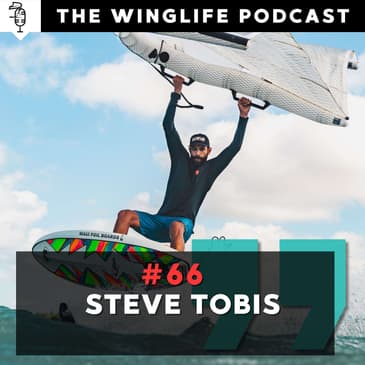

On this episode Steve Tobis joins us from his home in Maui to talk about:
- The downwind race season in Hawaii - Including the Voyager race, Paddle Amoa, the Maui to Molokai and Molokai to Oahu races.
- The key to success in these races
- The physical conditioning and mental tenacity are crucial for endurance and focus during the races.
- Safety equipment such as PFDs, VHF radios, and EPIRBs are essential for emergencies.
- Self-sufficiency and preparedness are important in case of equipment failure or unexpected situations.
- Downwind foiling requires skill, experience, and the ability to adapt to changing conditions. Learning to foil is challenging but rewarding, with incremental success driving motivation.
- Dry land training, including biking and weight training, is important for building physical strength and stamina in foiling.
- Recovery strategies, such as stretching and using ice baths, can enhance performance and reduce strain on the body.
- His favourite foods --- like chicken nuggets and french fries.
- The advancements in wing design and materials, particularly with the new flash wings from ON Kiteboarding.
- The new foiling disciplines like prone downwinding and his goals of riding bigger waves in the future.
Visit: https://www.instagram.com/steve_tobis/
This episode is brought to you by the Wing Foil Expedition in La Ventana, Baja California Sur. Are you looking for an all-inclusive wing foiling adventure this January with oceanfront accommodations? Visit https://winglifepodcast.com/wing-foil-trips to learn more.
★ Support this podcast ★[00:00:00] Hey everyone, welcome back to the show. This week we have Steve Tobis joining us from Maui.
[00:00:05] Steve is a downwind foiling enthusiast and on this episode we deep dove into the downwind
[00:00:12] races that happened in Hawaii. We chatted about the Voyager, the Paddler Moa, Maui
[00:00:18] de Malakai and also the Maui to Oahu race. We talked about the physical conditioning
[00:00:23] and the mental tenacity required safety equipment such as PFDs, VHF radios and much more.
[00:00:30] We also review the self-sufficiency and the training required to survive in conditions of
[00:00:36] equipment failure or unexpected situations that happen in those channels in larger conditions.
[00:00:42] We wrap it up with touching on Steve's favorite foods that keep him charging
[00:00:46] in those large, very large conditions in Maui. If you haven't caught last week's episode,
[00:00:52] it was with Brandon Scheidt. Brandon is a pro kiteboarder turned wing designer that lives in Hood
[00:00:58] River, Oregon with his wife fellow pro kiteboarder, Sensi Grace. We talked about Brandon's recent,
[00:01:05] near fatal accident, his recovery process, the love and support Sensi and Brandon received
[00:01:11] from around the world. We introduced his new baby and then we deep dove into the
[00:01:16] pair of wing and also touched on AWSI 2024. Now I want to take this opportunity to thank
[00:01:22] our team for making this show a reality. We have Frank that helps us with consulting,
[00:01:26] we have Matthias on guest relations, we have Stefan on editing. A big thank you as a lot of
[00:01:32] work goes into every single episode. Next, I'd like to say a big thank you to North Foils.
[00:01:38] They are our first official sponsor. Thanks for the gear guys. Really looking forward
[00:01:42] to trying the SF series in La Venta, Mexico this winter. So everybody stay tuned for my review
[00:01:50] and some probably some good footage from some large swell out there. Lastly, winter is coming
[00:01:56] and if you haven't decided where to go yet and you're looking to wingfoil, I would suggest
[00:02:01] hopping over to winglifepodcast.com, send us an email. I'll be teaching some wingfoil basics
[00:02:08] and some intermediate lessons in La Venta, Mexico. So more than happy to get you out there
[00:02:13] and help you learn this fantastic sport. Now I hope you enjoy this episode.
[00:02:26] Welcome to the winglife podcast where we talk about wing foiling and the lifestyles of
[00:02:32] those who enjoy this great sport. Pretty nice to catch up. Like I haven't talked to you
[00:02:36] since like what I think we did our eighth episode with you, I think or seventh or something.
[00:02:41] Yeah, it's been a while. It's been about a year or so I think.
[00:02:45] Been a year. Lots of stuff has changed. How's life been on Maui? What's new with you?
[00:02:50] Really good man. We're just doing a lot of downwinding. Like I said, we're going into
[00:02:55] our race season here. So we just had the Voyager race on Oahu and then coming up in
[00:03:00] about 10 days is the Paddolomua race from Malico down to Canoja. And then the weekend after that
[00:03:09] is the Maui to Molokai and Molokai to Oahu races. So a lot going on. It's a big month.
[00:03:15] And then after that it's pretty much just kind of enjoying the last bits of summer and get
[00:03:19] ready for the winter. That was sick. Welcome to the winglife podcast where we talk about
[00:03:25] wing foiling and lifestyles. Where we do a quick run through for those who enjoy this great
[00:03:29] sport. Pretty nice to catch up. Oh my god, we're talking to you since like what?
[00:03:32] I think we did our eighth episode with you I think or seventh or seventh.
[00:03:36] I think we did our eighth episode with you I think or seventh or seventh.
[00:03:37] Yeah, it's been a while. It's kind of just like this event to get everyone from
[00:03:40] the rest of the world but mostly in Hawaii together and since now one's been with you.
[00:03:45] Really good man. We're just 80s to downwinding. So about 13 miles.
[00:03:49] You know like it was really cool because there were just 10 to 3 different races
[00:03:52] that went on at the same time. There was the long course downwinds up to 10 days.
[00:03:57] It was from 80s to Katalina's and then there was one from China one to
[00:04:02] Canada eight or China one. The weekend is a different race and then there
[00:04:06] were a wing event as well. So it's really cool to have just a lot of different
[00:04:09] disciplines and then after that it's pretty nice to get everyone to go
[00:04:12] set together. You know enjoy the last bits of summer and get ready for the winter.
[00:04:16] And then coming up July, four p is Katalina. So those races for those who may not know
[00:04:21] as much as Phantom can be do a quick run through? Because like a special needs camp here in
[00:04:25] the US. So the Voyager race is put on by West feet Hawaii. It's just kining and it's a part of
[00:04:29] the triple crown this year. So there's like some real snakes and you know it's kind of
[00:04:34] just like it helps for something. So it's really cool to see that in the world but
[00:04:37] mostly in Hawaii together and since now we're run together. That was from
[00:04:41] Malika Gulps down to Kanahan Mono or the Kaikorotas Rite. And that was really cool
[00:04:46] because there were these kind of three different races that went on at the same time. There
[00:04:50] was a long course, every downwind, subfoil. So that was from 80s to kinds of other
[00:04:54] to participate in. And there was a subfoil, wingfoil. Oc1, Oc2, I think there might be
[00:04:59] some six man as a new team. Race, some kind of board to come out as well. So those
[00:05:04] really cool to have just a lot of different disciplines like it's just this massive
[00:05:06] skill level to get everyone to go set together. That's always really fun to get a good crowd.
[00:05:11] In the past it's always been like coming up to a friendly race, you know, yeah you want to
[00:05:14] beat your buddies but so that's a race that it benefits Camp Amo'a. Like meat to the
[00:05:19] lean. It's a really great fundraiser, just a really good pause to race for. Now being a part of
[00:05:24] Triple Crown and it's a part of the story between some real stakes. It just adds like another level
[00:05:29] of competition for something that has really cool to see that event. It's going to be
[00:05:33] prestige and get a little more serious in a sense. That was from Malika Gulps down to
[00:05:38] Kanahan Mono or the Kaikorotas Rite. And then that's a super fun event. That is,
[00:05:43] I don't even know, probably like 250 people in the water. And it's pretty much every
[00:05:46] vessel that can do a run is invited to participate. They have Subfoil, Wingfoil, OC1, OC2,
[00:05:54] I think they're mighty good. Some harbour down there and that's roughly 27 million miles.
[00:05:59] And lanes go down. That's going to be on Friday. It's just this massive downwind event.
[00:06:04] Which is got everyone goes all the way down to Kaimana. It's kind of a friendly race. You
[00:06:09] know, you want to beat your buddies but it didn't have a ton of like stack together. And I
[00:06:13] think that's going to come out to winning. You know, it's kind of like,
[00:06:16] I give you and miles more or less. I'm going to get on that. I know it's further than the
[00:06:20] MMM race. But between MMM and Kanahan, it just adds like another level of competition to the event
[00:06:26] that has had in the prior years. So it's really cool to start an event and take off a little bit.
[00:06:31] No, like, sorry. Like competing in both. I guess is the way to put it. Yeah. Yeah. A lot
[00:06:35] of the weekend after that is a lot of people are going to be racing all crossing double headers.
[00:06:40] Essentially. You have to perform on the day of where you're having a week of raster.
[00:06:45] Whatever. Or DT for MMMs to triple crown. It's going to be, you just ran M to N.
[00:06:50] You just pushed for 30 miles and that's one rest day. And I got to get out and go to miles.
[00:06:55] You know, for another like 40 miles, 35 miles Saturday is going to be the rest day.
[00:06:58] Race pace on both of these races with only one day all the way down to Kaimana.
[00:07:03] It's basically it's a really cool like
[00:07:05] in H9 just one day. So I just want to run. You got to really string together. That's going to come
[00:07:10] out 35 miles more or less. I know it's further than the MMM race. But a lot of cardio. That's
[00:07:18] going to be a lot of downwind runs, you know, kind of just how you train people running like the same
[00:07:23] people running both. I saw a lot of time organizers. No, sorry. Like competing in
[00:07:28] both. Just work on that stamina. Yeah. And then in the water, you know, just sending
[00:07:32] downwind runs. Trying to play officially and be able to breathe. So it's not only like you have
[00:07:37] to perform on the day of what you have. You need a week of rest or whatever before. Yeah.
[00:07:42] Just ran in the end. You just pushed for 30 miles there for one rest day. And I got to get out
[00:07:49] and go push being able to stay focused all the time miles, you know, run your race and not worry
[00:07:53] about race. You and if you make them as races with only one day of rest between them.
[00:07:59] Tenacity. It's a really cool like endurance. You know, it's not just one day. It's not just
[00:08:03] one run. You got to really just a mental grind. Wow. Okay. Yeah. It's mental.
[00:08:08] What's your training? Especially more kind of walking that channel. A lot of cardio,
[00:08:13] a lot of downwind runs, you know, kind of just how you would train for
[00:08:17] for really any endurance type sport. Do a lot of time on the bike. Try to run as much as I
[00:08:23] can. Just work on that stamina and then in the water, you know,
[00:08:27] for that crossing, could you estimate how long you are up on the soil? You know,
[00:08:31] push as long as you can, but then maximize your recovery time when you eat it. You're not touching
[00:08:36] down the whole time and having to do a lot of kind of stuff. Your body, your mind, that's the plan
[00:08:39] because it's also a mental game. You can't be out there for a couple hours. The more time
[00:08:46] on the soil the better. So the goal is to run your race and not worry about the people
[00:08:49] around you and start if you make a mistake like how do you recover from it. So just trying
[00:08:53] to have that mental tenacity that you need. I don't know exact starting to disappoint,
[00:09:00] but I think it's going to be roughly in that range. Yeah, it's mental and then there's
[00:09:04] absolutely a physical grind. Especially more cardio walking that, you know, I think some of the
[00:09:10] faster guys, you know, probably two hours maybe, you know, but it's kind of one of those,
[00:09:20] the conditions can be so variable that like crossing. Could you estimate how long you are
[00:09:25] up on the soil? But man, there's a lot of time guys that are pushing into 20 mile averages
[00:09:32] for long runs when the bumps are good. So I think that is what the whole time
[00:09:37] everything. Yeah, low two hours for some of these. So the goal is to be on
[00:09:44] the soil the entire time you start. How obviously the gears progress and how long is this one?
[00:09:50] What if you see? Yeah, what if you see like 35 to 40 miles? I don't know exact starting
[00:09:55] to say this, but I think it's going to be roughly in that range. And then hours to complete.
[00:10:00] So I think there's kind of two parallel developments that happen and they're kind of
[00:10:04] pushed each other. I think someone is with the faster development and the others with
[00:10:07] the foil development for what we're seeing with with downracing in particular aspect ratio
[00:10:13] seems to be king. It's kind of one of those things can be shown variable that like
[00:10:18] ratio, you know a year ago time delta to go like pretty pretty massive.
[00:10:22] Hi, now man, you know, the 10 aspect ratio right? You guys that are pushing into 20
[00:10:26] mile an hour averages as far as asset for long runs when the bumps are good.
[00:10:29] There's a lot of production. I think that running 13 aspect ratio out of the question
[00:10:34] there's some you know, two hours for some of these one off finish racing foils that are
[00:10:39] now.
[00:10:42] It's really interesting to see what what these guys are doing.
[00:10:46] What have you seen?
[00:10:50] Yeah, that's made you try to gain efficiency trying to make the more
[00:10:54] carry their speed as long as possible. So I think there's kind of two parallel
[00:10:57] development happen and then they kind of pushed each other.
[00:11:00] One is with the board development and the others with the foil development.
[00:11:03] We'll see how this race shakes out when definitely aspect ratio is king aspect
[00:11:08] ratio running smaller sizes. You know, 600 700 right now and 800 miles with aspect ratio.
[00:11:14] So you know, a year ago, two years ago, like 10 was super high.
[00:11:17] Now, especially for me and aspect ratio, you'll probably be in the development of the field.
[00:11:22] So running this really long, really narrow boards have a really good production designs
[00:11:26] that are running 13 really important ratio because it makes it easier to get up on
[00:11:30] some like one end.
[00:11:35] But it's a AR.
[00:11:38] It's really interesting to see how small foil up with these guys are building
[00:11:42] what's put in less to get the boys who designed are coming off as for the conditions are light,
[00:11:47] you know, trying to gain efficiency trying to be big, carry their having that extra water line
[00:11:51] will see whatever energy you put in the oil, then you can flat water easier or get to your
[00:11:57] It's the general direct out, but definitely aspect ratio is king
[00:12:04] running smaller sizes. You know, 600 700 miles right now and he seems to be the
[00:12:09] leading recipe of the four already gotten really small and one of the things that especially
[00:12:14] for me has allowed that to happen is the development of the board. So running really long,
[00:12:19] really narrow boards have a really good quality stuff that are coming out of just
[00:12:22] been really important because it makes it that much easier to get up.
[00:12:25] So yeah, you lose some of the
[00:12:28] Serpentility you know, we're running a 90 foot board, but I think the big name
[00:12:32] maybe actually is doing one off or that small foil up put in less work to get the foil
[00:12:39] doing and then it seems like they're taking a lot of what they're learning from this race.
[00:12:42] You know, if you're the pump, you know how to push the limit of just having that extra
[00:12:46] water line one percent, you know, how do you squeeze all your performance out of that
[00:12:52] applying that to more user friendly, the general direction we're seeing out here.
[00:12:57] A lot of what we saw last year was with the board, like for example, the Armstrong
[00:13:01] Firetiles that turn into the production series. So there is performance and success at that
[00:13:07] point in time running these like crazy camber wings like nobody was doing it. It was this
[00:13:11] kind of crazy one off idea like custom, boards, custom foils and stuff that are coming out of
[00:13:18] yards or you see the big guys kind of using the gear wings and developing a lot of what we're
[00:13:25] seeing is you learn about trying to perform at a high level in like one of those or, you know,
[00:13:31] building a top percent of their range. And you can use some of those things and
[00:13:36] taking a lot of what they're learning from this race design that's going to have a lot of
[00:13:40] push the limit of this capture what quite one percent people want to ride as far as like
[00:13:44] mass appeal, you know, how do you squeeze all your performance out of that and applying that
[00:13:48] to more user friendly production designs. So I'm running a lot of what we saw last year,
[00:13:54] 1994, the like for example, Armstrong prototypes that turn into the design to
[00:13:59] production series. So, you know, they're up nice and stable in the channel running these like crazy
[00:14:04] camber wings like nobody was doing it. It was this kind of crazy one off idea and it performed
[00:14:10] well in performance on the production product. So I think there is benefit to putting out an
[00:14:16] investment into a drawn out race that's almost an advantage for this sport, especially because
[00:14:21] you learn a lot about super short metal really high level and it's longer bonds. They're very big
[00:14:27] and very fast. They're kind of I think slowing down a little bit of that actually helps because
[00:14:32] it helps you make this portion to design more for a lot of mass appeal, having enough
[00:14:36] ability to maneuver and kind of deal with the high spots that you need. So it's a really nice
[00:14:40] balance in the board that we have. And then right now I'm raising a version 125.
[00:14:46] I'm running a custom KT that I save in the foil when I'm kind of modified it to be 4x17.
[00:14:52] And then I have a custom right still that I'm running designed to really just design to help
[00:14:57] be easy to get up, help that's stable in the channel to deal with category
[00:15:00] that crossing like a certain order. Just everything really skinny, really high aspect,
[00:15:05] tails, downwind performance designed to go fast. It's not like a kind of high
[00:15:09] to server, you know, it's long and better works. The turns are very drawn out with
[00:15:14] almost an advantage because especially in the channel everything is frozen.
[00:15:18] Right? If you have a foil that works really well, it's longer, a lot of times they're very big
[00:15:22] and very fast. So kind of I think slowing down a little bit of that actually helps because
[00:15:27] it kind of helps you make these really high aspects and force corrections while still
[00:15:31] having that ability to maneuver and deal with tight spots that you need.
[00:15:35] So it's really nice balance in the way that we have. And then right now I'm raising a
[00:15:39] progression 125, you have the efficiency in the aspect ratio to pump and carry you,
[00:15:44] finishing your stuff on that same as the foil usually is where the bad spot is
[00:15:47] until you find another set of tail that I'm running that's kind of really just designed to help.
[00:15:52] And what kind of stuff are you bringing in a higher speed category
[00:15:55] that ran with like a sort of just running really skinny, really high aspect tails.
[00:16:02] It's been a design gradation. Basically it's nice to have describing that faster you ride it,
[00:16:06] the better it works. And that's kind of what you're doing. You can get everything
[00:16:13] from the cone, right? If you have a foil that works really well, having floatation,
[00:16:17] a lot of times you'll struggle in slower speed areas and that's kind of where building
[00:16:21] the aspect ratio part. So if you have these really high aspect foils that are super efficient
[00:16:26] and they carry that glide in speed for a long ways of water, then having a chest pocket that has
[00:16:31] sectioned it, if you hit a point that gets kind of glassy or bones a lot of the efficiency as well
[00:16:37] as the aspect ratio to pump and carry you either to the finish line, which usually is where the
[00:16:42] bad spot is, or else you find another set of foils. That's what I just added on in the last
[00:16:46] couple of weeks. And what kind of stuff are you bringing?
[00:16:49] The no sharp, they're like not. And if you fall the wrong way, you catch it.
[00:16:54] You can get a serious five. Yeah, I've been wearing a bike floaty stuff, sort of. That's been a
[00:16:57] great addition to this night to have something that floats you out there.
[00:17:02] Because things happen, you hope you all have to use it. You probably will never have to use it,
[00:17:05] but if you fall, you have to hit on the board, you can get the wind. So yeah,
[00:17:09] you can multiple layers of safety. Having floatation has been my first go-to choice.
[00:17:14] This year, I never ran with the easiest thing to communicate with. I started using it this year
[00:17:18] when I really liked it. If that doesn't work, having a beauty check radio,
[00:17:22] you can attach it to the back and carry two liters of water on the race day. That's really important.
[00:17:26] And then having a chest pocket that has all those foils, none of my other safety systems are
[00:17:30] working, and I need someone to come be at me in there as well as a broken paddle,
[00:17:34] some BHF radio, I have an E-curve A that'll call the coast guard to come get you.
[00:17:39] And then I'll also carry a tour to get on there as well.
[00:17:40] That's what I just added on the last couple weeks.
[00:17:42] Really, it's not about just one single thing. It's about bringing layers of safety.
[00:17:45] Especially those sharp. Knowing how to use your safety equipment.
[00:17:47] And if you fall the wrong way, you deploy what device at what threshold.
[00:17:51] Just having some sort of trauma management that I consider
[00:17:55] practice with your equipment, know how to use it. I don't know,
[00:17:58] it's kind of like those years when you're probably never have to use it.
[00:18:01] But you might think it's 30 miles. It's not that.
[00:18:04] So we're just building out absolute layers of safety.
[00:18:06] Yeah, obviously myself on the best chance scenario, you know,
[00:18:09] just finding easiest to use. Finding someone to communicate with is impossible.
[00:18:13] Myself, we did a practice crossing with a boat. This is a 30-fradio
[00:18:17] where you can reach out to boats or whatever. Racing control and the race day,
[00:18:21] I lost the boat in minutes. None of my other safety systems are working,
[00:18:26] and I need someone to come get me. I'm just out to see a broken paddle.
[00:18:29] Something happened. I have an E-curve A that'll call the coast guard to come get you.
[00:18:34] And hopefully they find you. So when you're doing this, even though it's not about just
[00:18:38] one single thing, it's about building layers of safety, probably knowing how to use your safety
[00:18:42] equipment. What's your safety plan? When do you deploy what device and what threshold?
[00:18:47] And those problems are just really important to think about and consider.
[00:18:51] Practice with your equipment, know how to use it, conditioning to get yourself to safety.
[00:18:55] When you're out in the middle of a channel, I guess, and you might think it's 30 miles.
[00:18:58] It's not that far, but if something goes wrong, absolute needle in a haystack
[00:19:03] on the best scenario, finding someone out in that channel is almost impossible.
[00:19:09] We didn't practice crossing with a boat. This is a 30 foot fishing boat.
[00:19:16] I lost the boat in minutes. I just velcroed to the shaft on my PEP, so it's kind of on my rear cage.
[00:19:22] Moving between the waves, the waves are so big out there that it must be me and the boat were
[00:19:27] 99% of the time. That boat was invisible. If you need it, it just has an antenna.
[00:19:32] Even though that boat from your waterline to the top was probably 15 feet,
[00:19:37] 10 feet, but I'm not sure these are boat communication protocols.
[00:19:40] That pings. I believe it goes to NOAA in Florida or something like that.
[00:19:46] And you have to register the physical stamina and conditioning to get yourself to safety.
[00:19:51] No, I guess it has my contact list.
[00:19:56] And then if that contact list says, yeah, go find it.
[00:20:01] Then they dispatch the local Coast Guard.
[00:20:07] Yes, they're going to call around to say, hey, is this a valley?
[00:20:13] And I just velcroed to the strap on my PFD, so it sits right on my rib cage.
[00:20:17] Hopefully, then it has the accuracy where they can kind of be disabled for 99% of the time.
[00:20:24] If you need it, it just has an antenna that you pop open and push upon.
[00:20:30] I believe it uses GPS, but I've never actually deployed it.
[00:20:41] And you set up, you have to register it to you.
[00:20:44] So my beacon, when my serial number is registered to me, it has my contact list before I call
[00:20:49] or they call if this beacon goes off.
[00:20:52] Yeah, so that is a test button on there.
[00:20:55] Yeah, go find it and he's out there.
[00:20:56] And then basically they dispatch the local Coast Guard.
[00:20:59] Like, I believe that's a sequence of operations that might be communicating and talking.
[00:21:03] Nobody actually calls you like, hey, is this a valid beacon?
[00:21:07] Feedback that is actually in distress, but at least the beacon says that it's established a connection.
[00:21:11] And hopefully, then that beacon has the accuracy where they can come find me.
[00:21:16] So that's every person that I've done on my jet ski, you know, when we're up to
[00:21:21] sort of communicating stuff like, okay, someone actually does find you.
[00:21:24] I believe it works really well.
[00:21:25] That's also kind of a backup.
[00:21:26] I either eat or I test it.
[00:21:29] You do your annual update on your registration, but I've never actually deployed it.
[00:21:33] And hopefully, I never have to actually find out how it works.
[00:21:37] Is there any way to test it where you put in test code and you can have the beacon send a signal on your own laptop or something?
[00:21:46] And then you can press reference?
[00:21:48] Yeah, so there is a test button on there.
[00:21:50] To some and you pop it and then basically the beacon is back to where I need to be.
[00:21:55] It might take me 12 hours.
[00:21:56] It's communicating.
[00:21:57] It's talking.
[00:21:58] Really hydrated and super tired.
[00:21:59] Nobody actually calls you like, I don't get any feedback.
[00:22:02] Feedback that in my test, but at least the beacon says that it's established a connection.
[00:22:07] I'm not going to just sit out there and drifting.
[00:22:09] It sees the satellite that's going to tell someone to find me.
[00:22:12] So that's curious for these other spots where people are getting more and more into daily
[00:22:16] lending.
[00:22:16] Hopefully, if I do need it, it actually does.
[00:22:17] To what safety gear made the most sense.
[00:22:20] But that's also kind of my other layers of safety.
[00:22:24] Even be of any value with the GPS component in there.
[00:22:27] Have you done any research on those new watch's garments or all that kind of thing?
[00:22:31] Or drifted into a cell tower.
[00:22:32] You know, I really haven't yet.
[00:22:33] On my daily run, we go from,
[00:22:36] I just carry a cell phone and have a piece of equipment.
[00:22:39] And at the end of the day, I know on that run, I'm going to have cell services all the time.
[00:22:43] Like I know that I'll be able to swim.
[00:22:45] You know, we're only a few miles off shore as well.
[00:22:48] So like, again, I'm not worried about even if I just died and nothing worked.
[00:22:53] I know I'm going to be able to swim.
[00:22:55] I know I'm going to be super tired and hungry, but I always have my phone.
[00:22:57] So then that way in my cell phones, I can at least give my fitness that group.
[00:23:00] I will make it a location.
[00:23:01] So, you know, I'm not going to tell someone that out there and drift.
[00:23:04] I'm going to be out here for a while.
[00:23:06] Okay.
[00:23:06] So like for example, at the beginning of the season,
[00:23:08] these other spots when people are getting more and more and more into downwinding
[00:23:12] this year to one safety gear made the most sense.
[00:23:15] It was we had super strong wind.
[00:23:16] We had a big swell.
[00:23:17] There was only like three or four of us.
[00:23:19] Where any of that stuff even be of any
[00:23:20] building of water moving across.
[00:23:23] In there?
[00:23:23] Have you done any research on those new watch's garments or all that kind of thing?
[00:23:26] I ended up breaking my paddle.
[00:23:28] Like, you know, I really haven't.
[00:23:29] On my daily run, we go from Maliga to the hot water.
[00:23:31] I just got my cell phone and have my apple watch.
[00:23:34] So I was way outside all the outer weeks.
[00:23:35] Because I know on that run, I'm going to have to have salt water with the broken paddle.
[00:23:39] The broken paddle.
[00:23:39] So, if something happens, you know, we're only a few miles offshore.
[00:23:44] Broken paddle.
[00:23:44] I'm going to be late and I'm not worried about
[00:23:46] even if all my devices died and nothing worked.
[00:23:49] I know I'm going to be able to swim.
[00:23:50] But you know, I always have my phone.
[00:23:52] So then no one's coming to get me.
[00:23:53] Something happens.
[00:23:54] So at least kind of set up my group
[00:23:55] and share my situation.
[00:23:57] I know I can tell someone that I'm going to be out here for a while.
[00:24:01] It's like, at the beginning of the season, I broke a paddle.
[00:24:05] So I decided that we had paddling through big waves on a downwind.
[00:24:10] It was set up super strong.
[00:24:11] We had a big swelter.
[00:24:13] Even though it was shorter, I felt that I had more risk of getting hit by a foil.
[00:24:18] Getting jarged across the reef.
[00:24:19] And the ocean out there.
[00:24:19] Getting personal is absolutely insane.
[00:24:21] So at that point I was like, I need to break my paddle.
[00:24:23] We have about a four mile paddle.
[00:24:24] So let's just grind it out.
[00:24:26] And you know, I was focusing on managing my stamina.
[00:24:28] Not getting dehydrated.
[00:24:30] All the outer reefs, not this deep blue water with the paddle super hard.
[00:24:34] Just taking a nice,
[00:24:35] that's kind of like my options were
[00:24:36] consisting of pulling up my phone to get myself into the harbor.
[00:24:39] And it took a couple hours.
[00:24:40] But I shared my location and then at least
[00:24:43] everyone in my group stuff that knew I was going to be late.
[00:24:46] They knew I would expect me in a few hours.
[00:24:47] Or on their own, I'd share my location so they could see roughly where I was.
[00:24:50] So I just sat out there and looked at what was happening.
[00:24:52] What was my situation?
[00:24:53] And you just had to paddle all the way down to get yourself in.
[00:24:56] Or paddle straight in.
[00:24:57] Emergency services, I could have called you and I'm on one.
[00:25:00] They probably would have sent a lifeguard out.
[00:25:02] I decided that me paddling through.
[00:25:04] I wasn't in a situation where I needed that setup.
[00:25:06] Like yeah, it was not going to be a super fun from catching.
[00:25:09] Even though it was shorted.
[00:25:10] But I felt that I had more ways that like getting hit by the foil.
[00:25:13] Getting dirty across the reef.
[00:25:15] The responders are serious.
[00:25:15] Yeah, that's what they trained for.
[00:25:16] So at that point I was like, all right, well just situation where I needed it.
[00:25:19] I needed paddle.
[00:25:20] Yeah, I needed something to get me.
[00:25:21] So I felt totally focused on just managing my stamina.
[00:25:24] Not getting dehydrated.
[00:25:26] A reality that you have not been prepared to deal with.
[00:25:28] Especially if you're down and foiling and you're going far offshore.
[00:25:31] Smooth, consistent cadence to get myself into the harbor.
[00:25:34] And it took a couple hours.
[00:25:36] But I made it in, at least everyone does prepare you for your races.
[00:25:40] I was going to be late and knew to expect me in a few hours.
[00:25:43] Share my location so they could see you roughly where I was.
[00:25:45] Everyone that's done downwending, especially downwind,
[00:25:48] self-foiling or prone foiling,
[00:25:50] rely on yourself to get yourself in.
[00:25:51] There is no body that does emergency services.
[00:25:54] I couldn't have a story.
[00:25:55] They probably would have sent a lifeguard out to come get me.
[00:25:58] But it wasn't in a situation where I needed that.
[00:26:02] Yeah, it'd be nice to have a jet ski to come get you.
[00:26:04] Everyone has a story about when it was on a day that like 50 knots of wind
[00:26:09] and the responders at risk gathered so they changed the story.
[00:26:12] It wasn't in a situation where I needed it.
[00:26:15] Yeah, I needed something to come get me.
[00:26:17] So I felt totally comfortable and just swimming the four miles in
[00:26:20] and that's just a reality that you have yourself protected to deal with.
[00:26:24] And just mitigate risk.
[00:26:25] Downwind foiling and you're going to the water,
[00:26:26] or that windsurfing, sometimes things happen,
[00:26:30] you just need to be able to deal with it.
[00:26:31] Toe surfing, there's all levels of risk, right?
[00:26:33] That makes sense.
[00:26:34] And then I guess it does prepare you for your racist oath or a few of those incidents as well, right?
[00:26:38] How you prepare yourself to deal with those things.
[00:26:40] Absolutely, I think that's essential.
[00:26:41] Everyone that's done downwind, especially downwind, self-foiling or prone foiling,
[00:26:45] everyone has a story.
[00:26:46] To get to this point of fitness.
[00:26:47] There is no body that does this sport that doesn't have a story.
[00:26:50] It's just, I mean, I started downwind foiling two years ago.
[00:26:53] This is my 13th.
[00:26:54] This is my 13th.
[00:26:54] This is my 13th.
[00:26:55] They beat Tumsa Mission.
[00:26:56] They broke a paddle.
[00:26:56] Super new to the game.
[00:26:58] That something happened.
[00:26:59] Driving everyone has a story.
[00:27:00] Probably three different times.
[00:27:01] They were 20 miles off in my 40s, 18, 20, 19,
[00:27:04] swim up hill to the finish.
[00:27:06] Just everyone has a story like that.
[00:27:08] It's just that's when I tried out his video on that big 14 foot board
[00:27:11] going downwind, which was like super important.
[00:27:14] And just having all your layers of safety to help keep yourself protected.
[00:27:19] They just mitigate risk.
[00:27:20] Everything we do in the water, whether it's,
[00:27:22] I was like, I built surfing, wind foiling,
[00:27:25] it was like sub foiling, toe surfing.
[00:27:27] There's all levels of risk.
[00:27:29] That was inherently risk free.
[00:27:30] And I try to manage that risk.
[00:27:32] I'm never going to get this figured out.
[00:27:34] How you prepare yourself to deal with those things.
[00:27:35] Try it again six months later when I waved.
[00:27:39] So how long have you been training that years
[00:27:40] wise to get to this point?
[00:27:43] I got my first pair of shoes and that unlocked it for me.
[00:27:46] That let me get downwind foiling in the big box out in the middle of the ocean.
[00:27:50] And that was like super new to the game.
[00:27:53] That's when I really started putting time and effort into downwind foiling different times.
[00:27:57] At that point, I wasn't really doing 18, 20, 20 training because I was more just learning the sport.
[00:28:02] Just kind of starting to dabble with it.
[00:28:03] I think that's when I put out a training on that big 14 foot board going downwind heart rate
[00:28:08] which is like, hindsight, 45 minutes trying to go.
[00:28:11] There's the answer right there.
[00:28:12] Nobody had that just a grueling physical endeavor.
[00:28:16] At least for me it was.
[00:28:18] I built this board that was like 25 blocks in the middle of the ocean.
[00:28:24] And that was the absolute neutralizer.
[00:28:26] And I tried it and I was like, this sucks.
[00:28:28] I'm never going to get this board out.
[00:28:29] And that was super fun to me.
[00:28:31] I just really enjoyed because I was getting these nuggets later when I waved.
[00:28:34] And I still couldn't deal with this sucks.
[00:28:36] I finally coddled the board up.
[00:28:37] And then I coddled up and I got my first pair of feet on foil.
[00:28:40] And that unlocked it for me.
[00:28:41] That let me get moving in the big box out in the middle of the ocean.
[00:28:45] Absolutely addicting.
[00:28:46] And that was like every day we just couldn't get enough of it.
[00:28:49] That's when I really started playing time and effort in the bottom one kind of stuff.
[00:28:52] And then last year, I wasn't really doing any dry land training because I was more just
[00:28:56] dry land sport.
[00:28:57] You know, so that's when I started learning.
[00:28:59] I started doing great training.
[00:29:01] Trying to build my cardio.
[00:29:01] Like you're holding a 180 heart rate for 45 minutes trying to go.
[00:29:06] So I needed to develop more physical strength, more physical stamina, better technical endeavor.
[00:29:11] At least for me it was.
[00:29:13] I don't know.
[00:29:13] Get the board moving through the water.
[00:29:14] It was absolutely obliterating.
[00:29:16] You kind of took a couple steps back then as well.
[00:29:18] You know where your body just, you're not riding it was officially.
[00:29:20] You have a neutralizer technique to ride that small foil for a notion sport.
[00:29:24] Where it is efficient.
[00:29:25] And that was super fun to me.
[00:29:26] I just really enjoyed it because I was getting these nuggets of incremental success.
[00:29:30] I really was like okay, I finally coddled the board up.
[00:29:32] I'm trying to perform the races.
[00:29:33] And I was like oh, I coddled up and that's where I took feet on my foil.
[00:29:36] And then I connected through bones.
[00:29:38] Just keep gaming, you know, trying to live in that zone three.
[00:29:42] And back down the zone three, we just couldn't get enough of it.
[00:29:44] Trying to replicate the downwind.
[00:29:45] And then you know when it comes around you kind of start to effects, you know, where you're
[00:29:48] really pushing that heart rate high and trying to bring it down quickly and dry laying effort.
[00:29:53] And then that's how I started it again.
[00:29:54] Trying to maintain those levels of heart rate.
[00:29:56] Trying to build my cardio.
[00:29:58] To build up in your body.
[00:29:58] Because at the same time I was also setting the goal of riding small foils.
[00:30:01] Getting any younger.
[00:30:02] So I needed to develop more physical strength, more physical stamina, better technique.
[00:30:06] Like especially the thoughts here are those foils.
[00:30:08] I could get the board moving through the water.
[00:30:10] My body's recovering.
[00:30:11] And then I think you kind of took a couple steps back then.
[00:30:13] And that's going to give you a feeling of where you're not riding as efficiently.
[00:30:16] You have to develop some strength to ride that small foils every day.
[00:30:20] Is it big?
[00:30:20] So you're working just as far as the ice bath.
[00:30:22] Not an exercise scientist.
[00:30:24] And then this year, I really just had the other goals of racing.
[00:30:27] Oh, I know.
[00:30:28] I was at performing races.
[00:30:29] That's why I took my training a lot more seriously.
[00:30:32] When I don't like doing hard training on the bike.
[00:30:34] If I push super hard, you know, I do a workout in that zone three.
[00:30:36] You go down in zone five, back down in zone three, cardio stuff.
[00:30:40] Trying to replicate the downwind day near 100%.
[00:30:43] So where you're really pushing the heart rate high and then trying to bring it down quickly.
[00:30:47] Then that next day, I feel like maybe I'm accelerated again.
[00:30:50] And then if I don't again, the third day, maybe I'm at 50% like I feel the decline.
[00:30:55] Where and also when I do use the ice bath and hold therapy, the foam roll or the stretcher.
[00:30:59] I recovery, you know, that's a huge part.
[00:31:01] I feel like it just lets me go here.
[00:31:03] I put more effort into learning about my body's recovery.
[00:31:06] Or rather that's better or worse.
[00:31:08] I don't feel a huge game changer, you know.
[00:31:09] I feel better.
[00:31:10] I actually stretch now.
[00:31:11] I never use the stretcher.
[00:31:13] And now I just want to feel like that's a game in itself.
[00:31:17] I love the ice bath.
[00:31:18] I'm not a exercise scientist.
[00:31:20] I'm not a exercise scientist.
[00:31:21] Like I'm kind of, you know, all I know is I'm going on personally.
[00:31:25] You too.
[00:31:25] I feel what do I feel personally and what makes me feel as good as possible.
[00:31:29] So if I push super hard, you know, I go downwind.
[00:31:33] Okay.
[00:31:33] If I ice bath after that.
[00:31:34] If you looked at like anti-inflammatory different kinds of foods.
[00:31:37] Dang near 100%.
[00:31:38] Like my recovery just feels like it's so compressed.
[00:31:41] Not really.
[00:31:41] Where if I don't.
[00:31:42] I still rock a solid diet.
[00:31:44] I feel like maybe I'm at 70%.
[00:31:45] And then if I don't again, the third day, maybe I'm at 50%.
[00:31:49] Like I feel the decline where it's kind of the joke that I use with my cold therapy.
[00:31:53] The foam roll or the stretching.
[00:31:56] When I do all that, I get just let me go.
[00:31:58] 100%, 100% day after day.
[00:32:01] So hungry.
[00:32:01] And if what I'm going to do is say, I don't run.
[00:32:04] I have to eat.
[00:32:05] I feel better.
[00:32:06] I can't do two rounds of eating on my body.
[00:32:08] So at this point, I feel like that's impossible to gain in the self.
[00:32:12] Actually see.
[00:32:12] But is that I don't really work that regularly.
[00:32:15] As soon as I get an exercise, I'm kind of just, you know, so it's just about going off.
[00:32:19] That's about having a quick grab and go.
[00:32:21] What do I feel personally and what makes me feel as good as possible.
[00:32:25] So proteins for breakfast.
[00:32:27] I'm going to like, you know, have a sandwich or something with lunch.
[00:32:30] And if you looked at like anti-inflammatory different kinds of foods.
[00:32:33] And you switch your eating timers and all help with this.
[00:32:36] What are we having to have?
[00:32:37] So when I still rock a solid diet of like, what are we eating?
[00:32:40] I could put in more of a question.
[00:32:42] I guess the food over there is fairly...
[00:32:44] We do eat pretty good.
[00:32:44] Like you're more likely to eat clean.
[00:32:46] It's kind of the joke with our downwind ganks.
[00:32:49] I think so.
[00:32:49] I was going to grab these frozen...
[00:32:50] I mean I still pressed McDonald's.
[00:32:51] I know that's so good.
[00:32:53] I guess you guys haven't had a hard time.
[00:32:54] Because after we do a downwind run, I'm like so hungry.
[00:32:57] Yeah, I'm not too crazy to do like two healthy runs.
[00:32:59] I definitely think that as far as my training goes,
[00:33:01] I can't do two runs without me.
[00:33:03] My diet is the least developed part because that's all anyone actually sees for me.
[00:33:08] And like, I know...
[00:33:09] Is after a run, I'm always down at snobber as soon as I get in.
[00:33:11] I could probably perform better if I can super clean and all this.
[00:33:15] That's about more having a quick wrap and go.
[00:33:16] I like french fries.
[00:33:18] We did a pretty well hit it all.
[00:33:19] I've been having like, proteins for breakfast.
[00:33:22] And I try to like,
[00:33:24] What else has been going on this year with you?
[00:33:25] Dinner, having like just balanced meals.
[00:33:27] Any other big events in life?
[00:33:28] I don't go too crazy into it though.
[00:33:30] That's not too crazy.
[00:33:31] It's all, it's all we have in the house.
[00:33:33] We want to prepare and what's...
[00:33:34] It could be getting into this year.
[00:33:35] It's more of a question.
[00:33:36] In January, I broke my ankle.
[00:33:37] It's called toe surfing.
[00:33:38] I guess the food over there is fairly...
[00:33:39] That kind of took out the end of my winter.
[00:33:42] Clearly, I kind of my winter was cut short.
[00:33:44] So I think we're still...
[00:33:45] Right when I broke my ankle, we started getting...
[00:33:47] You know, that's some way.
[00:33:48] I guess you guys had a lot of different...
[00:33:49] Chicken nuggets and fries.
[00:33:50] Watch everyone just get totally served out on...
[00:33:53] I'm not too crazy on the sidebar food thing.
[00:33:55] I definitely think that as far as my training goes,
[00:33:57] like my diet is the...
[00:33:59] So all the least that's a very mellow year
[00:34:01] of my training system.
[00:34:02] I'm good with that.
[00:34:03] And like, obviously it'd be better if...
[00:34:05] Yeah, I know that is not awesome.
[00:34:07] Like, yeah, I could probably perform better if I ate.
[00:34:09] So yeah, really just trying to get myself in shape.
[00:34:12] Chicken nuggets, I like fried chicken nuggets.
[00:34:13] I try to keep my physical stamina out of what it is.
[00:34:16] It's okay.
[00:34:16] It's okay.
[00:34:16] And then now, you know...
[00:34:17] That's alright.
[00:34:18] Like, I see the end of the life,
[00:34:19] the racing synonymous year with you and me.
[00:34:22] And the mindset for winter again.
[00:34:22] Any other big events in life?
[00:34:24] Just getting prepared.
[00:34:24] How's everything going?
[00:34:25] For big ways and toe foiling.
[00:34:27] It's all, it's all been good.
[00:34:28] Just all those winter sports.
[00:34:29] I guess at the beginning of this year...
[00:34:31] I was just trying to get ready for those.
[00:34:32] I was looking at what gear I really saw now
[00:34:34] with that kind of toe foiling or some new things
[00:34:36] that are in the pipeline that I'm really excited about.
[00:34:38] And my winter was cut short.
[00:34:40] And of course, like, right when I broke my ankle
[00:34:42] and then we started getting just awesome waves
[00:34:43] for like, I'm good.
[00:34:45] So I got to sit and watch out
[00:34:46] and waiting on the toe foiling.
[00:34:48] Production stuff, the launch,
[00:34:50] company prototypes, you know, physical therapy.
[00:34:53] There's things coming that I'm really stoked about.
[00:34:54] That was kind of it.
[00:34:55] So all in, like, that's a pretty mellow year.
[00:34:57] I'm good with that.
[00:34:58] Now what do we do?
[00:34:59] We got to see if we can better burn.
[00:35:00] If that didn't happen, we'd start getting here.
[00:35:02] Some of us have talked about trying to learn pro-node.
[00:35:04] Yeah, really just trying to stand up boards out
[00:35:06] with hand paddles and for now,
[00:35:08] we'll try to keep it physical stamina up.
[00:35:10] That might be cool.
[00:35:11] You know, I think that's a...
[00:35:12] Now, you know, really, I guess at the end of the life
[00:35:15] for racing, I'm really getting...
[00:35:17] There's an all-in-a-handful guys around the world
[00:35:19] that are just getting prepared to do it.
[00:35:21] So for big waves and toe foiling,
[00:35:22] waiting and surfing, just all those winter sports.
[00:35:25] And I think that's something
[00:35:26] that's going to be a part of me getting ready
[00:35:27] for those.
[00:35:28] Looking at where you have to set up a time foil.
[00:35:31] So there's some things that are in the pipeline
[00:35:32] that I'm really excited about.
[00:35:34] We're going to grind that out and see how it goes.
[00:35:35] Some stuff that might be really good in the waves.
[00:35:37] Might give up and quit.
[00:35:38] Should be fun to be toeing.
[00:35:40] So yeah, I'm excited about that.
[00:35:41] Because that would be a lot...
[00:35:42] Like obviously you're generating a lot less power
[00:35:44] and you almost have to just quite get up on foil
[00:35:47] as you're starting to ride down swell.
[00:35:48] There seems to be something that I'm really stoked about.
[00:35:50] And kind of just rise the races down.
[00:35:52] You're not going to be able to get that thing up
[00:35:54] when we do a few runs to burn.
[00:35:56] Until the waves start getting here.
[00:35:58] You know, some of us have talked about trying to work pro.
[00:36:00] And that's kind of what makes me excited to try it.
[00:36:03] Because I don't try to pro.
[00:36:04] I like that process of just going up and middle of the ocean
[00:36:07] and just figuring something out.
[00:36:08] Really untapped.
[00:36:09] It's really incredibly hard.
[00:36:11] It's not super fun at the time.
[00:36:12] But there's only a handful of guys
[00:36:14] who are in the world that are really doing that.
[00:36:16] And just trying to learn something new
[00:36:17] and figure it out.
[00:36:18] It's really hard.
[00:36:18] I think videos are incredibly difficult.
[00:36:20] And I think that's almost done it.
[00:36:22] I see a few guys, I think Adam Bennett's even
[00:36:24] started.
[00:36:24] One step at a time.
[00:36:26] I've seen videos of people who are like,
[00:36:27] starting from your knees is easier
[00:36:29] because you can kind of hop and see how it goes.
[00:36:31] This is that form you generate,
[00:36:32] that rawt I give up and through the board.
[00:36:34] And then it looks like they kind of paddle
[00:36:38] and get the wave.
[00:36:39] Right as it starts to lift.
[00:36:40] And you almost have to just get up on foil
[00:36:42] as you're starting to ride down and swell.
[00:36:45] In essence, right?
[00:36:45] Because there's a point where you don't really have
[00:36:46] the board speed.
[00:36:47] Like, why don't you get that foil to engage?
[00:36:48] You're not going to be able to get that thing up.
[00:36:49] It'll lift you.
[00:36:50] On flat issues or on a shoulder or anything like that.
[00:36:52] And then it kind of like will spit you down
[00:36:52] into the wave.
[00:36:53] You know, I really don't know.
[00:36:55] And that's kind of what makes me excited to try it
[00:36:58] because I don't know.
[00:36:59] I like that process of just going out in the middle
[00:37:02] of the ocean and just figuring something out.
[00:37:04] What I'm about to get into.
[00:37:05] It's really, it's incredible.
[00:37:06] Definitely sizing up the foil at the time.
[00:37:08] It's going to be big.
[00:37:09] It's going to be slow.
[00:37:09] Going to have a low takeoff speed.
[00:37:11] Just trying to learn something new and figure it out.
[00:37:13] I've seen videos of if Dave Columbus done it,
[00:37:16] see how it goes.
[00:37:17] I've seen videos of people that just paddle
[00:37:19] for eight miles and not even get off the water.
[00:37:22] It looks like starting from the knee is easier
[00:37:24] because you can kind of hop and purpose that board.
[00:37:27] Any knowledge you can generate that rock
[00:37:28] through the board is a win.
[00:37:30] And then it looks like they kind of
[00:37:32] with what, three, four, five people?
[00:37:34] And get the wave right as it starts out.
[00:37:36] And they get on your feet really quick
[00:37:37] and start pumping the board.
[00:37:39] But it's also something that even if you don't
[00:37:41] really have the board speed,
[00:37:42] as long as you can get that foil to engage,
[00:37:44] they're going, they don't lift.
[00:37:45] So, and then it kind of like will
[00:37:47] spit you down into the wave.
[00:37:48] If one person lifts up in the other,
[00:37:49] that's it.
[00:37:49] You're going to be on your eye.
[00:37:50] I really don't know.
[00:37:51] Just kind of watching a couple videos from some guys
[00:37:53] and just being prepared for what they're doing.
[00:37:56] They might be doing something totally different
[00:37:58] and I don't know what I'm about to get into.
[00:38:00] Okay, let me know how it goes.
[00:38:01] Definitely sizing up the foil is going for something big.
[00:38:04] It's going to be slow.
[00:38:05] Are you still with doing some stuff with Ben?
[00:38:08] For on-temperature.
[00:38:09] Yeah.
[00:38:09] Yeah, so on they just launch their wings.
[00:38:11] The knee clasps.
[00:38:12] I've got some new materials like some crazy miles
[00:38:16] and not even get off the water.
[00:38:17] That's kind of the the bar that I've set for myself going into it.
[00:38:21] Cool wing.
[00:38:21] You know, it's cool to see that any more materials
[00:38:23] to go from the first gen into the second gen
[00:38:24] just to improvements the development.
[00:38:26] Obviously going out with what?
[00:38:28] Three or four or five people.
[00:38:29] The leading way as far as like trying to be on the cutting edge
[00:38:32] for wing development.
[00:38:34] But obviously you know, I was on that thing
[00:38:36] with the with the rain-mare design and they get up.
[00:38:38] Like they're not waiting for me.
[00:38:39] Like that's cool.
[00:38:40] There's a lot of self opportunity with that.
[00:38:42] But as far as sticking with what we have
[00:38:44] are traditional wing design.
[00:38:46] Eventually moving towards lighter materials.
[00:38:48] They kind of need a little more performance.
[00:38:50] Being a little more fun to ride.
[00:38:51] I think it's kind of having to hold as much weight
[00:38:53] in your hands.
[00:38:54] Especially in wave riding.
[00:38:55] Okay.
[00:38:55] Exciting.
[00:38:56] Well hey, let me down my clothes.
[00:38:57] Like having a wing that just kind of disappears
[00:39:00] and is ultra light.
[00:39:00] Are you still with doing some stuff on?
[00:39:03] It just feels like a huge performance.
[00:39:04] Yeah.
[00:39:05] So it's really nice to see, you know, companies
[00:39:07] and you know, like Ben has taken that leap of faith
[00:39:09] into new materials.
[00:39:10] Like some crazy laminates.
[00:39:12] Not afraid to put on a type of something different.
[00:39:13] The canopies.
[00:39:14] So that's, you know, I think that's just a really cool.
[00:39:17] You know, it's cool to see the idea to see.
[00:39:18] To go from the first gen into the second gen
[00:39:20] is the improvements and development.
[00:39:22] But I feel like I wrote his first gen of that one.
[00:39:24] Really seems like materials is the leading way
[00:39:25] as far as like knowing how to be on the cutting edge
[00:39:28] for wing development.
[00:39:29] In La Ventana.
[00:39:30] Like a three meter.
[00:39:30] Obviously you know, all is on how to think
[00:39:31] with the with the ran-mare design in the double.
[00:39:33] But man, I love that.
[00:39:35] That's cool.
[00:39:35] There's a lot of opportunity with that.
[00:39:38] But as far as sticking with what we have
[00:39:39] are traditional wing design.
[00:39:41] All the way down and cut many down.
[00:39:42] Every time I needed some power and great to wing design.
[00:39:47] You're not having to hold as much weight in your hands.
[00:39:49] Especially in weight riding.
[00:39:51] Like I was dressed.
[00:39:52] When you're riding waves.
[00:39:52] I love that wing.
[00:39:53] Having it still like one of my go-to choices.
[00:39:55] I want to like ultra light or do freestyle.
[00:39:58] Awesome.
[00:39:58] It just feels like a huge performance game.
[00:40:00] So it's really nice to see.
[00:40:02] You know, coming out of the water.
[00:40:03] You know, like Ben, he's taking that
[00:40:04] like one of my go-to choices.
[00:40:05] He's trying new things.
[00:40:06] It definitely has better low end.
[00:40:08] Then the flash design.
[00:40:10] So that's the flash.
[00:40:10] I think that's just a really cool refined
[00:40:13] and cool idea to see.
[00:40:14] It's kind of hard to describe it.
[00:40:15] It's not as grumpy.
[00:40:17] It's not like that.
[00:40:17] But I wrote his first gen of that one.
[00:40:19] It was crazy low end that just holds.
[00:40:21] And I was actually riding no if he twos this.
[00:40:23] Which deals like in La Ventana.
[00:40:25] It's like a 3 meter.
[00:40:27] V2.
[00:40:27] And I know they're a bit older.
[00:40:29] But man, it was amazing.
[00:40:31] Like that little pocket handle right at the start.
[00:40:34] Crazy low end.
[00:40:34] Like I would just ride bumps and stuff
[00:40:36] all the way down and cut many down.
[00:40:38] Flash when I think rides a little better in the waist.
[00:40:40] Because it seems to flag and balance a little better.
[00:40:43] Or the NOAA has that really good low end.
[00:40:45] So it's really nice for boosting free style tricks.
[00:40:48] I love that way.
[00:40:48] And that's still one of my go-to choices.
[00:40:51] And having that low end is important.
[00:40:53] Or if it's light, it really needs that
[00:40:55] incredible low end to pull me out of the water.
[00:40:59] And NOAA would be too slow to get the board
[00:41:00] to clear the surface of the water.
[00:41:02] It definitely has better low end than the flash design.
[00:41:05] I mean like there's flashing, knee starving,
[00:41:07] a little more like refining the water delivery.
[00:41:09] That's where you kind of don't describe it.
[00:41:10] It's not as low end anymore.
[00:41:12] And it's almost a benefit to not have it.
[00:41:14] Just because it's crazy low end.
[00:41:16] It just curls the sense.
[00:41:17] The flash wing definitely feels like it works.
[00:41:20] Yeah, I can ride that thing.
[00:41:21] Or it's like the higher end of the...
[00:41:22] Think in 16.
[00:41:24] All spectrum in a sense where like all is really consistent.
[00:41:26] Like I was quite impressed.
[00:41:28] But it doesn't have that crazy low end.
[00:41:30] The first handle and the last handle
[00:41:32] are obviously the easiest based on what you want to do.
[00:41:34] The flash wing I think rides a little better in the waist.
[00:41:36] As it seems to flag and balance a little better.
[00:41:38] I had a plan of blast that thing.
[00:41:40] So that's cool.
[00:41:41] And then so brand new materials obviously on the new way from then.
[00:41:45] And you want to ride it as small as you can.
[00:41:46] And higher pressure as well.
[00:41:47] Having that low end is important.
[00:41:48] Yeah, so also because I'm riding really small boards.
[00:41:50] You know I'm riding a secret board.
[00:41:52] It wants to run up higher pressure.
[00:41:53] So not having that good low end makes it hard to just get the board
[00:41:56] to clear the surface of the water.
[00:41:57] Or if you're on something a little bit larger
[00:41:59] or whatever that old, the normal material is.
[00:42:01] Where your knee's starting.
[00:42:02] Where your board doesn't really need to clear the water.
[00:42:04] Smaller strides.
[00:42:05] So you don't need all that low end anymore.
[00:42:07] And it's almost a benefit to be able to skip in everything
[00:42:10] because it's kind of wasted power.
[00:42:12] You don't need as much diameter to get the same stiffness.
[00:42:15] Yeah, I think we're going to have this new material.
[00:42:17] It has better performance.
[00:42:18] I think it's 16.
[00:42:19] You can run a lot higher pressure through it.
[00:42:21] And then your wing in turn can be thinner, lighter, faster.
[00:42:24] Like the handle positioning.
[00:42:25] So the first handle and the last handle are obviously
[00:42:28] the easiest based on what you want to do.
[00:42:30] But even the wide handle seems much better
[00:42:32] in a couple of weeks.
[00:42:33] I had to pick up some knee wings for this wing turn.
[00:42:36] So I think it worked pretty well.
[00:42:37] And then so brand new materials obviously
[00:42:39] on the knee wing thing then.
[00:42:40] But how's your total pressure as well?
[00:42:43] Like I know we were talking about that last time.
[00:42:45] So you've had an extra season there.
[00:42:47] Like what kind of stuff are you now,
[00:42:49] surfing compared to what you're doing last year?
[00:42:51] Like actually pretty noticeably harder.
[00:42:52] Like are we too hard or is actually not
[00:42:54] that great as far as the normal material is?
[00:42:57] We didn't have a lot of big swells.
[00:42:58] But what it also does is it lets you run
[00:42:59] a little smaller strides.
[00:43:00] So you get a little more efficient air profile.
[00:43:03] But for some reason it just didn't really
[00:43:05] stiffen everything up this year.
[00:43:06] We had a few good swells for diameter
[00:43:08] to get the same stiffness.
[00:43:10] The year prior, gosh, we think we have
[00:43:11] this new material.
[00:43:12] It has so many days.
[00:43:13] Better performance.
[00:43:14] Good things.
[00:43:14] You can run a lot higher pressure through it.
[00:43:16] And then this year we had like a few stretches
[00:43:17] that were just thinner, lighter, faster.
[00:43:19] And that's it.
[00:43:20] So you kind of just get gains everywhere through it.
[00:43:22] Last year I ran about $200 on my desk.
[00:43:24] This year I ran like this.
[00:43:26] So I think I'm going to go see my Montreal there
[00:43:27] in a couple of weeks.
[00:43:28] So little different.
[00:43:29] It was very different.
[00:43:31] It was very different.
[00:43:32] But it was also fun because it kind of forced me to
[00:43:34] test it out, pump it out or something.
[00:43:36] But how's your toe foiling progressing?
[00:43:38] Like I know we were talking about that last time.
[00:43:40] That I did the year before.
[00:43:40] So you've had an extra season at it.
[00:43:42] Like what kind of stuff for you now surfing into?
[00:43:45] Like waist to chest high.
[00:43:47] Similar stuff that I ran through last year
[00:43:49] was actually like that all the way.
[00:43:51] As far as winters go.
[00:43:53] We didn't have a lot of big swells.
[00:43:56] We had a lot of small stuff.
[00:43:57] The water for a few days.
[00:43:59] For some reason it just didn't really get this year.
[00:44:01] So it kind of forced me into that.
[00:44:03] Which was good swells for sure.
[00:44:04] But it definitely opened up for the year prior.
[00:44:06] I kind of think we built on some of those foundational things.
[00:44:08] We had so many days of just good big solid weights.
[00:44:11] And then this year we had like a few stretches
[00:44:13] that were just what it turns into and what you can do.
[00:44:15] So but yeah.
[00:44:16] Trying to get in a way.
[00:44:17] Last year I ran about 200 hours on my desk.
[00:44:19] Conditioned to plan this sport, right?
[00:44:20] This year I ran so much you can do.
[00:44:22] So we just whatever we get it's all in the mix.
[00:44:24] So it was very different.
[00:44:26] It's fair in how your pumps.
[00:44:27] But it was also fun because it kind of forced me to learn
[00:44:30] in different avenues and with boiling.
[00:44:33] Three and a half.
[00:44:33] I spent a lot more time paddling than I did the year before.
[00:44:36] Yeah they're just trying down the four different boil stuff
[00:44:39] that was swimming.
[00:44:40] And they're like waist to chest high wave range.
[00:44:43] Where do you take them swimming there?
[00:44:44] If it's like that.
[00:44:45] Like I'll just put them on the rest day or when I go.
[00:44:48] It's kind of by the airport there.
[00:44:49] And we'll just swim them early in the morning.
[00:44:51] Kind of go out before I go.
[00:44:53] I'll not be in the water for a few days.
[00:44:54] Or like going crazy.
[00:44:55] I don't take anything.
[00:44:56] So it kind of forced me to learn.
[00:44:58] Which was good.
[00:44:59] Which was good.
[00:44:59] The same way you do.
[00:44:59] I just tried to take them when it's not more kind of busy.
[00:45:02] Help me build what they can.
[00:45:03] They can those foundational things.
[00:45:04] Go run up and down the B.
[00:45:05] Just be constantly letting themselves out.
[00:45:07] I'm excited to see this one or whatever.
[00:45:09] Or you're not going what it turns into.
[00:45:10] And what we can do.
[00:45:11] They're golden.
[00:45:11] But yeah they're always what you're into.
[00:45:13] What do you have to eat?
[00:45:14] What snack do you have?
[00:45:15] Condition dependent sport.
[00:45:16] Right.
[00:45:16] There's only so much to do.
[00:45:17] So we just wet tennis ball and throw it at you.
[00:45:20] And nothing if you don't want that.
[00:45:22] It's fair in how your pumps.
[00:45:22] I love it.
[00:45:23] But not everyone does.
[00:45:24] Oh they're so good.
[00:45:25] Try to mistake them early in the morning.
[00:45:26] They're going to be just a little wider open.
[00:45:28] And then you can play three and a half or about three.
[00:45:30] Get upset or whatever.
[00:45:30] It's nice to just let the dogs go be.
[00:45:32] They hold down the course.
[00:45:34] They want the ocean to run up and down the B.
[00:45:36] And they can just roll around and have fun.
[00:45:37] And then take them home and get all washed off.
[00:45:41] We should just go down the canola.
[00:45:42] Yeah for sure.
[00:45:43] There's a lot of hair in those things.
[00:45:44] It's coming by the airport there.
[00:45:45] And we'll just go swim them early in the morning.
[00:45:46] And then go out before like all the wind.
[00:45:49] Well hey what's the plan for the rest of the day?
[00:45:50] The wangers show up.
[00:45:51] It's just I don't know.
[00:45:53] Not everyone loves you guys the same way you do.
[00:45:55] It's a little bit of a shortcut today.
[00:45:56] I've been looking at it all morning.
[00:45:56] It's not super busy.
[00:45:58] You know where they can go down to Keyeside.
[00:45:59] And just go run up and down the beach.
[00:46:01] And let them see themselves out.
[00:46:02] That's a super fun run.
[00:46:04] It's very different than the North Shore.
[00:46:05] They love people.
[00:46:06] They're going to throw rocks.
[00:46:07] They're always watching what you're going to do.
[00:46:09] What you have to eat.
[00:46:10] So it's basically like surfing for nine miles.
[00:46:11] They'll take this as a gross wet tennis ball.
[00:46:14] And then throw it in the air.
[00:46:15] I'm going to take it more serf.
[00:46:16] And nothing new things are worth your boil.
[00:46:18] I love it.
[00:46:18] But not everyone does.
[00:46:19] It's set up like I'm going to turn.
[00:46:21] Early in the morning when the beach is a little wider.
[00:46:23] And bang the bang the tips.
[00:46:25] And just send really hard turns for nine miles.
[00:46:27] Let the dogs go be dogs.
[00:46:28] It's really good run.
[00:46:29] Swim in the ocean.
[00:46:30] Run up and down the beach.
[00:46:31] Roll around.
[00:46:32] Have fun.
[00:46:33] And then yeah, I need to take them home.
[00:46:34] Yeah.
[00:46:35] Thanks for coming out.
[00:46:36] Thanks for chatting.
[00:46:37] Yeah.
[00:46:37] Good job.
[00:46:38] It's your happy day.
[00:46:38] Always good to catch up.
[00:46:39] A lot of hair and those things.
[00:46:41] Well, we'll have to have you back on.
[00:46:42] Maybe next year.
[00:46:43] Can let us know where you're at.
[00:46:44] Well, hey, what's the plan for the round?
[00:46:46] How I guess to finish off.
[00:46:49] Like what's the biggest toe in the game?
[00:46:51] I've been looking at it all morning.
[00:46:53] So I think we're probably going to go to the wayside
[00:46:55] and send a South Shore run.
[00:46:57] That's just super hard one.
[00:46:59] It's very good for me and your story in Milico.
[00:47:01] It was illy so.
[00:47:02] The Bumster Alarm is fever.
[00:47:03] I don't know if you're compressed.
[00:47:04] That's all we need to do.
[00:47:05] So it's basically like sort of up for nine miles.
[00:47:07] It was illy so.
[00:47:07] 100 feet.
[00:47:08] Maybe even bigger.
[00:47:08] The lines we're drawing and the turns we're doing
[00:47:10] is I'm going to take a more surf-eared coil.
[00:47:13] And then when I found I got everything bigger
[00:47:15] and gray set up, I'm going to turn.
[00:47:17] I don't know.
[00:47:18] Get the tips out.
[00:47:19] Bang the tips.
[00:47:20] 35 foot range.
[00:47:22] Really hard turns for nine miles.
[00:47:23] So it's really fun.
[00:47:25] Yeah, I mean I haven't gotten on any proper monsters yet.
[00:47:28] I feel like there's a point where you need like really
[00:47:32] specialness equipment to be able to catch up.
[00:47:35] And that specialized equipment
[00:47:37] like people just don't generally want to build it.
[00:47:39] It's very expensive.
[00:47:40] It's very time consuming and has an absolute zero market.
[00:47:44] Finish off like what's the biggest toe in the game from it?
[00:47:47] So there is.
[00:47:48] I'm like approaching the point where riding production
[00:47:52] or even kind of customization stuff.
[00:47:53] That's a hard one.
[00:47:55] It's probably setting it down.
[00:47:56] Yeah, you need more customizing here.
[00:47:59] At least I do.
[00:47:59] Like if you're free and really, really good,
[00:48:01] you can make anything for it.
[00:48:03] 100 feet or I need all the help I can get
[00:48:05] to kind of meet those goals.
[00:48:07] Just ride that way.
[00:48:08] It was huge.
[00:48:08] But yeah, I feel like even bigger.
[00:48:10] You have no 30-ish feet.
[00:48:12] You know, you can still go really fast.
[00:48:14] And then gnarly wave at like 25, 30 foot range.
[00:48:17] You definitely got the fucker factor going on
[00:48:19] when that thing goes unbossed.
[00:48:21] You don't need proper monsters yet.
[00:48:24] It's a good one.
[00:48:24] I feel like that's probably the biggest
[00:48:26] that you're really gotten so far.
[00:48:29] I obviously, you know my goals.
[00:48:30] I want to keep pushing that specialized equipment.
[00:48:32] People just don't generally want to build it.
[00:48:34] Because it's really expensive.
[00:48:36] It's very time consuming.
[00:48:36] But there gets a point where it also becomes
[00:48:38] an absolute zero market.
[00:48:40] You got to put in a lot of the game from it.
[00:48:42] So effort to gain just a little bit.
[00:48:44] I'm like approaching the point where
[00:48:45] you kind of almost get the magic returns.
[00:48:47] Production or even kind of customization.
[00:48:48] I don't know, there's a whole bunch of new gear
[00:48:49] that hasn't been launched yet.
[00:48:51] You have to get it done in the pipeline right now
[00:48:52] that I'm more customized gear.
[00:48:54] At least I do like if you're the spree
[00:48:55] and you're just really, really good.
[00:48:57] What I'm able to do and what we're able to push.
[00:48:59] Where I need, you know, what we can take and modify
[00:49:01] to kind of be the goal.
[00:49:02] It's a skill to get to.
[00:49:03] Yeah, I mean I feel like even
[00:49:05] reaching the new limits.
[00:49:06] Any up to a 30-ish feet.
[00:49:07] You know, you can still go really freaking fast
[00:49:09] and get on the gnarly waves as far as speed,
[00:49:12] efficiency, range, and what we can get out in spoils.
[00:49:15] Yeah, it blows up a little bit.
[00:49:17] It's still not a joke.
[00:49:19] And so I think that's probably the biggest
[00:49:21] threshold that I'm reaching.
[00:49:24] It's only a matter of time and development
[00:49:26] where you're pushing and riding bigger waves
[00:49:28] and going faster or higher or all that.
[00:49:31] I'm looking forward to seeing the gear at a USI
[00:49:34] and hood this September and seeing what new
[00:49:36] and some things are coming out.
[00:49:38] Or will it come out?
[00:49:38] To gain just a little bit.
[00:49:39] But yeah, I think that's gonna be super sweet.
[00:49:41] You kind of almost get the ministering returns.
[00:49:42] Thanks man.
[00:49:43] Thanks for joining us.
[00:49:44] It's a whole bunch of new gear that hasn't been long yet.
[00:49:47] Yeah, it's kind of in the pipeline right now
[00:49:48] that we're going to get.
[00:49:49] Yeah, thank you so much.
[00:49:50] That could totally change the scope for what I'm able to do
[00:49:53] and what we're able to push.
[00:49:55] Or what we can take and modify from that
[00:49:57] existing production gear to kind of reaching the new limits.
[00:50:02] Just in the last year, you look at foil development.
[00:50:04] Like we're still taking massive leaps
[00:50:06] as far as speed, efficiency, range,
[00:50:09] and what we can get out of these foils.
[00:50:11] Yeah, it's slowing down a little bit,
[00:50:12] but we're still just making huge strides.
[00:50:14] And so I think that those artificial thresholds
[00:50:17] or whatever that I'm reaching,
[00:50:20] it's only a matter of time and just development
[00:50:21] where the bar moves again.
[00:50:24] Yeah, I can't...
[00:50:26] I'm looking forward to seeing the gear at AWSI
[00:50:29] in hood this September
[00:50:30] and seeing what new little things are coming out
[00:50:33] or will come out.
[00:50:35] But yeah, I think that's gonna be super sweet.
[00:50:37] Well hey bud, thanks man.
[00:50:39] Thanks for chatting.
[00:50:40] Have fun today.
[00:50:41] You too.
[00:50:42] And looking forward to having you in the next one.
[00:50:44] Yeah, thank you so much.
[00:50:46] We'll talk to you.