
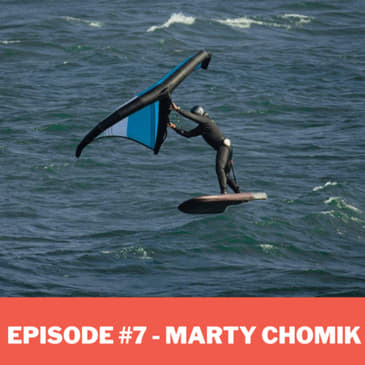



Marty is a Vancouver Island based board builder, shaper and repair man. When he is not riding swell near Victoria he's in his repair shop. On this episode we talk about when to bring your board into the shop, what to look out for when buying a used board, building basics and more.
To get your board repaired visit: https://www.facebook.com/marty.chomik
[00:00:00] Welcome to The Wing Life Podcast, where we talk about wing-foiling and the lifestyles of those who enjoy this great sport. Alright, fellas. Marty, thanks for joining us tonight. Hey, thanks for having me. Absolutely. I'm so sorry. We're the pleasure. What an opportunity to talk about foilic.
[00:00:25] Like, I'm in the basement. Why wife does a lot of talk about foilic, my kids roll their eyes. Guys are like, hey, you want to talk about foilic for two hours? Yes. Sure. Come talk foil and bro. Nice.
[00:00:39] So, for you guys, tuning in at home and don't have a video feed right now. Our lesson is in the podcast. We have Marty who's a board maker out in Western Canada when he's sitting in his basement, which is a huge rack of boards.
[00:00:55] And he's got his two gone and he's joining us for this episode here. Good looking, really Canadian. Whatever it takes. Oh yeah. That's it. How long you even doing this, Marty? When you say this, defying this,
[00:01:15] board making board repairing, and we can go into how long you've been boarding wing and the wind after. Yeah. Well, I, you know, Hubble would just start with the water part of things and I can kind of go from there.
[00:01:27] I was 19, I guess, I'm 47 now, 48 and a couple weeks. And I went to Mount Royal College for the outdoor education, outdoor pursuits program. And started white water fiking. And, uh, and that this is with the leads into this.
[00:01:47] And, um, so for me, I was like not going to get a regular job. There's no way I'm not going to give into the man. And I'm going to live a life of freedom and, uh, and I did for a long time.
[00:01:58] And part of that was, I said, the sea to sky court or I lived in Pemberton, uh, predominantly in Whistler sort of bit back and forth. And, um, and then I'm poking up with the crew guys there and we started working on, um,
[00:02:14] like trucks for by four or some stuff. And because it was a big thing back there because there's no gates all the communities, all the back roads are gated here in the island. Um, because it's like a grandfathered thing. The company is actually owned up owned the leases.
[00:02:27] Okay. We'll open the loan. And, um, and started doing a lot of body work. And, uh, so body work is, you know, you're working with polyester, um, resin and fiber and, uh, it's, you know, it's filling materials and sanding in a way to go.
[00:02:44] And that was kind of the beginning of like working with composites for me. Um, okay. So that goes the long ways back. Um, as far as fixing boards like as soon as I moved out here, which would have been,
[00:02:57] maybe 15 years ago when I see your south, that would be the south island. Um, you know, I was born. My neighbor's board. He gave me an old wetsuit and, uh, like, a couple smashed up old boards and said, how about her man?
[00:03:09] And it was like, well, I can fix that. And so I started doing my own repairs and, um, and they were terrible. Like it was just pouring resin on and, you know, just, you know, just, just, just, just,
[00:03:20] blending into the little rolling kind of resin and, you know, the whole thing, right? Um, but, uh, but, you know, I started developing some points of reference anyways, like, uh, on what not to do, you know, and, which is equally as important as knowing what to do.
[00:03:37] Um, maybe not least. Maybe maybe more so sometimes. Yeah. Um, and then it would have been about, uh, maybe a decade ago when we were fighting and we were fighting a lot and there's a bunch of spots on the island like,
[00:03:52] well, from the west coast all the way around the south tip and then up the east coast. It's all, it's all rocky. And so, you know, you're leashless guy boarding with surfboards and your boards are going to the beach all the time
[00:04:06] and our gear was just getting trashed and it was getting expensive to go to the shops. So, started, um, fixing my gear again and then I started fixing everybody else's gear. And then the guy that actually owned the shop that did all the repairs and town.
[00:04:24] So they stopped doing repairs and I was the only, I was the only guy. Um, so kind of worked out with the, uh, the COVID thing. It's sort of coinciding with that.
[00:04:33] So I ran the poll, uh, the flag of the poll and basically open for business and, you know, started taking people in as actual customers that would have been, you know, maybe five years ago. Um, we're going to go. But, you know, previous to that it was, um,
[00:04:55] like we were fabricating our own stuff already like right off the bat where like, you're going to get, you guys love this like this one, especially Tom. We're going to save some money and we're going to make our own stuff. Yeah. We'll save some time as well.
[00:05:11] That is. Yeah. That part of things didn't work out how I think this is. Yeah. That's okay though. But you're all answered to a short question. No, I appreciate it. But it does bring us in well as how you started all of this and, um,
[00:05:30] and how you got your business going. And I believe you build boards now as well, right? You've got a little bit beyond just fixing. Yeah. Yeah. I mean, like we were building, we were cutting socks in half and then, you know, at first.
[00:05:43] And then, uh, you know, there was my good buddy John Bridalow here, and Brad, uh, the calendar later. They were kind of like where there's a crew of us down here that are, you know, we're tight. We've been doing this for years and John and I were like,
[00:05:58] okay, man, we're going to save money. Right? And we're going to fix our own. We're going to make our own boards and that would have been, yeah, like five years ago. Um, and it was just for us really, you know,
[00:06:11] like it was just, uh, like we can do this and there's really nothing to these things that it's a barsel. You know, like, you know, how difficult can it be? Um, and to a degree that's still true, you know, it's not rocket science, but like anything.
[00:06:27] Um, there's some do's and don'ts for sure that, you know, a person learns along the way. Um, making something, uh, light is pretty easy and making something heavy is pretty easy. Making something light and strong that that's difficult.
[00:06:42] You know, um, so we all played with a bunch of different shapes. It's probably made 30 boards. Now, Noah has a couple. Um, Tom's got some like foils, I think. Uh, maybe. Um, yeah, because I started making the foils too and I worked with actually the engineering program here.
[00:07:06] This was just after the Tacuma and goal foils first came out. And then again, I was going to save money and, uh, make my own stuff. And I was like, I wish I had that, um, the original, like sort of picture back to you guys. It'll be funny.
[00:07:22] You'll be there for something. I'm sure. Um, and work with the Camosan Engineering program and did like a, what's called a Capstone project where I, uh, project managed and mentored this, uh, group of really smart engineering students and said me,
[00:07:37] like they helped me develop my own modular foils out in system, which, uh, cool. Again was like, like, incredibly educational, not just through them, but through me through the project managed part of things. I had a chance to actually like,
[00:07:56] really, um, review all of the mistakes and all the things that I had done until that point in time to be able to present it and hear like the options. Like it's like coming up with good questions. And we were able to answer a lot of those, um,
[00:08:10] then so, um, that kind of let in was really the big, that really kicked things in because if I could make a hydrofoil by hand, you know, through campus using utilizing different things and fixing a surfboard, it's pretty darn easy. Mm-hmm. Yeah.
[00:08:28] Yeah, I think the building foils and fixing foils is a whole different level, a whole different dimension. And when you start talking about making things light and strong, that's really where, you know, you can really differentiate between different buildings, uh, techniques and, and I think realistically speaking,
[00:08:49] um, if you really want to build something light and strong, it's a foil, you need just tooling that's not realistic for most people to have. Uh, in their houses, uh, and they can't, and they can't really do that. However, I do think boards are very doable.
[00:09:05] Um, so, do you want to tell us kind of a little bit how, what, how do you build your boards? Like, what is your process? We don't look forward. Well, it depends on what I'm making. You know, and like, I'm a kind of an experimenter too.
[00:09:19] So, you know, I've tried a lot of different techniques. There's different sandwich techniques. Uh, for somebody who doesn't know what his sandwiches, I know you guys do. I happen to have this cross-section of a board that, I don't know if we can actually see.
[00:09:33] Can you guys, is that focused well? Yeah. So you got carbon on the outer layer. You've got divinous cell. Then you got a layer of glass between that and the foam, and then you've got EPS. And, uh, and so that's the foam that's used nowadays.
[00:09:52] This specific construction, this is an old Mike's lab board. Uh, I converted from one of those old kite race boards to a wingboard, which worked okay. Um, but then in other ways it was not so okay. Um, we could talk about that later.
[00:10:08] And one of the things about learning about the importance of rocker, um, when you're building these boards. But, you know, we tried at first kind of using what we had and because there was, you know, anybody who was worked or salt had, like a polyester surfboard blank,
[00:10:25] kicking around. And, you know, early in, there wasn't really an understanding to what we were doing. And so a lot of what was happening was, um, the guys were, um, making the boards based upon a surfboard profile. Yeah.
[00:10:41] So I'm just going to take a little parentheses on this just because I know people are going to be listening in and then really see what you just showed us. And basically what Marty was just showing is a pretty modern, uh, kind of like up-to-date,
[00:10:54] how you build a wingboard today. Uh, and basically what you're seeing in a sound bridge instruction is that you have an outer layer that's either carbon or fiberglass, or if you have lower sometimes. Then you have a very thin layer of very high density foam,
[00:11:11] which is what the divinous element Marty was talking about. And the idea of that foam is to be able to make a really impact resistant skin without having to have a really thick fiberglass layer or a really thick carbon layer and kind of help
[00:11:26] then prevention and stiffness without having to add a bunch of fiberglass or a carbon. Yeah, after that you have another layer of fiberglass and then we go down to a really kind of light weight and a low density foam, which is your EPS
[00:11:41] and that'll give you volume basically. That'll give you the thickness of the board that you want, how much foam you need. And because the boards end up being so thick, especially wingboards, if you look at a cross section like Marty is showing us now, there's almost no fiberglass.
[00:11:56] There's almost no carbon in the thickness. You have these super thin layers on the outside, and it still ends up being something that's super stiff and super strong because of this really smart use of materials. And as Marty is saying,
[00:12:11] and then beginning the early wingboards were not built like that. They were just built like surfboards with reinforced tracks. It was basically just EPS, low density foam for the fairly thick fiberglass layer to make it damp resistant. So they were quite heavy and they weren't very stiff.
[00:12:30] And that ended up being kind of first-gen subfoil boards and windfoil boards and surffoil boards. And after that, all of this sandwich technology, which I believe comes from wind surfing mostly. Kind of showed up. Picture and that's a huge difference
[00:12:47] in the weights and boards and stiffness and durability. So one of the things that might be important to understand for people is the reason why also that sandwich technology works. It's one of those things where you have three materials and they add to three,
[00:13:05] but when you put those three materials together, it adds to five. By adding those materials, it creates a strength that is greater than the sum of the parts. Which is kind of where the miracle this stuff comes in.
[00:13:21] But it is not the only way to accomplish a lot of the objectives. You know that, and it is difficult. Like, we used to, I used to kind of make fun of things coming out of the co-oprofactory and overseas. And it was like a knockout board
[00:13:43] and they don't really, you know, it's just garbage. Like, those crafts people really are really good at what they do. Yeah, they are. And co-profrofrofrofrofrofrofrofrof that don't know is the fact that producers basically every production when search and board on the market
[00:13:59] and a lot of the wing boards, a lot of the kite boards. It's a high end composite factory in Thailand I believe. That has been at it for a very long time and they're actually very, very good at what they do.
[00:14:13] And you kind of get what you paid for, just like anything, you know, made in Asia or anywhere for that matter. You can get shitty constructions and you can get super high end construction is just depends what you pay for. Well, that's it.
[00:14:28] And so there are things there a lot are made to strike. I know a number of people and the board business and whatever else and one of the most important things when they're doing overseas stuff is having somebody that's doing QA quality assurance
[00:14:44] on the product to make sure that it's being done according to how that they wanted to be done. So which is one of the things there was the first generation KT boards or quadroboards that came out which were great boards all the way around.
[00:14:58] I think almost everybody I know is either has one or had had one of those. They ran into, was over COVID there and they ran into some QA things where the factory used thinner carbon and then they were potentially supposed to.
[00:15:14] And so it was a limited production run and it would they were just a bit more fragile and they were supposed to be all of those long, long since been built on the market can happen to any of the companies but the data sort of...
[00:15:26] There's sort of a... What's your skill? Yeah. And now like it's like, what is this? And you know, still really good boards there's absolutely another wrong with them for selling like a make any sort of a disc because not. And then the next run of boards
[00:15:43] they went with like thicker carbon, you know? And it's a little bit... It's a little bit the boards are a little bit heavier but they're way stronger and I think that that's where a lot of like... That search for the lightness
[00:15:59] only goes so far until it rebounds back and people start getting, you know, that proper sort of like value and durability intersect, you know? Totally. And it's a super, super fine line. Like I've... Here it is. I'm working on a huge composite project myself right now
[00:16:17] and through it I've kind of learned how to do the calculations and all this kind of stuff like actually how much fiberglass or carbon or whatever you need and how much thickness of blah blah. And it's really, you know, the skin plays such a minimal role
[00:16:30] and strength in reality and all of this, like it's really the geometry that does it. So you can have a board like those first generation quadruars which is structurally way stronger than us. But the skin is so thin that you just puncture it because there's almost nothing there.
[00:16:47] And if you add just one more little layer which doesn't add that much weight you have something that's not bomb-drew but really a lot more solid. So dialing in construction is a huge thing for more making sure. Yeah. So, yeah. Back to the question about
[00:17:06] how do I start making boards? Well, the first thing is is finding out what the objective is. You know, like, what do I want to do? What am I making this for? Like a prone surfing board and am I making this as a soft surfing board?
[00:17:18] Am I making this as a light wind-winging board? Am I making this as an all-around wind-in board? Am I making this as a sinker-winging board? You know, et cetera, et cetera. And that's going to give me a lot of, you know,
[00:17:34] that's going to give me a lot of the direction of where I'm going to go to. You know, and there is, you know, like, you've got these boards where it kind of really, it's a generalization but it only really matters in the light winds.
[00:17:54] Like if you have enough wind you can fly most anything to a degree of proficiency. Like, and of course, if you're in really, you know, really high winds and you have a big soft well, then you've got problems
[00:18:06] because it's going to get blown around all over the place and, you know, like why is going the other way there? And but really that's where, you know, you run into the lower ranges where it becomes challenging to, well,
[00:18:18] and we'll challenge any, it becomes one of the things that design features really come into play, you know, sharp edges and all sorts of things like that. And also, you know, depending upon where where you for me, where are planned on using the board?
[00:18:36] You know, so if I'm going to be up to coast where there's, you know, blast rock and all sorts of, you know, like really, really challenging launch spots or places and it can end and I'll probably go to trip over myself and land on my rails.
[00:18:50] Like, I'm going to want to use, like, a spectre carbon blend on the rails. Or, you know, or an anger carbon blend on the rails. Or something like that because, you know, as far as the materials goes, like if I were to put carbon on there,
[00:19:06] it would be lighter and cheaper for sure. But, you know, the second that I ding the rail all the sudden that EPS foam is taken in water and now I've lost all the weights savings that there was anyways. So, yeah, that's the way to look at it.
[00:19:23] You know, so it's like, you can only, like I'm really hard on my gear. Like there's no question about it. Like, you know, I make boards and I can just chuck around and I think you probably see me at the beach loop.
[00:19:34] You know, a couple times it may be like, oh, yeah. Once you're doing, you know, but I like I make my boards like that so that I don't have to worry about it, you know, because I'm making them based upon my needs. You know, okay, I'm out there.
[00:19:48] But, yeah, that would be sort of how I start the process. Is that answer to that question? Yeah, no. So I think it's a really good way to do it. We should, before moving on too far, does anybody have any questions at this phase of the game?
[00:20:06] We got some people here with us that are writing your gear, which is actually pretty cool. That's funny. Yeah. Any quick questions halfway? Hey, no one going in. Hey, Marcie, I'm having a great time writing. I got two boards.
[00:20:20] I got two of your boards now looking for it to hopefully plug in the gap. Like we were talking about. And we can have a fill on, to make quiver. So yeah, my question is Marcie, are you taking commissions at the moment?
[00:20:35] Are you making custom boards for people? I mean, I can. You know, somebody who approached me and say, you know, I'm looking at this and I'm looking at this. You know, it's something I can do seasonally. It's difficult for me.
[00:20:51] And the reason for that is I don't have a lot of shop space. And, you know, while I can move things around in and out there, I found that that affects quality. Like if I, if I, you know, want to make something that's really good,
[00:21:04] I want to be able to put it into a proper space where we don't have to move the blank around a lot. I'm not going to have to repair any holes in the blanks. I'm not going to make all these small little mistakes.
[00:21:14] You know, that accumulate over time. There's no light in the day right now. You know, it's a challenging time of year for me to do things like that. So I would have to say at the moment not really, but you know,
[00:21:28] I'm like, I listen to anything right as somebody has any kind of a reasonable idea and any way and even on reasonable ideas on like what's here. You know, so. Yeah. Why would he got? What do we do? Oh, no, what's thinking? No, what's thinking? I saw that.
[00:21:49] He's thinking about it. You go at that. That's an interesting point you're making about kind of manipulating stuff and having the right space to do it. And I think for people that are going into thinking about a home build, not something that's really worthwhile considering because if you're,
[00:22:06] you know, thinking of building this in your kitchen. You're apart from your, you know, significant other might be getting a little frustrated with you about that or your roommate or what not.
[00:22:18] But beyond that, you're probably going to need to move it around a lot and you're going to need to get it out of your way and you're time to want to eat and you're going to be living in fiberglass dust.
[00:22:27] So it's having a space dedicated to making the board and not moving it off the bench so that you don't think it as you move around and stuff like that is really a huge plus and it's not always easy to do
[00:22:39] because that space needs to be kind of 100% dedicated to that pretty to get your results. I know taking it to the next level what I'm doing back and back in bagging,
[00:22:50] which when I'm using high end materials like the carbons and the anegra on the spectrum and that kind of stuff, especially Kevlar going to want to use the vacuum bagging is not needs its own dedicated space because at the point
[00:23:06] time where you laminate things like to drape the cloth, you wet the cloth out, you know there's steps in between all these things but it's the basic way of it for somebody who doesn't know.
[00:23:17] And you put like a breather layer that can squeeze out material then you put like a layer that will actually allow air to move through. So you create suction bag, you have to have enough space to be able to lay that bag out properly.
[00:23:31] So when you put it in it's a nice and tidy process because you have $1,000 in material and however many hours in time and ruin it. Like if you're trippin. Totally totally.
[00:23:47] So just that that was a really good point about kind of breaking down composites just so people understand what it is because I think it's kind of there's a lot of mystique about it and people don't really know what composites are.
[00:24:01] So basically when you hear carbon or fiberglass or kevlar or aromatherer, all of these different fibers and it's basically the cloth that's impregnated or filled with some sort of a resin. So a resin comes out as a liquid and then catalyzes or and turns into a hard plastic.
[00:24:23] You usually have to mix it, you either mix and a catalyzer or curing agent to a specific ratio based on the resin blah blah blah that's kind of details that aren't that important.
[00:24:35] But the idea is that you have this liquid that you pour onto a cloth and then with time and some heat it turns into a hard plastic now you have this really rigid material that your strength is coming from fibers.
[00:24:51] And your adhesion between layers and then onto the foam is coming from the epoxy or polyester resin that you're using for it. And what Marty's talking about here is actually the next level of that where you're trying to use a vacuum bag.
[00:25:09] To remove as much resin as possible and keep the minimum amount of resin possible. So that's right and air as well so that you have this like perfect straight fibers that are stuck super well everywhere.
[00:25:24] And all you have in your lamination is just fiber and it's a little resin is possible and that's what makes it, you know, as strong as light as possible.
[00:25:32] And are you are you in using as well, Marty or are you doing a wet lay up and putting it in the bag.
[00:25:38] I don't infuse, I don't have the shop space for period and you want to really know what you're doing with that there. I'm not prepared to learn. To spend what it would take to learn and make that mistake in my backyard, you know, I know.
[00:25:55] That that have done it here. I'll do different kinds of layups like I'll do what I found lately. Do we want to get into this right now like the sort of technical component I'll answer quickly. Sure why not. That's it.
[00:26:09] I'll do my favorite way to do things right now is to do like, like, wet out on a table. And get a roll like a cardboard roll that the clock fiberglass clock would be on roll it up and then roll it onto the board.
[00:26:27] Yeah, that's already been sealed and I've I then back in bag in from there and I've got really good success with that. Every step of the way that I'm minimizing the amount of resin that I use saves weight. And you know, and cost. And cost.
[00:26:44] Which is and cost as well because the residents expensive.
[00:26:49] Yeah, for sure. And then actually know you're sending off a hundred dollars in resin and you burn through a hundred dollars in sound paper and you burn through a sander and you know there's like two weeks doing this yeah,
[00:26:59] And you start doing it over a period of time, man, it's it's costly right it's costly so. Yeah. We did kind of want to go into a little bit of basic DIY repair as I guess this could be a good bridge into that.
[00:27:13] Kind of session savers you're at the beach when do it would somebody take a board to you what what would that kind of that step be like. Well, first of all, don't ever try and repair your own board. That's it to me. Done. It's self-explosive self-explosive.
[00:27:32] Don't I mean, Nobody, you know, like don't act like you know, unless unless unless somebody's like at risk of losing their foil. Which is happened, I know somebody in this room who's lost. Well, yes. Where is a a sorry as both start crying. No, there's a bank.
[00:27:57] Yeah, then you can keep in the back for sure. Probably the most effective way to stop a cracker or leak in your board is tucked tape the red stuff. Yep. The nightmare to get off.
[00:28:12] It's like if you take it to you into the same thing with kind you can fix kind through wings with that. But when you go to take it to the repair guy a lot of the repair people won't they won't take it.
[00:28:22] That adhesive is so hard to get off. Yeah. So that said there's better options in that. There is is an ACS helicopter tape. You buy a roll of it's fairly expensive, but it's the tape that they use on helicopter blades when they're moving helicopters.
[00:28:41] It was originally a military application. And you can buy them in like rules now and like I said, it's a it's you know, cost a bit more for roll. Consulate, you cut in 30 by $400 or something. But it's like. Give.
[00:28:58] Rooms easily you can remove it afterwards it's got high bas ability He's got high flexibility andrendre. So it all look like so it's like Wallet to beach with a tucked tape along me like.
[00:29:12] Or the carrying I thought to kids I won't spawn that one come up with it, yeah. Well I've been working on that. Well, like, so, yeah. No, no, no. Those of us who were there were I'm understand. But that's both.
[00:29:28] But those are a couple good things for sure to have in your kit. You know, extra bolts, that's a good one to have. You know, like how some backup bolts and trying stay away from the rig, you know, just the regular hexagonal bolts in other garbage.
[00:29:46] For what we do there, they strip out entirely too easy and. And then when you get any sort of. Seizing to do with the salt water there, they can be really difficult to take out. You have to drill them and that's a whole their exercise and things.
[00:30:00] So, you know, having some extra bolts is a good idea. You know, I would say those are kind of the three three things that, you know, for the beach they're good. There's the clots.
[00:30:12] And you tried, can you try ding stick? Yeah. I was going to go into ding stick and different epoxy and stuff next. Yeah, so. Um, if you're using ding stick as a filler and then putting tape over top of that, that's okay.
[00:30:27] If you're using ding stick to push into a hole, letting it cure and thinking that everything is all right, you're settling the stake in. Because the. Regidity of that is of a different rigidity than than the board guaranteed. And so every time there's some movement, there's flexats happening.
[00:30:47] And because you have this EPS board that has all of this air in it when it hits the cold water out here is that. You know, the air gets denser and it pulls the water in literally like a vacuum.
[00:31:03] Yeah, I'm not really like you know what you do what you have to do. It's like ding sticks without having a cloth over top of them or you're going to get water intrusion. Very. Yeah, I think if you're, if you have a sandwich construction on your board. Yep.
[00:31:19] And it hasn't gone through the whole sandwich. Then ding stick is is a totally fine. You know, just for a session, Savior, not as a real repair but really just as a session, Savior. Totally in my opinion, I'm totally okay with it.
[00:31:34] I'd much prefer to see solar as being used though personally, which is UV cure epoxy.
[00:31:41] You know, at that point, again you still have the issue that Marty is talking about about having this big glob of hard stuff in a structure that's meant to flex and move in a coatings in way.
[00:31:52] But at least you're getting a real seal all around the edges as opposed to ding stick, which will fill the hole and it probably won't fall out. Really seal around the edges.
[00:32:03] Yeah, so I'm a really big fan of solar as they have an epoxy version. They have a polyester version and it's all you need is a little bit of sunlight. You apply the material on, ideally you sand a little bit beforehand and then you let it cure.
[00:32:21] And it can go quite quickly if you have a lot of sun here within like 20 minutes you're getting to go underwater. I think there's an important point there to be made that there's there's two different kinds of it. There's the polyester stuff.
[00:32:34] And then there's the epoxy stuff that for all intensive purposes, just get the epoxy solar. Because the polyester is like it will dissolve the EPS foam. So if you have EPS foam involved as soon as that touches it will create a big hole in your board.
[00:32:53] Yeah, it would be an absolute disaster. I think I normally use I think there's the 105. The epoxy I normally get just from a voting store or something very similar to solarism that sense but that stuff is pretty good for that.
[00:33:08] The kinetic here is what it's wet to that 105 does. Yeah, so that's always been kind of nice. What about for those at home that are looking to buy used board? Is there anything that you would recommend looking out for if there have been repairs done?
[00:33:24] I think that there's a number of people I know who've been. Kind of let down the garden path by reading how easy it is to take up wing foiling and you know what size boards they need for the size and this and that.
[00:33:40] Yeah, I'm a big fan of having fun like I believe you can have fun all the way through the process if you get the if you get the right stuff. You know, and that's a little angry. So getting up a board that is maybe a little bit.
[00:33:56] A little bit less an needle stroke and a little bit more functional. So getting something that has the higher leaders like a really short sub style.
[00:34:06] You know, I think there's probably a business model. I'm probably going to talk to Sam at Jarrow Beach and suggest that she actually has some boards.
[00:34:14] Rent out around Victoria for the summer or whatever so that you know people could rent out a large stop, you know, for ten sessions.
[00:34:23] You know, so they can actually like isolate the variables when they're learning a little bit and not have to worry about the stability of the board before they go and buying something. Before they even before they even think about buying anything that's like.
[00:34:37] So going to be their wing board for the next year, you know. I've found that a lot this summer teaching at net net. I was working with Marie there at elevation for a little bit.
[00:34:46] Well, the 145 150 one of our clients had a I think a Nash was a bit shorter a bit wider and and then I was able to borrow that board and put some other people on it. And it was significant difference.
[00:35:00] Are you an intermediate level wing foiler looking for an epic adventure this winter? If yes, I suggest you reserve your spot for the wing foil expedition hosted by Agua Salada. Baja California sir adventures this coming January.
[00:35:14] This trip is going to be absolutely amazing. It includes ocean front accommodations airport pick up and drop off fresh locally made food and snacks created by a local artisan al chef yoga massages five days of wing foiling and the best part over 100 kilometers.
[00:35:33] Of boat assisted downwinders just imagine the freedom and peace of mind that will provide. I look will be one of your wing foil coaches on this trip. So be a great time to know. Enjoy the downwinders, but also ask questions to approve your writing.
[00:35:48] Our trip will take you on different parts of Laventana and Baja that you would not otherwise be able to access without a boat to learn more visit winglifepodcast.com and click on trips in the main navigation menu once again.
[00:36:02] Visit winglifepodcast.com and click on trips in the main. With only eight spots available, we know it's going to book up fast. So we recommend that you act quickly. I'll see there for them in just how easy it was to get up.
[00:36:17] How they could take the instruction and then not spend half the time or three quarters of the time in the water. So I do like where you're coming at this before even knowing what to do then you got to start to look at the sea.
[00:36:30] Yeah, what is that best board for me even for that first couple seasons? There's a one guy in particular pretty good surfer out here and he ended up buying. He's a really like guys like 150 pounds. But together, a buy and like a 45 liter board.
[00:36:50] Yeah, and he was like he'd never done any like what he was like yeah, I'm not like I'm a good surfer and you know like I've been in double overhead surf and like he's pretty good surfer and I'm surfer them and and you know he was just really like that's he's getting this board and I know I'm going to grow out of that up something so big and he spent at the first at least 20 sessions walking in you know up the beach.
[00:37:15] And then I think whether he made it in like sensibly or you know like some sort of you know some terrible rescue scenario.
[00:37:22] You know, it was a real nightmare for the guy and that's like just the classic thing where it was you know I just kind of felt bad for the guy you know like you don't want to be like hey man, I told you but.
[00:37:33] Yeah totally and I'm going to help you. Hey, I got a bigger board. In fact, I got three come get it like I have and I have boards around that I just lend people just come get the big board.
[00:37:45] I think that's a pretty extreme example, but like the really classic example that that you see a lot is people not taking lessons not really having done much wind sports or even worse people are coming out at from a wind sport background.
[00:38:00] So they're already a proficient you know, kind surfer windsurfer and they're like oh I got this no problem. I'm just going to start with a board that's you know my way plus 10 liters or 15 liters because I'm not going to grow out of that.
[00:38:12] Well, that's a great idea if you already know how to foil and you already know how to kite falling you already know how to win foil and you already have a super good base surfing and you have really consistent wind direction really consistent conditions that you can go out every day.
[00:38:28] Yeah, that's a that's a great plan but the reality is that for 99% of people they don't have most if not all of those variables.
[00:38:36] One they get into it and so getting a big board like Marty's talking about is a huge huge help and I personally even though I had basically all of those variables. Starting I started on a seven foot long 150 or 160 liters sub four of word.
[00:38:54] Yeah, and I'm like you know 70 kilos. Are you being truthful about that 70 kilos Tom? What was that sir? Yeah, you know, you know even even even in my you know even at 75 kilos or even at 80 whatever that's still a huge board.
[00:39:23] Yeah, and I know stoked on having that because it's made it a joke. You know you stand up on the board and everything's good and you figure out okay what is this wind thing like how do I make it go forward?
[00:39:33] How do I do this and even with quite a few years of when surf or anything kind of falling all that kind of stuff it's still not that easy at first.
[00:39:46] And I think the people to get in the most trouble or the kite for others that come into it. Having used really tiny forils really tiny boards and they're looking for that you know light swing way and high performance and stuff like that.
[00:39:59] And they just don't have the efficiency to pump up onto for so they really need a big wing and a big board otherwise it's not going to happen. Yeah, or you're going to suffer a lot.
[00:40:13] What have you seen Marty is that kind of the same thing you've seen with people coming to you do you have people coming with with little experience kind of looking to get something or.
[00:40:22] What are some people like a lot of people just don't you know they think that their research on the internet has told them what they need to do.
[00:40:30] And that's fine like I don't have any business. I'm not too conservative will be in a right like you know for me and I'm not right a lot of the times you know.
[00:40:39] I just like to be helpful to people and see them having a you know a better time of of you know learning something like this because it's just it's such a positive culture.
[00:40:49] So it's a lot different than the serve culture which is a bit more like a limited resource and you know more for you is less for me. And in the win community, it's it isn't that period right it's you know more for me is more for you.
[00:41:04] Like it's all good. So yeah, you know I want to see people in that sense I want to see people do well and I don't buy into the thing that you can't rip with large boards like.
[00:41:15] I know a couple of guys out here like Chris Kerr was on a large board you know he was ripping like I don't know within five six sessions but he was glad that he did on that my buddy Brad who was like. Like a.
[00:41:27] Calam he was like an Olympic level skier so he's like one of these bizarre athletes. But you know he was one of the first adopters of winging coming from kidding because it got too mainstream for me hated.
[00:41:38] It's just kind of funny but you know up until last year and even this year he still uses his. His town of Palo board for a win board any rips like he rips.
[00:41:50] So you know as far as that you're not you know not being able to like you know perform on a high level on using you know bigger gear is sort of a misnomer too, but.
[00:42:00] Yeah, there's people that come and and ask me you know what kind of boards I think that they should get. I'm going to kind of segue back to you know what what the question is is one of the things to look out there and.
[00:42:14] Like there's been some pretty radical changes and design over the last like the last year seeing things kind of settled down it's all about ninety Other than that the one KT board, which is a bit of as an old merrier. It's interesting.
[00:42:29] Yeah, it's kind of an outlier so we'll just leave that there but. The other boards are ninety five percent sort of the same coming into the years before that there was a lot of changes that were happening.
[00:42:43] With some kind of radical designs and then some other designs that sort of ended up being a bit more like the classic design of what we go with now and.
[00:42:52] And that's fine because when you're learning it's you know you can make a lot of things work really but the you know one of the big things is is understanding. Not rather understanding making sure that you have a solid track.
[00:43:08] In place because when they first started doing a lot of these things they were like companies and there was some big name companies that that were like you know they would have like an inch thick of divinity of really high density.
[00:43:21] That was like a square that they dropped you know routed it in and dropped into the foam and puts them glass over top of that and off to the races you go and. You know that's fine and then the until you hit anything.
[00:43:33] And next thing you know now you crack that you may not actually even see the crack that happens right there but now you delaminated something inside of the board right there and and.
[00:43:43] You know I saw the first year that we were out there maybe the second year you know there was. There was foils that were getting ripped out of words kind of like that he was happening you know and.
[00:43:56] Now it is they've you know they're pretty much understand what works and what doesn't. So you know one of the things to look at is to poke a foil onto the board itself. So as as you would be.
[00:44:10] Flipping it upside down so that of course the deck of the board is on the ground and the foils up near and believe it or not. Reen forcing that board with your feet and rocking it back and forth to see if there's any movement in the tracks.
[00:44:24] And that right there can save you like depending on what kind of foil you have some foils will sink. You know some foils will go to the bottom so you know never mind the repair cost of getting that repaired.
[00:44:36] Losing you know $2,000 and we actually shouldn't what else was talk about numbers are me here. Who thinks does it cost. Yeah, but the foiling here is not a it's not a good time. So I think that's probably the most important thing to look at you know.
[00:44:57] You know we're lucky in a salt water environment here in the sense that when water gets whipped in and breeze out and dries it will leave salt crystals.
[00:45:09] So you'll get little weak marks and you'll see where there's salt that's left on a board and that will tell you where boards leaking because it can just sometimes be just little pimples. Which is easy to fix but that will still bring water into your board.
[00:45:24] You know so. Making sure that you actually get a board that's like going to bite it's.
[00:45:30] It's been taken indoors and warm, doubt at least like not heated so it's going to create a problem like a delamination but like warm up to see if you have any weeping that's happening out. You know paying special attention to like sharp edges. So like.
[00:45:54] You can see my board there as the sharp edges at the back right there. And also the weak spots those are spots or you know should be cut. You know keep an eye over those spots. They often get over-sanded. Yeah they get over-sanded.
[00:46:25] They're challenging to lay up you know if they're in our factory sense there especially if you get on the corners where there's the complex curves. I find I fix a lot of those kind of leaks right out of the factories they're also you know.
[00:46:41] Focal points for impacts so instead of having some of the ones you know spread out over larger area it hits that part right there and there's a lot of force that will hit right there and you know you can get little leaks from there.
[00:46:54] Paying you know attention to that. And then I think the next one that kind of comes out to mind is to make sure that you're going through the board to make sure there isn't any delamination.
[00:47:07] Like the delamination is for those that don't know is when the glass gets separated from the phone.
[00:47:14] Yeah so that can happen from a few things that can happen over time and wait you know pushing on something eventually and you know eventually it gets pushed in far enough that it just wants to rebound back when you're dealing with like a carbon.
[00:47:32] In order to not that it doesn't particularly like to bend. More often than not you're going to get delamination because there's water in the board. And those things can be. They can be fixed.
[00:47:49] But it can be costly and usually it's it's a it's a bit incomplete because once you get water in these EPS boards there or any on any level there it's a very difficult to get it out. If if it all impossible. Like taking on the home.
[00:48:06] Yeah and then they breathe.
[00:48:09] So what happens is the water gets spread throughout the board and turns into vapor and then you get expansion by our own contraction and expansion that happens in the board and it's just like a like it's breathing and not will that will cause delamination.
[00:48:25] So okay one of them's kind of an indicator of a larger problem.
[00:48:30] Okay yeah and why so the other the other place to really look out for part from the heart edges like Marty's describing is often the nose the tail and the rails of the board because those are kind of focal points for impacts.
[00:48:45] And then compounded you know actually have these like really thin noise noses are really thin tails with really hard edges. You know those are just magnets for things kind of like what Marty's pointing out on his board like really thin. That's going to make sure the noise.
[00:49:01] You're right. And these areas up all around and in through here. I've got a full empath so when I like up here that helps me kind of pushing a little bit like an ninja. You're quick. That was Marty's voice slipping that would be good. Yeah.
[00:49:18] I've got the chance to push again something but it also allows me to put the board upside down and not worry about it. Okay. Another one here too. I've got a spectra like which is like am steel or dineema.
[00:49:33] It's stronger than steel that's like a spectra of carbon weave. So it's really impact resistant and probably have all the places that there is dings. That's where they're going to happen in and around there. So I'm not sure who's who mentioned that but that's for sure the obvious.
[00:49:48] Yeah. Okay. And what about foil placement? Like I know that's changed as well like the V ones and stuff they started and you can move the track was further back and they moved it further forward. I know I learned on a buddy's board.
[00:50:01] It was a 145 liter but the track was so far forward. I couldn't bring the foil back enough and it would just spin like a top. So. Yeah.
[00:50:09] Did you guys you guys play with that as well as you were starting out and then to now like we're all the track. Absolutely that's changed a lot. They know they're to the point where there's boards that are like first generation or oftentimes incompatible.
[00:50:24] With what was you because you know you have the different kinds of foils and without getting into too much of it. Higher aspect foils lift like this with speed.
[00:50:37] Lower aspect foils which were the first generation had heavy lift that you could kind of jump and they would like lift vertically. And you actually needed nose on the board to control that lift you had to keep the nose down.
[00:50:51] Whereas you know the the current generation of foils generally is like you're getting speed like this and it's lifting up like this. You have less lift. And so you need to have the tracks further forward. Yeah.
[00:51:09] So just just so people that can't see what Marty's doing with his hands basically the high aspect foils is a more progressive lift. So as you pick up speed the lift kind of progressively gets higher. And the earlier generation lower aspect foils that are really thick.
[00:51:29] The second that you start moving at a high end of speed all the sudden it's like, This foils wants to just jump up and fly straight up and it's kind of all or nothing situation.
[00:51:41] So with the higher aspect foils like today that's why we're seeing a lot of number boards have foils further forward. And there's also a lot of standardization and kind of lift points for foils. In the beginning we had some companies that had super super fun.
[00:52:00] For heavy foils and others with super back what heavy foils and everybody's kind of moving towards a relatively balanced front and back foot. Now so some tracks are moving backwards some of the foils but everybody's kind of moving in a similar direction which is great.
[00:52:14] It means that you can use more foils on more different boards. Nice to come out. Yeah. What about board shapes and lengths and stuff that's another kind of cool question I was curious about.
[00:52:32] Well, I know when we first started out there whole speed was a pretty big thing and I think that it's still is a big factor. Balance you know carefully was sized on the board though you know like.
[00:52:48] I like about a four or eleven long board personally with more volume. Okay. And you know I used to go with something that was a bit wider and now I'm going to things that are a little bit narrower for for speed and it really does make a difference.
[00:53:04] I'm finding that I don't need the length on that as much as I do the volume. You know, off this way to a point. Okay. Volume as far as like the thickness. Like that's what I'm going for these days you know like.
[00:53:22] Kind of it depends on where you like where where you where you're going to be doing your things like if you're in cold water. And you're in like open ocean cold water lots of currents you know aka so dilent or something like that.
[00:53:37] You know you can get some significant winds and big swells and like you don't want to be floating around on a sinker like it's not it's not a good option but if you're in the Bahamas. I'm not sure you know.
[00:53:53] I'm about actually road my sinker a lot more back in Montreal than I do now. And warmer water. Yeah, look at that more wind. But it's still fairly warm water.
[00:54:08] Oh no definitely not and I mean I think it's it's I think it's a lighter level thing more than a volume thing to be honest and for most people kind of what I suggest the people usually when they're looking at board sizing is don't think about a sinker board until you're making a stall in 90% of your transitions.
[00:54:34] And to that point it's just not worth your time. Like the gains in performance that you're going to get and ensure it's more fun to ride.
[00:54:43] Sure it's going to maybe you know have lower swing way and be a little bit more reactive and whatnot but it's just not worth the energy that it's going to take to restart that thing every time.
[00:54:54] And if you're riding in kind of marginal conditions or if you're riding gusty conditions especially you really need to be quick to kind of pump really dynamically and pop up on the foil otherwise you're just sitting in the water the whole time or your exhausted or both so.
[00:55:11] You know I think it's definitely doable on a sinker board but you do need to have a pretty good level and ideally you know in a decent amount of wind as well that definitely doesn't hurt. Yeah, because I think.
[00:55:27] Well Marty from strong there was playing around it and it knocked this summer and he was on something super tiny and very light wind and even him he was saying.
[00:55:36] Wow, like this is a sinker and super light wind is super tough but I'm I'm 150 pounds I got myself down to about a 72 liter I'm riding 22 kT that 72 liter.
[00:55:49] And I find that's about as small as I can get while coming in and next to no wind and floating I do like a floater when it's cold I don't like at least then I can sit on it.
[00:56:00] And my feet can dangle over or something or I can paddle in and be fairly dry but.
[00:56:06] I try to 60 and it was just it was fine but it's just it's just a little smaller and if you are wanting to stay warmer a little more size is your friend and.
[00:56:17] And it's definitely that but I wanted to know because I've seen because Thomas has made a couple boards as well in Ottawa and he's kind of looked up and and kind of saw your your progression especially with your boards and.
[00:56:28] And then I'm going to say that you have a lot of things to do with the bottom of the bottom of the board is that stuff has changed quite a bit as well and we've seen some different kinds of tales and then even the new fanatics are going with that kind of hard kind of edge like you have in the board you just showed us.
[00:56:42] And then we've heard to that kind of step tale or what are your thoughts on on that well the step till was is for the waves.
[00:56:51] You know, and what is there was a real function to because they had these huge they had this huge like chopped up like downwind boards on white.
[00:57:00] So that was like just an idea that they had basically like I think it was Kylenian was with Alex Aguirre and and from Gofoil and then they chopped the board and half or whatever and then we're like well hey what if we just cut this little section all right here and then you know and cut that section out and.
[00:57:18] And you know it ended up becoming sort of like like a defining sort of design and stuff. And oh there's a lot of different. People like different things there's definitely a function to that if you're entirely packed waves.
[00:57:33] You know with different kinds of intervals and if you're really into pumping when you're coming off of the you know steep waves. Like it makes a difference you know having that hotel. But it also doesn't give the same amount of push and lift that you that you get.
[00:57:54] Having the kind of tale that's just the straight back on that one and so now that things have moved more you know they swung more to the medium high aspect.
[00:58:04] A lot of companies are finding having that really sharp edge at the back just gives a really like a really good edge release. Right okay. You know like coming from a surfboard design I didn't know this for a long time, but you know like having a rounded rail.
[00:58:22] Actually holds the board to the waters. And so when you look at a surfboard you'll see round rails, round rails, round rails and here's where the magic comes in with a shape or it's where they start bringing in that hard edge.
[00:58:36] You know on in relation to the fins in the back of the board because that's what gives the board its edge release. Right and so it's pretty neat now to look with that on different surfboards with my eye now as I come through.
[00:58:47] I can I can kind of get into like a you know they're like an engineer it on kind of re-engine reverse engineering what they're thinking is and what they're trying to accomplish it's pretty neat.
[00:58:58] That's sad it makes a difference you know with these wingboards having the sharp edges that's at the back I like it, you know for me I find that.
[00:59:06] I do tend to go with a bit more volume and when I push on that back tail there's like there's just that bit of extra volume that will like help me lift up you know and I can feel it I can feel the difference.
[00:59:22] Okay what about flat bottom versus double triple quad concave that seen a lot of variations in that as well. You know I again like I think I'd said at the beginning there I think a lot of this stuff matters in really light winds.
[00:59:38] I like a double concave and the reason I like that is because on these squirrely tiny little boards it helps to give the board a little bit of direction like it's like the channels give it a little bit more but.
[00:59:50] You know I have owns like a lot of different boards from different companies and I made a lot of them and honestly the difference between you know a double concave all the way through in a flat board is like. It's negligible if it all noticed.
[01:00:06] I think a lot of it's marketing you know and maybe there is. Like a two or three percent difference but like you make your job to spend. Yeah you have to spend a lot of time on it to feel the differences and yeah I see what you're saying.
[01:00:23] Yeah and then like don't forget like the more hard edges they get more chances of having leaks in your board.
[01:00:29] Right so some of the bottom concaves and bottom shapes that you see and they have all these sharp edges all the way along there will every time there's that sharp edge of it hits a rock you're going to leak. Okay no it's good point.
[01:00:43] These are things that I see right because I because what I'm fixing boards and they're coming through it's like I can see the little spots that I know I know now when that board comes in on looking there and I'm looking there and I'm looking there you know.
[01:00:56] Because you were doing all of. So for those at home and those who aren't from Vancouver Island. There's a KT dealer Jesse dirty merbing water sports up in the ukulele you were fixing a lot of his warranty boards right.
[01:01:09] Yeah yeah that was great and Jesse rip or good guy. Yeah it was really good with with dirty mermaid there too which is great but yeah he brought a bunch of boards to me and. Okay five six seven of those or some.
[01:01:25] Oh nice yeah because I think you had I saw one of the right drop went off for you last are they think it was this summer that you were repairing and stuff and. And another question I had actually was deck pads they've changed quite a bit.
[01:01:39] The first version of the board that I have is a fairly aggressive deck pad there are a bunch of different kinds what are your thoughts on that at which ones you like the best.
[01:01:47] Well you see them you see them getting thinner like you know it and using like companies trying to shave.
[01:01:53] You know grams of weight you know and it seems insignificant but when you're saving 25 grams here 25 grams there 25 grams there, you know all the way through then at the ends.
[01:02:06] You've saved the pound on a board which is like you know can take it from feeling kind of like a really light for to feeling like. Not like for like that's how much I can take.
[01:02:17] So you know I think they're trying to sort of find the magic as that like. You know what offers that intersect between the nice cushiony feel with the comfort ability and also maybe some durability.
[01:02:31] With like how much can you get away with like how much will the market bear. Okay, it makes any sense there and and also you know things being a bit more refined now like here I got a good example right here. Sure.
[01:02:45] This is the guys more great salmon and this was one of the he got this board which is one of the original downwind board that was being made.
[01:02:56] By Johnson the shape or back there and so it's like you know it's really thick and it also has the cut out tail this is like a two year old downwind design. Okay, really high on board.
[01:03:12] But you look at the deck out there and it's got all of this space in the decking like how how how much is somebody going to be using all of that deck padding. You know that. You know that. You know that's a good point.
[01:03:29] For those at home, Marty was just showing us one of the boards he was currently repairing and just checking out that deck pad positioning and how long it is and just to. To know what kind of to look for look at four.
[01:03:53] And when would you recommend for somebody to bring in a board to you as opposed to just doing kind of you know small repair on it themselves. Well, I mean that's like there's no real concrete answer on that you know if you've got.
[01:04:10] Like getting structural around the the like first the foremost to be seeing that's like an open wound where there's open phone and you're probably better off bringing it to somebody like you know a repair person.
[01:04:21] Because you're going to involve like there's more material that's involved there's more of a chance of you melting the foam through using too much product. You know there's more chance of you bringing water into your board and ruining your board.
[01:04:37] You know, if there's obvious things like you know if you see that your thin boxes or your mass tracks are cracking or you see like like you sometimes people you can see like a little paint line.
[01:04:48] You know and it's like that paint line you can see that it kind of look like it's cracking definitely make sure you bring it in. Somebody has a few.
[01:04:56] You know, if you might just lose your foil or it could just crack it you when you're moving at high speeds and then you get hurt. So yeah I mean like you can get by using tape and.
[01:05:09] You know stuff and didn't go in and you know and whatever else there but there's like and buy all me and so I you know I use tape when I'm on there I certainly don't get out of the water.
[01:05:19] You know or stop my session because you know there's something that I'm not you know that I don't. I'm not going to get out of the water for that I'll do quick fixes but you know like when you invest a bit of money into a board like.
[01:05:31] You might want to keep it up as well too and keep the value up on it and so you know taking it to somebody who.
[01:05:40] You know does it as an actual business might not be about idea you know keeps the keeps the repair value high you know keeps it high. Yeah absolutely.
[01:05:52] So I think as a short resume we can kind of tell people basically if you have any sort of you know cracking in the in the fiberglass or in the carbon or whatever around the foil box.
[01:06:07] Definitely bring it into a shop to take a look at it or to our parent person to take a look at it and if you have a lot of sort of. So we're going to have to mention that because there's lots of leaks around the handles.
[01:06:19] Yeah that's true and then if you have any sort of impact that you can see foam through. Then definitely bring it into the shop or into a repair person and for other stuff you know.
[01:06:35] It can be more or less important to get it done right away but it's really important to keep the water out of the board. As murdered was talking about before.
[01:06:46] I got another one that one there back in the old surf days are used to be a thing where when you would have delaminations where there was like the inject the resin in and just. No, it's a whole lot of what ever and now that's a great one.
[01:07:02] You know back in the day it worked with with you know with polyester foam and polyester resin but if you do that nowadays what you'll do is you'll you'll get an exothermic reaction where the epoxy starts getting there's like there's heat created through the reaction.
[01:07:15] It's it's a stoichiometric and there's heat created if it doesn't have a chance to escape as in there's like a big globule of it and gets so hot it'll melt the core of your board. Don't do that. So don't do that.
[01:07:31] Do you want parentheses on the injection is gorilla glue and I don't know if you use this at all my but gorilla glue is basically a foaming.
[01:07:42] A polyor thing glue and you can inject it into anything basically and it activates with moisture so it actually soaks up any moisture that's in that area.
[01:07:56] And it just turns into a high density foam so there's no exosome problem like Marty is talking about a big help in our association. On that one there because gorilla glue will exotherm if there's enough of it.
[01:08:11] Okay, the challenges you get with gorilla glue is that you can actually like change the shape of your board. Yes, that's true. I've done it all my own stuff and I have created too much heat.
[01:08:31] Like doing it when it was hot outside like I could grease and then use a lot of gorilla foam. Doing it for box actually and then it just melts it and it melted the bone so. Good to know how to significant is with epoxy but yeah.
[01:08:48] Okay, now it's good point and Thomas from auto just mentioned that also that that repair guys have materials on hand so most people don't have a lot of materials on hand and maybe you go and buy this stuff.
[01:09:00] Fine fiberglass buying your epoxy buying this buying that the repair may actually come out to closer or even cheaper or not at least you're going to get a good quality repair as well right.
[01:09:12] Yep, now I want to know because I'm curious if you want to spend we've been on here for a little over an hour.
[01:09:21] Those early foils that you made do you want to chat about them and chat about the evolution and I would be stoked to find out more about how you guys started. Oh, we're just talking about some of those old foils that I said you guys over there.
[01:09:35] I wish I just had I wish I just had that one in particular. But I can talk a little bit about one of these designs that I made I found this one and I was like, oh, this is good one so good one.
[01:09:50] At the point in time when I made this was like a really small you know foil like really small and like look you guys it doesn't have to be huge and.
[01:10:02] So I thought you know, I was like okay you get a big curve and a foil here and you know that curve helps to create lift through the spectrum when you're carving because you're going to have more.
[01:10:15] Area as this way if you have a curve that's lifting right and so why not have just the vertical step like this, so you're going to have some vertical lift that's coming up from you know from this right here while you're banking a turn.
[01:10:28] You get all of the stability from having a flat foil section you know on the bottom.
[01:10:35] And it looks cool and I had a lot of fun with this one actually like you know, I had to fix it a few times or whatever but what are the emerging properties that came from this this is the one that I ended up developing with caboce and college.
[01:10:49] And I got a bolder than everything and by the time that that was done like foils at.
[01:10:55] Way changed and like doing what I was doing was no longer relevant but one of the four thing book this one is is it actually when I would breach and come out of the water I could actually skim the surface of the water.
[01:11:10] Because it would be like an airlock here and I could actually ride that on top of the water and then jump back down on it and I was like.
[01:11:17] I thought it was like well, I was just the freakyest thing that ever happened never happened again and I was actually able to replicate that in like. Like do that is kind of like a move.
[01:11:28] And I thought man, like this is the next big thing there people are going to be knocking on my door man and there's getting I'm going to get up somebody's going to make this and I'm going to get a freakyer and it's going to be awesome and it'll be over.
[01:11:42] Yeah, we were using like. I wanted to reach by running aluminum angle bar of different grades well bending all sorts of fuselages and. I mean it's that that's almost like a whole podcast into itself.
[01:12:02] Yeah, I was thinking if you want to come back on we could talk about that because it's it's in Tom Thomas and you've made some as well.
[01:12:09] I think Tom was playing with some of them and that would be a fascinating chat to go through but we could definitely have you back on and we could chat that for sure. We had like Thomas and the crew there like that's how we originally met.
[01:12:22] And we had a thing where we had a meeting there was a whole crew of guys that were like, you know engineers and the whole thing with you guys there and then I was like listen. Just go get an access fuselage.
[01:12:36] Just get an access fuselage if you're going to do this, don't even bother with anything else, you know because I'd spent years trying to like.
[01:12:44] Dr. Kate and machine and get some of you to make an heinous thing in there, it was like all because this perfectly made fuselage that made it perfectly easy with right angles. I don't know if you guys ever followed up on that.
[01:12:59] Well, Marty, I want to say thanks for joining thanks for sharing some of that knowledge. People know how to get a hold of you and looking forward to seeing you again this summer.
[01:13:11] Yeah, when I rip back on the island and hopefully you guys get some wind soon there I came back for Christmas out in the east coast and I almost got one session with with Thomas here in Ottawa.
[01:13:22] We just two cold so we ended up just sitting in the car had some food and filmed our one body with a dry suit.
[01:13:30] Shopping at the bit and I guess everything just got put away. It's like cracked at the fat bike there yesterday and got to get doing some of that stuff but there was a little bit of a storm that rolled through.
[01:13:40] We can they my brother message me and he went out to island view I think that you get out or not. No, I for sure if you got out. I was up to a couple times one of them was a right off plover point on the southeast and the first day.
[01:13:54] It turned into probably was getting up into the 50 not thing there and I thought we thought we're going to die and they're like no head high shore pound those just grinding into the beach with logs and.
[01:14:05] You know, it was like like a death-defying move to get out of the water and then the next day. Next morning in it settled down and it was more like. In the 30s which when you compare 40 knots to 30 knots it's like a. Yeah, it's a really nice.
[01:14:24] And I had a little bit of a lot of time there and Chris current and I and we had just a just a dream session and there was Chris current and I and Mark Soodle and. Oh nice it was really good.
[01:14:37] The stoke is so we're having so much fun and I know we all are like. Yeah, from all these different backgrounds and win surfing and citing and you know to a rivalry are in this and just like the stoke is real man it's awesome.
[01:14:53] I found that such as soon as the sport came out as like this will be an opportunity for a whole like a lot of us to to get and to see.
[01:15:03] Like a evolution of an entire sport, I miss some of the other sports so to be able to see that and to be able to play in all the versions and then watch and then have you guys kind of get super into technical with this and.
[01:15:14] And that is a huge thing, especially with wind sports and I find with rock climbing and stuff as well as every it's such an inclusive community.
[01:15:23] Well, especially out on the water and stuff like we're not necessarily stealing anything away from anybody because there's ample space you're always surf especially on the fall right you're always surfing.
[01:15:34] Like even at knit knits sometimes you can even surf for a second or two unlike a two foot little section and you're like.
[01:15:42] I don't know, it just lights you up the lights everybody else up so that's the whole thing absolutely absolutely will have you back on because I think all of us want to talk foils and see some of those oil prototypes.
[01:15:54] You can all put something together there just as they we could do a quick little like like to her through the home fabrication of oil. Yeah, no, you know, when you see this thing it's like it's pretty good. No man, it's like that's history.
[01:16:09] It's history. It's like the right mother's flying the airplane kind of thing. So Marty if anybody's looking to get a board repaired or fix what's the easiest way for them to get hold of you.
[01:16:22] Yeah, I'm on Facebook there. I'm Marty man which was like, um, I was a nickname of mine when I was a lot younger there. And so you can contact me through there.
[01:16:35] If you forget about that or you don't have Facebook, you could call any of the surf shops in town that would be the gyro beachboard shop coastline or the surf seek and surf in soup and they have my number to contact.
[01:16:49] I'm kind of like the place that they send people to.
[01:16:53] Or you can email me so I'll encompass it so I'll encompass it at gmail.com and yeah, so yeah, basically the process I do a paperless try to cut down on as much you know waste which is a lot of waste in this industry.
[01:17:12] It's hard to reconcile being an environmental practitioner that I am naturally like.
[01:17:18] Yeah, I just do that paperless somebody takes a picture or a couple pictures of the of the repair and then I see it and that basically got to start it and then they get it out to me and like I.
[01:17:30] You know, I'm pretty flexible. I want people to don't want people to be out of the water for any amount of time so I know if there's no hurry then I keep something on the back burner maybe cost a little bit less.
[01:17:40] Maybe we're going to get more work done for the value but usually I'm about 10 days somewhere around there I work I work pretty hard I know I work my full time job and then I come home and work on boards so. Hey, that's not bad. That's pretty cool.
[01:17:55] Well hey, I'm out of your thanks a lot man and well we'll chat soon with you. All right, take care. See ya. You too. Thanks for joining Tom and I in this episode. We hope you enjoyed it and we'll see you next time.