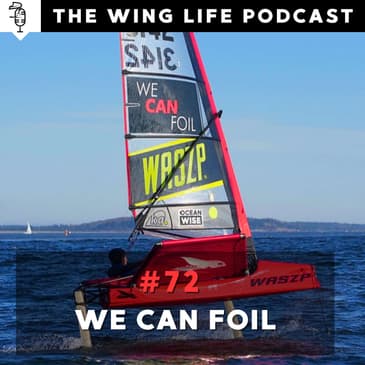

On this episode Greg and Agustin join us from WeCANFoil to talk about:
- Their origin story, their mission and goals for foiling in Canada
- Foiling offers a significantly different experience compared to traditional sailing, providing higher speeds and a unique sense of freedom.
- Their initiative aims to democratize access to foiling by partnering with local sailing clubs and organizations.
- Community engagement is crucial for the growth of foiling, with events designed to introduce the sport to the public.
- The program has successfully introduced hundreds of people to foiling, showcasing its potential to attract new enthusiasts.
- Foiling is rapidly evolving, with various disciplines being integrated into the WeCANFoil program.
- The partnership with manufacturers has allowed for a diverse range of equipment to be used in training and events.
- The future of foiling in Canada looks promising with ongoing support and interest from the community.
- and much more.
Visit: https://wecanfoil.org/
This episode is brought to you by the Wing Foil Expedition in La Ventana, Baja California Sur. Are you looking for an all-inclusive wing foiling adventure this January with oceanfront accommodations? Visit https://winglifepodcast.com/wing-foil-trips to learn more.
★ Support this podcast ★[00:00:00] Hey everyone, welcome back to the show. This week we have Greg and Augustine from WeCANFoil.
[00:00:05] If you haven't heard about them, WeCANFoil is a Canadian not-for-profit organization
[00:00:10] that is doing big things in the world of foiling in Canada.
[00:00:13] So today we get to talk to them, find out more about them, how their not-for-profit got started,
[00:00:19] their goals, the demos that they offer across Canada and much more.
[00:00:23] So I hope you enjoy this episode and learn more about them.
[00:00:27] Now if you haven't caught last week's episode, Tom and I recapped the GWA event that was recently held in Dakla, Morocco.
[00:00:34] We talked about the conditions, the new faces, the event site, Cash and Elena's big wins and much more.
[00:00:40] So if you haven't listened to it, I would suggest hopping over to that episode and enjoying that one as well.
[00:00:47] Now I want to take this opportunity to thank our team for making this show a reality.
[00:00:51] We have Frank that helps with media and consulting,
[00:00:53] we have Matthias on guest relations, and we have Stefan on audio mastering.
[00:00:58] A big thank you guys as a lot of work goes into each and every episode.
[00:01:02] Next, I'd like to say a thank you to North Foils.
[00:01:05] They are our first official sponsor.
[00:01:07] They have a great team and so far our team is loving their gear.
[00:01:11] So keep up the great work guys and we're really excited to be working with you.
[00:01:16] I'll be right in the SF range in La Ventana this winter.
[00:01:19] So stay tuned.
[00:01:20] Winter is coming and if you haven't decided where to go yet,
[00:01:23] I would suggest hopping over to our website winglifepodcast.com and sending us an email.
[00:01:29] I will be in La Ventana, Mexico.
[00:01:30] I'm sure you've heard this a couple times.
[00:01:33] But I'll be there from November to March offering some wingfoil lessons.
[00:01:36] So if you're looking to learn more or looking to improve or heck you want to come down and ride with me,
[00:01:42] send us an email and let us know where and when you're going to be there and we can set it up.
[00:01:47] Lastly, our YouTube channel needs some love guys.
[00:01:50] We are close to our first thousand subscribers.
[00:01:53] So if you're not subscribed yet, we ask that you pop over there and just subscribe and click on the notification
[00:01:59] so that you can stay tuned with what's coming out.
[00:02:02] We have some really good AWSI coverage and for those who don't know what AWSI is,
[00:02:07] it's a trade show where the big brands release gear to their retailers.
[00:02:12] So what we did is we had some really good coverage episode.
[00:02:15] So you never know, you might see what's coming for 2025 from your favorite brand.
[00:02:20] Now, with all that said, I hope you enjoy today's episode with Greg and Og.
[00:02:32] Welcome to the Wing Life Podcast,
[00:02:34] where we talk about wing foiling and the lifestyles of those who enjoy this great sport.
[00:02:39] All right, guys. Hey, thanks for coming on to the show.
[00:02:42] Looking forward to talking to you guys about foiling.
[00:02:44] I think it's going to be a good time.
[00:02:46] Indeed. Pleasure to be here.
[00:02:48] Yes, very excited.
[00:02:50] So the first time I heard about We Can Foil was from my Arcaid friend, Max Robinson.
[00:02:56] And so, Greg, maybe you want to take it off.
[00:03:01] And what is We Can Foil?
[00:03:03] Well, let's see.
[00:03:06] It's 2024.
[00:03:08] I guess We Can Foil started, correct me, three years ago.
[00:03:14] Correct.
[00:03:15] Yes.
[00:03:15] Yeah, thanks.
[00:03:16] That's a relief.
[00:03:18] And so, in the world of foiling, which ranges from individuals doing it on planks all the way up to people doing it on 100-foot trimaran monsters,
[00:03:33] there's a set of foiling cathemarins that Larry Ellison kind of has funded and a league that he set up that he's trying to turn commercial,
[00:03:43] which is called SailGP.
[00:03:44] And there are national teams about, well, I think it started off as eight and then now it's 10 or 11.
[00:03:54] And there was the opportunity for some private investors to go into making a SailGP team and race these 50-foot boiling catamarans.
[00:04:05] And Canada did that three years ago.
[00:04:09] A guy named Fred Pye out of Montreal started a team.
[00:04:13] And Phil Robertson, who was a Kiwi sailor, was the skipper, the driver.
[00:04:20] And he put together kind of the best foiling sailors that he could find in Canada onto that.
[00:04:27] And it's a pro-protein.
[00:04:30] And the thing's quite interesting.
[00:04:33] It kind of models itself as a Formula One on water.
[00:04:37] The whole thing packs up into, I think they've actually got their own container ship now.
[00:04:42] And so the whole thing packs up into X hundred 40-foot containers.
[00:04:47] And they ship the whole thing around the world.
[00:04:48] And they race in not necessarily the best sailing locations, but the most spectacular cityscapes for spectators to be right there and see these boats wetting past.
[00:05:00] And they do wet past.
[00:05:01] They go up 50 knots, 100 kilometers an hour, 55 miles an hour.
[00:05:06] They're absolutely cooking.
[00:05:07] Wow.
[00:05:07] So SailGP is, you know, and it kind of had pushed forward some of the things that have been happening, sailing, getting away from the lead mines that just kind of go slow, which people often associate.
[00:05:24] Anyway, problem being in Canada is that they took the best sailors they could find, but they really were almost the only sailors they could find who would be competent at foiling.
[00:05:34] Because there are just so few people doing high performance sailing in Canada.
[00:05:38] High speed, apparent winds, and things where discussions are made in decisions made in two words, not in like 15 minutes of tactical conversation before the next tack or jive or whatever.
[00:05:54] And that meant that they immediately were faced with a problem of what would happen in a few years time when that team aged out and they needed to find the next generation of talent.
[00:06:06] So they started this program called Weekend Foil inside the team.
[00:06:10] This was kind of Fred Pye's vision for it, funded it himself.
[00:06:15] And another guy out of Montreal, Tyler Bjorn, was tasked with starting it.
[00:06:21] And in that first year run inside the team, it was largely, I think it's fair to say, a demo program.
[00:06:29] And so they managed to get some support.
[00:06:35] 500.
[00:06:35] Yeah, with some support from Wasp, which is one of the manufacturers of a small single person dinghy that's good for, I don't know, what's the max weight limit?
[00:06:45] Something like 80 kilos, 160, 170 pounds tops?
[00:06:48] Yeah, 85 kilos or, yes, 185 pounds.
[00:06:53] So they had a few of those, and they took them around the country.
[00:06:56] And they managed to get 500 bums into seats and gave at least a reasonable fraction of them a chance to lift off the water.
[00:07:04] I don't think everybody managed, but it was a great time.
[00:07:09] At the same time, I was, let's see, I'm fifth.
[00:07:15] No, I'm 51.
[00:07:17] So when I turned 40, I thought I should have a midlife crisis.
[00:07:20] I should buy something fast.
[00:07:23] And I had two choices, really.
[00:07:25] One was a motorbike.
[00:07:27] One was a catamaran.
[00:07:28] And because my father's friends had been orthopedic surgeons, your backstory kind of rings a bell.
[00:07:37] It does.
[00:07:38] And so I decided that I wouldn't buy a motorbike because with my personality type, I would probably kill myself within a matter of days.
[00:07:46] So I bought a cat.
[00:07:49] And, yeah, I just couldn't believe how much fun it was to not just be going at wind speed, but now to be going at a fraction higher than the wind speed, to be able to go single-handed or with friends.
[00:08:02] But after about five years or so, I'd start to hear about this foiling thing.
[00:08:07] And I thought, well, 45, you know, I'm going to have a back issue or something.
[00:08:11] I should probably learn about foiling now rather than wait until I'm 55.
[00:08:16] So I bought an 18-foot foiling catamaran modeled after the kind of classic F-18 that some people have sailed in fleets for the last 30, 40 years.
[00:08:28] But this one would lift up out of the water as well.
[00:08:31] And it whips around downwind.
[00:08:34] I think top speed I've had it to is 25 knots.
[00:08:36] And I had been doing something to try and get more people onto this boat.
[00:08:40] I didn't just buy one either.
[00:08:42] I bought two because I thought, well, you need two to race.
[00:08:45] Although it turns out you break them a lot.
[00:08:47] So actually you need two to have one functioning is the short answer.
[00:08:51] Okay.
[00:08:52] And so I've been doing this thing called RBR Flight School, which was trying to get and support mostly youth.
[00:09:00] To foil.
[00:09:02] And I had a lot of people who would come with me once at least.
[00:09:05] And then I would scare them into never coming with me again.
[00:09:08] But at the same time that SailGP was having this kind of first year in Canada, I was thinking, I'd really like to do something a bit bigger with the RBR Flight School.
[00:09:19] And I'm not the right person to be doing it.
[00:09:22] So I talked to the guy who was then the CEO of the SailGP team.
[00:09:28] And they said, well, actually, they were looking to try and take their development efforts and put them outside of their commercial ring, if you like.
[00:09:36] So they needed to concentrate on the commercial performance for the protein.
[00:09:40] They still wanted to do the development and support it, but they weren't able to do it inside anymore.
[00:09:46] So the next year, we kind of did an MOU between RBR, which is just a funding source, and Canada's SailGP, which said that we would do this thing together.
[00:09:58] And we started an official nonprofit that's incorporated.
[00:10:03] And at that point, because I knew I wasn't the person to actually do anything useful, this is where Og comes in.
[00:10:10] And Og and I had known each other for a number of years before that.
[00:10:16] I guess we first met at Nova Scotia at the sailing school where you were teaching for a long time.
[00:10:23] That's correct.
[00:10:24] I was running a sailing program in Halifax.
[00:10:28] And actually, I was myself coming from a sailing background, like been running there for many years, a sailing program.
[00:10:39] And then through COVID was my opportunity to actually start introducing foiling into the sailing program as a way to like get sailors and get people trying to foil.
[00:10:50] Because I was already sold into the whole foiling thing.
[00:10:53] And who knew?
[00:10:54] One day, one guy shows up in a van.
[00:11:00] A white van?
[00:11:01] A white van with his camera.
[00:11:04] With candy?
[00:11:05] Oh, no.
[00:11:06] Greg.
[00:11:08] With his trim around the back saying, hey, I heard you're running a foiling program here.
[00:11:15] Oh, no way.
[00:11:16] You'd love to get more foiling here.
[00:11:18] And he basically, we hanged out together doing some foiling.
[00:11:23] And he stayed basically living out of his van at the parking lot of the yacht club for I think it was maybe like two weeks or something like that.
[00:11:30] Yeah, it was.
[00:11:31] It was my summer holiday that year.
[00:11:33] And it is, I've got to say, it's the kind of yacht club that's really a yacht club.
[00:11:37] It's not a sailing school.
[00:11:38] Oh.
[00:11:40] So they weren't best pleased when they found a slightly rusting sprinter with a scruffy guy who crawled out of it in the morning goes, where's the coffee machine?
[00:11:50] Yeah.
[00:11:51] But we had a blast.
[00:11:53] And so many people, not only the kids out of Aug's program would come, but also the other coaches that he had would come.
[00:12:01] And then the parents of the kids would come.
[00:12:04] And so that was, yeah, it was fun for me.
[00:12:06] You know, the best kind of holidays where you get to do what you choose to do all year long anyways.
[00:12:11] And I don't usually get to sail all year long.
[00:12:14] So that was a lot of fun.
[00:12:16] And talking to Aug, it was clear that what he'd started there was a great model.
[00:12:21] And so we decided to partner up.
[00:12:24] And so Aug is now the program director for Weekend Foil and spends his time kind of divided between all of the locations in Canada that we serve.
[00:12:37] And we're just coming to the end of our second season in this kind of chapter.
[00:12:46] My commitment for this in terms of funding is three years.
[00:12:51] But we've had a number of other people step up and put kind of, you know, people are pretty not looking for a lot of self-promotion or anything like that.
[00:13:03] We've had some people who have been incredibly generous and just want to see sports thrive.
[00:13:10] They want to see a real difference at individuals' levels, not necessarily just as a mass thing, but they're also interested in seeing it happen across the country.
[00:13:22] And those people have helped in the budget.
[00:13:26] And then we've had tremendous support from manufacturers as well.
[00:13:29] So WASP was the first one, but North has been a phenomenal one in this last, I would say, just over a season, season and a half in terms of wing foiling.
[00:13:45] And that has meant that we've been able to expand the kinds of boats and all that kind of thing that we've been using.
[00:13:51] I won't go into too much about what we do, but we're in a second season now or finishing that.
[00:13:58] And we're really looking for how do we generate enough momentum on it and some funding that will continue in not perpetuity, nothing lasts forever, but something that will give it a bit of legs to keep on going.
[00:14:14] So that's a potted history.
[00:14:16] That was a bit more than a pot, two pots of history.
[00:14:19] No, that was really good.
[00:14:20] Thanks for kind of bringing us up to speed a little bit.
[00:14:22] And one of my main first questions is I saw the transition.
[00:14:26] Like, I don't know a lot about sailing, but I do remember watching one documentary about it where they had their boat covered and everything.
[00:14:35] And they didn't want anybody to know they had developed the first foils and stuff and how.
[00:14:40] And then this thing's just whipping by.
[00:14:41] I know what the feeling feels like when you're going from windsurfing to wing foiling, because it's like the speed and all that stuff.
[00:14:52] Is it similar on a boat?
[00:14:54] Like, is it similar on a vessel like that?
[00:14:56] I would say it's 10 times more going from a regular sailboat to all of a sudden foiling.
[00:15:06] It's 10 times more intense or, yeah, to the difference that you perceive going from windsurfing to wing foiling.
[00:15:16] Like windsurfing, you were already doing 20 to 30 knots, right?
[00:15:20] Yeah.
[00:15:21] And so foiling, you've taken that up by tens of percent, but you haven't gone above 50 knots.
[00:15:30] Like, you haven't multiplied it by two and a half.
[00:15:32] But a lot of people are used to sailing at four knots.
[00:15:35] Oh, right.
[00:15:36] And so to take people who, especially people who are used to carrying around keels, are used to like, and they get pejoratively called lead mines because they're mostly made out of lead.
[00:15:46] You know, those boats, even a 20-foot or a 30-foot monohull sailboat, its weight is measured in tons.
[00:15:55] And so the amount of energy you need to get it moving and keep it moving, it's substantial.
[00:16:02] So once you go to a boat that is foiling, you typically aren't carrying a keel at all.
[00:16:08] You're carrying dagger boards or center boards or some kind of foiling.
[00:16:12] And everything is made to be light anyways because you don't want to lift lead out of the water.
[00:16:18] And so you really are talking about people who are used to maybe very big sails and lots of power in them, but resulting in a very slow movement.
[00:16:27] And all of a sudden, you've got something that's so efficient that's taking all of that power and driving it into speed.
[00:16:34] And that does really blow people's minds.
[00:16:37] That must be like, do you get that same feeling of unbelievable peace and quietness and just that you get foiling?
[00:16:45] That's the main difference.
[00:16:46] The first time I popped up on a foil ever wing foiling, it brought tears because like, oh, this isn't.
[00:16:52] Like you could look around while and it was just peace and quiet.
[00:16:56] It was insane.
[00:16:58] There's usually a lot of screaming, I would say, but that usually comes from the crew.
[00:17:03] I think the transition, though, is not that you're used to sailing a big slow boat.
[00:17:09] But there's also a transition, like on these 18-foot cats that organize sail together sometimes.
[00:17:17] You can sail them in a kind of planing mode, just like a windsurfer.
[00:17:24] And they do still go pretty quick.
[00:17:27] And you can have people hanging off trapezes off the side of the boat to counterbalance the forces.
[00:17:33] And you can get thrown around and capsize in various ways that you never predicted and that kind of thing.
[00:17:41] But so the difference between that and foiling, yes, when the boat lifts up out of the water, my boat starts to foil at about 12 knots, which these days is pretty poor foiling boat.
[00:17:54] I would say like lots of boats are now starting to foil at sub 10 knots, right?
[00:18:01] And yes, there is that incredible sense of quiet.
[00:18:04] But there's also I often describe it as you were driving a race car before and now you're driving a motorbike.
[00:18:11] Everything just becomes that much twitchier.
[00:18:13] If there's any play, particularly on the catamaran, if there's any play in the two rudders that you have for steering, you detect that when you're doing 25 knots when you didn't detect it at 18.
[00:18:25] But the speed delta is not the same.
[00:18:27] You know, it takes you up 20 or 30 percent in speed rather than 100 or 200 percent.
[00:18:34] In sailing, traditional sailing boats, we're used to like, you know, doing half the speed of the wind.
[00:18:40] And then when you move to foiling, you're basically doubling the wind speed in your speed, right?
[00:18:46] Or tripling in some cases.
[00:18:48] So it's a huge change.
[00:18:51] So like foiling in the sailing world, foiling has been a massive revolution.
[00:18:59] Huge.
[00:19:01] I mean, it still is.
[00:19:02] And it's fairly young.
[00:19:04] And that's kind of like a little bit, you know, with weekend foil, that's kind of like where we're aiming.
[00:19:10] We're trying to help Canada really get on board and really spread, you know, into this revolution of foiling.
[00:19:17] Because at the end of the day, like it is already a way of sailing.
[00:19:22] Right.
[00:19:23] And we really want to help develop this pathway of sailing or, you know, being on the water in Canada where a lot of people can get hooked with basically and really enjoy.
[00:19:34] In the hopes of, I guess, developing future athletes and future competitors for Canada and that kind of thing?
[00:19:40] That's right.
[00:19:41] I mean, we've kind of talked about our vision since day one.
[00:19:45] And it has changed a little bit according to the, I would say, the external circumstances.
[00:19:54] But we've always had this idea of a pathway in it.
[00:19:58] And particularly when we had the support of the Canadian CLTP team, it was a pathway to pro.
[00:20:06] So how do you produce a kind of farm team, just like Barcelona or every other football team, soccer, whoever you're depending on what you say, team has.
[00:20:16] How do you produce a farm team that's producing the next generation?
[00:20:20] There's also been the idea, because I think, what is it, Og?
[00:20:25] You're going to have to correct me on this.
[00:20:26] There are how many sailing disciplines or sailing related disciplines at the Olympics at the moment?
[00:20:34] I think there's like eight.
[00:20:36] Eight and six of them are foiling?
[00:20:40] Four of them, basically.
[00:20:41] Four of them are foiling.
[00:20:43] I think it's at least half for sailing at the Olympics.
[00:20:48] Half of the Olympic medals now, when it comes to sailing, are in foiling boats.
[00:20:54] And foiling was really introduced at the Olympics in Tokyo, basically.
[00:21:00] So in Tokyo was the first time foiling was introduced in sailing at the Olympics.
[00:21:09] And now by the Paris Olympics, already half of the medalists, half of the disciplines are in foiling.
[00:21:17] Which is crazy, because the number of people who learn to sail who go foiling is about that big.
[00:21:24] So you really have a tiny pool of people who are used to the reaction speed, even used to apparent wind sailing, is not necessarily common with everybody.
[00:21:37] The sense that you have to trim your sails, you have gears to your boat, right?
[00:21:42] You have to completely change your behavior according to how fast you're going.
[00:21:46] As opposed to a boat that only ever maxes out at six knots, where you can pretty much do the same thing, whether you're standing still or whether you're moving at full speed.
[00:21:54] When and how did the idea come to include the other foiling disciplines, such as wing foiling?
[00:22:00] Are you doing kite foiling and windsurf foiling as well?
[00:22:03] So currently, our plan is to really help develop foiling across Canada, right?
[00:22:11] And help clubs and organizations and sailing centers across Canada to kickstart their foiling programs, right?
[00:22:21] Because it's a great way to bring more people into the sport, right?
[00:22:25] And so we started, as Greg was saying, in our first year, we started with the Wasp, which is kind of like a dinghy, like a sailing dinghy.
[00:22:35] And since last year, we diversify as well in adding boards.
[00:22:41] And this year, we've now started full on into wing foiling and windsurf foiling as well through partnerships with North and Starboard.
[00:22:52] And the idea, of course, behind it is like, well, you know, we really helped a lot of people get foiling through the Wasp.
[00:23:02] But at the end of the day, we noticed that a lot, you know, board foiling could be also even a more accessible way to introduce people to foiling and get people on the water, right?
[00:23:12] So that's why, you know, even though we started with board foiling, I would say, fully powered up this season, I would say we've gone full throttle with it.
[00:23:28] And it's been a major, a major step up on our end and a major investment when it comes to resources.
[00:23:35] And because, you know, we realized, yes, this is a great way to get more people on the water and get people introduced to foiling.
[00:23:44] Absolutely.
[00:23:46] You know, one of the challenges, one of the challenges around the pathway idea is if you think of a single person dinghy that's 12, 14 feet long, and then you think of a 50 foot catamaran with six people on board topping out at 50 knots, there's a big gap between those two.
[00:24:07] You know, there's gaps in just about everything.
[00:24:11] There's gaps in physicality.
[00:24:13] There's gaps in reflex time.
[00:24:16] There's gaps in teamwork.
[00:24:19] And so it's also been difficult for us to find intermediate platforms in between those two.
[00:24:27] There are some around.
[00:24:29] So at the Olympics, for instance, there's a boat made in Holland by a company called NACRA, and they make a 17 foot foiling catamaran.
[00:24:39] And the Olympic rules are that it's a mixed class.
[00:24:43] So it's a man and a woman together, which is great because that takes it away from what used to be the multi hull in the Olympics, which was called a tornado, which was an absolute beast of a boat.
[00:24:53] So amazing performance, but could only really be handled by two muscle bound men.
[00:24:59] And so it was something that women just were never going to be able to compete in equally.
[00:25:04] Whereas now.
[00:25:05] And it wouldn't foil.
[00:25:05] Oh, and it wouldn't foil.
[00:25:07] Yes, that's right.
[00:25:09] But, but, okay.
[00:25:11] So that takes you to a boat that's got some elements of teamwork.
[00:25:14] That's great.
[00:25:15] It takes you, it's an element to a boat where you think about downwind and upwind more differently than you do.
[00:25:23] You've got sails to change a spinnaker that goes up and down there kind of thing.
[00:25:28] But you're still, it's still topping out at 20, 25 knots.
[00:25:34] So what do you do about that?
[00:25:35] Well, there are other foiling boats, but they're in really, really low volume.
[00:25:41] And the difficulty is that you make a boat big enough for a lot of people.
[00:25:46] A hundred percent, it's got to be carbon.
[00:25:49] And a big boat made out of carbon is big money.
[00:25:52] And so, and so even if you think about these F-50s, they've only got six sailors max on them.
[00:26:01] They can be sailed with four.
[00:26:03] And you think about dollars per sailor.
[00:26:06] That's a really big ask.
[00:26:07] And you're back into the kind of traditional images of sailing as being for people who are incredibly wealthy.
[00:26:14] So what's been really, really attractive about moving towards boards is that you bring the budget way down and you're able to do it without infrastructure, without a kind of multi-year or, you know, am I going to do this for the rest of my life kind of commitment?
[00:26:34] You know, it's something that you can pick up some secondhand gear and try for a season.
[00:26:38] And if it's not your cup of tea, that's fine.
[00:26:40] You haven't killed yourself on it.
[00:26:42] But it also democratizes it in terms of not needing facilities.
[00:26:46] Most of our work has been done inside existing organizations.
[00:26:51] So we run these hubs across the country that are based inside sailing schools.
[00:26:56] And we kind of have a joint commitment where we'll provide through org coaching.
[00:27:03] We'll provide equipment to them, which we get through our partners.
[00:27:08] And we will ensure that for their side, they're geared up to be able to run some race events throughout the season, that they're able to, we'll come in and train the trainers so that they're able to deliver that.
[00:27:21] We'll encourage them in terms of giving demos to the public as well.
[00:27:24] So it's not just people who've signed up for a school program type thing.
[00:27:30] But it's got to be said, board foiling doesn't necessarily operate well out of sailing clubs.
[00:27:35] It operates off the beaches or, you know, wherever you can drop it in the water.
[00:27:40] And often you're moving those things around completely depending on wind direction.
[00:27:45] I mean, here in Ottawa, there are like four sites that everybody knows.
[00:27:48] And depending on whether you've got a little bit of north or a little bit of south and depending on whether you can swim the rapids as well,
[00:27:55] which I almost went down last week when I tried winging just off Britannia.
[00:28:00] Oh, geez.
[00:28:01] Yeah.
[00:28:02] Yeah.
[00:28:02] Almost became a stat.
[00:28:03] I was getting a bit worried.
[00:28:04] It was the southwest?
[00:28:05] Yeah, exactly.
[00:28:06] Yeah.
[00:28:06] It was a bit too southerly and not enough westerly.
[00:28:10] Okay.
[00:28:10] And yeah.
[00:28:12] Yeah.
[00:28:13] We're not going to talk about that on the recording.
[00:28:16] No, it's all right.
[00:28:19] Yeah.
[00:28:20] Yeah.
[00:28:20] So it really plays into having a different set of experiences for people that we can try.
[00:28:28] And it is, I mean, we've got to be honest, it's evolving.
[00:28:31] So nothing that we're doing is set in stone or with a kind of, I don't know, nobody's come down from the mountain with something saying,
[00:28:41] this is what we must do in terms of weekend foil.
[00:28:45] So we're following our noses in terms of what's interesting to us and what is interesting to the people we meet.
[00:28:52] And when we find communities that are interesting and have enthusiasm about what we're doing,
[00:28:56] of course, you want to do things that are fun.
[00:28:59] I mean, life's too short.
[00:29:03] That's true.
[00:29:03] And where are your hubs in across Canada?
[00:29:06] And how many do you have so far?
[00:29:08] So we basically have, currently we have about 11 hubs, basically coast to coast.
[00:29:15] We have a couple in British Columbia, like including a couple around Vancouver, Victoria.
[00:29:23] We have a couple in Ontario, Quebec, and Nova Scotia as well.
[00:29:29] So a little bit of coast to coast, so a total of 11 hubs, which are basically sailing clubs or sailing organizations that are interested in developing and kickstarting a foiling program.
[00:29:46] Because they see the fact that foiling is developing at a rapid pace and the interest is there.
[00:29:53] So we partner with them to help them develop those programs.
[00:29:58] And as Greg was saying, we basically supply the gear for them and we help train their instructors and everything.
[00:30:05] We help them out, basically set it up so they can actually kickstart it and set them up with a good pathway.
[00:30:11] And yeah, we've had, I think, already this year a major step forward with all of the hubs already running consistent foiling programs.
[00:30:26] Not only that, but I think over this year we've had already like 600 people trying foiling.
[00:30:32] So that's part of it.
[00:30:33] One of the things we do ask the hub is like, yes, we help you kickstart your program so that you can run your courses.
[00:30:41] And your lessons.
[00:30:43] But one of the things we do make sure is that they're offering, you know, open to the public demos, what we call demos, free demos, basically, where people from the community can come and try it.
[00:30:54] Right.
[00:30:54] And if they're interested, and for sure, we got lots of volume on that.
[00:30:59] And if people like it, then, you know, they said, wow, this is really cool.
[00:31:03] I'd like to do more of it and I'd like to learn how to do it.
[00:31:05] And that's usually how they sign up then for the foiling programs that the hub offers.
[00:31:12] Oh, I see what you're saying.
[00:31:13] Okay.
[00:31:14] We had a great one just before.
[00:31:16] So Canada's SailGP event was in Halifax.
[00:31:22] And that was a big do for Halifax to get this event.
[00:31:26] It's a multimillion dollar kind of sponsorship thing that the municipality needs to put in a lot of money.
[00:31:33] The SailGP puts in a lot of money.
[00:31:35] It generates ostensibly X and all that kind of thing.
[00:31:39] It's like the Montreal Formula One Grand Prix, but coming to Canada of sailing.
[00:31:44] Yeah.
[00:31:45] Yeah.
[00:31:45] That's right.
[00:31:46] And so we went up and in conjunction with the local organizing committee that had been the Halifax,
[00:31:53] the Haligonian team of people who were bringing SailGP in,
[00:31:58] we ran a public event the week before called Foil for All.
[00:32:03] And basically took over Bedford Basin, Halifax Harbor, right off the boardwalk in Halifax.
[00:32:10] And we had just over 100 people.
[00:32:14] I think we got out in two days and ranging from like seven to 71 in age.
[00:32:20] And we had, yeah, okay, the local MP and that kind of thing.
[00:32:23] But just a lot of just regular people who were curious.
[00:32:28] And I would say 80% of them, maybe even a little more, but actually took flight.
[00:32:36] And so they had their first experience.
[00:32:38] Now, some of them, it was crazy.
[00:32:39] They had their first experience of any kind of wind-powered sailing type thing.
[00:32:43] So they're really spoiled because if somebody else asked them to go sailing,
[00:32:47] they're going to be bored out of their skull.
[00:32:49] But anyways, we didn't want to tell them that.
[00:32:54] That was interesting for sure.
[00:32:56] Because that was, as Greg said, like for a lot of people,
[00:32:58] that was their introduction to, yeah, being on the water and propelled by the wind.
[00:33:04] And their first introduction to that was through foiling.
[00:33:08] That's mind-blowing.
[00:33:09] We actually have at some of our, you know, I just met a couple of days ago here in Halifax with a girl.
[00:33:18] You know, she came in from China for school, fell in love with Halifax, stayed here, moved here full-time.
[00:33:26] And, you know, she really poked herself around like this foiling thing because all this, you know, this sailing thing.
[00:33:33] And then she's basically learning how to sail through foiling.
[00:33:37] Just mind-blowing.
[00:33:39] Yeah.
[00:33:40] Quite the change.
[00:33:42] Yeah.
[00:33:42] Quite the cool change.
[00:33:44] What, for those people who are taking advantage of the demos, are the hubs tracking what percentage is going to, let's say, the WASP or what percentage is wanting to try board stuff?
[00:33:58] Like, are you seeing distinct trends or are we still a little bit early?
[00:34:02] Like, it's basically what we are noticing is we do have – the board is super fun and it's super, super accessible in some way, right?
[00:34:14] So it's a really low intimidation factor for somebody who can, you know, stand up paddling, holding something at the lowest level is kind of a balance.
[00:34:24] And the worst thing that goes wrong is you fall off as opposed to, oh, here's your crash helmet or here's your impact vest because you might hit something hard.
[00:34:35] Yeah, we get them to wear helmets, absolutely.
[00:34:37] But when they look around, they don't see a kind of threatening thing in winging.
[00:34:45] Yeah.
[00:34:46] Okay.
[00:34:46] Usually a lot of the people that come with a sailing or a traditional sailing background, most of them get more into the foiling dinghies.
[00:34:58] And those who don't come with basically any background get more into the board foiling.
[00:35:05] Oh, interesting.
[00:35:07] Yeah.
[00:35:07] Oh, that's cool.
[00:35:09] It's also been interesting because when we've had boats which support or vessels, I don't know, floating things that support more than one person, they also have – like the catamarans that we're sometimes using – those also can be incredibly popular because they allow somebody with less experience to get an experience of high performance kind of straight out of the gate.
[00:35:34] Whereas you stand up on a wing foil.
[00:35:37] Yeah, whatever.
[00:35:38] I mean, I'm still – I think I'm an hour eight on – it takes a long time for a 51-year-old.
[00:35:46] You're fresh.
[00:35:46] So hour eight.
[00:35:49] Yeah.
[00:35:49] And so if you're going to do a taster session for somebody in an hour, they're not going to be zipping along and jiving at 20 knots unless you drop them from a height.
[00:36:01] So the cats allow you to go out with an experienced driver and have an amazing adrenaline speed experience even though you're pulling a rope or two under guidance.
[00:36:14] But actually, let's be fair, the driver is actually pulling all the strings that really matter and making the boat fly.
[00:36:22] So you get a great experience as a participant, as a taster.
[00:36:26] Oh, that's quite fascinating actually.
[00:36:29] And it can open their eyes to that level of foiling.
[00:36:33] And then if they want to try something at an individual level, they could try all these different aspects through the demos.
[00:36:38] And then from there, purchase gear and then rip all of that.
[00:36:44] Let's go a bit into your coach development.
[00:36:49] Og, are you taking care of more of that aspect of things?
[00:36:53] And what goes into developing, I guess, that skill set that you would like your coaches to have to a certain level to be able to pass that information down?
[00:37:03] Yeah, so basically, since day one, when we started this with Greg, like a big item on our goals was to, yes, we need to, if we want to develop foiling across all of Canada, we need to develop more foiling coaches.
[00:37:18] Right?
[00:37:20] That's key.
[00:37:21] You know, if we develop more foiling coaches, we're going to be able to develop more foiling, you know, participants.
[00:37:26] And since then, we've partnered with Sail Canada, which is basically Canada's national sailing sport organization, who traditionally they develop and deliver all of the sort of like traditional sailing instructor programs, basically as well.
[00:37:49] So whenever you go to a sailing club or yacht club or sailing center, and they're offering a sailing program, it's usually under Sail Canada, right?
[00:37:59] Under umbrella.
[00:38:01] And then what we've done is we've developed basically the foiling curriculum with Sail Canada so that we can develop more coaches across Canada.
[00:38:13] So in most cases, the participants that we have is our sailing instructors that are already used to, they already know how to teach sailing.
[00:38:24] And then we, you know, teach them how to teach foiling, right?
[00:38:29] In most cases.
[00:38:31] And then we also have lots of, you know, and one of the things we're finding is we are, as we grow and we're reaching further in our scope, that we are having a lot of people that are already foilers.
[00:38:47] And, you know, they fall in love and they want to just spread the love and really spread it across.
[00:38:53] And so we are also taking them over to really give them the tools on how to become coaches, right?
[00:39:02] And so we have a, we're very, yeah, we're very diverse in that end.
[00:39:10] And yeah, so we actually this week, you know, coming in now tomorrow, I'm off to Vancouver.
[00:39:17] We're going to go on to do our third, our third instruct foiling instructor course off to Vancouver.
[00:39:25] So we've done our first one in Montreal back in 2023, their first pilot one.
[00:39:31] Our second was earlier this year in June in Halifax around the Foil for All event.
[00:39:38] And now we're on to doing the first one in BC.
[00:39:42] And, you know, so far we've had, we've already at this point certified over and developed and trained 35 instructors, basically from, you know, multiple provinces, BC, Ontario, Quebec, Nova Scotia, New Brunswick and PEI, actually.
[00:40:01] And we're now evolving to the point where we want to help all of the provinces to be able to have more annual foiling instructor courses.
[00:40:12] So that's, that's, that's, has been a great growth of and great impact for our program because when we develop coaches, you know, we're no, we, we know that we will be developing hundreds of foiling participants.
[00:40:26] Now for, for your coaches, if somebody, for example, wanted to go and take your certification, but teach wing foiling or teach windsurf foiling, do they also have the luxury of learning the sailing aspect of things too?
[00:40:40] Like you can, do you learn everything?
[00:40:43] Because even though I've only been on a board, the foiling on a boat sounds pretty interesting.
[00:40:50] Sounds pretty fun.
[00:40:50] So like, that would be something that I would enjoy because you're allowed, you can kind of get every aspect of foiling, right?
[00:40:58] You're not just sticking to what you know.
[00:40:59] Is that kind of what you guys offer as well?
[00:41:01] Exactly.
[00:41:02] Our, our foiling, our foiling instructor module is not about a specific discipline.
[00:41:09] It's about helping, helping instructors develop the ability to introduce foiling, whether it's on a dinghy, on a board, uh, or on a catamaran.
[00:41:19] Uh, to, uh, to, uh, to participants in a safe way, right?
[00:41:23] Uh, that's a big aspect of it.
[00:41:25] So yes.
[00:41:26] Uh, so we have a lot of instructors that, you know, maybe know a lot about, uh, sailing dinghies, but then they actually learn about board foiling.
[00:41:35] Uh, we have a lot of board foilers that come to this courses and they also actually learn about dinghy foiling and how, and, and they, they, usually everybody's minds gets met, you know, blown away.
[00:41:47] And, and actually one of the coolest things I would, you know, I find in my experience running this, uh, clinics is that just the sharing of, you know, putting all, all this, all this characters, you know, board foilers with dinghy foilers, sailing, experienced sailing instructors.
[00:42:05] Uh, you know, putting them in the same room and working together.
[00:42:09] Cause at the end of the day, like there's, there's no, there's no just sailors.
[00:42:12] Like we're all coaches and the ability to get them to all work together and share best practices.
[00:42:17] Like I, you know, um, I, I deliver those clinics and out of every course I take, I come up probably with tons of notes on how to, you know, things that I learned from other people, you know, a lot of the other coaches as well.
[00:42:30] And, and how to keep this evolving as well.
[00:42:32] Right.
[00:42:32] Cause I think, you know, at the end of the day, it's, it's, it's a bit of a multidisciplinary, um, program.
[00:42:39] Yeah.
[00:42:40] I like that approach and because it gives people every kind of, they have so many different disciplines to choose from.
[00:42:47] And given there's demos, given you could get into it for free, given you can actually try stuff.
[00:42:52] I think that's a pretty amazing feat cause not very many things are free anymore.
[00:42:58] And we kind of understand a little bit about how, where the funding is kind of coming from and what companies are helping make this actually happen.
[00:43:05] Which is, which is really cool.
[00:43:07] Cause you need, you need all those pieces to kind of fit in.
[00:43:10] So, Og, we're going to start with you.
[00:43:12] How has your wing foiling journey been?
[00:43:15] Are you doing double backflips yet?
[00:43:17] Like our buddy, Chris, or how's your journey?
[00:43:20] Actually, uh, no, I'm, I would say I'm still on a hour around, yeah, hour eight or nine.
[00:43:26] Oh, come on.
[00:43:27] Well, no, probably.
[00:43:28] It might be the same number of hours, but a different level in the building.
[00:43:33] So I will say, yes, I have a lot of dinghy foiling background, right?
[00:43:39] So I did a lot of competitive wasp sailing myself.
[00:43:44] And I've been a kiter for over 20 years and I've been kite foiling for, I don't know, maybe six years.
[00:43:51] So winging for me, like, you know, I, I can, I can toe foil that, you know, winging or foiling on the board behind, behind a motorboat or something.
[00:44:02] Yeah.
[00:44:03] No problem.
[00:44:04] Um, but I, I, I'm still learning and actually Max Robinson gave me some good pointers last time.
[00:44:10] Yeah.
[00:44:11] He's a great guy.
[00:44:12] And he, yeah, he's, he's awesome.
[00:44:14] And, uh, he, I think he got me probably foiling for maybe, uh, 10, 12 seconds on, on a straight line, you know, in, in Kingston, Ontario, uh, today.
[00:44:25] So.
[00:44:25] I guess, uh, I just want to say something about, uh, that idea of Max doing something.
[00:44:30] There's also something that is tremendously powerful about having people like Max, uh, because when they've been involved in weekend foil events, they're real role models.
[00:44:41] And so we've been incredibly lucky to have people like him, uh, people like Anna Sagilenko, who is just like a master of IQ foil, which is the, one of the foiling wind surfers.
[00:44:52] Um, uh, so Robertson, who was the driver of the Canadian sail GP boat, uh, was out around one of the events we had.
[00:45:03] And, uh, you know, you'd find this guy, uh, cruising up behind you in a rib, holding his phone up, taking video of you.
[00:45:13] And you'd be like, what is he doing?
[00:45:15] And then an hour later, when we're having dinner, he'd walk around the room and he'd pull out the video that he'd taken of everybody who was out there.
[00:45:23] And he'd just say, oh, you know, you should try doing this and make sure you get a bit more windward heel.
[00:45:27] And, and he just like that kind of attitude towards sharing from somebody who, yeah, he's not the tallest in stature, but in terms of, uh, you know, uh, sale foiling in the world, one of the best.
[00:45:45] And, and so right up there.
[00:45:48] And so to have people and this affiliation with the Canadian sail GP team has been great like that because people, especially the teenagers and people in their twenties getting to rub shoulders with their role models.
[00:46:00] People of Max's stature.
[00:46:02] Uh, yeah, it's really, it's great.
[00:46:04] It's not just Og and I who like, uh, hanging out with Max.
[00:46:08] Well, yeah, like his, his career from Toronto, from sailing with us at Sandbanks and then to be able to compete on the pro tour.
[00:46:15] And all the travels that he's done in the last couple of years has been absolutely phenomenal.
[00:46:20] He was probably one of the more skilled windsurfers that we saw sailing and in big conditions at Sandbanks.
[00:46:27] And, uh, he didn't even want a wingfoil at the start, but now he's competing in it, which is the most hilarious, hilarious part.
[00:46:35] Everyone, everyone comes around in the end.
[00:46:38] Yeah.
[00:46:39] Well, there's, I don't know what, like I had the choice cause I was at like point traverse there a couple,
[00:46:45] like this week and I had the choice between windsurfing and wingfoiling and surfing waves and surfing swell.
[00:46:53] It's when it's not like eight to 10 foot or 60, like anything like two, three foot on foiling.
[00:47:01] It may, it's insane.
[00:47:02] It's so much fun.
[00:47:03] It's a little bit easier on the body.
[00:47:05] The wipeouts I think are worse, but.
[00:47:07] Oh, it sounds like you're getting old.
[00:47:11] It's the, it's the forward whipping that you get when you're going down swell and you,
[00:47:16] and you have a hard time gauging how high you are.
[00:47:19] So then the swell goes down and you go straight and you fall four feet.
[00:47:24] There's some good whippage going on that I don't remember from windsurfing, but overall,
[00:47:28] it's so much easier on your back and body.
[00:47:31] Yeah.
[00:47:32] Cause, cause it's just, you're, you're snowboarding in a cloud, but.
[00:47:36] Um.
[00:47:37] I've spent, I've spent more time, uh, foiling on, on catamarans.
[00:47:41] And we have our own equivalent of whippage because you're often hanging by this wire that
[00:47:46] goes to a harness between the harness that you're wearing very much like a windsurf harness.
[00:47:51] And it's going to the top of the mast trapeze.
[00:47:53] And so that allows you to lean off the side of the boat.
[00:47:57] Uh, and the more you can lean off the side of the boat, the more power you can take in
[00:48:02] the sail because your weight is balancing the sail power.
[00:48:05] And the more power you take in the sail, the faster you go.
[00:48:07] So the more your trapeze or the more way you put out on the trapeze, uh, the faster
[00:48:11] you can go basically is the quick rule of thumb.
[00:48:15] The only problem with being attached by a wire to the top of the mast is, is that usually,
[00:48:20] so old days catamarans would what they call pitch pole, which is somersaulting forwards,
[00:48:27] like a dinghy when you were a kid capsizes, it just rolls over sideways and you fall on
[00:48:32] the sail.
[00:48:32] Now, now a catamaran pitch poles as it nosedives and the back goes over the top.
[00:48:38] That was okay.
[00:48:41] Well, no, no, that was okay.
[00:48:42] What happens on a foiling boat, what happens on a foiling boat is neither of those.
[00:48:47] So instead of it falling away with the wind, it actually falls towards the wind, but you're
[00:48:54] on a wire hanging six feet off the side of the boat, which means all of a sudden you're
[00:48:59] not above the water anymore.
[00:49:00] You're in the water, the water's doing 20 knots.
[00:49:03] You have no hope of staying on the boat.
[00:49:05] So you get swept off.
[00:49:07] The two of you, two of you, I don't know, depending on the size of your crew, but I'm 200 pounds
[00:49:11] and I might pick a nice chubby 200 pound crew as well.
[00:49:16] And you'll hear why chubby is important in a moment.
[00:49:18] The two of you get pulled off the boat and the boat all of a sudden has nothing to pull
[00:49:23] it towards you.
[00:49:24] It's got the wind pushing it away.
[00:49:26] So the boat then suddenly rolls in the other direction, which would be just fine, except
[00:49:31] for the wire that is attaching you to the top of the mast.
[00:49:35] And at that point, the two of you get, I call it trebuchet, like the Roman kind of stone
[00:49:41] thrower.
[00:49:41] Right.
[00:49:42] You get trebuchet.
[00:49:43] Right.
[00:49:43] And, and it's important to have a chubby crew at that point, because you'd like the chubby
[00:49:47] crew to land first and provide a soft landing location.
[00:49:51] So you can come down.
[00:49:53] So the thing falls and you get whipped from one side to the other like that.
[00:49:57] We'll send you some links.
[00:49:59] All right.
[00:50:00] We'll see some videos.
[00:50:01] There's some classic footage.
[00:50:03] I'm putting, I'm putting that link on.
[00:50:06] I'll just put that link on the, on the chat.
[00:50:08] It's already hit the chat.
[00:50:09] There you go.
[00:50:10] We'll include it in the, uh, in the, in the show notes.
[00:50:14] No, no, no.
[00:50:14] I think we've got enough time.
[00:50:15] You can edit this.
[00:50:16] Yeah.
[00:50:17] We'd like you to watch this and we want to do a, we're going to do a reaction video.
[00:50:22] So, so we're just turning the tables.
[00:50:25] You're going to watch that Luke.
[00:50:27] Like that's all right.
[00:50:28] We're going to watch her now.
[00:50:30] And this has got to be the parent of outward footage.
[00:50:34] Absolutely.
[00:50:35] Yeah.
[00:50:35] It's the class.
[00:50:37] Holy man.
[00:50:38] All right.
[00:50:39] All right.
[00:50:40] That's insane.
[00:50:42] All right.
[00:50:42] Let me see if I can share my screen here.
[00:50:44] We can look at this little, this little whippage here.
[00:50:48] This is next level whippage.
[00:50:52] You have to watch it a couple of times to even understand what the hell just happened.
[00:50:55] So the boat goes downwind.
[00:51:00] Holy man.
[00:51:02] You see how high.
[00:51:03] Yeah.
[00:51:04] Well, here's another one right here.
[00:51:06] Yeah.
[00:51:07] Yeah.
[00:51:08] Just getting completely tossed.
[00:51:12] All right.
[00:51:13] Which to be honest, I've got to say a lot of the attraction of foiling is the possibility that these things happen.
[00:51:19] It is.
[00:51:20] Exactly.
[00:51:20] I didn't think it was that exciting.
[00:51:24] It is quite the extreme sport when you put it like this.
[00:51:27] Yes.
[00:51:28] Wow.
[00:51:28] All right.
[00:51:29] So yeah.
[00:51:30] All right.
[00:51:30] My, my whip on it has nothing, nothing compared to these guys, but thanks for sharing that.
[00:51:37] That's insane.
[00:51:40] Oh, that's insane.
[00:51:41] Good.
[00:51:43] Um, so future of foiling, where do you guys think it's going to go next?
[00:51:48] Obviously in the wing foil world, we got a crazy amount of development and masts and front wings and tails and all that kind of stuff.
[00:51:56] But where do you guys think it's going to go beyond this?
[00:52:00] Um, of where we are right now?
[00:52:02] You should have the, you should have the final word on that, but I think I want to say something a bit skeptical first.
[00:52:07] And, and that is probably about the weekend foil side of foiling, which is we're serving two really different communities at the moment.
[00:52:18] And one is based out of organizations, facilities, clubs, yacht clubs, squadrons, those kinds of things.
[00:52:28] And the other is beaches and, uh, docks and lakes and just wherever somebody turns up and does it themselves or they go with a friend and there's nothing more organized than that.
[00:52:42] And I don't know whether we'll actually find a model that works for both sides.
[00:52:49] And if I was trying to think of how to support winging in Canada exclusively, we would probably do a whole bunch of things very differently than we are at the moment.
[00:53:03] Because we've both come out of kind of sailing backgrounds, which are most of the time organizations where facilities cost money, the boats cost more money than, you know, nobody teaches sailing by insisting that everybody buys their own gear because it's too expensive.
[00:53:21] Whereas foiling changes that.
[00:53:23] And, you know, uh, I mean, I'm trying to think back to windsurfing in the eighties and nineties.
[00:53:31] Um, it's, it's also much more accessible than kiting was right.
[00:53:37] And, and I think the popularity that's exploding winging is because there, there isn't the same, even need for space.
[00:53:44] And you can launch your wing anywhere without having to have a tree coverage, uh, you know, chop down on the shore or 60 feet, a hundred feet of line.
[00:53:53] My first kiting experience ended up in a hospital, uh, largely because of that.
[00:53:58] So the, uh, I don't know whether we can foil will necessarily be able to help and find the same.
[00:54:07] Um, I don't know what our model is going to be for support of wing sports, uh, which are more individual versus the more team sports with more facilities, with more infrastructure.
[00:54:24] But that's maybe a sign up.
[00:54:26] Looking at it from my perspective, who's kind of brand new to this because you're offering demos and giving people the opportunity to enter foiling and the whole world of foiling.
[00:54:38] Like, let's say there's people who may have never thought that they could even, even come close to affording to get into a dinghy.
[00:54:46] Now they can have that experience.
[00:54:48] Maybe then there's some funding in the community to help them join the club, for example, and decide to go that way.
[00:54:53] Or maybe then they try wing foiling or they try windsurf foiling and they realize that it's like, Hey, this is where I fit in.
[00:55:00] Um, so that aspect of things working with organizations that maybe are, they're well kind of positioned within the community could give you more leverage to offer a bit more to that community because they already have good established funding.
[00:55:15] Um, there's a lot of people that are part of those communities.
[00:55:18] So you can say, Hey, we're going to have this event for such and such.
[00:55:21] So that kind of aspect of things, I like it.
[00:55:24] Um, and then you can always move instructors and have people around to go anywhere, which is, which is still a fun, um, it's a fun way of looking at it.
[00:55:33] And I like the foiling as a whole.
[00:55:36] Cause some people who may have bad hips or they're not sure about their back or.
[00:55:41] They might just want to go 10 miles an hour on something and that's all they're going to do.
[00:55:47] But, uh, at least it gives them an open, like an option to try everything.
[00:55:52] Yes.
[00:55:53] I agree with what Greg said.
[00:55:54] You know, we, we do in some way and, and, and I think it's a great, it's a great opportunity.
[00:55:59] Like we are working with basically two demographics, right?
[00:56:02] Like the, the yacht club, uh, the traditional sailing yacht club, uh, demographics.
[00:56:08] And in some way we, you know, through, through wing foiling and windsurfing.
[00:56:12] All of us hippies.
[00:56:13] Yeah.
[00:56:14] I call it, you know, we call it the beach community.
[00:56:16] Right.
[00:56:18] And I think, and I think that is actually more as much as foiling is yes.
[00:56:24] Like a, a revolution in that way.
[00:56:26] I think, I think we can foil or in some way we are going to end up developing it because
[00:56:32] we already are building a bit of a bridge between those, those two communities.
[00:56:37] Right.
[00:56:37] It might be a nice thing.
[00:56:39] And I think we are because, um, at the end of the day, you know, um, you know, in all,
[00:56:44] a lot of our hubs, basically we are helping, we're helping the traditional yacht clubs learn
[00:56:51] about how, how to open more and adapt to this, to this, to this culture or to this, to this
[00:56:58] new developments or new disciplines.
[00:57:00] Right.
[00:57:00] And how to adapt more into this other aspect, like, you know, uh, thinking not about, okay,
[00:57:05] this is not going to mean more, more, uh, kill boats in our marinas.
[00:57:10] This is, but this is going to bring more, our yacht club, uh, a lot more people into our yacht
[00:57:14] club and it's going to, it's going to get more activities.
[00:57:16] And at the same time, also from the beach community, we're really helping them to a lot of people,
[00:57:25] helping them learn that there's organizations and with facilities that can really help them
[00:57:31] take their, their, their hope, you know, their, their, their experience to, to other levels
[00:57:36] that just, you know, staying at the beach, they wouldn't be able to.
[00:57:40] Right.
[00:57:41] As, as someone, you know, I'm very passionate about this because, you know, to me, like
[00:57:46] weekend foil is about getting more people on the water through foiling.
[00:57:49] Right.
[00:57:50] And as someone who grew up at, you know, like Greg said, same as Greg, like at the traditional
[00:57:54] yacht club, I, you know, out of the, out of, out of my generation of, you know, 10, 15 friends
[00:58:00] that we grew up, you know, all as kids growing up sailing together, dinghies at, at the yacht
[00:58:05] club, most of them faded out of the sport because there wasn't a bit of a beach culture.
[00:58:12] Right.
[00:58:12] You know, there was, because they went into university and stuff like that or, or whatever.
[00:58:16] And, and some of them got into kite surfing or windsurfing and it was just, and they were
[00:58:22] able to stay around it, but most of them kind of like faded out.
[00:58:26] And I think, you know, we need to, you know, I think that, you know, we need more of that.
[00:58:30] We need more, we need more board sailing at yacht clubs and we need, and we need more sort
[00:58:37] of yacht club opportunities or facility opportunities at, in the beach culture.
[00:58:42] And I think in some way we can foil through our, you know, through this, what we're doing
[00:58:47] between wasp and wing foiling and windsurf foiling.
[00:58:51] We're, we're bringing those two cultures a lot together.
[00:58:55] And I think, you know, I agree with Greg, we don't really know what's going to come out
[00:59:00] of it, but, but some definitely something good, right.
[00:59:03] Cause we're building a bridge there and yes, we're, we're a small organization at the end
[00:59:07] of the day, but I think the impact we're having, uh, you know, 10 years from now, like we'll
[00:59:12] look back and, and something will good will come out of this for sure.
[00:59:17] Absolutely.
[00:59:17] Now for people at home who are looking to learn more about you to find out where your next
[00:59:22] demo is so they can bring their kids and get started, is there a good place for them to,
[00:59:27] to find all this awesome information?
[00:59:30] We're a lousy webmasters, but we have a website.
[00:59:34] You do?
[00:59:34] Yeah.
[00:59:35] All right.
[00:59:35] That's what you don't know about it either.
[00:59:37] We can foil.
[00:59:38] We can foil dot O-R-G.
[00:59:41] And, uh, um, by the time this podcast goes to air, we promise it'll be better than it
[00:59:50] is today.
[00:59:51] Um, no, that's where we do all our registration for events.
[00:59:54] And, um, it's also kind of the clearing house that we use.
[00:59:58] So if you sign up there to say, you're interested in doing a demo and put in your approximate
[01:00:04] location in the country, then we'll try and hook you up with the hub that's running the,
[01:00:08] uh, the, uh, program in that area.
[01:00:11] Um, or if you're traveling across the country and you're going to be in one of the locations,
[01:00:16] um, yeah, reach out.
[01:00:18] We, we don't necessarily ourselves.
[01:00:21] I mean, we run the demos when we're there.
[01:00:23] Um, but the hubs are running these autonomously, uh, all the time, according to different schedules
[01:00:28] and, uh, availability and things.
[01:00:29] Um, and, uh, and we're more than happy to help.
[01:00:34] The other thing to say is if there are people who are listening who are in, uh, organizations,
[01:00:42] let's say at the moment, whether that means a community organization or a more formal club
[01:00:49] or something like that, uh, who want to start something along.
[01:00:55] It might be without having an established program at all at the moment, or it might be alongside
[01:01:04] then drop us a line about, uh, whether you'd want to be interested in becoming a foiling
[01:01:09] hub.
[01:01:09] And we have kind of a hub program.
[01:01:12] We also have a hub light version, which is the one where people can't commit as much
[01:01:17] themselves.
[01:01:18] We can't commit as much to them, but we do like this kind of seed planting model where
[01:01:23] we take boats, we take wings, foil boards, whatever, and we plant them with, in a particular
[01:01:29] geographic location for a year or two years.
[01:01:33] And over that time, we hope that there are seedlings which come out of it, that are people
[01:01:39] starting to either through their own funding as a group or individually going out and getting
[01:01:44] some gear.
[01:01:44] And then we can take our seeds away and you don't actually notice because now the community
[01:01:50] is thriving and we just plant them in a different place.
[01:01:52] And so if you're interested in doing that kind of work in your own community, then reach
[01:01:58] out.
[01:01:58] We'd love to talk to you.
[01:02:00] Um, and we also, uh, we've had incredibly generous support from, uh, the partners who are
[01:02:07] making gear.
[01:02:08] And that means that we're able to offer really to organize programs that are going to be hubs.
[01:02:14] We're able to offer really advantageous, uh, pricing on gear.
[01:02:19] Should you actually want to establish a program with your own equipment as well?
[01:02:25] Yeah.
[01:02:25] I would, I would add to add as well that, uh, yes, as, as much as we, our website will,
[01:02:31] we'll, we'll, we'll be stepping it up and we have, uh, we, we keep, we try to keep up.
[01:02:35] We could hardly step it down.
[01:02:37] Um, but, uh, but our social media, I would say, uh, on Instagram at weekend foil, uh, we,
[01:02:46] we do try to keep, I think we do a fairly better job on that to try to keep up and we try to
[01:02:52] share about on our social media.
[01:02:54] We try to share a little bit about what's going on at our different hubs at different
[01:02:57] times.
[01:02:58] And whenever the, whenever we have a hubs that are going to be running demos and everything,
[01:03:02] we try to advertise it there as well.
[01:03:04] Um, you know, so, but also, you know, feel free to reach out via social media as well.
[01:03:09] Um, cause, uh, we do try to keep up with that, with that as well.
[01:03:12] And, and, uh, you know, uh, yeah, like foiling, foiling produces amazing video, you know, super
[01:03:18] fun videos and super funny pictures as well.
[01:03:20] So, so we, we do, so we, we always get, you know, this, this, uh, pictures or videos from
[01:03:25] our hubs, you know, showing, showing, you know, showcasing what's going on there.
[01:03:29] And we try to share as much as that as possible for sure.
[01:03:33] Yeah.
[01:03:34] I'm just on your Instagram now.
[01:03:35] And, uh, all right.
[01:03:38] So we can foil on Instagram.
[01:03:40] Well, Hey guys, thanks for taking the time, Greg.
[01:03:43] We're going to have to get together cause we're both in the same city right now.
[01:03:48] Go grab a coffee and talk foiling for more.
[01:03:51] Well, I've got a, I've got a disassembled foiling cat in a yard, not far from here.
[01:03:56] And maybe I should rope you into doing some bolts up with me and then we could actually
[01:04:00] take it up the river on one of these blustery days.
[01:04:03] I would love to do that actually.
[01:04:05] Yeah.
[01:04:06] Yeah.
[01:04:06] It'd be fun.
[01:04:07] The river when it's a, you know, this place doesn't have a lot of wind in the summer, but
[01:04:12] in spring and autumn, they can really, and right now the water's warm, even if the air's
[01:04:17] cold and we're going to be in the water a lot more than we'll be in the air.
[01:04:20] No, I would, I would actually love the opportunity to try that.
[01:04:25] I think that would be a blast.
[01:04:26] Yeah.
[01:04:27] We'll definitely connect.
[01:04:29] All right, guys.
[01:04:29] Thanks for joining us.
[01:04:31] And, uh, thanks everybody for tuning in.
[01:04:33] Thank you very much.
[01:04:34] Thank you.