
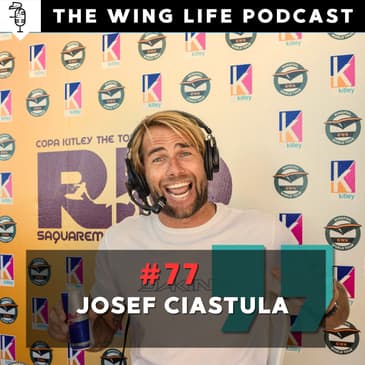

On this episode, Jo Ciastula shares his extensive journey in the world of water sports, particularly focusing on the evolution of kiteboarding and the rise of wing foiling. He discusses his early experiences in Tarifa, the influence of his family's background in water sports, and the development of the GWA and GKA. Jo emphasizes the importance of community, safety, and the exciting future of wing foiling, highlighting the involvement of younger generations and the accessibility of the sport. In this conversation, Jo Ciastula discusses the evolving landscape of water sports, emphasizing the importance of safety, community engagement, and the vibrant culture in places like Tarifa. He highlights the balance between passion and work for athletes, the promising future of winging, and the necessity of nurturing young talent to ensure the sport's growth and sustainability.
[00:00:00] Hey everyone, welcome back to the show. Today we have Joe Ciastula joining us. He was born in the UK but brought up in the wind mecca of Tarifa. From competing on the Kite World Tour back in the day to, as they would say in Spain, watching the bulls from the other side of the fence, Joe has been the voice of the GKA and GWA since their inception.
[00:00:23] He notes that he is very fortunate to do what he loves and there is nothing he likes better than getting a crowd excited for the event he is commentating. So we hope that you enjoy this episode.
[00:00:36] Last week, we had Fabian Momental on the show. He is a North sponsored pro athlete, industrial design and product development engineer for water sports from Tarifa, Spain.
[00:00:47] We had the opportunity to talk to Fabi about his journey with North Foyles and Mystic, what growing up in Tarifa was like, his life as a pro athlete, and the release of his new movie, Mars 13 that's available on YouTube now.
[00:01:03] So I hope you enjoy that episode as well. Now I want to take this opportunity to thank our team for making the show a reality.
[00:01:10] We have Frank that helps with me and consulting. We have Matthias on guest relations, and we have Stefan on audio mastering.
[00:01:17] A big thank you guys as a lot of work goes into each and every episode.
[00:01:22] Next, I'd like to say a big thank you to our sponsors. If you want to see everybody on the corporate end who's behind the scenes, visit winglifepodcast.com.
[00:01:32] Check out our sponsors. We're going to give a shout out to North Foyles as they were our first.
[00:01:38] Thanks guys for supporting us and believing in us. We really appreciate it, and we love working with you.
[00:01:44] Looking forward to doing more next year.
[00:01:47] Lastly, winter is coming, and if you haven't decided where to go yet, come visit us in La Ventana.
[00:01:53] We're offering some lessons. We'd be more than happy to get some riding time in with you.
[00:01:57] Also, we have some exciting trips at winglifepodcast.com.
[00:02:01] So check that out. Click on trips.
[00:02:04] We just started advertising our latest venture to Bonaire.
[00:02:08] So we'll be going to Bonaire May 4th to 10th.
[00:02:11] So make sure to check that out.
[00:02:13] Come learn how to wingfoil in warm waters and shallow waters as well.
[00:02:19] So now I hope you enjoy today's show.
[00:02:28] Welcome to the Wing Life Podcast, where we talk about wingfoiling and the lifestyles of those who enjoy this great sport.
[00:02:36] You know what? Thinking of commentating, it's always, are we ready to rumble that comes to mind.
[00:02:47] So I think we, since GKA and GWA, I think we got to get that to start it off.
[00:02:54] So we got to do it.
[00:02:56] You want to take the throne?
[00:02:58] Yeah.
[00:02:59] Yeah.
[00:03:02] Are we ready to rumble?
[00:03:05] There you go. You got it.
[00:03:07] You got it.
[00:03:09] So you've had a long history in wind sports.
[00:03:12] It's pretty cool, actually.
[00:03:13] We looked into you a little bit, obviously doing a bit of research.
[00:03:17] And at the early onset of GKA, how has that journey been through Kite and then also Wing as this brand new?
[00:03:28] It must have been a pretty cool time.
[00:03:31] Yeah.
[00:03:31] I mean, I think, you know, it's we're very fortunate people who can say we dedicate ourselves to our passion and to be able to consider it a job.
[00:03:41] I was fortunate enough to be in the GKA from when it was founded, which is just 10 years ago.
[00:03:48] And then obviously as the sister tour of the GWA came on, starting from the same beginnings and being involved in that core team to see how another new water sport evolves.
[00:03:59] And being one of the fastest growing water sports in the history of that water sports.
[00:04:03] I think it's, you know, very precious, very cool, very, very good moments to be involved.
[00:04:10] Because, you know, obviously the core team has a lot of experience from different disciplines.
[00:04:17] You have, you know, judges who have competed back in the days.
[00:04:20] We have, you know, guys coming from windsurfing, guys coming from kiting, snowboarding, racing, you know, kind of coming underneath one roof to try and push and progress something new like wingfoiling is.
[00:04:32] Which, you know, we can, I think, what would we be at about five to six years when it really started to take off?
[00:04:40] Even though, you know, probably a decade ago, we started seeing people playing around with what used to look like wings.
[00:04:48] I remember being on a tackle like in Thailand with Sven and the guys from starboards and with Air Rush starting to play around with being on a paddleboard with what semi looked like a wing today.
[00:05:00] And, yeah, really, I think it's a very, very cool moment of the sport.
[00:05:03] And, you know, sky is the limit.
[00:05:07] And definitely the guys and the girls and the athletes are taking it there.
[00:05:11] Yeah. And how did you get started in this whole, like when you grew up in Tarifa?
[00:05:18] Yeah, I was born in the UK in Newquay, which is kind of a surfer town of the south coast of England.
[00:05:25] And I moved to Tarifa when I was five because my family comes from a water sports background.
[00:05:31] My dad was a shaper and it was actually ran Cobra for many, many years where they do all the big manufacturing production for boards.
[00:05:40] So I've always had a, let's say the industry has always been in the house and then obviously living in Tarifa.
[00:05:49] Since then, we arrived 92, 93.
[00:05:53] And, you know, with the Red Bull Skyride back in the day of like 99, 2000, fortunate enough to be able to get my hands on the kite very early on with the likes of Eduardo Bellini, Jaime Arias and the boys.
[00:06:06] Started kiting and it was a lot easier back then, for sure.
[00:06:13] Yeah, I was able to be fortunate enough to compete and competed on the PKA World Tour of kiting for many years.
[00:06:22] And then when, let's say, when the athlete side started to tilt it down, getting involved in sales and then the GK came along when the other tours faded out.
[00:06:33] And was, you know, met Jorgen, met Jaime, who was the sports director, Jorgen, obviously the CEO and still the CEO today.
[00:06:40] And with a core group of people which are still involved to this day, we started putting together what is today the Qatar HGK Kite World Tour.
[00:06:52] Okay, wow.
[00:06:54] Now, what brands were you working with for sales and stuff after you were like working as an athlete?
[00:07:00] I was sponsored by Air Rush and the Taco Group.
[00:07:04] So then I did the Spanish distribution for Starboard Zera Severn.
[00:07:10] So obviously when I stopped competing, started doing the memo, I was very involved in the R&D of the Razer back in the day.
[00:07:21] So fortunate to travel around and, yeah, boards as well because of the background of my father with Cobra.
[00:07:29] So always started to do that.
[00:07:31] I like competing, but I was either very good or very bad, depending on the day.
[00:07:37] But I was always a good talker.
[00:07:39] So I guess that's where we are today.
[00:07:43] Do you enjoy competing more?
[00:07:47] Do you enjoy your role that you're doing now more?
[00:07:49] Just because of the interactions and the fun conversations you can have with so many people.
[00:07:55] Yeah, which do you prefer the most?
[00:07:57] I think I was never a big fan of competing.
[00:08:01] I think to be a good competitor, you have to have that pit bull mentality.
[00:08:05] You have to have that focus and, you know, that be your only goal.
[00:08:10] And, you know, as much as we would love our sports to not be niche, they are very niche sports.
[00:08:17] And to be able to make a full living just on competing is a very, very hard feat.
[00:08:25] And I saw that early on and knew that, you know, to be honest with myself and with my sponsors that I was not going to be that podium athlete and started to look for other avenues.
[00:08:38] And I've always loved to travel.
[00:08:41] I've had traveling in my family since, you know, since the beginning.
[00:08:45] And I saw kiting as my opportunity to see the world.
[00:08:49] And if it lasted one year or I think it's almost 22 years now, well, awesome.
[00:08:55] And being able to, you know, try and be, you see so many riders that they forget they have to be ambassadors of the sport.
[00:09:04] There's always going to be a kid that spins faster than you, jumps higher than you.
[00:09:08] And, you know, depending on the day of competition, we'll be able to beat you.
[00:09:12] But if you can be that complete package, you are going to last long.
[00:09:16] I mean, if we look at the industry, a lot of the higher people up in our industry are ex-riders, ex-competition people, ex-organizers.
[00:09:25] And it's kind of, I saw that avenue, pursued it and fortunate enough to still be here today.
[00:09:32] Yeah, I guess it doesn't, you don't necessarily need to be a top level athlete,
[00:09:37] but it's the passion, dedication and time that you put in overall, right?
[00:09:41] Yeah, exactly.
[00:09:42] Exactly.
[00:09:43] Now, growing up around Cobra, like that's one of the main factories.
[00:09:48] Can we talk a little bit about that?
[00:09:50] Yeah.
[00:09:50] I mean, my dad was, he's been a shape all his life.
[00:09:53] And we moved to Tarifa as they were running the No Work Team studio, which was windsurfing days before kiting.
[00:10:02] And then he moved to the Canaries where he was one of the shapers for Proof, which is the brand of Beyond Dunkerbeck from windsurfing.
[00:10:10] Okay.
[00:10:11] And from there, they moved to Cobra, where he ran the kite department for probably the best part of 10 years together with Bruce,
[00:10:20] who's the guy who still windsurfing department today.
[00:10:24] So obviously, yeah, board manufacturing has been in my family from the beginning.
[00:10:30] I had my cradle was in my parents' windsurfing and surfboard shop in the UK in between the boards.
[00:10:37] So I've had resin in the vein since day one.
[00:10:42] That's a pretty special upbringing to not only like fall in love with the sport that's in your family,
[00:10:47] because there's some people who it's not in them, right?
[00:10:50] Yeah.
[00:10:50] How does it feel to share that same passion with your parents and whole family?
[00:10:55] As super fortunate, like to be able to, you know, the best memories I have of my water sports is, you know,
[00:11:03] waking up at 6 a.m., going for a surf with my dad out of the break and just being the two of us,
[00:11:07] you know, very fortunate to be able to share that passion.
[00:11:10] And he was always the manufacturing side, which I wasn't a fan.
[00:11:14] I was more the commercial and other sides of the business.
[00:11:17] And yeah, obviously, all of my uncles, my parents,
[00:11:21] they were very involved and been very fortunate to be able to be that close to the industry.
[00:11:27] Cobra, for example, to have been able to see the factory from the inside,
[00:11:31] which is very lucky to see how the whole manufacturing process of what is going from a blank to, you know,
[00:11:38] to a boards before the days of CNC's and a lot of the automated things that we have today,
[00:11:43] actually meeting people that, you know, can take a blank of foam and turn it into a board without a computer.
[00:11:49] I think it's very fortunate.
[00:11:50] Yeah, well, pushing passion.
[00:11:52] There could be a lot of other things you could be pushing.
[00:11:54] And it's cool that there are people who dedicate their lives to sports that help bring the world in a place that we'd like to go.
[00:12:02] Absolutely. Absolutely.
[00:12:04] I know talking.
[00:12:06] Go ahead, sir.
[00:12:06] And they share that passion and you can see that with people.
[00:12:10] You know, it's not about the numbers.
[00:12:11] It's not about the units or where it's going.
[00:12:14] I mean, is there that tribal?
[00:12:16] Let's say what a lot of us could understand from the surfing side is those veterans that that that family feel it's it's awesome.
[00:12:24] Especially shapers.
[00:12:25] Like we've had a bunch of fairly big name shapers on and and it's yeah, it is their art form.
[00:12:33] It's their work.
[00:12:34] And then in looking at the amount of time and dedication and the finesse that they've put in their craft over the years just to allow us to like turn a little sharper or do this or do that.
[00:12:44] Right.
[00:12:45] Like it's crazy to think of all the stuff that goes into that.
[00:12:48] Yeah.
[00:12:48] And the differences that millimeters make, which I think a lot of the times people don't realize and and the amount of time being involved in R&D that, you know, we see a lot of the top brands these days.
[00:13:01] And like you'd be making 100 prototypes of one model to try and improve it.
[00:13:07] It's there's a lot behind it to to be able to get that I like to call the USB plug and play that the end consumer can just grab it, go in the water and go, oh, that was awesome.
[00:13:18] There's a lot of work behind that.
[00:13:20] No, fair enough.
[00:13:21] So back to your kind of commentating how obviously since we're more wing focus, whatever GWA, that thing has absolutely exploded.
[00:13:32] Yeah.
[00:13:33] Let's go into a little bit of that journey of going through that whole process of start because I know you're what your first ever tour stop was in Brazil.
[00:13:40] And then from there, just expanded more and more tour stops every year.
[00:13:44] Yeah.
[00:13:44] I mean, yeah, the Superfall back in the day was, you know, when Wingfoil started to come onto the map, it really came with speed.
[00:13:55] Like, you know, you could see that this had traction.
[00:13:57] Obviously, it had the the industry was behind it.
[00:14:01] There was, you know, a lot easier, easy access for a lot of locations, for example, in the European market where there's lakes where the wind is in the middle of the lake and they could just paddle out and then go and have a session.
[00:14:14] You know, the safety side of it that you can let go and it stops.
[00:14:19] I think it was just to see just to see that traction.
[00:14:22] And then one of the best things that happens today is the youngsters.
[00:14:28] There was so many new generation young kids starting to wing in the first year that winging came into the picture.
[00:14:38] And that just meant future.
[00:14:40] You know, I think one of the things we see in kiting is there's not a lot of kids.
[00:14:46] Of course, there's so are kids and very talented kids.
[00:14:49] But you go to a wing event now, you go to the GWA and they are 14 to 18 years old.
[00:14:56] And there's from 14 below, which is they can't compete yet because you have to be over 14 to be able to compete unless you have a wild card.
[00:15:04] There's so many.
[00:15:06] And that's so cool because with the kids, it means there's the parents.
[00:15:09] With the parents, it means there's the whole circle kind of kind of starts to close itself.
[00:15:15] And yeah, I mean, it's it's crazy.
[00:15:17] Yeah.
[00:15:18] Year to year, event to event, even.
[00:15:21] It's just insane how many changes there's been.
[00:15:24] It's really cool to see.
[00:15:25] And moves like off the charts.
[00:15:31] Did you guys foresee that?
[00:15:33] I have to study.
[00:15:34] I have to study literally so much for these youngsters.
[00:15:40] These kids are killing me.
[00:15:44] It's ridiculous.
[00:15:45] It's ridiculous.
[00:15:47] But it's like any, you know, take the lights of snowboarding back in the days.
[00:15:52] It got to a point where it was, you know, half bite was 10, 10, 10, 10 and spin to win.
[00:15:58] And I guess you have to touch the roof for then for it to come down.
[00:16:02] I'm I'm always a big fan of quality over quantity.
[00:16:05] You know, give me a give me a big front roll with power high.
[00:16:10] And don't give me a triple whirly gig to tornado spin a magic.
[00:16:14] You know, I love that quality style.
[00:16:18] But you do have to go through that process to come down.
[00:16:21] We've seen it in so many sports.
[00:16:23] And I think, you know, this end of the season, like what we saw at some of the last events and what we can see coming is also it's the athletes.
[00:16:33] You know, for example, Chris Madonnell, Chariko, Noe Kuyala, you know, Axel Gerard, Malo.
[00:16:39] These guys are pushing.
[00:16:42] You take Nia, you take a lot of the girls that are going so big that also their body weight is something that is starting to hold them back.
[00:16:53] Because we saw it, for example, in kiting, you know, for example, the likes of Alex Pastor, who was multiple time world champion.
[00:17:01] And it wasn't until he suddenly grew and got muscle that the next level came.
[00:17:07] And you see the likes of like Malo, you know, Noe is, what is he?
[00:17:13] 160, 165 tall, probably 55, 60 kilos.
[00:17:18] You wait until these boys are 17, you wait until these girls, you know, with the equipment development as well, which is always, always a difference.
[00:17:26] It's going to be ridiculous because they, they're out to lunch.
[00:17:30] Like they are pushing so hard that it's really cool to see.
[00:17:35] It really is.
[00:17:36] What, if any, because there's been a lot, what would, let's say your favorite move that you've seen so far or thing that wowed you the most?
[00:17:45] T2A is double front in Maui, without a doubt.
[00:17:48] Double front.
[00:17:50] Excuse me, double back, I apologize.
[00:17:53] Double back, okay.
[00:17:53] His double back.
[00:17:54] Yeah.
[00:17:55] I've seen, I've seen double front attempts from Axel.
[00:17:59] Yeah.
[00:17:59] But just kind of like the double backflip in motorcycling from Fasana back in the day.
[00:18:06] It was like just those, those moves that really, just really laid out.
[00:18:11] And freestyle competition is a different animal than free riding in any sport.
[00:18:18] Mm-hmm.
[00:18:19] And it's the, the attention to detail because in the end of the competition, you play to the judges.
[00:18:25] Yeah.
[00:18:25] Um, and you have, you don't have all the time to perfect it.
[00:18:29] And that's why there's great competition riders.
[00:18:31] There's great free ride riders.
[00:18:33] There's unusual that the same person is good at both.
[00:18:36] Mm-hmm.
[00:18:37] Um, and I think, you know, stuff like that and then all of the, the new, all of these
[00:18:43] TAC frontside sevens and stuff that are actually TAC and in front of the wave using the wave
[00:18:48] as a kicker and then rolling out is unbelievable.
[00:18:52] I'm just looking to hear Frank had a few questions for us too.
[00:18:56] Mm-hmm.
[00:18:57] And kind of serve yourself.
[00:18:58] Oh yeah.
[00:18:58] Well, you competed on the tour.
[00:19:00] So he was more curious about, uh, finding a little bit more about how your first experience
[00:19:05] was with wingfoil itself.
[00:19:07] Like how was your first foil?
[00:19:09] Um, I was impressed on how hard it was.
[00:19:14] I went in, I went into it going, ah, this is going to be a piece of cake.
[00:19:18] You know, we've been, we've been doing water sports for ages.
[00:19:21] It is.
[00:19:22] Got up on that board and wow, humbling, humbling in the way of that, uh, how the right teacher,
[00:19:31] right gear makes such a difference.
[00:19:33] And especially, you know, these initial stages that a lot of us who start wingfoiling come
[00:19:39] from other sports and we forget that, Hey, you know, there is a reason there's schools.
[00:19:44] There's a reason these schools have the right equipment because what the average person is
[00:19:50] using won't allow you to get up and go in and have that smile.
[00:19:54] Um, so yeah, very, very humbling, but you know, the first time you make your first flight
[00:19:59] and you, you know, there's no noise and you're just chilling and going along is very cool.
[00:20:04] And how I really, the thing I loved about it was the fact that you could freestyle and wave ride
[00:20:11] with no waves.
[00:20:12] You can just cruise and carve kind of like snowboarding on a ripple.
[00:20:16] That's where I really see the, how the future has it because you're always, you know, you
[00:20:21] have a playground, you can choose your, you can choose your obstacles.
[00:20:25] Yeah.
[00:20:25] And, and I find that we can space ourselves out.
[00:20:29] So it's a little bit less competitive for waves and that kind of thing.
[00:20:33] Um, out of all of them, freestyle, like which is your favorite discipline to either you like
[00:20:40] to watch or take part in?
[00:20:42] Uh, I'm a fan, I'm a fan of the mix.
[00:20:44] Um, one of the, the, let's say formats we have with the GWA is that depending on the conditions
[00:20:50] at hand, it can be one way or the other.
[00:20:53] So we have the 100% pure wave events where it is only surfing.
[00:20:59] And then we have the a hundred percent freestyle events, but then there's like a little annex
[00:21:02] that if, for example, we're at a wave spot and conditions aren't great to do 100% wave,
[00:21:09] we mix it up.
[00:21:10] And in my opinion, that's where the sport really comes to life because you portray what your
[00:21:16] average Joe has in front of his beach, which is he has some kickers to do some moves off.
[00:21:22] He has a small little ripple or a nice little wave to do some cruising and some carving.
[00:21:27] And I think it's more the reality of what people can relate to back home.
[00:21:32] Cause yeah, all of us would love to drop in on Punta Preta or Mauritius or that, but it's not
[00:21:38] normally, it's not normally our home ground or, or on a super butterflat location.
[00:21:43] But I think, well, I really fell in love with it when I saw the first event we did in Brazil
[00:21:50] and Baals Muller came all the way from the back, surfing this bump, surf the wave, finished
[00:21:55] the wave, turned around.
[00:21:57] And when it did a backflip off of that wave, he was surfing as a kicker and continued on
[00:22:01] and I was like, whoa, okay, that's a skate park out there.
[00:22:04] Of course he makes it look easy.
[00:22:06] Oh yeah, Baals is top quality for sure.
[00:22:09] Yeah, for sure.
[00:22:12] Now audience, obviously for GWA and GK continue to grow.
[00:22:16] So, um, now you're on site, you get to go to all the events.
[00:22:20] What kind of a demographic of people are showing up?
[00:22:23] Families, younger people, older people, people who are involved in wind sports, not involved
[00:22:28] in wind sports.
[00:22:29] What have you seen?
[00:22:31] I think GWA.
[00:22:32] So on the, especially on the wing foiling, there's a big family vibe.
[00:22:37] So a lot of youngsters, obviously the demographic of the competitors is younger.
[00:22:42] You're looking from 22 to 14 years old.
[00:22:46] So a lot of them come with their parents, travel with their parents and, you know, uncles,
[00:22:51] et cetera, coming along on the beach.
[00:22:53] You do see a bit of everything, but I would say that it's a, it's a younger generation
[00:22:59] with families.
[00:23:00] And that's, I think it's very cool to see.
[00:23:03] And then like any events, it, depending on the location, uh, you will get more or less
[00:23:09] people.
[00:23:10] The more remote locations, take a Cape Verde, for example, the beach is not going to be
[00:23:14] packed because it isn't next to a city.
[00:23:17] It isn't right there, but you go to the likes of a, you know, a silt or a lucat or places
[00:23:23] that are a lot more accessible.
[00:23:24] You do see people turning up.
[00:23:27] And the cool thing is, is they ask about it.
[00:23:29] It's like, Hey, Whoa, what is this?
[00:23:32] You know, why, what is happening here?
[00:23:34] And I think that's the definitely one of the advantages wing foiling has is that it is
[00:23:39] so accessible.
[00:23:40] You know, you can go out in a lake right next to a city and cruise and have a session, which
[00:23:45] you couldn't do on a kite because you couldn't launch or it would be too gusty or, you know,
[00:23:51] it kind of reminds me of like the windsurfing in the eighties where you could just putter
[00:23:55] out into the middle of these lakes in central Europe and have a session.
[00:23:59] And I think that's why it is getting so popular.
[00:24:03] And obviously gear is lighter than windsurfing.
[00:24:06] You can start, you don't have to uphaul.
[00:24:08] Uh, the only thing we got to be a little bit careful of is the foil, but the kids seem to
[00:24:12] have such a good handle on that.
[00:24:14] Um, have you seen any crazy kind of wipeouts?
[00:24:18] Any, obviously you've seen everything, so any terrible injuries so far or has it been
[00:24:23] fairly manageable?
[00:24:25] Uh, fortunately touch wood, fairly manageable.
[00:24:28] Obviously, you know, the occasional in the end, you know, where we are at, these guys and
[00:24:33] girls are pushing the limits and sometimes the limits push back.
[00:24:36] Um, definitely with the foil waves is the fact of being foot straps involved in waves
[00:24:44] is hard because if they do get caught and go over the falls or something, unless they
[00:24:48] can release, you have a big foil, you know, wrapping around your head.
[00:24:52] So that's always, always, you have to be careful.
[00:24:55] But fortunately, nothing too, nothing too major because you can detach, which compared to a,
[00:25:02] for example, kite team being hooked in, you know, you can't let go and everything stops,
[00:25:08] even though deep hours, et cetera, it's this and safety is a lot better.
[00:25:11] I think winging is very user friendly.
[00:25:14] Um, and as long as like, again, you learn in a certified school, take the basics, get
[00:25:20] the basic knowledge.
[00:25:21] I think it's, we have to be more careful about who is using it and that they have knowledge
[00:25:25] of the ocean because, you know, a lot of the times with these sports that are, let's
[00:25:30] say learner friendly, that you can be having fun.
[00:25:33] And what would he say a week or a couple of weeks of starting to be on the gear, you
[00:25:37] already have a smile on your face, you know, surfing, it takes you years and you never learn
[00:25:41] or wind surfing.
[00:25:42] I think it's more etiquette and knowledge of the person using it rights of way, riptides,
[00:25:49] currents, you know, knowing how to swim.
[00:25:51] It's unbelievable how many people go out and do not know how to swim.
[00:25:55] Uh, I think that's more important, but yeah, fortunately up until now, nothing major, just
[00:26:00] a few scratches.
[00:26:01] That's positive.
[00:26:02] Now mandated helmets, which is, I think is a good thing for everybody.
[00:26:08] Do you think there's any other safety considerations that are coming in that will come into play
[00:26:14] as people boost higher and higher and higher?
[00:26:16] Or like, I know like it's like double backflips and stuff and all that you're starting to get
[00:26:23] into territory of some potential risk.
[00:26:26] Yeah.
[00:26:27] Yeah.
[00:26:27] I mean, I'd say yes and no using motorsports as an example.
[00:26:33] You know, you see motorbike athletes and yes, they are all snowboarders.
[00:26:36] They have protection.
[00:26:38] They have impact protection.
[00:26:40] But of course, when you're impacting on water, the second problem is if you go unconscious,
[00:26:46] you're not on dry land.
[00:26:48] So you have the addition of, you know, being able to go under.
[00:26:52] I think, um, it's a fine line with what the athletes are pushing.
[00:26:57] They're going higher and higher.
[00:26:58] And if you come down, that water is like concrete.
[00:27:00] It's, it ain't a splash anymore.
[00:27:02] And we're starting to see that approach, but you know, the only real floatable or flotation
[00:27:11] devices that is 100% certified is the old little foam square that has, I think it's those hundred
[00:27:18] eutons, which makes it official if my memory serves me right.
[00:27:20] And you can't ride with that.
[00:27:22] Um, but you know, I think we do need to find a line in between the typical impact vest matches
[00:27:30] just to protect your ribs and the full flotation, you know, that again, it all comes, it comes
[00:27:37] from the bottom up is schools have to push it.
[00:27:40] It has to be accessible for brands.
[00:27:43] You know, there's a, I wouldn't say a fashion point, but it has to, you know, look the part
[00:27:48] as well.
[00:27:48] So you, so people will actually wear it.
[00:27:51] But I think having a helmet all the time is already a huge advantage over other sports
[00:27:58] because it's a generic thing.
[00:28:00] It's very unusual to see a wing foiler without a hammer, without a helmet, you're looking kiting
[00:28:05] or windsurfing.
[00:28:06] It's very unusual to see someone with a helmet.
[00:28:09] Very true.
[00:28:10] Yeah.
[00:28:10] Like even I gave a lesson to my, my buddy's neighbor son here the other day.
[00:28:15] And so he didn't have helmet or impact.
[00:28:17] So I just gave him stuff.
[00:28:19] And, and so I went out without one and it is just, it felt, it felt unnatural given the
[00:28:24] fact that you'd been wearing one for so long.
[00:28:26] And I've had a few friends just get touched on the head with the foil and no helmet.
[00:28:30] So it's nice to see that now as the GWA, do you guys stay on top of a lot of kind of
[00:28:36] these internal discussions about either these points and talk amongst yourselves and figure
[00:28:41] out what's the best because you almost have to, A, you're helping kids push themselves
[00:28:45] as far as they can go in their professional career.
[00:28:48] But on the other side, you almost have to parent as well a little bit, right?
[00:28:51] Because they are so much younger.
[00:28:53] Oh, for sure.
[00:28:53] On and off the water.
[00:28:55] Yeah.
[00:28:55] In the end, it's especially, I think we have a responsibility with such a young generation
[00:29:02] being part of it from, you know, from the A to the Z from the beginning to the end.
[00:29:06] And I think it's very cool because the helmet is a mandatory thing, but it's a mandatory thing
[00:29:13] that has come naturally.
[00:29:15] It hasn't come because, oh, we're going really high now.
[00:29:18] We need to use a helmet.
[00:29:19] No, it's been you wear a helmet and wing foiling period from anybody down the beach.
[00:29:25] It's become part of the gear setup, which I think really helps.
[00:29:30] And then, you know, of course, anything from trying to get them to, you know, know how
[00:29:36] to swim, do a kind of classroom stuff about how to read riptides, just general water.
[00:29:43] And then especially with, as there's so many water sports out there, water etiquette.
[00:29:48] I mean, we've seen it.
[00:29:50] It's a huge one, especially, you know, going into breaks around the world and let's say more
[00:29:56] on the wave side, you have to know what water etiquette is, because if not, A, you're going
[00:30:02] to create a bad rep for the sports.
[00:30:05] We've seen it, for example, with prone foiling and surfing and guys not respecting rights
[00:30:10] away or who has preference on the wave.
[00:30:12] And there being places where you can't actually go in with a foil.
[00:30:16] And I think it's super important for the, let's say, the ambassadors, which are the athletes
[00:30:22] that do the world tour, the, you know, local shop riders or the people that have, let's
[00:30:26] say a little bit of a name inside that they, they are using as an example.
[00:30:31] Hey, you know, go to the locals, introduce yourself, ask them, be open.
[00:30:35] Hey, is this okay?
[00:30:36] Where do I do this?
[00:30:37] Is, you know, if you get a wave, go back out and wait a while.
[00:30:41] You have a wing, you have a foil, you can grab it from all the way up.
[00:30:44] Am I going to be just in the area where the surfers can only surf that part of the wave?
[00:30:49] It's, I think we try and try and help them, you know, progress in that way.
[00:30:55] And especially from a younger age, which of course has its challenges.
[00:30:58] Kids are kids and adults are adults and some adults are kids.
[00:31:02] So, but yeah, we do try and, we do try and create the, you know, one of the guidelines
[00:31:08] of the GWA is to create that more complete rider.
[00:31:12] So an athlete who is amazing at surfing ends up being very good at freestyle as well, because
[00:31:18] if they want to be a world champion, they have to be the most complete athlete on the
[00:31:22] planet.
[00:31:23] It's not just about one side or the other.
[00:31:25] And, you know, from that example, also, you know, being the industry, being very involved
[00:31:29] with the GWA, the same as it is with the GKA is, you know, talk to them, do, you know,
[00:31:35] young blood camps do the F1 does the new generations doing a tone, for example, does all the,
[00:31:40] the young blood with the wingers that from a very young age, try and, you know, tell them
[00:31:46] the mistakes that we've made as athletes coming from before and, you know, try and guide them
[00:31:51] in a way, but you do also have to let them fly because you can't just box them in because
[00:31:58] you have the guys like Baus Muller, who is probably as out of the box as we can get since the beginning
[00:32:03] of all of his sports, you know, you can't clip their wings, so to speak.
[00:32:09] No, for sure.
[00:32:10] It's a gentle, gentle guiding.
[00:32:12] And I know when I was talking to Tom, the GWA does try to do as much interaction with
[00:32:17] the local community as possible.
[00:32:19] And because you guys are living some pretty cool, I guess, pretty cool lives from a lot
[00:32:24] of people look at it, the ability to travel and see all these different places.
[00:32:28] How's that community interaction and getting to know different cultures and, and people?
[00:32:34] How's that been?
[00:32:36] I think it's, it's one of the most important and let's say one of the perks of the, of
[00:32:41] the tour and of the job is we are seeing the world.
[00:32:44] It's again, you know, being fortunate enough to, to passion involves is traveling has always
[00:32:51] been a passion for myself to be able to go to these different locations.
[00:32:54] But I think it's also important that, you know, when we go to a location as an event is that
[00:32:59] the local community is involved in the event, you know, people from those countries who are,
[00:33:05] you know, maybe wanting to become judges to be able to do their practices on a world championship
[00:33:09] stage, people, you know, local businesses that are involved to give back to the community.
[00:33:15] I think it's very important not just to turn up to a place with everything done and this
[00:33:19] is our way or the highway.
[00:33:20] I think, you know, we, we always try to have, uh, local sides involved because, you know,
[00:33:27] give a man a fish, don't teach, you know, try and get them to learn how to get that fish
[00:33:31] because then it's just going to make it bigger and bigger.
[00:33:34] Yeah.
[00:33:34] Cause it is their event.
[00:33:36] If you think about it, it's in their town, it's their break and you're like guests,
[00:33:40] they're coming in and being allowed to use it.
[00:33:43] Yeah.
[00:33:43] Yeah.
[00:33:44] We're fortunate.
[00:33:45] We're fortunate.
[00:33:45] They are, they are, they are letting us do that.
[00:33:48] And, you know, that's where competition wise wildcards should be mandatory and wildcard
[00:33:55] doesn't have to be the best person out there.
[00:33:57] It can be their best ambassador.
[00:33:59] It can be whoever the, the event scenes fit to represent them inside the competition format.
[00:34:06] The same way as like being involved in the crew, you know, you should have local judges,
[00:34:12] you should have local, you know, organizers involved inside because they're going to have
[00:34:18] knowledge that we don't have because it is their spot.
[00:34:21] It is their, their politicians.
[00:34:22] It is their country.
[00:34:23] They, they know it better than us.
[00:34:25] We can, you know, dot the I's, cross the T's, but I think it's so important.
[00:34:29] And then, you know, one of the best things about traveling is, you know, getting to meet
[00:34:33] different cultures, different people around the world just, you know, opens your mind.
[00:34:37] Yeah.
[00:34:37] Yeah.
[00:34:38] And I think that helps blend with all this stuff going on in social media and kids spending
[00:34:42] more and more time on there and more and more division being spelt around the world.
[00:34:48] Cause there's always differences among us.
[00:34:50] Um, I can only see this benefiting, especially the youth coming in that get to go to these
[00:34:55] different spots, meet seven different people that are all completely different, come back
[00:35:00] home and say, Hey, like they're just like us.
[00:35:02] Oh, for sure.
[00:35:03] I mean, you know, look at Chris McDonald who lives out there in hood river.
[00:35:06] He is, he's Mr.
[00:35:08] Freestyle, you know, the world champion and probably the guy pushing the level the most.
[00:35:13] I know a couple of months ago, you know, about six different athletes went and stayed at their
[00:35:20] house with, with him and his parents to enjoy and to get to know themselves and to train together
[00:35:26] and get to know the States and, and became a whole family thing.
[00:35:30] And I think that's so cool.
[00:35:31] Yeah.
[00:35:32] And sometimes on the adult size, you know, the oldest side that doesn't happen so much
[00:35:37] anymore.
[00:35:38] And I think it's true.
[00:35:39] That is so cool that, you know, it's almost like they went over and had a sleepover.
[00:35:43] It's awesome.
[00:35:44] Yeah.
[00:35:45] Oh yeah.
[00:35:46] Well, the older you get, the easier it is to box yourself in your house and never leave.
[00:35:49] Right.
[00:35:49] And not talk to people and just do your own thing.
[00:35:52] But as kids, it's nice that they have that opportunity.
[00:35:56] Any, which would be your favorite tour stop?
[00:35:59] If you can pick one.
[00:36:01] Well, um, probably Tarifa, my hometown.
[00:36:09] Um, I think it a place that has a lot of history of different water sports.
[00:36:14] So the beaches are always crowded and it has that mixed format possibility.
[00:36:21] If I had to pick win, what let's say if I had to pick one of everything, because there
[00:36:26] you do see, let's say a more of a reality of what everybody would riding.
[00:36:31] Um, yeah, I'd say Tarifa would definitely be my, my favorite place so far.
[00:36:37] You got a lot of crazy athletes coming out of there, like Nia and Zavi and like Fabi over
[00:36:44] there from North is from there.
[00:36:45] We just had him on the show like last week talking with him.
[00:36:48] And is it, it's just such a, like, it's on my list of places to go.
[00:36:53] I'm in Mexico this winter, but like, it's definitely a place that I would love to go spend a winter
[00:36:57] or fall in or something.
[00:36:59] Um, how was that kind of vibe and scene growing up so close and in a Spanish town?
[00:37:05] I think very, very fortunate because it is one of the wind makers of the world.
[00:37:11] So especially in Europe, it's, it's a place that is always windy.
[00:37:14] Um, and there's a very, a very big community of athletes and people and enthusiasts that roll
[00:37:23] through any time of the season.
[00:37:25] Um, and yeah, it really, it's really cool because you get to meet, meet a lot of different cultures,
[00:37:31] especially from the European side.
[00:37:33] It's, you know, it's, it's the South of Europe.
[00:37:35] So it's warmer for Europe.
[00:37:38] Um, you have a lot of, you know, some of the best riders in the world from windsurfing,
[00:37:43] kiting, wing foiling, and whatever comes next have come out of Turifa and, you know, or
[00:37:49] they spend a lot of time throughout the season to come down there.
[00:37:53] I think it's a definitely a good place to, to be involved in the scene.
[00:37:57] And then on the Spanish side, you know, the food, the vibe, the, the kind of Latin thing
[00:38:02] that, that Spain has in the Mediterranean.
[00:38:05] It's yeah.
[00:38:05] Good place to grow up.
[00:38:06] Not bad.
[00:38:07] Not bad.
[00:38:08] Um, writing time when you're on tour, do you like, I know Tom doesn't get a lot of writing
[00:38:13] time when he's out.
[00:38:14] Do you get any, or is it kind of the same thing?
[00:38:17] Um, kind of the same thing.
[00:38:19] Yeah.
[00:38:19] It, it is, you have to be careful because working with your passion, sometimes passion becomes
[00:38:25] work, so you have to know how to separate.
[00:38:29] Uh, I always try and maybe have more time before or after an event because, you know,
[00:38:36] when you, when, especially from my side, when I'm, uh, talking or shouting about something
[00:38:40] for 10 hours, when I'm done shouting about it, I just want to get out.
[00:38:44] I want to get out of there and, and talk about the newspaper.
[00:38:49] But, uh, yeah, definitely.
[00:38:51] Obviously if there, if there's good conditions, uh, you know, you're always going to want to
[00:38:55] get on the water, but yeah, the real, the, the realistic side of events it is, you know,
[00:39:00] from, from dusk, from dawn until dusk until dawn.
[00:39:04] And you, you don't get much time to get out there.
[00:39:07] A lot of people see it as, ah, yeah, you guys are on holiday.
[00:39:11] You're in Brazil loving it.
[00:39:12] And I'm like, you know, sitting, sitting in front of a TV screen in Punta Preta with
[00:39:18] no perfect 12 foot barrels breaking in front of my screen and not being able to touch them
[00:39:22] is, is a lot harder than it seems.
[00:39:26] I went over to Maui, I think it was in 2012 or 2013.
[00:39:30] And I, I volunteered there and I, like I did the live stream with a buddy of ours now for
[00:39:35] the PWA that year.
[00:39:37] And yeah.
[00:39:38] Yeah.
[00:39:38] And, um, and it was what, eight hours of competition, sit behind the screen, just like shooting
[00:39:45] and stuff like that and making sure not to get jittery like four or five hours in.
[00:39:50] How do you keep, let's say focus and, um, enthusiasm?
[00:39:54] Cause people might tune in like three hours in.
[00:39:57] And if you're like drowning out by that time, you're tired.
[00:40:01] It's like, ah, screw this.
[00:40:02] I'm going to go watch wrestling.
[00:40:03] But like, how do you keep that motivation and enthusiasm throughout your, your broadcast?
[00:40:09] It isn't easy.
[00:40:11] That's for sure.
[00:40:12] Um, location formats, people, uh, really make a difference.
[00:40:18] Um, you know, not all of the time we have a second commentator, which really does make a
[00:40:24] difference.
[00:40:24] Um, so trying to roll and get athletes or, or people coming in to be able to have a conversation
[00:40:30] because talking to yourself for 10 hours is hard for anybody, the listener, the listener
[00:40:35] and the talker.
[00:40:37] Um, but yeah, I mean, in the end it's just a lot of times, I think it's, it's reminding
[00:40:43] ourselves that, Hey, this isn't that bad.
[00:40:46] Yes, you are.
[00:40:47] You are there.
[00:40:48] You are talking about it.
[00:40:49] But I think that passion does come in and just having, you know, having cards up your sleeve
[00:40:53] of having a bit of a plan, seeing what is going to come throughout the day, know when those
[00:40:58] lulls are, make sure to try and have things, you know, kind of set out for when those scenarios
[00:41:04] happen to be able to keep it more dynamic because, um, you know, it's, it's a bit, one
[00:41:09] of the big talks generically across, uh, cross sports.
[00:41:12] I'm very involved in CrossFit as well as, uh, lives and MC.
[00:41:17] And it's, it's so important that in the end you want to be able to take your grandma to
[00:41:23] the beach and for her to go, wow.
[00:41:25] In those first three minutes is to go, whoa, what?
[00:41:29] I have no idea what this is, but that is incredible.
[00:41:33] And I think it's, it's something that we have to be careful with in our sport.
[00:41:38] The wing foiling is not to go too niche because if you make the niche of the niche of the
[00:41:43] niche, yeah, there's going to be 10 people that love it, but there's going to be thousands
[00:41:47] of people who don't understand it.
[00:41:49] And to be able to keep it entertaining, you know, less is more quality over quantity.
[00:41:55] And I think, you know, the formats, which I know for next season is, is a big topic, um,
[00:42:00] that is coming out to see how to, you know, maximize, how to maximize exposure, how to make
[00:42:07] it seem more interesting, how to see more appealing for that mass markets, not just
[00:42:13] the, you know, diehard core people that will watch it no matter what.
[00:42:18] I think it's super important to be able to keep it enthusiastic, but obviously, you know,
[00:42:23] keeping our feet on the ground that yes, it would be amazing to have a 20 crew live stream
[00:42:29] with all bells and whistles, but you know, there has to, there has to be a reality of,
[00:42:34] you know, if there's, I think, you know, maximum we were having probably about after a live stream
[00:42:40] of a day, maybe about 25 to 30,000 views, which is great for, for the sport that it is about
[00:42:46] thousand, 500 to 2000 people watching at once on the top events.
[00:42:50] But it also is very joined to a, the action that is happening and be the location and time
[00:42:57] zone.
[00:42:58] So, um, for example, Cape Verde, it was 12 foot barreling, beautiful, sunny waves, an hour
[00:43:08] and a half difference time zone from Europe.
[00:43:11] Uh, and it was happening when it was also, you know, great for the U S to be able to tune
[00:43:16] in as well.
[00:43:17] So that was like picture perfect because even if you don't understand it, you see these athletes
[00:43:22] ripping in a wave and it's, they're in board shorts and it's beautiful is going to be a lot
[00:43:27] more entertaining than, you know, in a wetsuit with 10 degrees doing three spins on, on something
[00:43:33] that is completely flat.
[00:43:34] I think it's, it's a topic that is out there and for the industry as well, you know, is where,
[00:43:40] where are the next steps?
[00:43:41] And that's why there's the committees, uh, the GWA, they meet up with the industry twice
[00:43:45] a year where they have a meeting with all of the brand members to, you know, see where
[00:43:50] they are taking the sport, where it's going.
[00:43:52] And I think a thing that a lot of people don't understand sometimes or don't want to see
[00:43:56] so far past that picture is there's more than just the entertainment of what we want to
[00:44:02] see, you know, for it to be sustainable.
[00:44:04] There has to be, you know, where the brands are taking it, where the athletes want to take
[00:44:08] it, what is logistically possible with the organizers that are at hand, what are, you know, price
[00:44:13] tax, what, what is needed for, to be able to, to make a sustainable tour, which I think,
[00:44:19] you know, especially at the GK and the GWA, we can be very happy with is because, you know,
[00:44:24] athletes can have a future and say, Hey, I know there's going to be a world tour next season.
[00:44:30] The, let's say the end of my kiting career, there was so many ups and downs with different
[00:44:35] world tours appearing, one disappearing, another one coming up.
[00:44:38] It was a very, let's say dark time.
[00:44:40] I think it's very cool that the new generations can go actually, Hey, we're pretty sure we're
[00:44:46] going to get five to six events a season where we're going to be able to push and see us
[00:44:51] and, and brands as well.
[00:44:53] And I think that's a, that's a very cool thing for them to be able to have.
[00:44:56] Are you seeing a lot of kids now?
[00:44:58] I'm like, obviously follow the traditional kind of career path of going to school.
[00:45:03] And like, I'm finding a lot of these kids are engineers, actually.
[00:45:06] There's a lot of engineers in, in this kind of GWA space.
[00:45:11] Are you finding they're doing that supplementing their income with obviously brand sponsorships
[00:45:16] and because traveling to all these destinations isn't cheap and you can't, let's say you're
[00:45:22] just working a side end job.
[00:45:23] You can be a super passionate and dump all your savings into it.
[00:45:27] But then after your career's over, you're not getting a house.
[00:45:30] You're, you're starting from like you're 16.
[00:45:32] So have you seen some of those transitions and stuff in this industry working a little
[00:45:37] bit more with athletes to help them through that?
[00:45:40] Um, in winging, I'd probably say it's a little bit too early, uh, because yes, we can't
[00:45:48] kining.
[00:45:48] Yeah.
[00:45:48] I mean, for example, winging Bo, she is an industrial engineer, and she literally just
[00:45:54] finished her, uh, her theory of, I think six months ago.
[00:45:58] And she was doing stuff with mystic and fabby, for example, who had on his, you know, seriously
[00:46:04] involved with, uh, North winging as well.
[00:46:06] I think there are characters that are coming aside, but the thing with winging is that the,
[00:46:13] the top side of the athletes, they're 16 years old.
[00:46:17] So, okay.
[00:46:18] All right.
[00:46:19] They are not, they are not thinking they're, they're not thinking of, wow, I have to get
[00:46:25] to the end of the month and pay a mortgage.
[00:46:27] They're, they're not, and that's, they shouldn't be, they shouldn't be at that process, but then
[00:46:32] it is very important who surrounds them, be it their parents, be it brand managers, be
[00:46:36] it, you know, agents.
[00:46:38] I think that is very important for those age.
[00:46:40] One of the things that we saw in kiting from, you know, the days of, for example, Martin
[00:46:45] Vary, Jaime, Jeff Tobias, a lot of, when the space monkeys crew started the kiting revolution,
[00:46:52] so to speak, these guys were 30 plus.
[00:46:55] So they knew how much it costs to live.
[00:46:58] It wasn't that they would go traveling and what their con, what said on their contract
[00:47:03] was what they could enjoy.
[00:47:06] And let's say as the newer generations came into kiting, there was a moment in the sport
[00:47:10] where you'd get a top 10 contender who would get two sets of kites from a brand.
[00:47:16] And that was it because they either had money or they didn't have to pay for anything because
[00:47:21] they're still living with their parents.
[00:47:23] And that brought the salaries down to the bottom because as a brand, it's like, Hey, I've got
[00:47:29] a top 10 contender.
[00:47:30] Why am I going to be paying you 50 K a year if you're not even making top 20?
[00:47:35] It's, I think, I think we do have to be careful.
[00:47:38] Uh, but winging, I mean, you know, especially winging with how the industry is at the moment.
[00:47:44] I know contracts are in a very, very good place.
[00:47:47] Uh, athletes are being very looked after.
[00:47:49] Um, and it's good to see because no matter the age, you know, this isn't football.
[00:47:55] If you, if you want to be able to retire and be able to buy that house, be able to have
[00:48:02] a living, a living inside the sport.
[00:48:04] I think, you know, like anything studying is primary.
[00:48:08] It has to be your, your main goal because then, you know, if you had Fabian, he's a
[00:48:15] perfect example.
[00:48:16] He's an ambassador.
[00:48:17] He's a guy that is good on the water, great off the water.
[00:48:21] He, you know, he speaks languages.
[00:48:23] He has studied and is involved in R and D if he wants to, he can have a future inside
[00:48:29] the sport when he decides not to compete.
[00:48:33] And, you know, in kiting, you know, you take the likes of Raphael, Sky Skullback, Etienne
[00:48:38] Lott, you know, uh, Dave Tversky, uh, you take a lot of them that were ex riders, but
[00:48:44] because they, they had value to a brand outside of, you know, in between the buzzers with a
[00:48:50] seven minutes, that's why they're still there and can still live with their passion.
[00:48:54] Yeah, no, that's a valid point.
[00:48:56] Valid point.
[00:48:57] Where do you see this whole thing going?
[00:49:02] Oh, that's the million dollar question.
[00:49:04] Um, I think winging is, has a very bright future because of there are so many kids involved.
[00:49:16] And when there, where there are kids come federations, where there are federations come grants and
[00:49:23] where there are grants, you, you know, will come further along in outside industry support.
[00:49:31] Um, I think the accessibility wing has is unlike any water sport we've ever seen.
[00:49:39] You know, they can, it's not heavy, uh, foils are, you know, day after day are getting easier
[00:49:46] to put together and put down that you can, you know, but whack it on, put it in the car
[00:49:50] and then, you know, fold it down into a, into a car very easily.
[00:49:55] Uh, equipment.
[00:49:56] You have so many different options on price point that, you know, it's accessible to most
[00:50:01] people.
[00:50:01] I think it has water sports wise.
[00:50:04] It has the brightest future without a doubt.
[00:50:07] We just have to make sure that, you know, everybody puts their little grand a saying of
[00:50:12] sand to be able to look after it.
[00:50:15] Is there anything else you want to cover?
[00:50:18] Pretty much good from my side.
[00:50:20] I mean, just invite as many, as many people to give it a go.
[00:50:24] Competing is competing is awesome, but you know, we can't, we can't forget to have fun.
[00:50:29] Um, and I think, you know, it's a lot, everything from your local shop to your biggest of brands
[00:50:36] is, I think we have a responsibility in wing foiling as the, the general consumer of the,
[00:50:44] let's say the world tours is so young.
[00:50:46] We have an even bigger responsibility to turn those kids into ambassadors and not just,
[00:50:53] you know, one hit wonders that will appear and disappear in the, in the spite of, you
[00:50:59] know, three to four years.
[00:51:00] I think if we, you know, brands doing young, you know, young blood camps doing those seminars,
[00:51:07] I think there's so many possibilities.
[00:51:09] And yeah, I really do think if we look after that winging has the brightest future.
[00:51:16] Oh yeah.
[00:51:17] It's either that or everybody else is getting older.
[00:51:21] So that's the thing, right?
[00:51:23] We need, we need that young blood rolling through and to kind of ignite that new level of passion.
[00:51:27] And Hey, thanks a lot, man, for taking the time to talk with us today.
[00:51:31] Yeah, you too.
[00:51:32] Hope you have, um, any kind of any wind or any sort of entertainment for the rest of your day?
[00:51:38] Uh, no, I'm actually, I leave, I got back from Puerto Rico yesterday from a CrossFit event
[00:51:43] and I'm off to Serbia tomorrow for another one.
[00:51:47] So I'm going to be, I'm going to be inside, but then next week I go home to Tarifa and
[00:51:51] it's looking like there's a good forecast.
[00:51:53] So loving to get in the water.
[00:51:55] Beautiful.
[00:51:55] All right.
[00:51:56] Well, Hey, safe travels and I'm sure we'll catch up soon.
[00:51:59] Yeah.
[00:52:00] Take care guys.
[00:52:00] Thank you.
[00:52:01] All right, everybody.
[00:52:02] Thanks for joining.