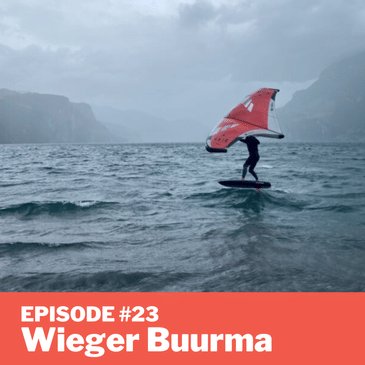

Wieger Buurma is the co-founder and CEO of Appletree surfboards. A wing, prone, kite and surfboard company form the Netherlands. It's one of the only wing companies who have their own in house production at a professional scale, with their own factory in Portugal. Appletree produces high quality carbon wing and foil boards, with special attention for sustainability and employee well being.
http://appletreesurfboards.com
Follow us on Instagram: https://www.instagram.com/winglifepodcast/
[00:00:00] Welcome to The Wing Life Podcast, where we talk about wing-foiling and the lifestyles of those who enjoy this great sport. Okay, and we are live and going, so thanks for joining me today on the show.
[00:00:22] Yeah, thank you for having me. Good afternoon for me. Good morning for you, I guess. Yeah, it's a, what time is it over here? Now it's 825 and happy to start the day with some foil chats and board chat. That's not every day to get to do that.
[00:00:39] I actually got a sneaky bear. It's my 30 hair. I ran by the fridge. It was like, hey, there's one final bear, that's mine. Oh yeah, nice. Nice. So, I guess how is the work day today? What did you guys work on?
[00:00:59] Well, not too bad. Just nowadays, like I'm mainly in the office doing stupid office work, like in voicing and accounting and all that sort of stuff. So, yeah, it was not too bad. I've got a bunch of new guys started just like this week and the week before,
[00:01:17] because we're hiring a lot of new people. So, I'm slowly handing over a lot of my work with right now. I'm still doing a lot of stuff myself that we're growing so quickly that it's getting better and hopefully
[00:01:30] we'll have more time to get more sessions in the near future. So, it's all good. But it's all good. But it's all good. It's all good now, so it's full on season. Oh yeah, it's always the busy time of year.
[00:01:46] So, we're packing up for the big demo events, which are mainly in Germany the next two weeks. There's two really big events in Germany. They're wearing the Netherlands. It's about five, six hour drive and there's big kinds of wing and foil events.
[00:02:02] Bigger than they organized in the Netherlands. So, we need to go there in the next two weeks. And then come back, re-pack and then prepare for AWS IN the US, which is the next event we're getting a September. So, it's always this time of year.
[00:02:16] It's always a couple weeks home, a couple weeks away. Just keeps going until October and then it sort of melos out and we go into winter and it's more production work. Okay. Now, for the first time I saw your brand was in Victoria BC.
[00:02:32] I went to a friend's store and they had just converted. I think they're yoga studio and they were running a successful stand-up paddleboard rental business. And they were bringing on different wing brands and I'm a teacher at here and instructor.
[00:02:46] Like, hey, what do you think about Apple Tree? And I said, well, I haven't seen them yet. But I loved the concept and then I did a bit more research into you and into your brand and then just loved your story.
[00:02:59] So, maybe for those at home who are unfamiliar with Apple Tree, could we start with your origin story? It's pretty cool and it helped brand and shape your entire company. Yeah, sure. So, it's a bit of a classic story of making your hobby into a full-time job.
[00:03:17] So I was actually working as a head chef in the kitchen. But always was interested in producing anything basically just making my own stuff. Was doing some surfboards just for fun surfing, like normal waves surfing, became a thing here in the Netherlands.
[00:03:34] It's quite a big thing now even though we have pretty shitty waves. But boards were not widely available back then so I just started making my own or so at least like experimenting that the first ones were pretty terrible obviously.
[00:03:48] But with fun to do is it was just a hobby making them board. Then made a few more for friends slowly made like a board a month something like that. Next to my job by my brother, Yorat, who I, on the company with, finished his studies
[00:04:07] and he has more of a technical background than me and he started working at Mystic, the well known accessories, kind of accessories, what's with brand, which is from the Netherlands. It's actually literally like 15 minutes away from our office. They're at quarters nowadays, they're on by North exchange boards.
[00:04:25] So they are the same group as North foils in North Gaide, Kai-Porty. He started working there after an internship as a wet suit designer and harness designer and he got into Kai-surfrey. And I was doing surfboards on statistics, experimenting for fun with how to make a board stronger,
[00:04:44] adding some materials I was talking to some suppliers of different kinds of residents, different kinds of fibers, all sorts. Again, just as a pure out of interest, I like to find out how things are made and how things are done.
[00:04:59] And my board's got pretty strong, still old hand shapes, still old hand made and did everything myself. And he got into Kai-surfrey and they, and he told me like the guys are starting
[00:05:13] strapless Kai-surfrey, so really wave Kai-surfrey on surfboards but they constantly keep breaking and we're looking for a way to make Kai-Porty stronger. And around that time, there was just like either people were riding normal, B-U, Bollyas,
[00:05:29] surfboards and destroying them within a few months or the were riding is really heavy, ultra thick glass boards that were made for Kai-surfrey, but they were not very lively. They were not a lot of feel in there.
[00:05:42] So I just started doing a few boards for Kai-surfrey and then, turn out we could make pretty strong boards and my brother started sort of helping me a little bit with new technologies and we experimented with a whole whole whole stuff.
[00:05:58] And back then we were actually our parents, we're living on a Apple farm and super close to here. And we were doing everything in the backyard, basically took over my parents' shed, got the bikes out there.
[00:06:10] They didn't do a small shaping bay and my parents actually liked it because otherwise we would, you know, we left the house so we were never around much and as parents want their kids, want to see their kids every once in a while.
[00:06:24] My mom was always super happy for to have us over because at least her kids were there. So we could work in the shed. However, whenever we wanted to. So we were making boards, everything handshake, nothing too exciting, we're experimenting with some vacuum glossing,
[00:06:42] which is the way a lot of friends do. So we're using EPS foam and using a vacuum pressing method to get a reasonably strong board, and use some sandwich materials, that sort of stuff just got used to working with those techniques.
[00:07:01] And so the two things happened at the same time. My brother had a friend and he was making a 3D printer and he made a few 3D printers and he said,
[00:07:10] I can probably make a CNC machine because it's the same as a 3D printer just bigger and it just takes things away instead of adding, but the rest is the same. I like sure, but they needed money for parts and I was making good money as a chef.
[00:07:25] So I said, like, I'll pay for parts if you build the scene. So that was the deal. So my brother and his friend built a machine and I paid for it to be year. And then we had to see the machine which was quite funny.
[00:07:39] So it was, yeah, it was in the shed. And we sort of extended the shed with a, with like a shipping container. We put extra to shed. Luckily my parents had a big garden so we could get a shipping container and put it next to the shed.
[00:07:54] Put the machine in there and then just started experimenting. So now I still have these machines. So you can just replicate shapes and get it way more consistent. And then we, we were at a, I think it was a big conference in Germany.
[00:08:10] There's the Gale get together for, for composite industry professionals and we got tickets. So we just went and now I always just speak to whoever I can speak to and then just network and found some people who were, they liked our stories.
[00:08:26] So there is like, yeah, we can hook you up with some high tech materials, high tech phones, high tech other infusion stuff that's normally, you can get it but it's like not super easy.
[00:08:39] But you know, there is this couple of young guys from the Netherlands making surfboards and everyone there is making yachts and windmill blades and relatively boring stuff. So surfing is cool in other like I will help these kids out.
[00:08:52] Maybe they can make us a surfboard to put on the booth next year as a, you know, we can relate to these kids that are trying to get something going. So we got a couple of brands actually send us loads of experimental things to work with.
[00:09:06] We even got some some phone that was never going to work for surfboards. We knew it was way too expensive, but they're like, oh yeah, have a beast and experiment.
[00:09:15] And, and one of them actually said, like you can come to our lab to see if we can find a way to use a resin infusion method on a on a surfboard. And, and that was sort of our breakthrough.
[00:09:30] We went to their lab, we did a bunch of tests. It didn't work. It actually costs us in the end it cost us quite a few boards that failed.
[00:09:41] And we were on the sort of tipping point of stopping quite a few times because it's actually really hard to. To to to simplify what infusion is basically you, you make your your back of fibers and your sandwich materials or in our case also in boxes as well.
[00:10:00] Are you an intermediate level wing for the looking for an epic adventure this winter? If yes, I suggest you reserve your spot for the wing foil expedition hosted by Agua Salada. Baja California sir adventures this coming January.
[00:10:14] This trip is going to be absolutely amazing. It includes oceanfront accommodations, airport pick up and drop off fresh locally made food and snacks created by a local artisan al chef yoga messages five days of wing foiling and the best part over 100 kilometers of boat assisted downwinders just imagine the freedom and peace and mind that will provide.
[00:10:39] I look will be one of your wing foil coaches on this trip. So it'll be a great time to know the enjoy the downwinders but also ask questions to approve your writing.
[00:10:48] Our trip will take you on different parts of Laventana and Baja that you would not otherwise be able to access without a boat.
[00:10:55] To learn more visit winglifepodcast.com and click on trips in the main navigation menu once again visit winglifepodcast.com and click on trips in the menu with only eight spots available. We know it's going to book out fast. So we recommend that you act quickly. I'll see there.
[00:11:13] And you put it all together dry without any books or your poliester or resin. And then put it on their vacuum pressure and then inject it on the pressure with a really thin resin.
[00:11:30] And what it does is it eliminates any air bubbles and it gets you the ideal ratio between fiber and resin. It's a bit of a technical story, but.
[00:11:43] Yeah, I'm sure people would love to hear because this is contrary to how boss brands build right so yeah, not know what brand builds this way.
[00:11:52] The easiest thing to to compare it to is like if you if you were back in school and you're not to do at the creative class, you have to stick pieces of paper together.
[00:12:03] If you could clearly smother it with glue and then stick the two together. It never really works and you might remember like it's not really stuck. If you apply just a thin layer of glue like the right amount, it works way better.
[00:12:19] It sticks way better because there isn't ideal ratio between fiber strength or your pieces paper and your glue or your books or your poliester resin.
[00:12:29] And it's it's a well known thing that there's this ideal ratio that you're always looking for because that way you get the most strength out of your fibers. And your combination or your layout with your books or your honey comes or any reinforcement.
[00:12:44] That can be the only thing that all Berkeley was tough.
[00:12:48] That white color is hard to use back that yeah, yeah, yeah, yeah, yeah, yeah, it's similar and the thing is like if you have a strong layer like a fiber layer and another strong layer and you have a lot of glue in between the basics strength that you get is the glue just a glue.
[00:13:03] And the glue itself is not strong is to glue matrix with the fiber that makes the whole thing strong. So yeah, using vacuum infusion you get the ideal ratio automatically basically and nowhere and air is always back because air just means we points.
[00:13:23] So can we maybe like explain this a little bit more so maybe walk through what how other people do it and then just for our folks at home we're looking for a board and like hey I need something.
[00:13:38] Why why does this set this apart so a traditional company is doing it version A and then you're saying you're doing it a brand newer.
[00:13:46] Yeah, so there's there's three basic ways number one is the most traditional way of making serve work so this may that like what you you can look it up on you and you'll have to make a circle that will show you this.
[00:13:59] No matter the materials either it's polyester or epoxy or the type of foam what they do is they have a blank that you shape the blank that's the piece of foam you shape the piece of foam into whatever shape you want.
[00:14:11] talking about shapes here and you layer a layer of glass fiber or multiple layers or carbon fiber which is like a cloth it's like a flexible cloth you layer it over and then you mix a batch of polyester or epoxy resin, which is a like a Seruby thick transparent plastic that's fluid that's liquid and then it's it do do you a chemical reaction it hardens into this plastic.
[00:14:39] So when it's still liquid you pour it over and then with this with a plastic squeegee you work it into the fiber and the fiber absorbs this resin and sticks it to the blank.
[00:14:49] And then with your with your plastic squeegee you scrape away the excess resin as much as you can that grips on the floor that's discarded and then the layers of this fiber cloth are stuck to the blank in your way for the whole thing to dry.
[00:15:09] You flip it round you send the edges because it's always a bit roughness there and you do the other side and then that's the way you build a normal surface. So it doesn't matter, polyester or epoxy or carbon or glass fiber and doesn't it.
[00:15:24] So that's number one that's the weakest way but it's also the easiest quickest cheapest way. So that's why normal PU, polyester, surfboards are relatively cheap because it's all cheap materials and it's quite an easy process.
[00:15:39] Then the next level up is that you do the same thing but before the resin dries you cover the whole thing in a in a and a bare for a plastic layer like it's literally a foil with tiny holes in there and then an absorption layer and then you put that into a bank and you pull it back you.
[00:16:01] And what the vacuum does it applies pressure to your board and your layers in your resin and the excess resin flows through the holes in the plastic layer into the absorption layer.
[00:16:16] And it gets you so it takes away a part of the excess resin that was in your that was not needed.
[00:16:25] So like a sponge with water you fill it with water it's completely absorbed and then you smash it down so you still have all the sponge there but you have less less resin there.
[00:16:37] So again the resin is just a glue to stick everything together simply said it's just a glue stick everything together and like you don't you want minimum amount resin with that's what most brands do.
[00:16:52] And what we do is sort of the opposite so we squash first and then inject the resin. And it's very hard because it's it's a common process that they also use for.
[00:17:08] Fins, foils, car spoilers whatever race boats all kinds but in all of those applications they have a mold off the boat or off of the spoiler for your race car so they make a mold first and then they press this package into the mold.
[00:17:29] This is nice because you can replicate over and over again with the same mold.
[00:17:34] But the problem is that you can't customize and you need a mold for every part you do and for us as a relative niche sport it's not worth making a mold for every board plus you can't do any custom addition so you're going to stick with the same mold for a really long time because it's literally like a mold for a.
[00:17:57] A mold for a surfboard you're looking at like 15 to 20 thousand dollars for one so that's one model one size.
[00:18:04] So if you have one model in six sizes you need six times you know it's it's it's a lot there is a few brands doing this way making normal surfboards.
[00:18:14] But consider normal surfing is a much, much bigger sport so it's worth it in some cases but then still you will see these brands sell the same model.
[00:18:23] For a number of years they might change the color because you can do that but they can't change the shape just to to recruit them investment on the mold.
[00:18:31] And then still it's not really the same process as what we do so in surfing it's not really used that much and for us in so what we found the way to do it without using a mold so we basically used the shape to blank as a internal mold and then press against it and then.
[00:18:50] Yeah, so it's it's hard to explain it easier than that I understand that it's hard to to to wrap your head around if you're not a technical person but sort of that's the only way that I can explain it. But but the main thing is.
[00:19:05] I'm sorry in essence what you're doing is you're wrapping everything on there for example so if your so your blank is lying on something is it's suspended or isn't on a table. Yeah, I can't tell you. Okay, fair enough.
[00:19:18] It's also a secret process so that's how I'm going to be. I was going to ask you that when that's fine in essence what you do is you make super strong boards it's a unique process and. Well, there's no.
[00:19:35] Yeah, there's a number of of websites to this process the the most important one is that we can use core materials and. Honeycomb reinforcement and stuff that you cannot use without you need this this way of working to be able to use these materials so it's it's.
[00:19:58] It's all connected like back to the phone that for instance, the phone that we use we have our our own phone so we don't use EPS we use a phone that is 100% waterproof and has a really fine. texture so it's really nice to shape.
[00:20:15] But if you shape it and gloss it in the traditional way. The connection between the foam and the layer on the outside is not ideal so it will delaminate over time.
[00:20:27] So a lot of people have tried using this foam and normal surfboards or kiteboards or whatever because it's really nice like it's it's surf really nice it's shaped really nice it's really strong and it's waterproof which here which are all quite important things but.
[00:20:41] Yeah, but if you normal gloss it just doesn't work like it will delaminate especially on the your front foot where you put a lot of pressure.
[00:20:50] The the vacuum infusion makes a basically a perfect connection between the outer shell and the inner foam core because there is no air so. It's it's it's it's again bit of a technical thing but like we found the way that the foam does not delaminate guaranteed.
[00:21:09] So we never have any deleminations. So we can use this really nice phone which is also guaranteed waterproof so like you said before if you do doing the board you do get a crack in the real or whatever.
[00:21:24] You really do not have to repair it immediately you can just keep writing finish your holiday finish your session and then it's advisable to repair it at some point.
[00:21:34] But you don't have to panic on the water and especially with these carbon boards that are full black in the sun they heat up a lot so it out gases and water does get inside but not with our phone.
[00:21:46] Yeah, that's maybe something we can unpack just a little bit because traditionally. Were used to wind surf ding. For example you crack that nose you're scared to bring that board because if you get any water in there your anywhere from 500 to 3000 dollar.
[00:22:05] Thing is is now if it's almost obsolete. Yeah, yeah because the reason for this is that. Inside of your traditional board is a really light EPS score so EPS is the beaded foam that your television comes back in and you buy it but it's really low quality actually.
[00:22:26] And the reason for this is because it needs to be lightweight for the high volume we need the lightweight phone because the lighter you make the core the lighter the total product will be.
[00:22:35] The the individual beads in EPS are waterproof but the void between the beads is not like water and air can flow. Between between these beads.
[00:22:53] The higher quality higher density the harder it gets the lower quality lower density to easier water translate the transfer flows through these through the score. Now what happens if you're on the beach.
[00:23:05] Your board heats up due to the sun obviously the pressure inside the board increases and it starts to blow out air through your hole you might not even know you have a crack but it starts to sort of blow out air because the pressure increases the the air expands and it blows up.
[00:23:22] Then you you you're not you did a notice you had a crack you grab your board you walked to the water you put it in the water it gets cold because of the water what happens the air contract and it sucks air back in but but it's on the water so it sucks in water.
[00:23:39] And the water doesn't stay at the hole it sucks into the board and once it's stuck inside the core it's extremely hard to get it like you you if from the winter thing days you might know like yeah if you have a crack.
[00:23:52] And you're in your nose you put the board upside down and it goes down it can drip for days it just literally like it slowly will flow out but you never really completely get rid of it so that's a big problem.
[00:24:04] And the way they make the board strong is by adding a sandwich layer. So sandwich layers essentially have really thin layer of heart foam or sometimes wood or bamboo around the the really soft core and that sandwich in between layers of fiberglass and sometimes a layer of carbon.
[00:24:23] This makes the board look really like clean it's really impact resistant but the problem is as soon as you go through and you hit the core your done basically so it's strong up to a point and then it's done.
[00:24:38] Now we use a foam that's much stronger from the start and waterproof but also higher density so there's no need to make a sandwich because the outside layer is already strong enough on on the strong foam.
[00:24:55] There is a few downsides to this for instance that if you dent one of our boards the dent stays with another board because the heart layer on the outside is sort of flips back and the dent is inside but you don't really see it anymore.
[00:25:09] But for us the upside are bigger than the downsides so we decided that it's okay to to go this way and for your durability longevity of the board it's it's way better because does outlast the other boards quite a bit the the other the other small downside side there is is that they're that the foam is relatively heavy so if you go at if you make really big boards like 130 liter plus.
[00:25:39] It does get heavier compared to these light foam boards but on the smaller boards this is completely flipped around and we're way lighter. But it's just there is a there is a tipping point there but we focus mainly on.
[00:25:50] Or making boards full carbon for advanced riders who are not looking for 130 board leader boards our main sellers are. 70, 89 liter in which case where like for being boards and in which case we're super super light compared to the other standways stronger.
[00:26:07] Yeah, that's a pretty cool tradeoff especially me just kind of walking through that scenario because I've had several.
[00:26:13] Windsor boards because I just I've had two wing boards and haven't ding them but Windsor boards you'll go and then they as long as you're okay with them getting heavier and heavier.
[00:26:23] It's fine, but I read this and it was like it was a cool concept and I don't think a lot of people know that they just assumed that all boards are either a made the same or the use in the top level quality of material.
[00:26:35] Yeah, and to approach it in this way if you're looking for a new board this would definitely be something that you can not consider.
[00:26:42] Yeah, it's it's different you know it also it looks different it feels different so you have to sort of it that's why we keep explaining the whole story over and over again because it's something people are used to a certain way and they're used to certain feel in their boards and we we know this is better especially for foiling where you need the stiffness and there.
[00:27:04] The thickness of the board this works way way better and and to add to that so.
[00:27:10] We are now a days from our humble beginnings on the farm we we grew to quite a big company so we now have our own production facility in Portugal so my younger brother moved to Portugal to run the factory and we actually moved again.
[00:27:28] Last year from a small factory in Portugal to way bigger so our new factory now is three and a thousand square meter I don't know how many square feet that is but a lot times nine or something.
[00:27:40] That was really big and it's completely ours and that's quite unique as well so we always stuck to making our own stuff where.
[00:27:49] Literally every other brand of wind boards produce at a different facility so none of these brands have their own factory they all produce with Chinese or tie or.
[00:28:03] There's a number of factories in the east in the east side of the world that can can produce these kind of boards they'll produce there. With like we we always wanted to do our own production because from the start we've been mostly interested by this technology side.
[00:28:24] And we we want to fully control the whole production process from the buying of rough materials to you know training our staff and everything and then.
[00:28:35] At the same time we we want to build a sustainable company so we're really heavy on where we get our stuff mostly locally produced the.
[00:28:46] For instance we used the the epoxy resin with the highest biobase content there is it's not there isn't higher bio base but that doesn't.
[00:28:57] That's not strong enough for us or it's really yellow it's like so we used the right balance with you try to source everything locally so our foam is made locally import your goal.
[00:29:06] And we also hire everyone on a full time contract with all benefits which is not as easy as producing an Asia where you pay people.
[00:29:18] And fire and hire them at will we really can't Portugal is slightly cheaper than the Netherlands especially for real estate and it's easier to find staff that's why we moved from the Netherlands to Portugal.
[00:29:30] But we we really always want to stay in Europe and say and produce locally for the local market.
[00:29:38] At the same time I realize you being Canada we're growing streamed quickly in the US and Canada so we export a lot from Europe to Canada which is not very low goal.
[00:29:47] So we are looking into it's on our our multi year plan to eventually start a production facility overseas to produce for the overseas market that's one of our goals so we can.
[00:29:58] You know stick with our beliefs of producing locally but that's another major step that's going to be a few years in making. Yeah those are nice core business values yeah that's cool. Yeah and it's not easy but it's also more fun like I wouldn't like to.
[00:30:18] Outsource my production fully to a company on the other side of the world where I don't know my staff I don't know whether or I can speak their language it's.
[00:30:28] I really don't want to go there we want to build a sustainable company and actually it's kind of nice because we now also produce for other brands so there is more and more brands that see.
[00:30:40] That what we do one produces an amazing board and two is is better for the for the planet and for everyone on it so they are willing to pay a little bit more quite a bit more.
[00:30:53] I'm going to use locally with us as well so that's also one of the reasons why we can expand so quickly because we are producing for a number of brands there's more brands coming in the next year.
[00:31:05] And we constantly get approached by a brand that want to go that way and start producing locally so we have a lot of interest and we still have to hold back quite the kind of few of them right now because we can't expand that quickly.
[00:31:18] I think we're pulling an Elon with super chargers and stuff that's what we're trying to do at least like it's. Yeah but then in the in the wing and in the kind and in the surface which is that way. No absolutely stepping into manufacturing and kind of.
[00:31:36] I guess if you look at that metaphor is like your apple tree brand and you got some deep roots and you don't know where those roots are going to go and it's kind of exciting to see you stepping off into that because not only.
[00:31:47] Yeah, I guess not only you getting a good board but brand recognition and then expansion is something that everybody wants to see. So yeah congratulations on that. That's exactly how thank you.
[00:31:59] And as cool the people see it and want to be a part of it and you know and and when you buy one of our boards, we try to keep the price relatively low, especially compared to what our brands are doing.
[00:32:10] But you know you support local Portuguese people instead of like really far away where most of the money ends up in the pockets of executives and what we're trying to sort of build a community and then right now we have 30 something people working there.
[00:32:27] So yeah it's one to say it's starting into a nice family and it's really your family business with me and my brother and then we have a third bar of marijuana and everyone there and I for me Portugal is like 2000 kilometers away so I have to go there every once in a while and right now I still know everyone in the factory by name.
[00:32:46] But it's getting to a point where I can do that anymore, but I hope that we still you know transfer that that family value and everything into to everything you do.
[00:32:57] So yeah no fair enough. Yeah thanks for sharing that with us. It's a unique story especially coming from from from every product or not every product but a lot of products that we're we don't know where they're being built how they're being built and that transparency helps build some brand loyalty and trust so that's pretty cool.
[00:33:17] Yeah that's what we've been noticing and we're working on expanding that quite a bit so we're from for next year for instance what we're going to do is you kind of find.
[00:33:27] And near field chip in your board which you can scan with your phone and then you can you get the serial number and everything is stored on that and you can go into this sort of virtual apple tree world that we're building or you can see who built your board.
[00:33:41] You get maintenance tips you can you know have a direct line with us for if you have any issue and you know we offer advice on how to repair how to maintain your board how to take care of the board and then you've actually even want to go as far as like how to recycle your board and the life you know how what can you do.
[00:33:59] And when it's when it's done and how can you dispose of it in such a way that it can be recycled so we have a long way to go still it's really fun process to work on which one of the things that I'm really passionate about and.
[00:34:13] I'm also like now that I've got more staff doing good sort of normal day today stuff. I can think about these kind of things more which is a really really cool thing I think. And it's something that I really love doing as well.
[00:34:26] Oh yeah, the the innovation yeah innovations in your hand which is which is pretty cool. To walk people on shapes sizes.
[00:34:38] Can we maybe go into a little bit about that as anything you can share about because a lot of people come to me and they're what shape should the bottom my board be if I want to get out of the water quickly.
[00:34:50] And my foil foil track placement so foil tracks go to forward to far backwards one guy just reached out from auto and he was asking about I want to make sure my board is lively I got a bit of a bigger foil so my track placement I want to make sure that my choice for all can go far enough for could we go into some of those details into.
[00:35:11] Yeah, for thought processes behind them. So, um.
[00:35:16] It can be a bit confusing because we now have in our like just focusing on the wing range we have three models which I know is quite a lot that at the same time we're a board brand so I think we're allowed to make specialty boards at the same time.
[00:35:33] We make everything to order or we have very limited stock and also shops usually have limited stock so we make a lot of boards to order.
[00:35:42] This allows us to be more flexible in sizing and everything because we don't have to calculate like again going back to another brand that has to order from Asia they have to decide a year and advance like this is what we want we need to fill a container it is 300 boards in a container it is silent sizes.
[00:35:59] But that, winging and foiling is such a new sport it's developing quicker than this normal one to two year cycle that most brands are on so they might order with the factory order 300 400 boards.
[00:36:15] And wait a year for these boards to finish and ship to your local shop and then they have to sell them for another season which is like another year.
[00:36:25] So, but within the year of their then waiting for their delivery the whole trend might have shifted or the whole you know foils might have changed so for instance like you say foil placement.
[00:36:36] High is highly dependent on the way to foil is designed and what brand of foils you use and some brands are really pushing therefore for those forward because they're designing them in such a way that they work better more forward in the box.
[00:36:51] Which, then means that some older boards with the foil box very far back come to accommodate these foils that you might which is annoying.
[00:37:02] For me not very sustainable but I understand that it's a new sport and it's pushing forward and then foils are i'm still amazed when I get new foils how much better they still are like incredible.
[00:37:17] It's incredible it's not done like innovation and development is definitely not done so we're still in this super exciting phase that citing was in maybe 15 years ago.
[00:37:28] For every new model was exciting and new and now everything is good you know there's no bad guys anymore with with wings and with foils like it's new you still want them to stop.
[00:37:39] Now what we only make boards so we have to try to accommodate most if not all of the foils so.
[00:37:48] What we've done last year is that we made new tracks that are our own tracks so love it you can buy standard tracks but we made our own tracks that were better with our construction are also much stronger and they're quite a lot there are two inches or five six enemy is longer than standard boxes which means.
[00:38:04] We place them correctly you should be able to fit any foil to our boards.
[00:38:10] We also make them neutral as neutral as possible which means the angle of attack so the between the must of the foil and your standing position with our boards is 90 degrees so it's it's like the most neutral position.
[00:38:26] With some foil brands you might want to base play chip to compensate for a design choice that they made so for instance F1 makes their boards with a bit of tail rocker so it's.
[00:38:43] That means that the angle between the standing area and the foil ends up at like 91 degrees so their foils are compensating for that so if you a lot of people like to.
[00:38:54] We have to give them their F1 foil with one degree negative to make it neutral again so these are things that and yeah we can't help that we have to sort of rely on foils for instance Armstrong is a foil brand that really pushed that forward position.
[00:39:13] So those foils naturally want to sit more forward in the box but newer foils mine might want to go back and like we also heart slowly moving our foil boxes in all our models further forward so I'm currently writing my exes bit fire foil on a normal fuselage almost all the way to the back again.
[00:39:34] But then exes is launched is advanced fuselage where the must connection to the fuselage is forced intermediaries more forward which means I have to compensate with my mass placement and put it 5 cm forward.
[00:39:49] But because of our longer boxes I still have enough room to play so we try to make we experiment a lot we test a lot of different foil brands constantly to check if they still work but it's also a personal preference thing.
[00:40:06] You know get some of those wing nuts things that you can adjust your foil in the water for instance they're like not very expensive but it gives you the opportunity you don't have to go out of the water if get these big wing nuts under on your foil and you can move it so just until you.
[00:40:21] Have it in a position that you feel comfortable with there's there's no good and bad there's just what you what you like and what you're looking for.
[00:40:31] That's good tip yeah and heard about the advice on the on the foil place fair enough yeah what about yeah shapes now yeah so it's another one where. A lot of development and it's very.
[00:40:49] Sort of transcends the diff as well so a couple of years ago all the boards had these massive cutouts behind that foil some brands still have because. I'm how everyone believed that that really helps release or push the board up so.
[00:41:06] Our first boards also had that and now it works it's fine the boards work but we slowly got realized that it's not perfect for all conditions and it doesn't always work so most brands are now on to this more.
[00:41:20] And it's a more stable area and if you look at kind of boards or wind serve boards they're all flat with a hard edge on the back. And it's fine works really well for.
[00:41:48] Plaining speed so it's stable at slow speeds and it's fast at high speeds because you get this planning surface the heart edge in the back of the board makes the water release so around their edge will pull the water up and sort of slow you down slightly and.
[00:42:05] That is not a slow speed and this this hard edge surface like a wind serve board glides really well on speed so a lot of brands started including our start making boards with these hard edges flat bottom and that works really well. Right now though.
[00:42:29] We're moving ahead with shapes and we're moving away from this flat planning surface but but it doesn't mean that there's no.
[00:42:41] There's no market for a flat surface so we are as a brand as I said before focusing heavily on the advanced writer and the semi pro writing guys know what they're doing can properly wing in almost all. Conditions and and everyone's getting better all the time like.
[00:43:03] Even in the higher pro ranks and freestyle people are doing stuff that was unimaginable two years ago so we go and some have to evolve with that as well.
[00:43:14] Yes, but yeah and we can because again we could use ourselves so we can basically move much quicker than other brands as well so we can move and work with our team much more intensively and.
[00:43:26] The new products quicker even though we don't want to come out with new products too often because you also don't want to read their old stuff obsolete but. What we found is that. Well, the planning story is true but.
[00:43:46] By the time you have enough ground speed or water surface speed. To really get the benefit of this planning surface your foil takes over so you live and the and it's the foil it's not the board anymore. So this whole theory of a planning hole.
[00:44:07] Being easier to write or easier to release is actually not true. It is more stable because it's a flatter wider surface and it's much more easier at slow speeds to you know get up on your feet gain speed.
[00:44:22] But as soon as you have a little bit of speech you pump it up in your way and this this flat area actually what it's designed to do when you when you play so when you're on playing on the board.
[00:44:33] It actually sucks to the water surface it actually doesn't want to release because it wants to stay on the water surface.
[00:44:42] So what happens on this bigger wider boards is that if you're on foil and you touch down you really feel it hit the brakes and then if you're lucky it's kept back up.
[00:44:52] But it does slow you down and with more radical wave riding for instance you do hit the walk the wave point off the same for freestyle if you've just.
[00:45:03] And then you pump like ideally you land on foil and stay on foil but happens in practice a lot to set you sort of hit the water surface and it slows you down and sometimes it slows you down so bad that you get stuck stuck in your tracks and you have to pump your wing again to get back up the foil.
[00:45:22] So we started experimenting with a completely different whole shape which is which is way around her and we noticed that if you touch down on this round shape it actually sort of bounces back up.
[00:45:33] And it's just a round shape it's also like we make this board into very sort of a tear drop shape with actually his little point on the end. And and that's where we are now with the latest range of boards.
[00:45:47] And what you feel with these boards is that slow speed they have less drag than this wide flat board because it's it's like a tear drop shape so it's a very.
[00:45:56] Hydrodynamic shape with a water can flow around so they're actually easier to get to speed and then once you hit foil lift off speed or so speed you you will go up and this round bottom with the tip on the answer the releases the water and you.
[00:46:11] It doesn't stick to the water it really flows up naturally in your away and then same when you touch down or in your land.
[00:46:17] And you hit the water surface and it just bounces back up and and we've been literally been testing this and I actually will testing it yesterday again is on purpose constantly hit the water surface and feel what the board's doing and sometimes you hit it in such a way that you feel it break.
[00:46:32] But most of the time it sort of skips back up so the reason why our our newest boards are called the skipper because that's what it is. All right, yeah.
[00:46:42] So because the board I'm currently writing I'm writing a KT drifter and they have a triple or quad concave on the bottom.
[00:46:50] Any thoughts on that bottom shaping aspect of things because I find the one concern and complaint that you've had from blow ups is that they're flat so they stick.
[00:47:01] But I found this concave or yeah the shape of the bottom of this one because I think there's two or three ripples or three ripples. It definitely helps with with not stick goes. Yeah, it does.
[00:47:14] So concave mistake like concams are there for stability at high speeds so they do stick because they are stable because this thing. So when you're on playing they are actually stable because it holds the board onto the board surface and make it stay.
[00:47:27] But these are concams with sort of the the tips of the between the concams that creates release points and so yeah that that does help.
[00:47:36] So we are experimenting more with like a plate like a both whole kind of shape like what you call displacement hole which really sort of moves the water in two ways but also creates a release point when you when you go up the water releases down so with the skipper there is actually a sort of a bulge on the front.
[00:47:56] On the front of the board that sits lower than the foil tracks.
[00:48:01] So it hits the water first before the flatter part in the back is the water and it already starts to bounce back up before the rest of the board hits and then the the tail you have to maybe hard to see in the video but.
[00:48:13] If you look on the website you'll see the whole shape of the the the tail is completely designed to for that release and so it's a different way of looking at. And it's a different way to solve this problem.
[00:48:29] Like I said like we're still making flat boards so we're making three models we have one the jazz which is our sort of freestyle board in the smaller sizes and it's quite wide and short and set.
[00:48:43] And in smaller sizes works really well because if you land your trick and you land on the water surface the ports are the stops it does break but at least you land the trick and you can pump it up and ride right away.
[00:48:56] In the bigger sizes like 95 liter 80 liter of these boards are extremely stable because they're short and wide and they're like super good for intermediate riders to come off there like 130 140 maybe inflatable board. They go down down to like a 90 liter board just saying like your average maybe 80 kilogram.
[00:49:19] So you're riding a 90 board which is floats your weights but it's getting to be because it's close to your way these boards are really stable super easy to ride and we'll last you are really long time.
[00:49:30] But you will notice that when you get better and you get more into wave riding that this study shorter wider shape does get in the way and the edge is start to hit the water in the wave when you're riding waves and stuff so.
[00:49:46] Yeah I mean it works it works for a lot of people I still ride a jazz quite often flat water because it's a really nice free ride board and it's really super easy.
[00:49:54] Even in a sinker so I ride I'm 95 kilos I ride like a 62 liter sinker and a jazz I can almost ride that all of the time because it's so nice and wide.
[00:50:04] I sink it I'm on my knees I grab my wing I get a bit of pressure in the wing and because it's so wide it pushes you up to the surface.
[00:50:11] And then it flows on the surface quite easy because it's a wide it get you don't you don't need a lot of speed for the thing to sit on the water surface.
[00:50:18] I get up and I just pump it at crank the wing and I pump it up and so that board works well for a lot of people and definitely continue making that board for that reason.
[00:50:28] And then the next board of us to slice which is our sort of free ride over on kind of board which is compared to the jazz is longer and error.
[00:50:40] And it's got more of this displacement hole in the front but it's still a flat bottom with a straight edge on the back so it's more of a flat plane new surface style board.
[00:50:51] These boards work well with both of sinkers and as a float or style board and they're more traditional it's still our most popular model that we're selling now.
[00:51:02] And it's a board that for me to meet you to really advance people really like and keep riding and it's also a board to sort of don't outgrow. But then finally the skippers are we believe the next best thing.
[00:51:18] But only for advanced riders and actually the biggest skipper wing size that we make is 75 liters and the reason for this is that it's designed as a sinker.
[00:51:28] If designed as a sinker style board because if you are going to ride this board as a float or you can but you need to go way bigger and then it works really well as a low in port,
[00:51:38] that's what we sort of done in our downwind subfoil boards. So the downwind subfoil boards in smaller sizes like 18, 1900 liters are also the low wind skipper wing boards but the skipper wing range as is his design as a sinker.
[00:51:58] So you should ride it as a sinker and I personally again ride it as 60 liter. Yeah, you do need some wind. It's not a like wind option and it's a perform high performance shape but from like 16, not 17 knots on words, it's for me it's easy to ride.
[00:52:16] And as soon as you have a little bus that you get it to the water surface, it's so fast and it bumps up so easy that people actually appreciate that low inside of the board more than a sticky flat bottom and they really are like,
[00:52:30] well, I'm amazed that I can ride this small of a board and if you want to go sinker which I know that a lot of people eventually want to go sinker because the advantage of a sinker wing board are in same like it's so nice at the ride when you're up on foil because it is a lot of net board.
[00:52:50] Yeah, this is actually really easy for a sinker. So but that bumps it's not for your average. And you're riding minus 30 to your kgs is what you're saying? Yes, yeah, okay. That's good to know.
[00:53:04] Yeah and that's another really really common question that I think we have quite a good answer now and that is avoid anything that's like your weight and then minus 15 or 20.
[00:53:20] Go lower if you want to sink sink like a lot of people will go like say you're 90 kilos people go learn on 140 improve on 110 maybe get a 90 and then I might try a 75 but it's terrible because if you get a board that only just sinks it's super quirky it just wants to throw you off left right and center like it's.
[00:53:44] It's it's actually not easy to ride because right where you want to grab your wing the board froze you off or a little wave hits the foil or a little current pushes or it goes or you fall forward and the board slides on that you own the back.
[00:53:58] If you got a proper sinker like minus 20 or even more, you could just grab the board push it under push it on your knees and hold it under and then you're actually.
[00:54:07] Quite nice and stable and you can grab your wing and or do like the sink bug style where you make yourself really small and crouch to get and get a bit of wind under the wing and pull up.
[00:54:18] And I literally had this with a friend yesterday when I was writing he was writing a 70 the guy was 85 kilos. He was writing a slice 70 that I gave him because he thought he wanted to buy that then I gave him my skip or 60 and.
[00:54:33] And he was like completely confused. She said I can this 60 is easier to write than this lie 70 and it's crazy because there was a lot of wins. It was a good day but like that's that's how that works in in our in our mind and then what we advise so.
[00:54:49] Yeah, if you want to go sinker wait for a proper day because wind helps makes it way easier wait for the it is least 18 to 20 knots and go. And then you're going to have more more so you're recommending like minus 30.
[00:55:10] Yeah, 20 25 30 depending on how skill I personally like 60 better than 70 like I I 60 I can.
[00:55:23] And so I'm using the board I'm like waste deep like little little under chest deep and I'm stable like I can control this this thing that wants to go to the surface on the water with just my needs.
[00:55:38] And to grab my way we get power it's not sinking too far it's not floating too much from me. So right there right down and all right yeah using straps are no straps both doesn't matter for me I like using straps as well I sometimes use the straps underwater to hold the board sort of control the boards I grabbed the back strap with my both my feet I sort of hold it between my feet.
[00:56:07] And I can do with all that doesn't I like just like writing straps because I like doing some chances well but we have our own straps which are really soft EVA straps you can actually stand on this trap as well.
[00:56:22] So I wave right out of straps I just stand on the straps and then I slip my feet in if I want to do a jump and I personally constantly switch but. For me it works either way. Oh, that's cool you.
[00:56:36] I'm still riding strapless but this year I was there's just it's I think it's in all of us is that little piece and there's like.
[00:56:45] It would be cool to ride a small board with some straps and do something right so it's in there it hasn't been it hasn't materialized yet. But I'm definitely because I'm 70 kilos and I'm riding a 72 it floats me waters colder.
[00:57:01] So for me I can get going with that thing and I switched down I'm riding primarily a three meter wing this year and my foil is the bigger it's like a V1 Armstrong 15 50 so it's a bigger foil but I can get that thing going pretty quickly with the with the new threes from from Katie and.
[00:57:21] Yeah, it's this year finally that I realized that with skill and in with that development of the wing.
[00:57:31] I don't need much bigger for like 17 18 knots or whatever I can get going because I'm a smaller guy on a tiny wing and then the fun of being on such a small wing is pretty cool but that that's not boards but.
[00:57:45] So it will be the same with boards it will be the same with sports because they have smaller gear equals more freedom. Looser quicker control over your foil less drag same with the wing I mean a big wing is just flat and not just.
[00:58:02] It's just around it's just yeah and a three meters easy you know same with and it will be the same with board if you start going smaller but if like at 70 kilos.
[00:58:12] You need to go 50 you need to go all in don't go 60 you have to go 50 and it will be a struggle but I mean there's no fun if you can do it in an hour like what's the fun in that it's like.
[00:58:23] You want something that that brings you back and you're almost ready to throw it away and I think that's that's what kind of things has come back.
[00:58:32] So now length of board obviously have you had a lot of questions of people asking how long is too long how short is too short because we kind of talked about the bottom we talked about full track but what about width and length now.
[00:58:48] It all ties together obviously the trend is going longer and error. Which the KT's boards are people like them because they're I hear that a lot because they're a bit longer.
[00:59:05] And it does just work I mean no longer narrower board equals less drag better low end people say like us we wait this and that but if you move to foil a bit forward you're more balanced so the swing way it's not much of an issue so it's slowly getting.
[00:59:22] A little bit longer. And then you can go narrower so that's a nice plus but you know when you go narrower and longer it does get more unstable especially when you're in your knees so it's harder for people to learn so I would say.
[00:59:35] Sure it's widened a bit chunky is very good for beginner to intermediate and then once you know how to ride back and forth through your tax and all that stuff and you just you know you're going to ride whenever and you can go longer and there or but.
[00:59:52] Then the really long ones you get more into sort of the downwind territory of boards which this year is of course really blown up and.
[01:00:01] It's insane how low of a wind speed you can go on a downwind board with a wing it's crazy because these things are just like they're super thing I can needle they have very limited drag the bottom is super rounded so it doesn't have any.
[01:00:18] Plaining surface just like I can do which is keeps going and it may taste speed.
[01:00:23] So with a little bit of wind and little goff then a little bit extra help of pumping you can get it up to speed enough to foils and cruise on to foil but then you're riding this really long board and you know you got to ask yourself if that's.
[01:00:37] If you even want to ride in eight not to then what's if you if you're super committed and you want to win all the time and.
[01:00:45] A lot of people are riding in lakes where super gusty and they want to always make sure they can get back to shore this kind of kind of board can really can really work but you don't want to wave right away.
[01:00:56] Okay, yeah, I've seen that trend definitely blow up especially at a hood. Yeah, because obviously that is ideal conditions where you can kind of but I guess any downwind situation would be would be pretty ideal now.
[01:01:11] My buddy from Vancouver and last year mentioned that that was the future and they are definitely coming down so what you're saying is the bottom is shaped a lot more like a canoe in that sense so it would be a lot tip here to get on more for intermediate to advance riders definitely.
[01:01:26] Okay, and then yeah. Are you got you get online at those as well? Yeah, yeah, okay, it's also called the skipper because it's the same range so the skipper range actually goes from a tiny pocket board that you've reduced for guiding and behind about a surf foil board.
[01:01:44] The Cappron foil board which is the same characteristics narrower longer and with this bulge in those displacement hole and then the wing range and then the downwind range and it sort of flows together so.
[01:01:57] It goes all the way from like 11 liters to 120 liters yeah 120 liters in the biggest downwind board and everything in between and then we just chop it up into bits like these are perfect for waiting these are perfect for prone and then we also chew in the construction for each one.
[01:02:13] So the prone boards are a little lighter that don't have inserts the wing board or it's having serves to have they come with that bads the standard there are the wing construction and then. When you go bigger they're.
[01:02:24] Light their construction again, so you don't have inserts on the downwind boards because you're not going to jump them there like they're a bit more fragile but they're ultra light and ultra high performance and you can you know like I said you can definitely wing on these they are really really nice for winging but it's not for like hardcore jumping or anything.
[01:02:43] You're all check. Yeah, I'll have to check to see if the store in Vic has some of those if she brought any in because they'd be pretty fun to try she's a couple hours away.
[01:02:53] It'd be pretty fun to to give it a whirl on some different different ranges at the moment they're really hard to get because we are we are extremely full in the factory.
[01:03:05] We just shipped out a few to the US there's a few here and there but I know that most of them are already pre sold.
[01:03:14] And our factory is running full stop, but our part are lead time at the moment is about 10 weeks because we're so cool so we're sort of we're trying to keep up but we also want to you know training new people on expanding is not easy so it's a big time so it's.
[01:03:30] It's a good board. That's good because we can. Yeah, I said it's what we can do with our crew. No definitely well hey thanks for sharing a little bit of that history and then walking through all that different board technology with us.
[01:03:45] Now for for those who are meeting you for the first time could we talk maybe a little bit about you. Look into how how did you find wind sports for the first time. So me personally I come from a form of surfing with background.
[01:04:04] I'm I'm 40 years old now I used to wind surf in the 90s because who didn't. My father used to wind surf but I never really liked wind sports I never really liked the wind surfing and never really caught me.
[01:04:19] So I didn't do any water sports for a long time started surfing normal from surfing when I was 15 16.
[01:04:28] But back then in the Netherlands there was no scene was really really small had to learn myself like if you look in the map in the Netherlands where it is we're kind of blocked by the UK so we don't have an open ocean we don't have the North Sea 3D shallows or the waves get big but we never get let proper swell like it's always short period.
[01:04:48] short loop when there's wind there's waves when there's no wind usually no way so yeah same as the great likes yeah yeah it's very similar to the great likes actually sometimes actually the great likes have better swell than us because it's deeper but we do get some north swell because if you look in the map north there's like a gap towards Iceland and Norway and that's the only direction that we get proper swell and so.
[01:05:12] Especially in summer you get some days where it's like waste high hip to waste high.
[01:05:20] Cleaner is cleanish mid 9 10 seconds something about but that's never much bigger than that sometimes if the storm passes and it's really nice weather straight after winter and offshore you get this magic few hours where it's can even barrel and be super clean that this is nothing compared to France or Portugal or.
[01:05:41] Or or how I or whatever. But like I said so my my got into quite surfing through my brother who started working at mistakes started to give that a go as well and found that I never really twin tips I went straight to surfboards because.
[01:05:59] In the Netherlands we get a lot of really strong side shore wind and then the waves do get big like four or five six meter waves is not uncommon.
[01:06:11] And but chunky and like full on 30 knots side shore but writing a surfboard with a kite is amazing there because it's just like there's ways everywhere and you smash the lid up and then.
[01:06:23] Right to the next way if you just want to dig there and then, you know that was really nice so that's why kind of thing was that was the first thing from for me as a new win sport. All these are kind of sports.
[01:06:37] So we still we still we still have those. And then for a long sort of started with kite floiling slowly actually at the same time that we were experimenting making carbon fiber surfboards and Kaiser sports.
[01:06:54] We were experimenting with carbon fiber does it works really well with our construction method.
[01:06:59] But for kites surfing the carbon boards were nice but so stiff that they get really chatry on the one that's managed to help you so it's amazing when the waves are clean but then they're hardly ever clean when you're guiding. Yeah.
[01:07:13] So it works but it's like it's not ideal we work really nice for like freestyle and strapless freestyling the boards are super light so you know people and they look cool so people still want them but like for comfort I always advice just to go for a proper lesson is it's nice here.
[01:07:29] And then and I'm foiling came about so we started experimenting making a few like fairly foil boards. They were pretty shit and we were struggling with the connection and was also when foiling still had.
[01:07:42] Brands had different widths and sizes of the connection and it was still other boxes which are completely dead apart from racing.
[01:07:51] It was tricky you know we're just experimenting with some stuff we try to all kinds of both ways to connect the foil bolting it through the board whatever but the carbon fiber really work well so experiment a carbon fiber is naturally extremely stiff.
[01:08:06] With foiling you have this massive leverage thing with the most and the wings.
[01:08:11] The thing that you stare is quite far away from you so the stiffer you make that whole connection stiffer you make the connection the board to the to the most stiffer you make the most stiffer you make the fuselage the nicer it rides the better control that you have.
[01:08:27] And it turned out our boards we were already using the water proof film we were started to use the carbon fiber and it's just like super nice and it's just a natural thing to start making these boards and then it grew from there and to.
[01:08:40] Surf foiling slowly came up so we were the first people surf foiling in the Netherlands my brother and me and one friend just trying to surf foil on kite foils.
[01:08:50] So like I find it's sent me to guide foil and a 60 centimeter must trying to surf foil and got little glides in really fun we got shouted out of the water by any any real board and it's a great resource that we had on the board.
[01:09:03] It was fun.
[01:09:05] So yeah made a few boards like this and I think about having a board brand you can just dream it up, cook it up and make it you know it's really nice we might all kinds of weird prototypes just having a loft is experimenting and new stuff.
[01:09:23] And then winging came and it was actually quite funny because. It was just after we moved to Portugal so my brother was in Portugal and I was here. I'm in the Netherlands by the way, it's so Portugal.
[01:09:38] It's it's not far but it's also enough but you drive there.
[01:09:42] And we got this connected a little bit because he was full on production and I was full on sales marketing and everything so we got split up and and we had a few meetings where we were discussing what we're going to do the next new projects are and.
[01:09:55] I kept saying like are this weaning will be a thing is weaning on he was like no way never done you think they.
[01:10:03] And then that was not it's going to be the new thing is going to be the new thing and I put it on the agenda for months like I don't know six months every time you had this section in the meat in the monthly meeting like chances now which is put wing wing in your chances.
[01:10:20] Screw you. We're going to make a prototype and it was absolutely horrible I remember it was like. I think Kalama back in the day was making these subs there were really thinge of ultra wide like flat does a door and.
[01:10:37] Super sticky super weird was like a hundred and eight liters we did make it out of carbon fiber but it was massive so it to. We're huge amount of carbon fiber actually question quite a costly thing.
[01:10:48] But we managed to get it all week we managed to learn how to wing on this is actually not long ago maybe like four five years.
[01:10:56] Well, okay first series of well as the first series of wings ozone wasp is what we have we worked together with those and by the bits that we got a watch from them.
[01:11:05] This board didn't work so we started working on some upscale scaling up our fuel for a server for a boy.
[01:11:12] And then I had a I remember I had like a 70 liter and I was like this is going to be easy on it because I was surf falling on like a 35 liter something 70 liter huge you have it in your hands and used it all the way 21 20 liter what 70 liters huge like remember I'm 90 because I started.
[01:11:32] I tried winging on this seven and it just like yeah you can imagine what happened there was a game of stone. Shouting and screaming I remember my wife was in a boat next to the church.
[01:11:46] Oh, I was terrible there was no school there was nothing is going play the world.
[01:11:53] I just trying to eventually got it but it was such a such a but the rest is history I guess the week you took off so quickly of course together with COVID and stuff it was a bit of a win so that's crazy situation or everyone was jumping on this new sport no one no brand could deliver because China was closed lockdown the ship were not going.
[01:12:18] So our demon just went through the roof so we were just producing wingboards and it took over like so much of our production because we were doing mostly kiports in some kind of oil.
[01:12:31] And now we are doing like I'd say like two thirds of what we do has a foil book maybe even more so it's combined with words and kind of when we're doing we making a lot of course now so yeah it's good that we put it on the agenda and I pushed it through.
[01:12:47] Because yeah otherwise we wouldn't be where we are now and I like I said it it just it works so well with our construction.
[01:12:56] It's the way that we produce Boris the carbon fiber to foam the stiffness connection it's actually ideal ideally tuned for foiling but it wasn't developed for for me it just naturally works. And it works so much better than any other construction so yeah just a lucky thing yes.
[01:13:19] I guess I was that was meant to be. When you did get flying for the first time do you remember what that feeling felt like I asked everybody this just because I'm fast by everybody's experience. Relief mainly the finally got into work.
[01:13:35] I can't remember if I was like but I was already kite fighting so I knew the feeling okay so with the wing it was more like finally that now don't fall like I'm going one way at some point I need to go the other way I need to do this.
[01:13:51] I'm not going to make a score so I don't know but yeah I I I always kind of falling already so I do the feeding but it's still a magical thing like pointing is still such.
[01:14:09] And everyone always ask from the beach because it's still quite news a lot of people are not into it or maybe seeing it for the first time and everyone always asking like. I think it's a closest thing you can get to flying. It's flying by yourself at least.
[01:14:25] Yeah, it's good analogy same with powder. It's close to powder snowboarding powder skiing that kind of thing too but for me it was we don't have blown away.
[01:14:37] Fair enough well flying it is I'm always like when you're in Central America and stuff you always have these these pelicans that just glide on the way if you know these lines of pelicans always compare it to that it's like that they're doing the same thing just slightly above.
[01:14:55] The water using the air we use the water but it's just a kind of glide and feeling is just like no more noise no it's just smooth no more chalk no more bouncing around just just a glide to still.
[01:15:11] Still magical and still it's what I think it will keep people coming back. Especially I think everybody like to get an introduced now it.
[01:15:19] It takes a little while to learn it obviously but they're blown away at that for me it was the sight seeing as well because down like climb up wind in 15 minutes and then do this massive downwinder which was never possible like.
[01:15:33] You would have to work so hard when surfing and citing to get that far up wind but foiling it's too toxic you're there so well that aspect of things has been has been just so fun.
[01:15:43] I want to go there and then you just go there and you can do it all the way down the way because the wind's better there because you know you're going to get back up and.
[01:15:53] Another thing here is a citing is so hold on this is full of lakes is water everywhere but citing is only allowed on a few flat water freshwater spots and on the sea but. That's really nice. No it's been like that forever okay.
[01:16:10] These the lakes are so small and there's trees everywhere and there's like Holland there's there's too many people here basically there's cars trees cows sheep whatever everything is in your way so there's there's few only a few spots there are big enough to launch a client and then there's there's like they have a bullet punch of boys in the water you have to stay within this.
[01:16:32] But back in the days and the 80s and 90s when wind surfing was big, big boom and everybody was wind surfing there's wind surf clubs little wind surf beaches cut put in back then and they're still there.
[01:16:46] So you you're allowed to wing everywhere literally everywhere so it opens up completely new market of people we're not don't live close to the sea.
[01:16:57] And and live close to the lake and people are weaning everywhere and and it all comes together it's it's it's allowed it's legal is less dangerous than citing it's way easier in in custody conditions then citing because the lakes are all gusty.
[01:17:15] And with kind of student injuries because you cry drops in the middle of the lake and you're screwed with the wing it doesn't matter just sit wait for the next gust and you go again so that makes it safe and fun for everyone to do on all of these lakes and I think everyone in the Netherlands lives within 30 minutes of a lake where you can wait like all those everywhere so this opens up this whole new and the same is in Germany and in Denmark and large parts of France are so many new spots open up.
[01:17:41] I hear the same from my guys in UK as well all these old wind surf clubs now start building a lot of them.
[01:17:49] Stop operating the summer reopening with winging you so it's a good week and I see a lot of inflow from old wind surfers who haven't done what a sports for years. And then get back into that they see this wingings like oh that's fine.
[01:18:01] And they're all down so they have a proper job to have some of this goes away and comes so they'll just buy the whole set and just go which is amazing.
[01:18:10] Yeah that's true actually yeah and it gives them a new opportunity I've talked to a lot of people and they're like this is something brand new.
[01:18:17] It's awesome that I can watch the creation and the building of a brand new sport as well because like I didn't see when surfing but this has just been such a.
[01:18:28] I don't know such a blessing I guess just to be able to watch something because it's expanding so quickly the kids now are throwing backlips frontflips 720 is like all of that stuff is just insane.
[01:18:38] So yeah I agree and I think it has the exactly the right balance between it's not too easy that you get bored and it's not so hard that it takes years to master. It's the perfect balance like you can have success in just a few hours.
[01:18:56] But there is a learning curve that is really long to keep getting better slowly slowly but quick enough to make it to keep it excited which in a lot of other sports is not the case like see their super dangerous or get stangers really quickly or it's so hard like normal surfing.
[01:19:13] If you don't start normal surfing before you're like 15 or 16 you're never going to get really good and people that go surfing on their in their 30s they can ride away but they'll never get proper good with winning you can start at 40 and still get good you know in a few years which I think.
[01:19:32] I started I started surfing 40 as a go and. I'm sorry I crushed your dreams. Oh shit.
[01:19:42] All right I just turned 40 this year and I'm in to Fino to Fino BC right now and and I was like or down in UK actually you clue it and obviously everybody talks about to Fino it's 20 minutes away so it's like whatever so.
[01:19:58] I have this obviously wind surf kite and then wing and as I can really give this thing ago I've subserved but I've never traditional surf right.
[01:20:09] So have this big long board right now and I caught my first few waves and it's pretty cool but yeah definitely there's so much learning so I was just going every day just my personality.
[01:20:20] So every day for two three hours and then just try to paddle in I got to figure out everything that I didn't have to figure out winging I've winged at this spot once and I would just catch the like at long beach you catch it you kick out and all the servers were waving and they're like what are you doing on that wing and like.
[01:20:37] And so I was doing that catching 10 times more waves but this has been a pretty fun experience so far and and yeah I don't know where it's going to end but.
[01:20:46] Well, I have to see it doesn't eat it. I'm not saying like you're not going to go to high but you're not going to ride barrels or do like crazy turns and with winging if you start at 40 in a couple years you can do tax and you can ride waves and you can.
[01:21:06] You know, ever race your friends and and do all that stuff and have like a bit of a quicker fix than with surfing you really have to commit and you have to be that guy that is on the water for three hours every day. Yeah, yeah.
[01:21:20] Oh, you drink still fun. Yeah, it's a blast. Yeah, yeah, a complete blast surfing.
[01:21:26] And it was like probably 20 of us there, most beginners and what it did do actually is it helped me reconnect with that because as you get better winging and when surfing and stuff you get a little bit pickier and you're like I want three four foot swell like with us it's it's like if I can get four foot swell on a wind surfer in 20 25 knots on a smaller sale.
[01:21:48] It's beautiful. Same thing with winging, you want some bigger stuff so you can go small but this I looked at people and how excited they were to ride this two foot.
[01:21:58] Two foot wave as I go, okay fine, like I'm going to have fun with this and then see where I can take in it will only help my other sports. Yeah, definitely. But the but surfers are the biggest people I know.
[01:22:13] Maybe in the Netherlands where the waves are always shit and that people are quite like like we have the same.
[01:22:19] I'm also to stand with each lake basically you translate to if they're there you go because that's what you do here, but if you're in France like locals will be on the knees like now. It's nice to not so unsure when I'm going to go.
[01:22:32] So yeah, they do get ultra picky after a while. Yeah, I don't know maybe with winging in a few years time we say the same like oh I remember that winging yeah that was boring. Yeah, I'm curious to see how it will see you. I'll see you.
[01:22:49] I don't think it will happen that quickly but it did sort of happen with kind of floating like most of the guys that I know could we work I'd funny in our whole winning now and then on the really guys follow anymore.
[01:23:03] So I don't know my happened we did we do still sell quite a few guide boards so there's new ciders going into for a link for for as a lightweight notion so for me and it's still there everything has its place you know like you have with wind surfing ice book ID when it's really strong.
[01:23:20] And the waves are perfect. I still go kidding I'm not going to go winning in 30 knots and four meter waves like I have friends and do but I can't be bothered.
[01:23:29] And I also don't wing when it's less than 50 knots because it's just boring to me and I'll go kite for the business so much better and those lightweight conditions.
[01:23:37] And then when there's no end I go surf boiling or normal surfing and in between I go winging so it's perfect. I wish I had more time. That's nice.
[01:23:48] Yeah, it has it's place it has for me it has a perfect place in that bracket of like 1314 to 20 23 knots. My wing range. What I like to go with you. No it's beautiful.
[01:24:01] And at least then you have the tool set to pick from different and I think that's what a lot of us who have been in this forever is we're now opening up this toolbox.
[01:24:08] And I think more people are realizing and say oh like I can it's good surfing weather now it's good this weather now it's good that weather now.
[01:24:17] And at least with all these new companies and coming out with awesome new toys you can have you can expand your front your fun zone which is pretty cool. Yeah, yeah exactly. All right. Well hey is there anything else that you'd like to cover?
[01:24:34] No I don't think so. I'm yeah I'm keen to see you on how the how the Canadian market is sort of opening up we're doing a little bit in Canada but it's it's always tricky for us to know from here.
[01:24:48] And it's long and expensive to travel there so I tried to go to at least a hood river once a year to because it's a nice location where everyone what I can beat everyone.
[01:25:01] Really hope to be able to visit Canada at some point see if I can sort of slip that in. Yeah, well hack let me know if you come out we got some connections on on the coast here on the island just north ahead.
[01:25:15] Yeah, yeah, I might actually drive down to AWS because that's in September it's a six to four hours drive for me. It's not far. Yeah, yeah, it's not bad at all. And it's super fun.
[01:25:25] It's really fun like it is really it's a really funny event they have been talking about opening it up to the public or a number of years but the location just doesn't allow because it's way too small and now with the wing and all these new brands coming in I think they're also limiting the amount of brands that are allowed to exhibit there because it's just.
[01:25:44] Tiny stretch of grass where they have the events and it's just getting too small but it's a really really nice event. And everyone's there and it's really good opportunity to test new testing beer and meet him possibly meet new people for your podcast as well.
[01:26:00] So yeah, it's probably completely worth it to go and you get to meet us and write our words as well. Oh yeah, that's fun. Well, hey, well thanks a lot for taking the time out of your day today and enjoying here.
[01:26:15] I think you have your beer so that's pretty it's all my favorite done. It's done. It's definitely my wife is what's happening me when I'm going to come home. Okay, perfect still ready. Be nice family night. So thanks everybody for joining us tonight.